
How do you consistently turn creative ideas into campaigns that perform?
That’s the question Thiago Nogueira, Creative Director at Insense, and Samuel Seldon, Head of Content at WaterHog, tackled during the Influencer Marketing Summit: Summer '26.
In this article, we'll break down the framework Thiago's team uses to research ideas, develop creative concepts, brief creators, and test campaigns that consistently convert for WaterHog.
Start with buying motivations, not creative formats
Most brands start by looking for a winning creative format. They try to pinpoint whether user-generated content (UGC), skits, podcasts, or "day in the life" videos convert best. Then they build briefs around those formats.
But formats don't persuade people to buy. They only influence how the story is told.
"Formats alone are not going to convert. You need recognition. You need relatability. You need that 'Oh, shit! That's me' moment."
- Thiago Nogueira, Creative Director at Insense
What makes your audience continue watching is relatability, like:
- A situation they’ve experienced
- A frustration they’re dealing with
- A goal they’re trying to reach
Before you send your creator partners a brief or decide what to film, understand what was happening in your customers' lives before they started looking for your product.
Once you know that, choosing the right creator and format becomes easier.
Use customer research to shape creative strategy
Buying motivations drive creative. But how do you understand what motivates your customers? Thiago's team prioritizes customer research before a campaign gets planned.
"Creative research is a huge part of all of this. I'd say like 60 or 70% of success is now there."
- Thiago Nogueira, Creative Director at Insense
Start by collecting signals from your customers. Look at:
- Google Ads: See what customers are actively searching for.
- Google Trends: Spot growing search behaviors and seasonal demand.
- Keyword Planner: Identify the phrases people use when they're looking for a solution.
- Competitor ads: Understand how competitors position the problem, then look for ways to stand out.
- Social listening: Use social listening tools to pay attention to how customers naturally talk about the product and the language they repeat.
Sam recommends starting with Google search data, because it often reflects the buying interests that perform well on Meta.
"Look at your Google Ads. If you're not running Google Ads, look at Google Trends and Google Keyword Planner; find out where people are searching the most, because I can guarantee you 99% of the time, those same concepts get replicated on Meta, and it's the same thing you can pass over to your affiliates."
- Samuel Seldon, Head of Content at WaterHog
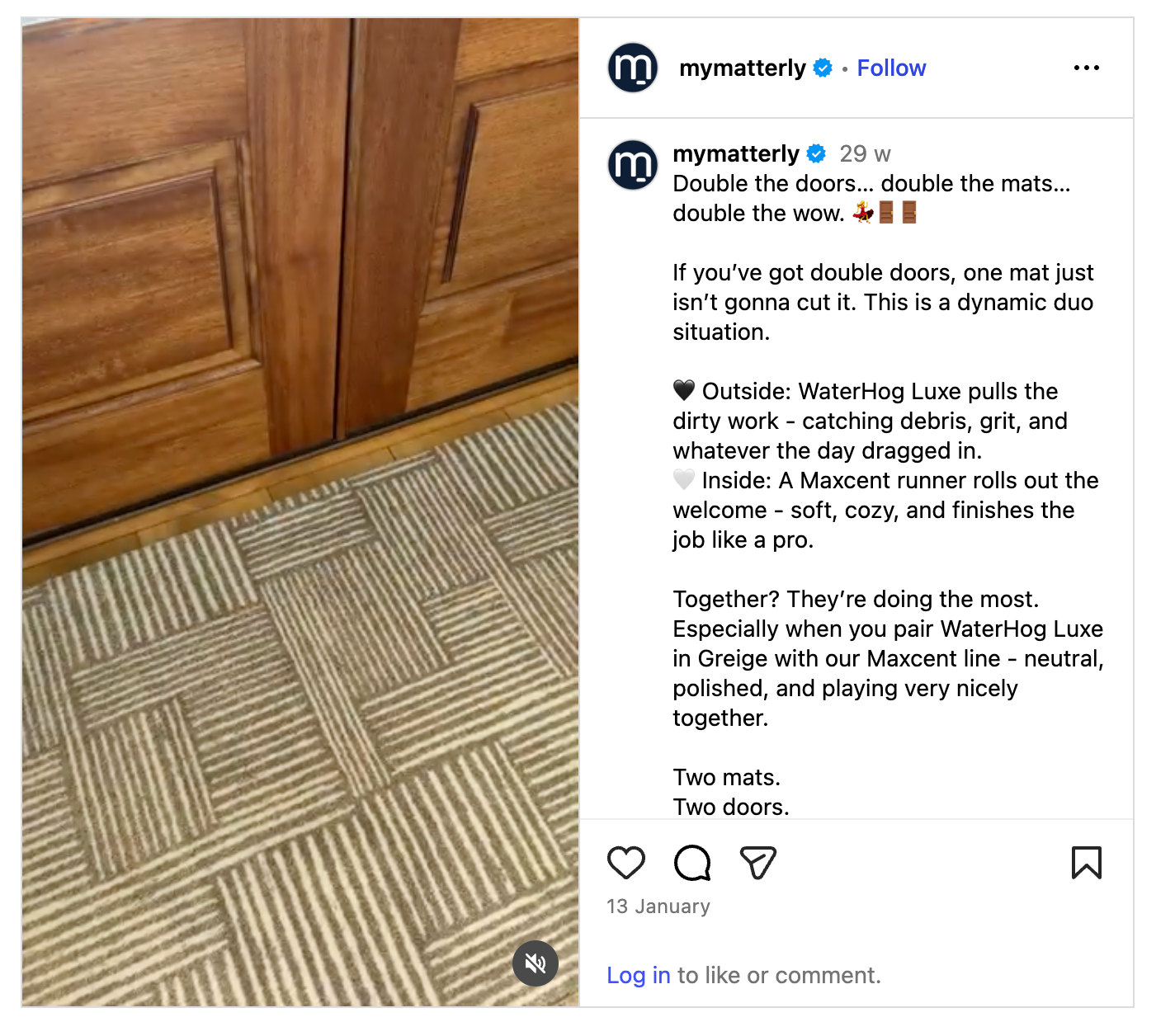
WaterHog's Google search data consistently showed demand for "extra large doormat." Rather than leading with generic product messaging, the team built creative around that specific buying intent. Their "double doors" concept came from the insight that people were looking for a doormat that actually fit a wider entrance.
Use AI to speed up creative research
Once the research process is in place, artificial intelligence (AI) can help you move through it much faster.
As Thiago explained, his team uses AI to organize large amounts of customer research, making it easier to identify patterns before developing campaign ideas.
"AI has become a huge accelerator. It helps us organize research reviews, social listening, identifying recurring language, and getting first drafts."
- Thiago Nogueira, Creative Director at Insense
AI helps speed up tasks that would otherwise take hours:
- Organize research from multiple sources.
- Summarize customer reviews.
- Identify recurring phrases across social conversations.
- Create first drafts of creative concepts and briefs.
That gives you more time to focus on the work AI can't do:
- Decide which customer motivations are distinct enough to deserve media spend.
- Refine the creative direction.
- Decide which ideas move into production.
"We still need, as a strategist, to decide which customer motivators are different and good enough to deserve media spend."
- Thiago Nogueira, Creative Director at Insense
While AI makes the research process more efficient, you should use the research to build your strategy: understand your customers, choose the right buying motivations, and turn those insights into campaigns.
Find the buying moment before writing the hook
Before you plan a campaign, identify the event that triggered the search. Thiago's team starts with a simple question: what happened five minutes before someone started looking for this product?
“If they have no idea that they have this problem yet, or that they want this product, what were they doing before they started scrolling? Did they just come home from work? Did they just wake up? Like, what was happening?”
For WaterHog’s customers, the answer was never "I need a premium doormat." People weren't searching because they suddenly wanted a better mat. They were usually reacting to a situation in front of them.
Some of the buying moments the team identified included:
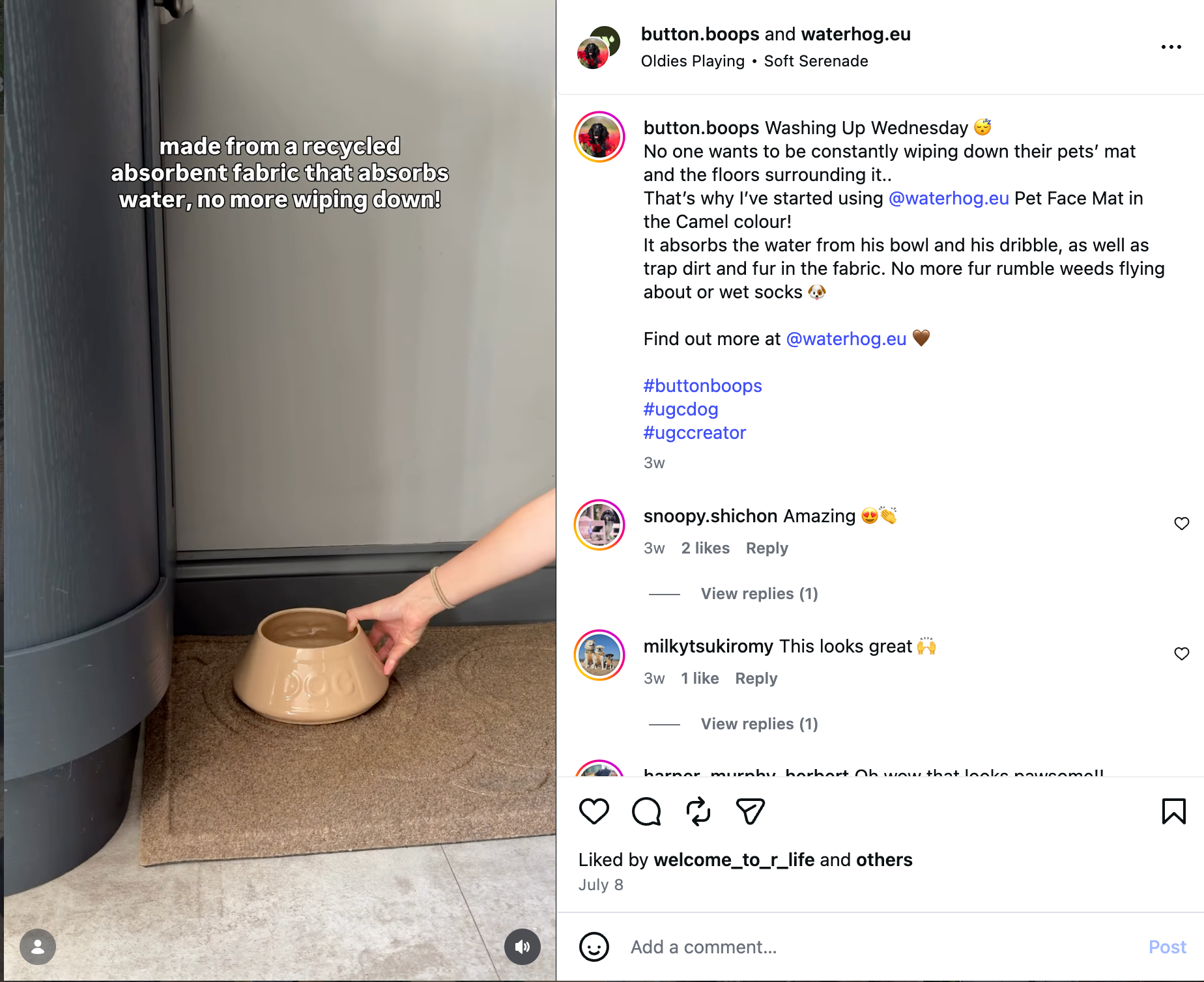
- A freshly cleaned hallway with muddy dogs about to run inside.
- A front door that's wider than the doormats they've bought.
- An entryway that feels unfinished after renovating the house.
- Replacing another cheap doormat that didn't last.
Each of these is a real experience that customers can recognize and relate to immediately. Once you identify those buying moments, it’s easier to write the hook.
"It's a visual entry point, but it tells the right customer, 'This is for you.'"
— Thiago Nogueira, Creative Director at Insense
Before you brief your affiliate creators or write a script, identify the moment that made someone start searching for your product. Lead with that experience. That's what makes people stop scrolling and engage.
Build campaigns around customer stories
Buying moments are more valuable when you group them into customer stories.
Once Thiago’s team mapped the different reasons why people bought WaterHog's products, they built a story around each one.
"We were not testing these formats. We were testing which customer story Meta could match to the right audience."
- Thiago Nogueira, Creative Director at Insense
For WaterHog, that resulted in several distinct campaign angles:
Each story reflects a different customer motivation, allowing Meta to match the right message to the right audience, instead of repeatedly showing variations of the same idea.
This also changes how you approach creator briefs.
Instead of asking creators to "make a video about the product", give them your customer stories. Creators can then pick the stories that are most relevant to them and their audience, making the content more engaging.
Adapt one story across multiple creative formats
Once the customer story is clear, you have more flexibility in how you tell it.
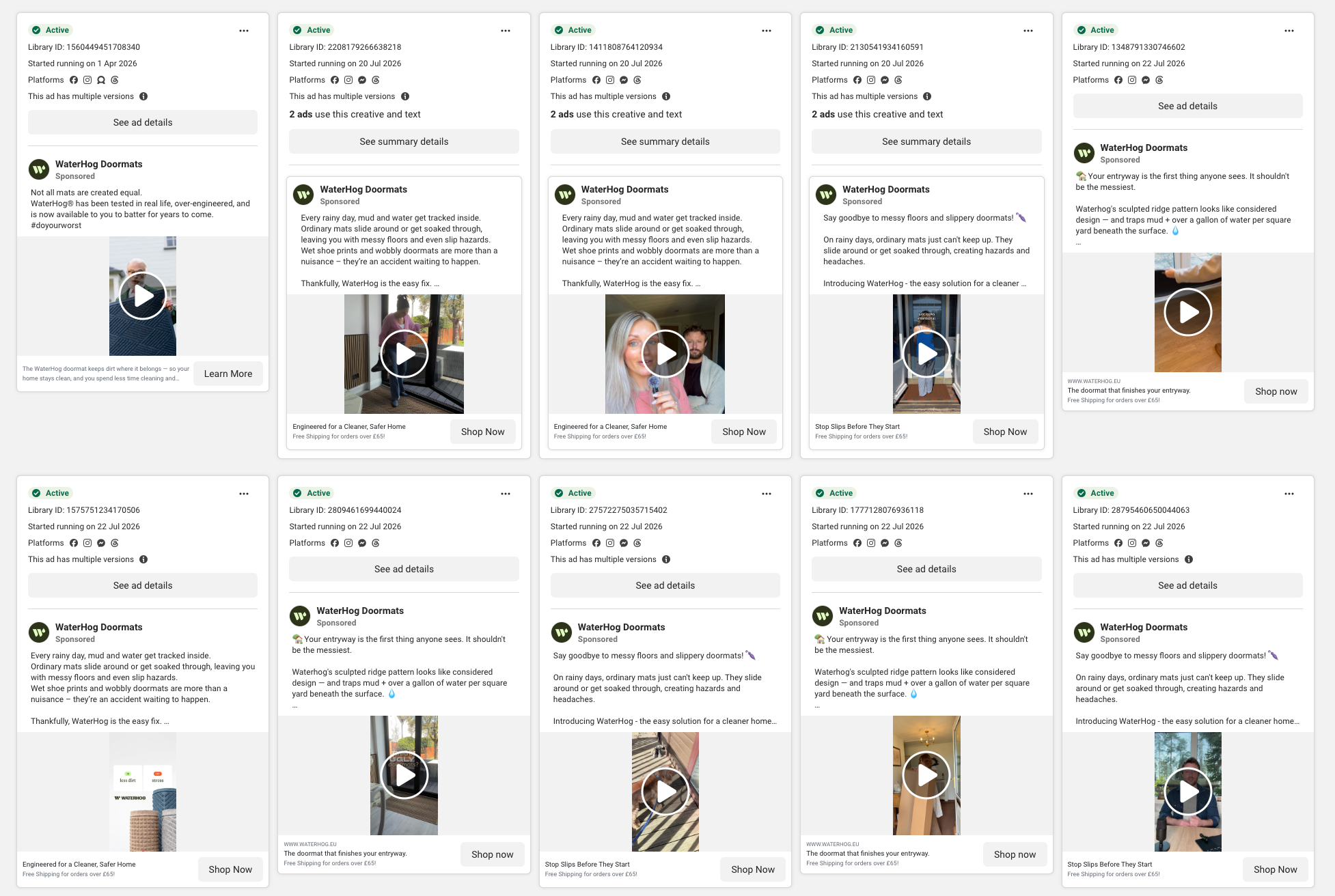
Thiago explained that WaterHog didn't lock their stories into a single content format. The same buying motivation could be shared in different ways, depending on the creator and platform.
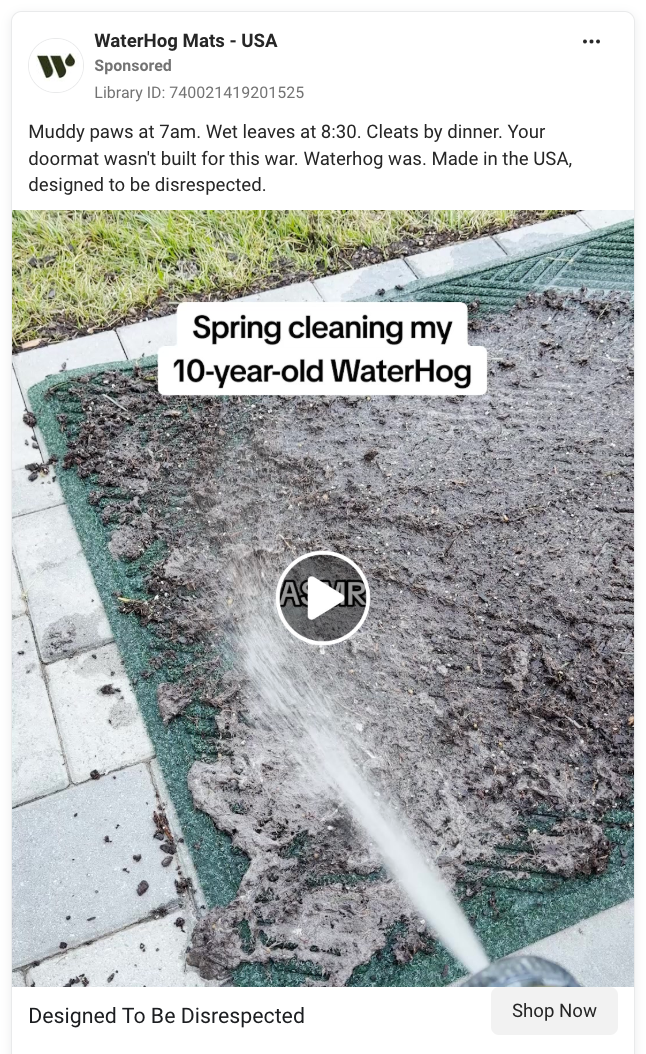
"One idea became a skit, another one became an ASMR video, another one an aesthetic home film."
- Thiago Nogueira, Creative Director at Insense
Take the "double doors" story, for example. A creator could demonstrate it through a cinematic home tour, an everyday lifestyle video, or even a humorous skit about struggling to find a mat that actually fits. The buying motivation stays the same, but the delivery changes.
Having variety lets you understand which formats resonate with different audiences without changing the core message. It also makes it easier to work with creators who have different content styles, while keeping every piece of content anchored to your customer stories.
When evaluating performance, look beyond the format that generated the most views.
Identify which customer stories consistently drive stronger engagement and conversions. Once you've found those, pitch these stories in your briefs so that creators can adapt them across formats instead of chasing the next creative trend.
Reframe value instead of defending price
Brands selling premium products often face objections around their pricing.
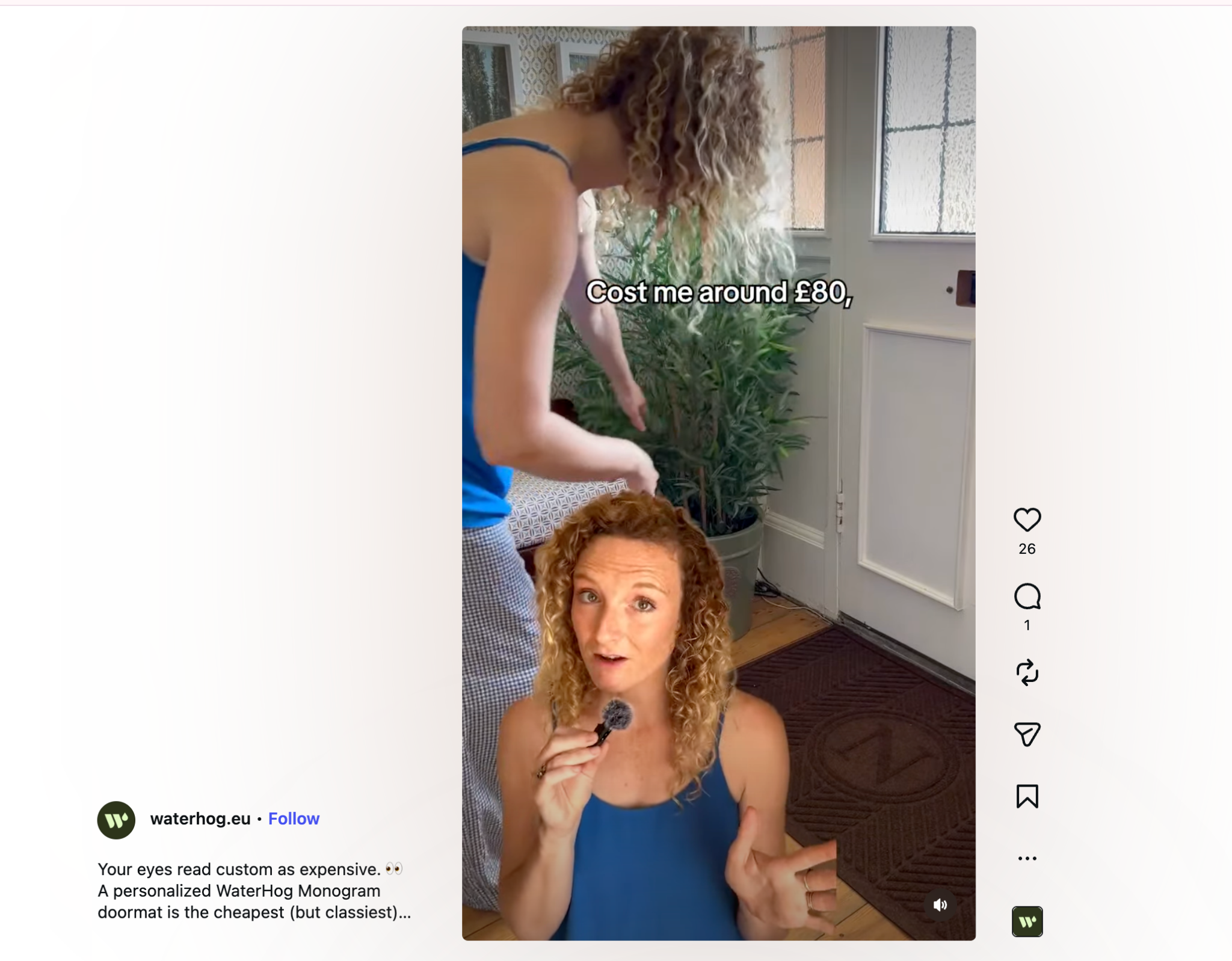
WaterHog wasn't selling a $20 doormat. Their premium mats retailed for around $150, which meant price naturally became a friction point during the buying process.
"We're not convincing anyone to pay this money. We're just really showing how great it looks and all the things that it does."
- Thiago Nogueira, Creative Director at Insense
Instead of trying to justify their price with more features, Thiago’s team changed what customers compared the purchase against. The message became: "The last doormat you'll buy."
Creative highlighted the outcomes customers actually cared about:
- A mat that protects floors by trapping dirt and moisture.
- A cleaner, more polished entrance.
- A product that lasts, so you don't keep replacing cheaper alternatives.
Those benefits gave customers a different perspective when evaluating the purchase. Instead of comparing the upfront price, they could picture the value they'd get over time.
The same principle applies to any premium product. Before building creative around price, identify the outcome customers are investing in. That outcome often becomes a stronger story.
Scale campaigns with creative diversity
Many brands think scaling creative means producing more videos.
Thiago's team approached it differently. Instead of producing more versions of the same idea, they built a portfolio of campaigns around different customer stories.
"If every new video is just another variation of the same message, Meta won't really have anything new to learn."
- Thiago Nogueira, Creative Director at Insense
This has become even more important with Meta Andromeda. With a broader range of customer stories, the platform has more opportunities to find new and relevant audiences on its own.
Different campaigns resonate with different types of customers. For WaterHog, their customer were pet owners, homeowners renovating their entryway, shoppers looking for premium quality, and people moving into a new home.
With diverse campaigns, the brand could give the platform multiple paths to find these customers. However, building that diversity requires a consistent production process.
"You have to test everything that you possibly can."
— Samuel Seldon, Head of Content at WaterHog
When WaterHog first partnered with Insense, the team worked with 3 creators, developed 6 net-new concepts, produced 12 video ads from those concepts, and then layered on up to 5 remix ads plus text-overlay variations. In total, they were testing just under 20 ads each month.
The team tested across multiple angles:
- Multiple creators bringing different perspectives
- New customer stories and creative concepts
- Different UGC hooks for the same concept
- Remix ads built from existing footage
- Variations in editing and text overlays
Every asset had a clear purpose. Some concepts built on proven winners, while others were intentionally designed to uncover new audiences and buying motivations.
Ready to turn creative insights into high-performing creator campaigns?
High-converting creator campaigns rely on a simple framework: use customer research to find real buying moments, build a portfolio of customer stories, allow diversity in formats, and scale production with this creative diversity.
Developing winning creative, however, is only part of the equation. As your program grows, you also need a way to recruit creators, manage affiliates, track performance, and automate commissions with a streamlined process.
That's where Social Snowball comes in.
Social Snowball gives ecommerce brands the infrastructure to run and scale creator and affiliate programs. With features like automated creator onboarding, payouts, communication, affiliate tracking, and performance reporting, you can spend less time managing operations and more time building campaigns that convert.