Creator marketing has become a core growth lever for most ecommerce brands. But the challenge shows up in how it gets executed. Teams launch campaigns, bring in a set of creators, and push content live. Once that cycle ends, output slows down, and results become inconsistent.
At Social Snowball’s Influencer Marketing Summit, operators shared how this is changing. Creators are integrated into performance-driven systems where payouts are tied to sales, content continues over time, and output increases as more creators participate.
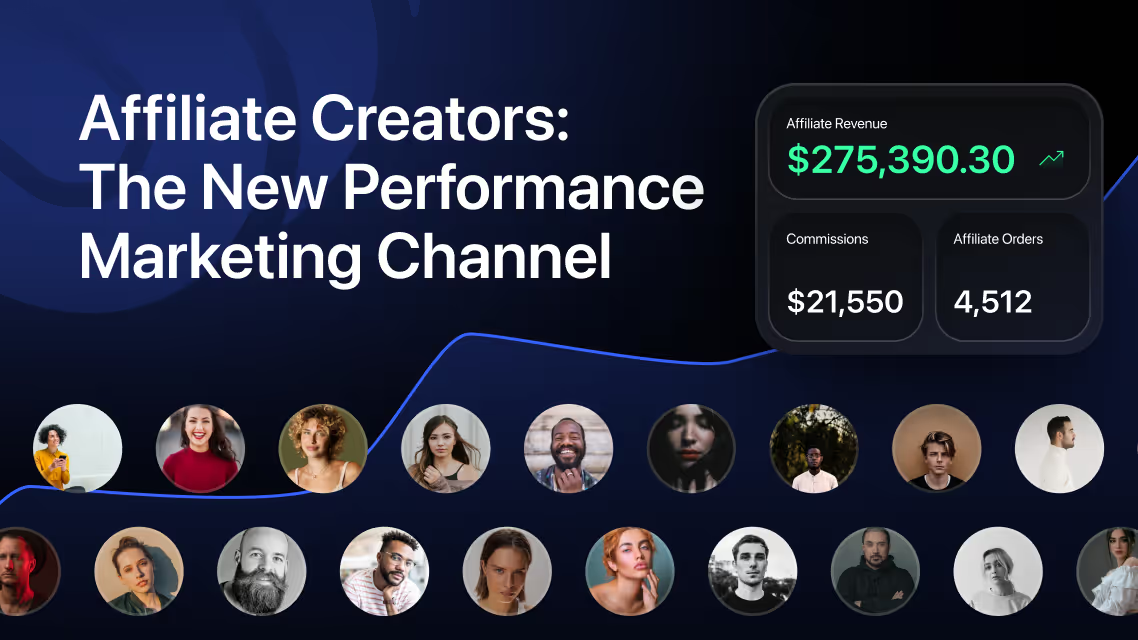
This guide breaks down how affiliate creators function as a performance channel and how brands are building systems that turn creator activity into consistent revenue.
What is an affiliate creator?
An affiliate creator is a content creator (blogger, YouTuber, influencer) who earns commissions by promoting products through unique links across social media, websites, or apps.
What makes affiliate creators a different channel
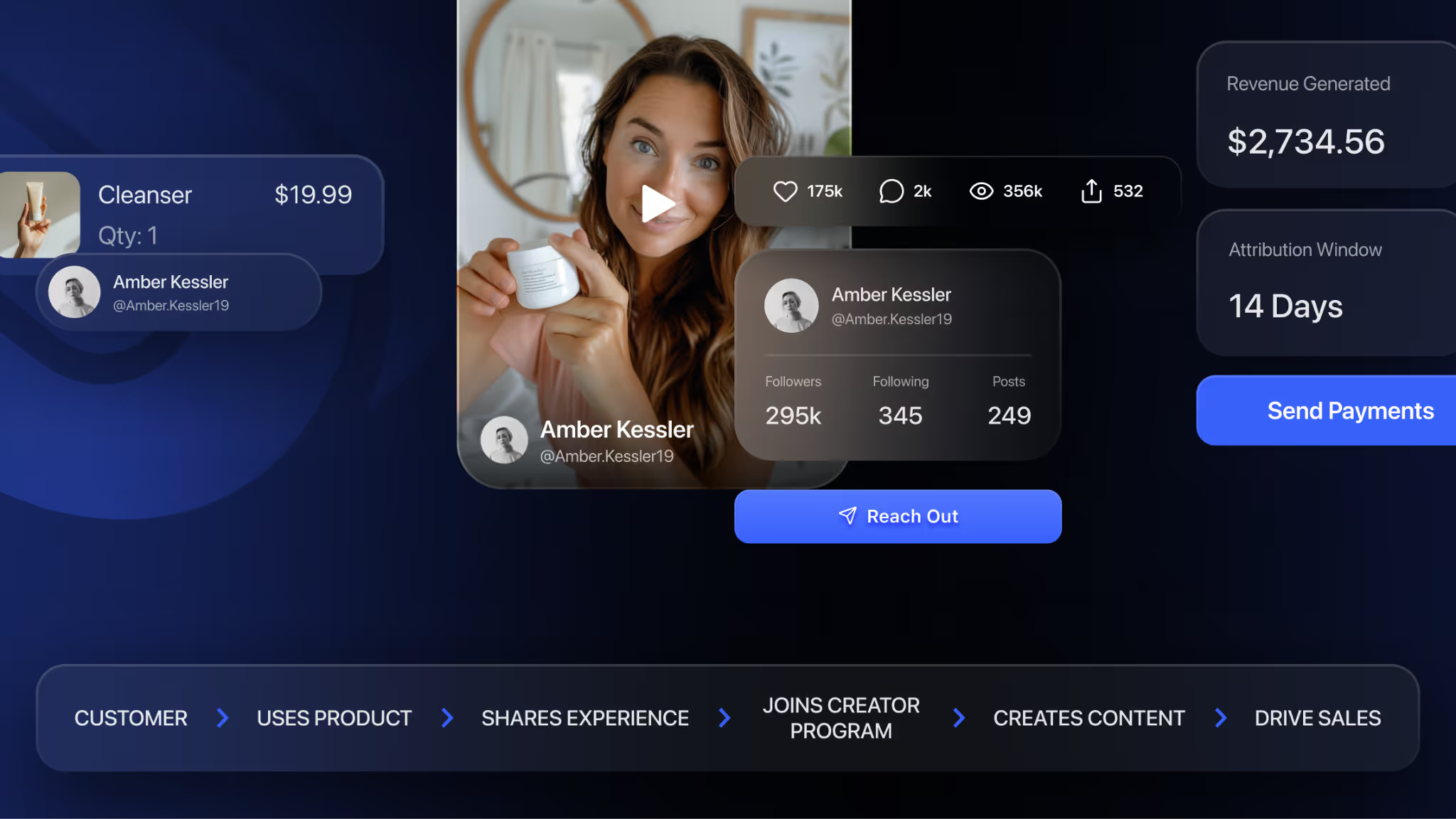
Affiliate creators operate as a revenue channel tied directly to sales, not just content output. Their role connects content creation to transactions, repeat purchases, and ongoing performance.
This model works because every part of it aligns with outcomes:
- Commission is tied to revenue: Creators earn through tracked links or codes. Every payout connects directly to a sale, so spend scales with performance.
- Content continues over time: Creators post multiple videos, test formats, and bring the product back into their content across weeks. This builds familiarity and trust.
- Performance compounds: Content keeps driving sales after it goes live. High-performing videos can be reused across ads, product pages, and lifecycle flows.
- Output scales with incentives: Clear commission structures and upside encourage creators to keep producing and improving content.
Commission structures that actually scale
Commission structure directly shapes how much creators produce, how long they stay active, and how your program grows. When payouts increase with performance, creators have a clear reason to keep posting, testing, and improving.
Here are the structures operators are using to drive that behaviour:
Base commissions (15–30%)
This range sets the baseline for participation across most categories. It determines how quickly creators enter the program and start producing content.
Myah Christenson, Affiliate & Creator Partnerships Manager at SEEQ, shared that starting at a 10% commission rate led to limited traction. When the team moved to a 15–25% range based on creator tiers, participation increased and creators began posting more consistently.
A higher base rate reduces hesitation, increases signups, and accelerates the initial layer of content the system relies on.
LTV-based payouts (not AOV caps)
Payouts tied to customer value expand how much you can pay creators without affecting profitability. This connects creator incentives to the long-term revenue they generate.
When payouts reflect lifetime value:
- Creators earn more per customer
- Brands can support higher commissions sustainably
- Content continues to generate returns beyond the first purchase
This structure reinforces the idea that creator content functions as an asset that keeps driving revenue over time.
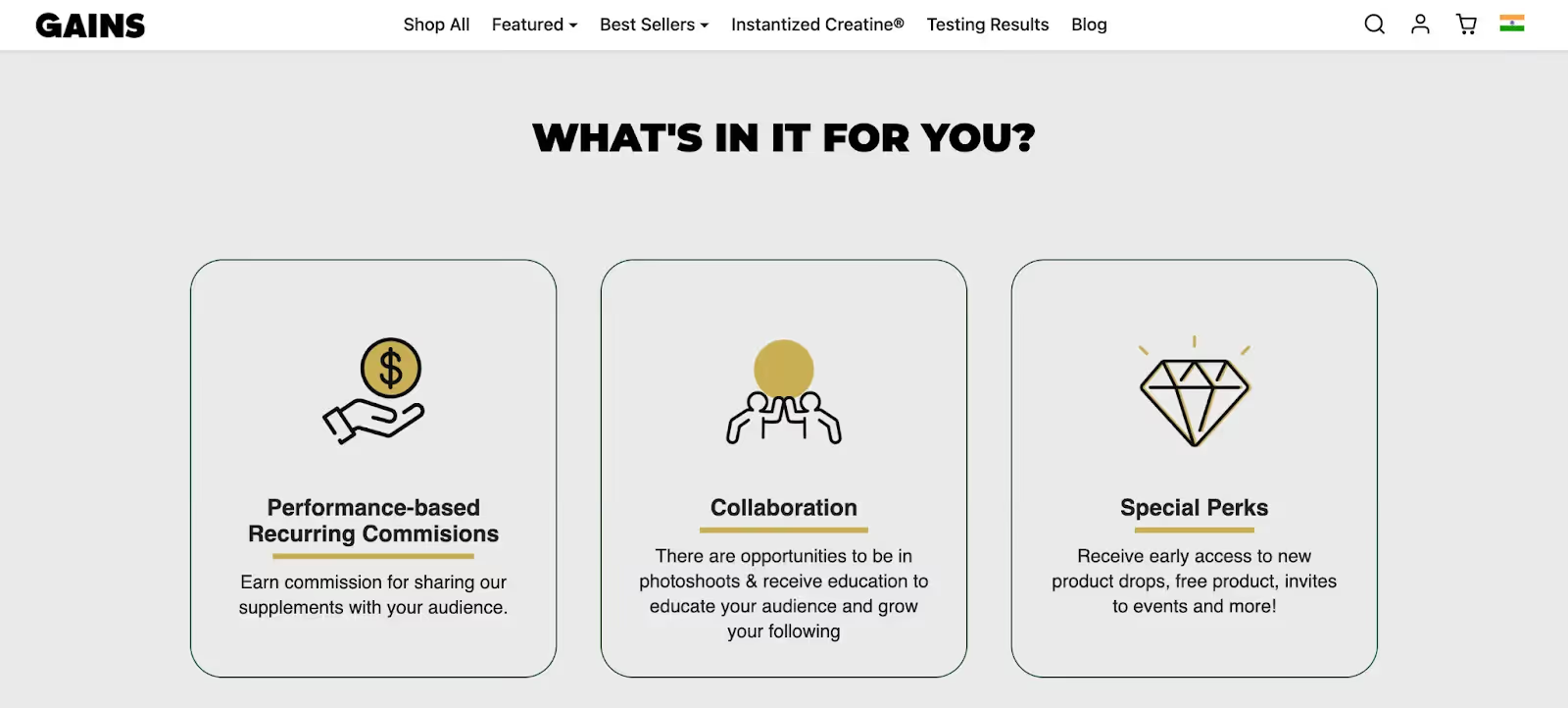
Tiered progression
Tiered systems introduce a visible growth path for creators. Each level connects output to higher earnings, which drives continued activity.
This creates a progression loop:
- Creators track how close they are to the next tier
- Output increases as they push toward that threshold
- Higher tiers reinforce continued participation
In larger programs, this structure builds consistency across the entire creator base, not just top performers.
Incentives and challenges
Short-term incentives concentrate effort around key moments and introduce a competitive layer within the program.
Robyn Nissim, CEO and Founder of Social Proof Agency, described how visibility changes behaviour. When creators can see who is performing and how much they are generating, it creates a shared benchmark across the community. A creator seeing someone drive 25 referrals compared to their own two changes the way they approach content and posts.
This drives more frequent posting during campaign windows, faster iteration on content formats, and higher engagement across the creator base. These bursts are most effective when tied to launches, retail pushes, or seasonal campaigns where concentrated activity leads to stronger results.
Retainer and performance (for volume)
Some programs offer a fixed retainer on top of performance incentives to guarantee output while ensuring that creators drive conversions.
Chelsea Klika and Kelsey Eyers from Collab Collective shared a model where brands invest around $5K/month on a group of in-house creators, which generates approximately 300 videos per month.
This guarantees a baseline level of content volume and keeps creators focused on performance through commissions.
This helps your program improve faster:
- You test more hooks, formats, and angles in a shorter time.
- Winning content surfaces faster because there’s more to compare.
- You build a consistent pipeline of assets for ads, product pages, and lifecycle flows.
This model also supports scale. Once brands cross roughly $50K GMV, consistent content volume becomes a direct input into growth. A retainer with a performance incentive model creates that consistency while keeping output tied to results.
What keeps creators producing (beyond commissions)
The commission you offer brings creators into your program. Ongoing output depends on how clearly you structure the experience after they join. When creators know how to earn, what to do next, and how to improve, they keep posting without constant follow-ups.
Transparent payouts create consistency
Creators quickly decide how seriously to take your program based on payouts. They want to know what they’ll earn and when they’ll get paid.
Here’s what that looks like on your end:
- Offer commission rates and tiers clearly from day one
- Stick to a fixed payout schedule
- Give creators a simple way to track their earnings
Once payouts feel reliable, creators start treating this like a steady income stream. That’s when posting becomes consistent.
Gamification keeps creators moving
After the first few posts, creators need a reason to keep going. Gamification creates that momentum.
Leaderboards, milestones, and tiered rewards shift how creators think. Instead of posting occasionally, they start tracking progress:
- “A few more sales and I hit the next tier.”
- “I can move up if I post more this week.”
That shift turns passive participation into active effort.
To amplify this, structure your program around focused pushes. Run monthly themes tied to product launches, seasonal moments, or short-term leaderboards. When effort is concentrated into a defined window, activity spikes without constant incentives.
Strong relationships increase output over time
The creators driving most of your revenue aren’t one-time partners. They’re the ones who stay, improve, and post consistently over time.
That only happens when they feel connected to the brand. When they do, they post more frequently, invest more effort into content, and speak about the product with more conviction.
Here’s how you can build this:
- Share what’s working and where they’re winning.
- Give early access to new products.
- Involve them in upcoming launches.
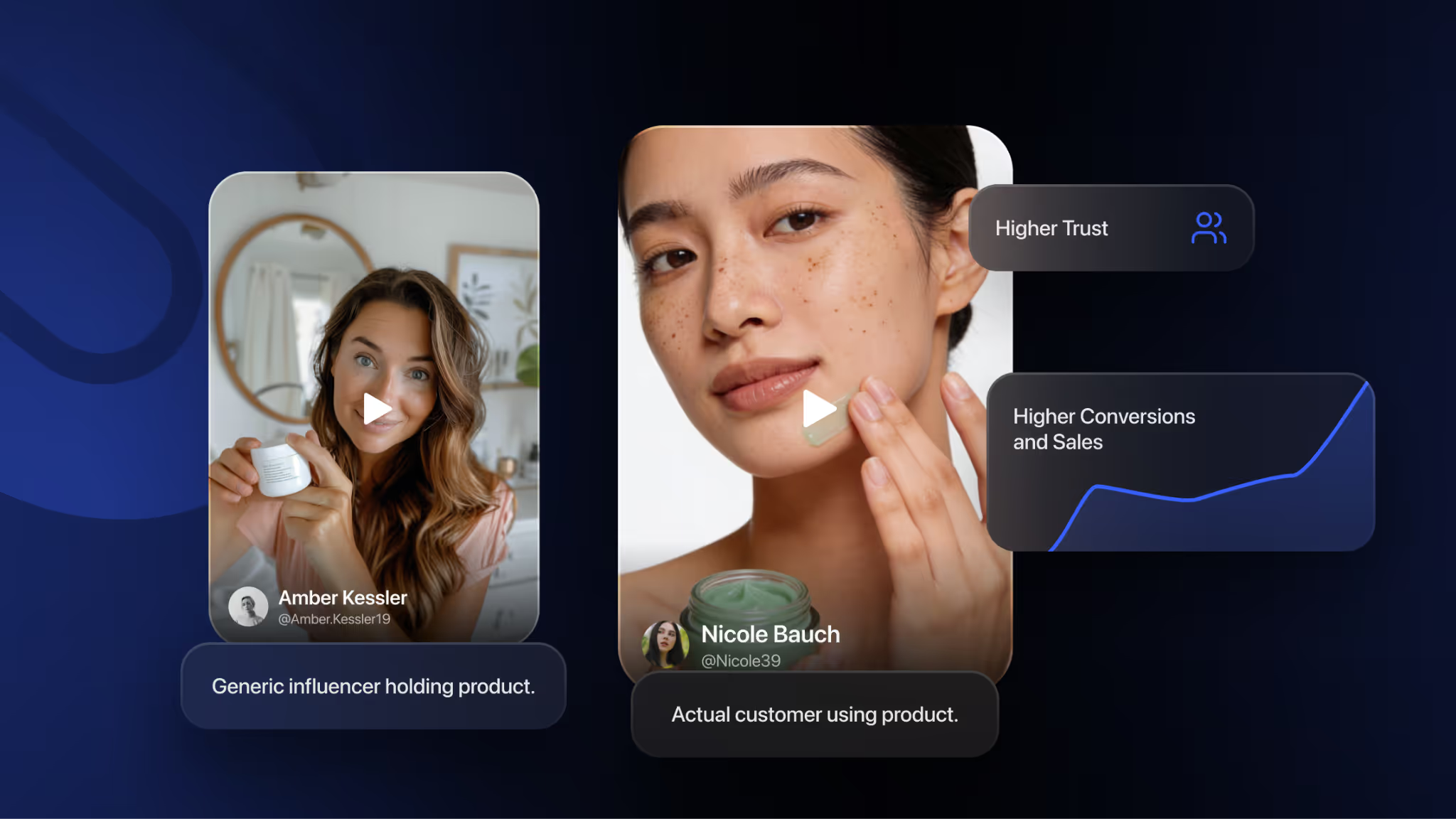
Product seeding builds real buy-in
Creators make better content when they actually use the product first. Seeding gives them that context. Here’s how:
- Send products out widely without strict expectations.
- Identify which creators post organically.
- Double down on the ones who show real interest and create content that resonates.
You end up working with people who already believe in the product, which shows in their content.
Creative guidance improves results
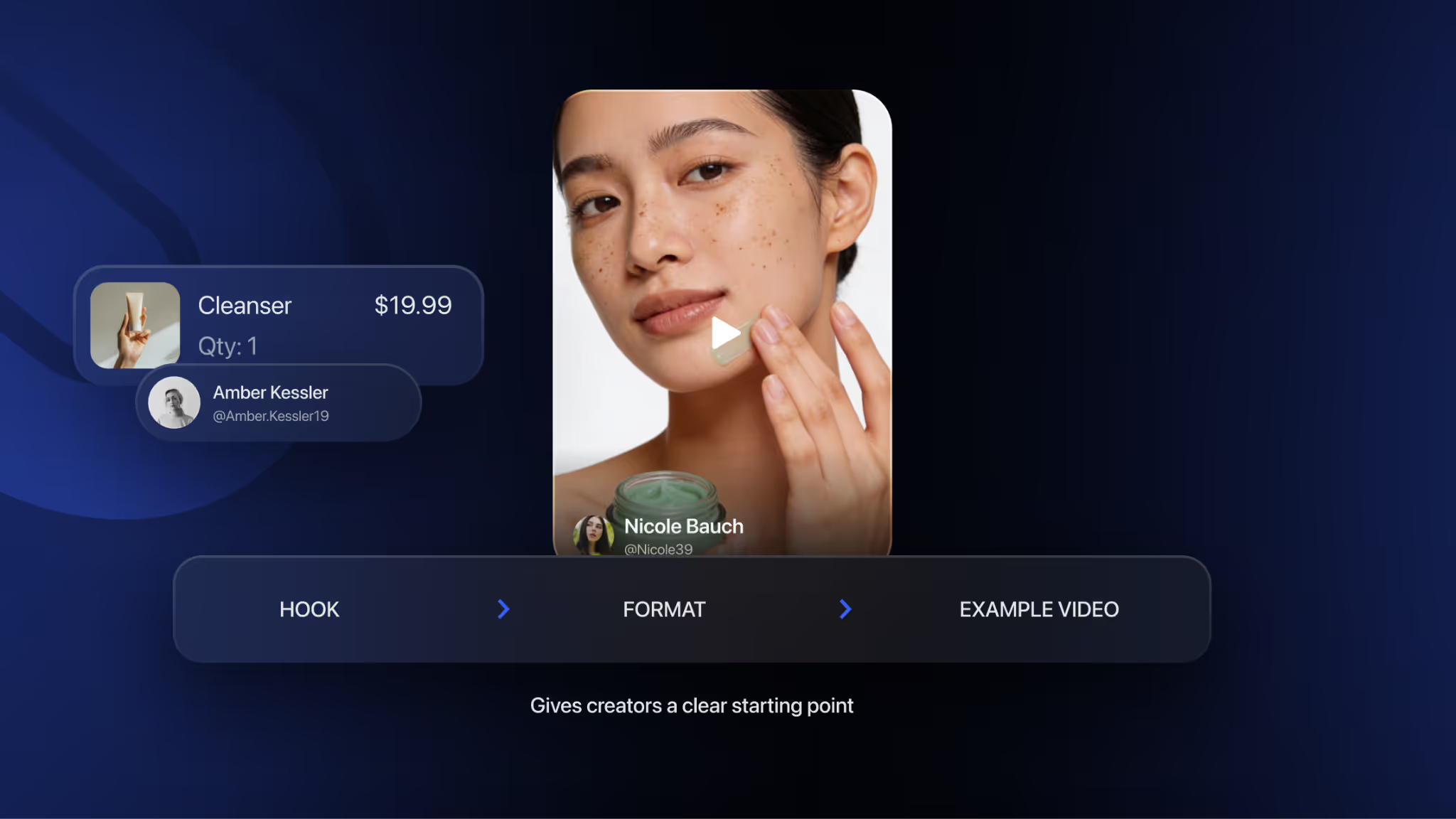
Creators don’t need heavy briefs, but they do need direction. When you show them what works, they produce better content faster
Here’s how:
- Share examples of content driving sales.
- Break down why it works (hook, structure, angle).
- Give easy starting points that they can adapt.
This helps creators try stronger ideas from the start, improve quickly with each post, and build on formats that already convert.
How brands scale this into a real growth channel
Most brands stall at the same point. A few creators get recruited, content goes live, and the team waits to see what happens. When nothing compounds, activity slows down, and the process restarts from zero.
Without a system behind the effort, momentum never builds. Each step needs to feed the next, and that only happens when the program is built to run continuously.
Here’s how you build a system to partner with affiliate creators and drive repeatable revenue:
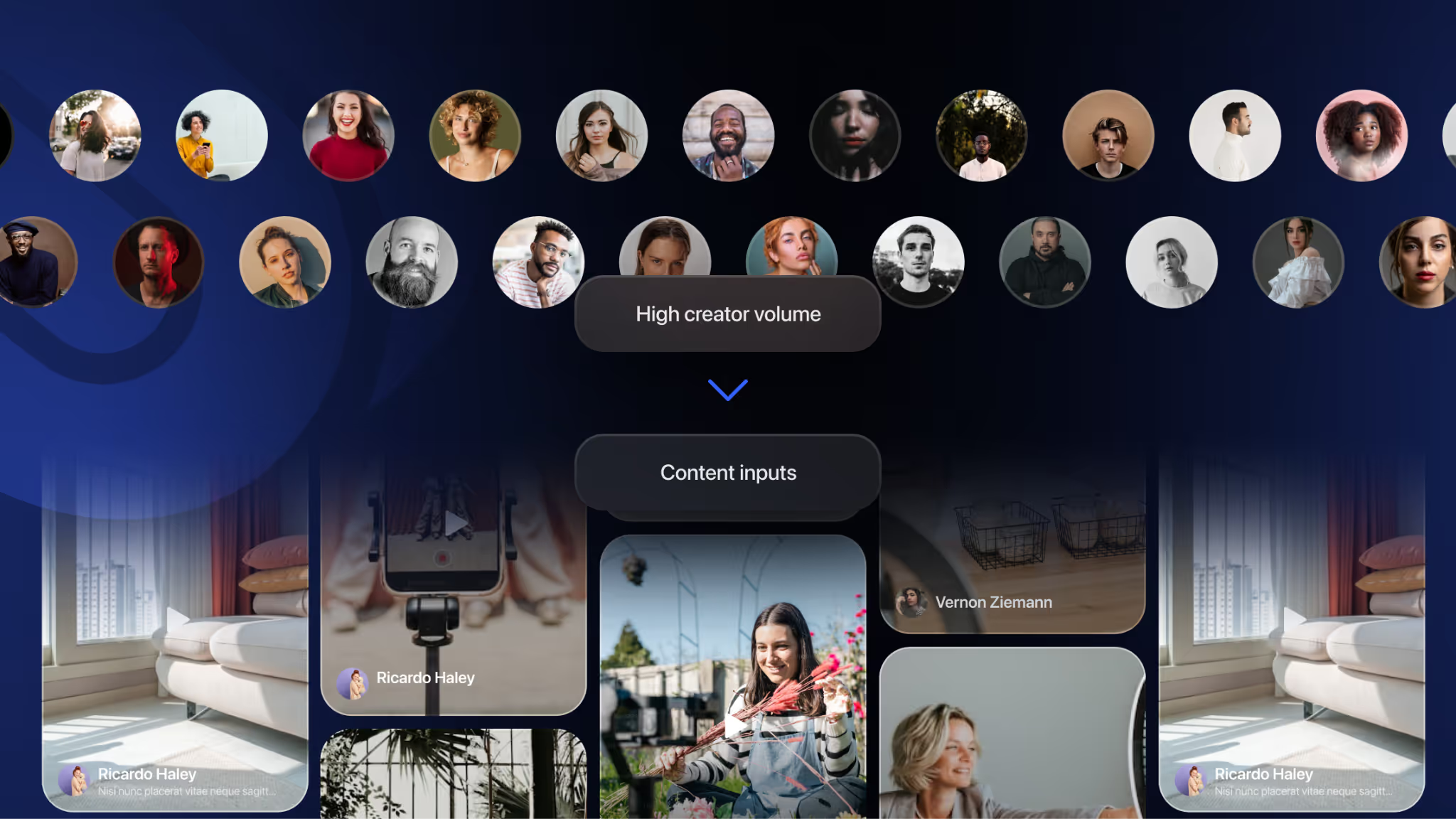
1. Start with volume
At the early stage, your goal is to generate enough inputs to see patterns.
Start with high-intent sources:
- Existing customers already posting or tagging you: Pull your existing customer list and cross-reference it with your organic social mentions. The people who have already bought from you and already create content in your category are your first priority.
- Creators engaging with competitor brands: These creators already know how to talk about products like yours, and most of them have never been approached.
Learn how you can find creators for your ecommerce store.
Nichole Munoz, Co-founder and Head of Marketing at EZ Bombs, built her entire growth engine by prioritizing creators who stay active and show up consistently. This signal only becomes visible when you have enough volume of creators to be able to observe who actually follows through.
Low volume delays learning while high volume reveals direction.
2. Identify who is worth keeping
Once content starts coming in, shift your attention to selection.
Track three things:
- Who posts repeatedly without being prompted
- Who refines their content each time
- Who generates consistent conversions.
This group is usually around 15 to 20% of your total pool, and they are the ones worth building around.
As Myah Christenson points out, alignment drives performance. When creators are actual customers, potential customers connect to it faster. The creator already understands the product and the use case, which shows up in how they talk about it.
Once you identify this group, move them into a more structured environment. SEEQ runs its Discord as a working channel where creators learn how to generate revenue from a product they already use.
Here, you can share which videos are driving GMV, break down what hooks are working, and recognize top performers publicly. This gives creators a concrete reason to stay active and keep improving.
3. Increase output from your top performers
A single post gives you a signal. Repeated posts from the same creator give you stability, which drives compounding results.
Once you identify which creators bring in conversions, give them a clear framework to increase output:
- Share the hooks that are already working
- Show examples of content that has driven sales
- Encourage multiple variations of the same idea
The goal is consistent posting across weeks, with each post building on what came before.
Read about how you can help affiliates create better content.
4. Reuse what works across every channel
When a piece of content performs, treat it as a template. Extract the hook, the structure, and the core message. Then apply it across other creators, paid campaigns, and additional platforms.
For example:
- Run the organic post as a paid ad.
- Add creator content to PDPs and landing pages
- Pull the messaging into email flows to show real usage.
One proven asset reused across multiple channels outperforms constantly producing new creative.
5. Build an always-on system
These steps only compound when they run continuously. Here’s what the system should look like:
- Steady onboarding brings new creators into the program.
- Top performers stay active and increase output.
- Winning content keeps getting reused across channels.
Chris Chisholm, Director of Talent Management at G Fuel, runs his program at scale with a clear ratio: 90% automation, 10% personal connection.
Onboarding, communication, and performance tracking run without manual effort. The 10% is to build creator relationships. This may look like a timely personal message, a customized reward, or even a public callout when a creator hits a milestone. His operating principle is to accomplish more with less while treating everybody as inherently valuable.
The automation handles operations while the personal layer drives retention. Together, they keep the program running and growing.
Ready to turn affiliate creators into a scalable revenue channel?
When managed right, affiliate creators can be a consistent revenue channel. You can build a system where creators generate sales, content continues to perform over time, and output increases as more creators join and improve.
This system grows by continuous onboarding new creators, setting clear commission structures that reward performance, and having ongoing content that feeds ads, product pages, and lifecycle flows.
To run this at scale and without friction, you need infrastructure that handles the operational load. Platforms like Social Snowball simplify how you manage affiliate creators:
- Automatically onboarding affiliates after purchase
- Track sales across TikTok Shop and your store in one place
- Manage tiered commissions and payouts without manual work
- Scale creator volume without increasing team size