
Creator marketing is evolving at breakneck speed.
For DTC brands, winning isn't just about keeping up. It's about anticipating what's next and learning from top operators in the industry.
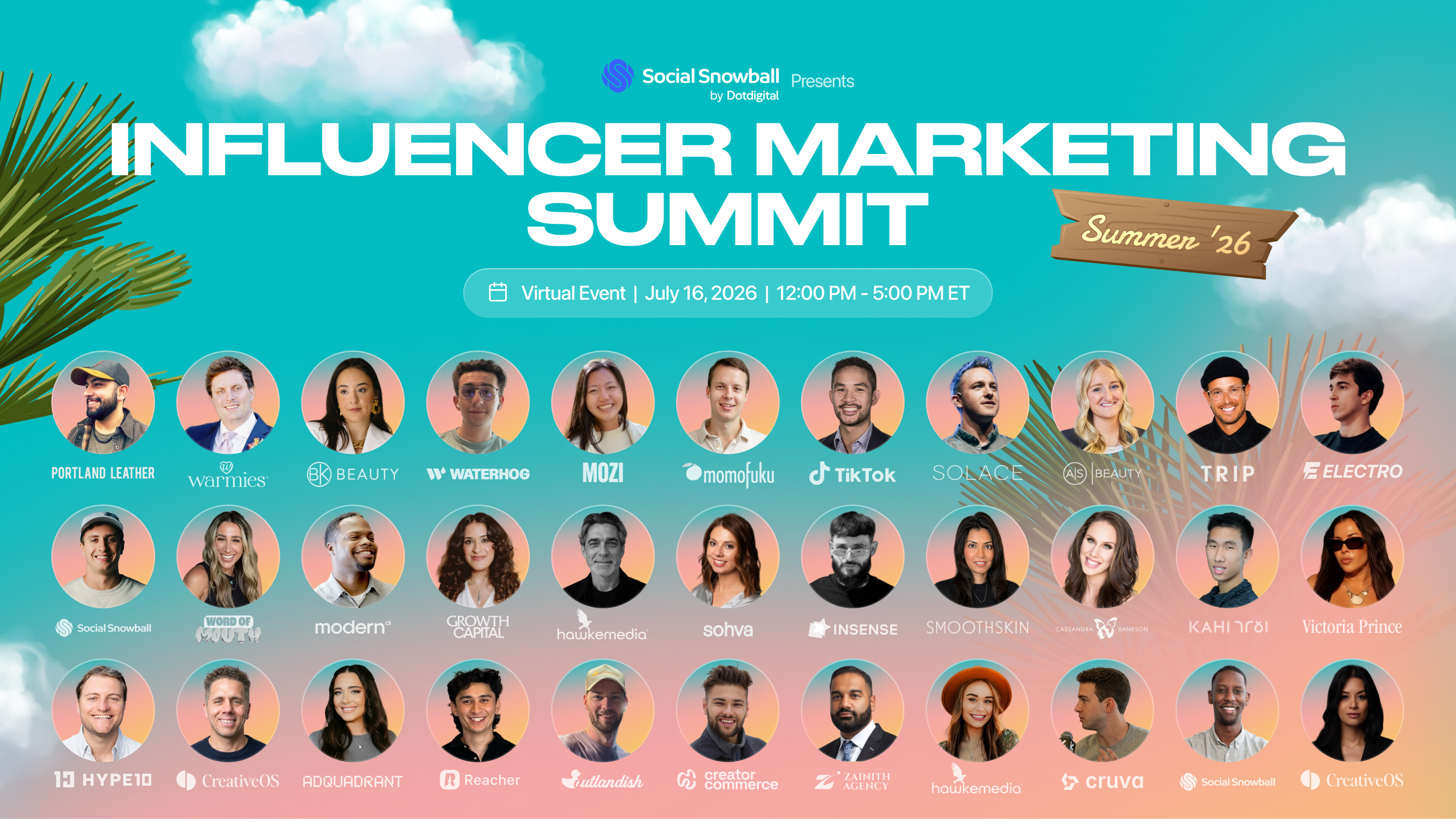
That’s why we hosted another Influencer Marketing Summit.
More than 1,300 people attended 5 hours of tactical sessions by 33 influencer marketers, creators, and ecommerce leaders.
Instead of predicting trends, our expert speakers shared practical learnings and frameworks they use every day, from recruiting creators to writing briefs to scaling on TikTok Shop.
We’ll release deep dives from each session soon, but for now we’re sharing some of the top takeaways from all our speakers.
Let’s get into it.
1. Build creator programs deliberately, not as a numbers game
It’s a common misconception that scaling creator programs means that you have to recruit as many creators as possible. In reality, you just have to find the right creators, help them succeed, and retain them.
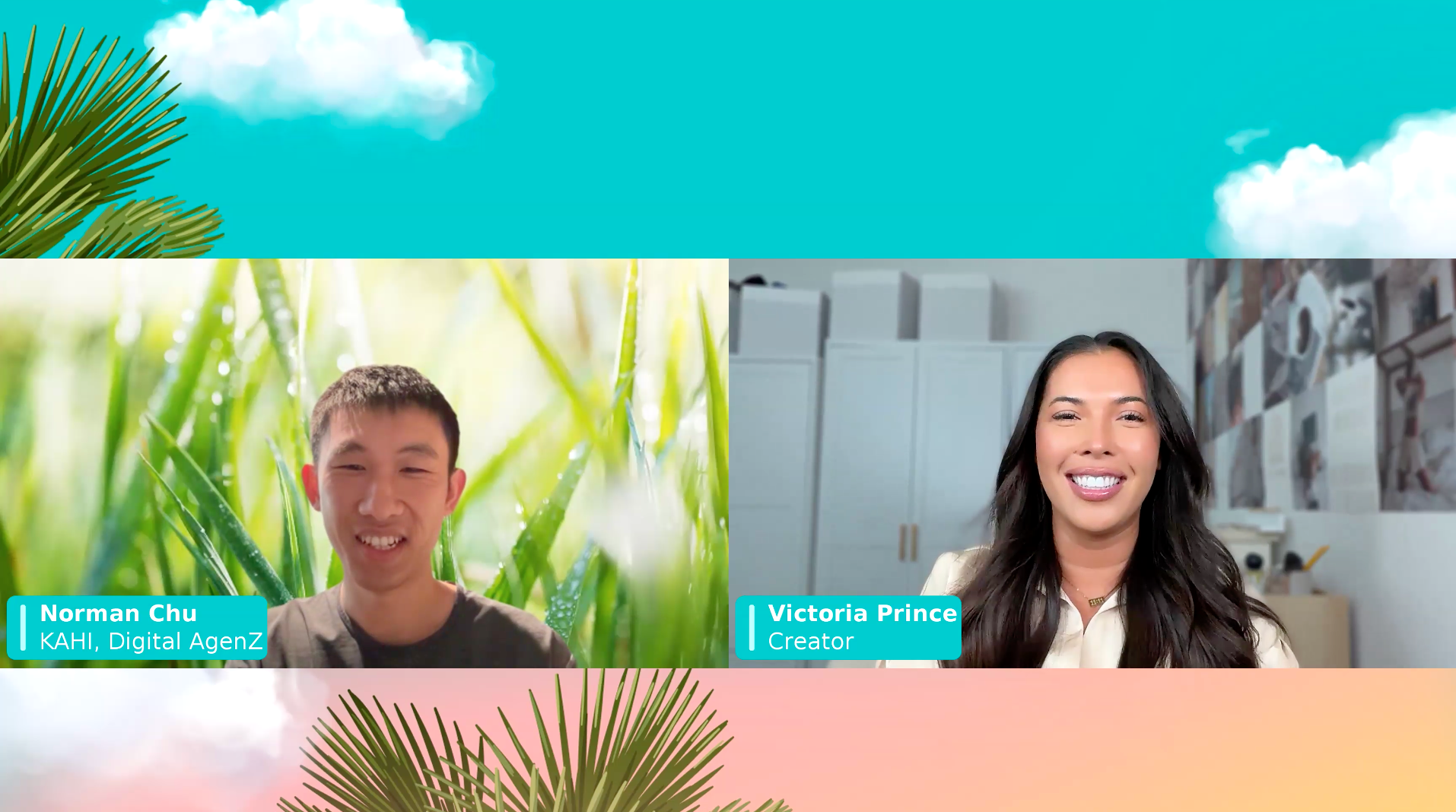
Victoria Prince, a creator who has generated over $7 million in TikTok Shop GMV, recommends starting with a small group of creators who establish your brand's positioning and messaging before you scale.
"If you're out there gathering a thousand affiliates, you don't have any control over your brand story."
The best partnerships don't end after recruitment. Victoria explained that the brands creators remember are the ones that actively invest in them, amplifying winning content, involving them in launches, and creating opportunities for them to earn more over time.
2. Turn creator sourcing into a scoring algorithm
Finding creators shouldn't depend on intuition alone. According to Christian Cook, VP of Consumer at Warmies, the most scalable creator programs treat sourcing like a data problem.
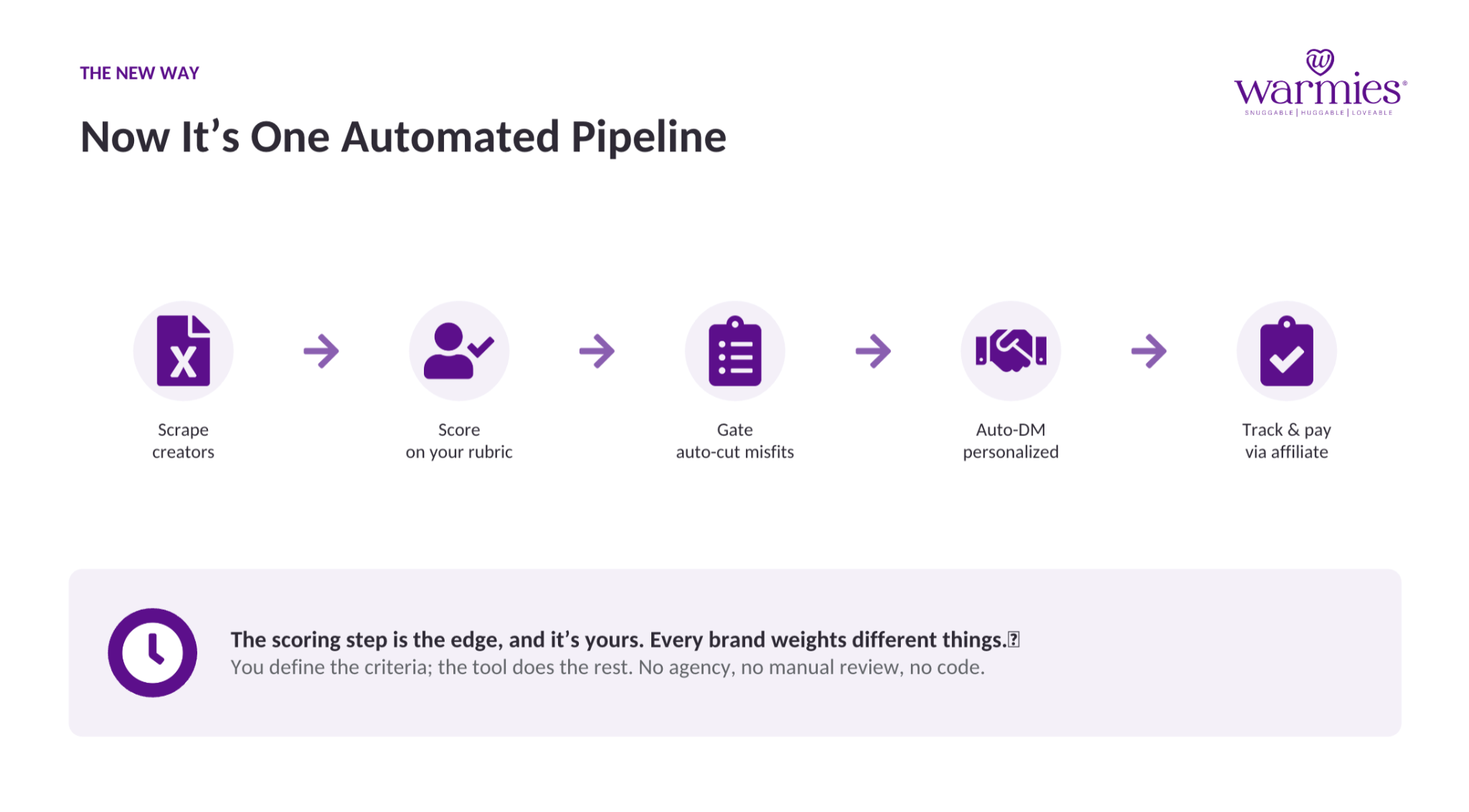
Instead of manually reviewing creator lists from agencies, Christian's team built a semi-automated system that scrapes creators from TikTok and scores each one against a weighted rubric.
"We built a scoring algorithm and rubric. Creators get a score out of 100. Anyone under 70 gets gated out as not being a good fit for the brand."
Their points system isn’t based on a single metric. The team assigns positive and negative weights to characteristics that align with Warmies' ideal creator profile.
For example:
- Creators with 1,000-10,000 followers get a slight boost because Warmies is prioritizing micro-creators.
- A creator with "mom" or "stay-at-home mom" in their bio earns significant points because they match their target demo.
- Creators outside the U.S. receive negative points.
"We've been able to bring down our creator sourcing costs from $12 to $0.13 per qualified lead."
Christian emphasized that your scoring model should reflect your brand's unique priorities. Copying someone else's framework won’t give you the results you’re looking for.
"It has to be personalized to the brand because what's important to Warmies might not be important to a different brand."
3. Optimize your store before recruiting more creators
Recruiting more creators amplifies your existing customer journey… for better or for worse.
Norman Chu, VP of Marketing and Partnerships at KAHI Cosmetics, explained that creators increasingly evaluate brands based on the experience after the click.
A slow website, weak product page, or poor checkout hurts both the brand and the creator's earnings.
"I can drive the traffic, but can the brand actually put in the effort to make sure that their website converts?"
Your website needs to give creators a realistic chance of generating sales. If your website doesn’t convert, they’re effectively sending qualified traffic to a dead end, which hurts their own earning potential.
Before recruiting more creators, audit the entire post-click experience. Improving page speed, product pages, and checkout gives creators confidence that the traffic they generate will actually convert, making your program more attractive to experienced creators.
4. Recruit creators who can influence buying decisions
For years, brands have evaluated creators based on metrics like follower count, engagement, and reach. But as social commerce has evolved, a different metric has become far more important: Can this creator actually influence a purchase?
Shane Clapper, Head of US Operations at Outlandish, believes brands should stop thinking about creators as influencers and start thinking about them as KOSs (Key Opinion Sellers).
"KOLs (Key Opinion Leaders) help consumers discover. KOCs (Key Opinion Consumer) help consumers trust. KOSs help consumers make buying decisions."
The distinction is important. A KOS doesn't just generate awareness or positive sentiment. They know how to explain a product, answer objections, demonstrate value, and give shoppers the confidence to click "buy."
That's especially valuable on platforms like TikTok Shop, where entertainment and commerce happen within the same piece of content.
Building a program around KOSs changes how brands invest in creators. Rather than constantly searching for the next viral influencer, brands should identify creators with genuine selling ability and help them improve over time.
"The goal isn't just to find someone who can sell your products today. The goal is to build a network of trusted sellers... Winning brands don't just recruit affiliates; they actually incubate them."
5. Nurture emerging creators, not just top performers
Many brands concentrate their time and resources on creators who are already driving significant revenue. But teams at BK Beauty and Laura Geller have found success by investing earlier.
Rather than treating emerging creators as one-off collaborators, they provide product education, performance feedback, and direct access to the team. That support helps creators improve faster while building stronger loyalty to the brand.
"The L1 and L2 creators are the most eager to learn. They're the ones who are going to be the most loyal to your brand."
-Sophia Monetti, Social Commerce & Influencer Marketing at BK Beauty
Instead of asking which creators are performing best today, consider which creators have the greatest potential to grow.
By nurturing emerging talent, you create a stronger pipeline of high-performing creators while building relationships that are more likely to last.
6. Invest more in creators who prove they can perform
As creators generate more value, they should unlock greater opportunities in return.
Jeremy Fenderson, VP of Agency Operations at Modern.ai, recommends creating a "creator growth plan" where future opportunities are tied to performance.
"The next 3-6 months should be reflective of the GMV they generate... your best creators bubble up to the top.”
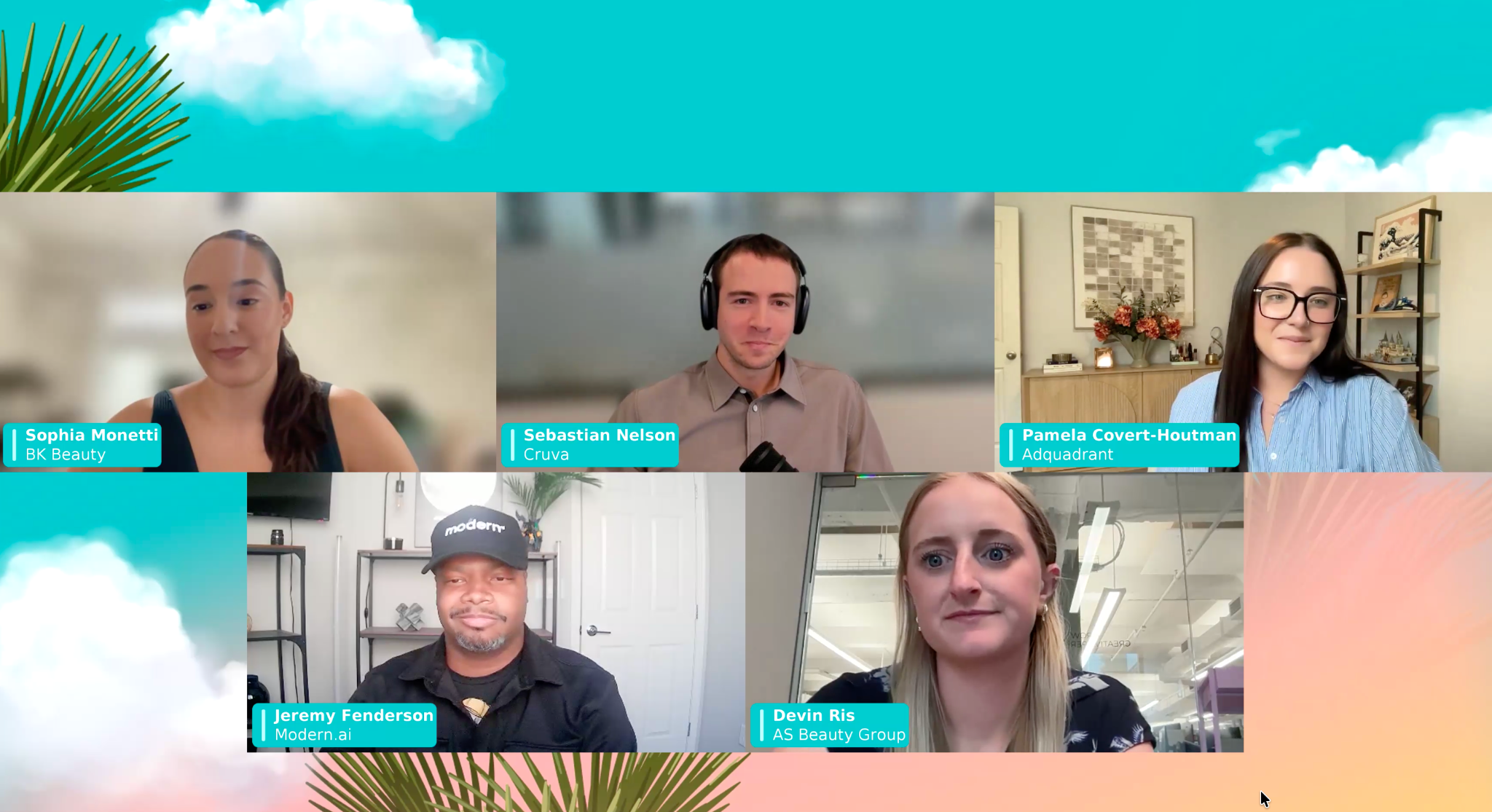
Several speakers echoed this approach.
Sophia Monetti explained that BK Beauty supports creators differently at each stage, giving newer creators more education while offering top performers higher commission tiers, exclusive opportunities, and greater earning potential.
Jose Gutierrez, founder of Electro Gum, turned creator progression into a game, allowing athletes to unlock new rewards as they hit sales milestones.
"We stopped hoping creators would post, and we instead gave them a scoreboard and a clearer direction on how they could scale with our program."
-Jose Gutierrez
Build a program where creators always know what the next milestone is, what they’ll unlock by reaching it (like higher commissions, exclusive opportunities, etc.), and how to continue progressing within your program.
7. Build creative around buying moments
Many brands start by debating creative formats: Should this be a UGC video, a product demo, a skit, or a talking-head?
According to Thiago Nogueira, TikTok & Meta Partner at Insense, that's the wrong place to start.
"Formats alone are not going to convert. You need recognition. You need relatability. You need that 'Oh shit, that's me' moment."
Every purchase starts with a trigger: a problem to solve, a milestone to celebrate, or a situation the customer recognizes immediately. Start there.
For WaterHog, that means building campaigns around real customer scenarios, like preventing muddy paw prints in the house, finding a doormat that fits a double-wide entryway, or decorating for the holidays.
Only after identifying those buying moments did the team experiment with different creative formats.
"We were not testing these formats. We were testing which customer story Meta could match to the right audience."
Creative formats are variables, not strategies. Start with the customer story that drives someone to buy, then test multiple ways of telling that story.
When the buying motivation is clear, the format becomes far less important than the message it delivers.
8. One product can generate dozens of creative angles
Many brands create one campaign for a product and move on. Portland Leather Goods takes the opposite approach.
As Cam Martinez, TikTok Shop Lead at Portland Leather Goods, explained, a single product can inspire content around size comparisons, color comparisons, leather education, and different use cases.
Just as importantly, the team doesn't limit itself to one style of content.
"We have creators who do short 15 to 30 second videos, and then we have creators that talk for 3 minutes... Both work well."
Instead of asking, "What video should we make?" ask, "How many stories can this product tell?"
The more angles you uncover, the more opportunities you give creators to connect with different audiences.
9. Optimize your creative briefs, not just your creative
When a campaign underperforms, it's easy to assume the wrong creator was selected. But often, the real problem starts with the brief.
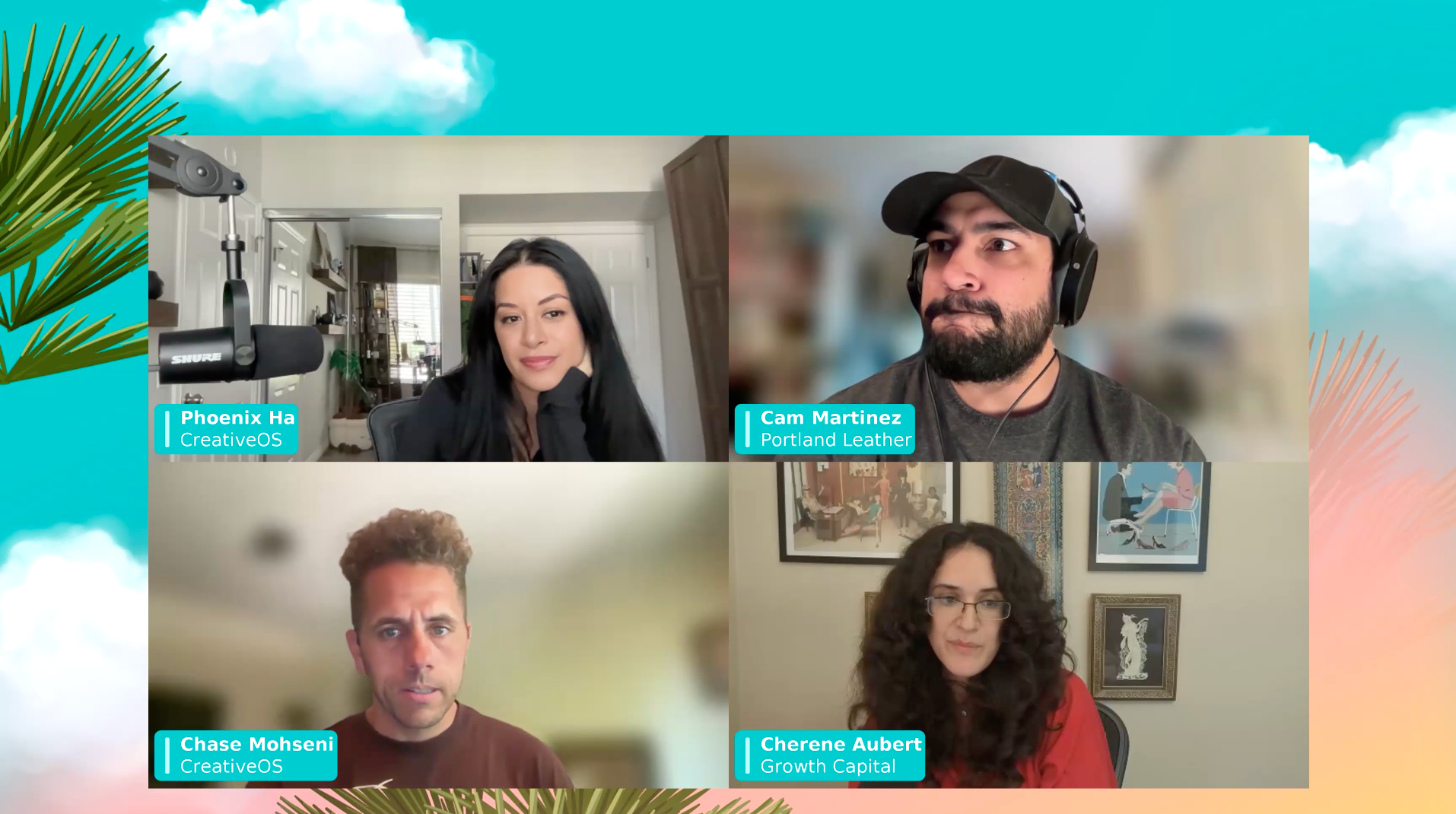
Cherene Aubert, CEO of Growth Capital, explained that her team treats creative briefs as performance assets.
Rather than evaluating whether a creator succeeded or failed, they ask whether the brief gave creators the right foundation to produce content that converts. After each campaign, they review what worked, identify what was missing, and refine the brief before sending out the next wave of content.
"We're testing our briefs... Was our brief a hit or a miss? And how do we iterate on our brief for next time to be better?"
This approach shifts the focus from individual creators to the system that supports them. A stronger brief gives creators clearer direction while still leaving room for their own ideas. Over time, continuously improving your briefs leads to better creative across your entire creator program.
10. Lead with emotion, then justify the purchase
As product prices rise, creator content has to do more than just explain what a product does.
It has to make people care.
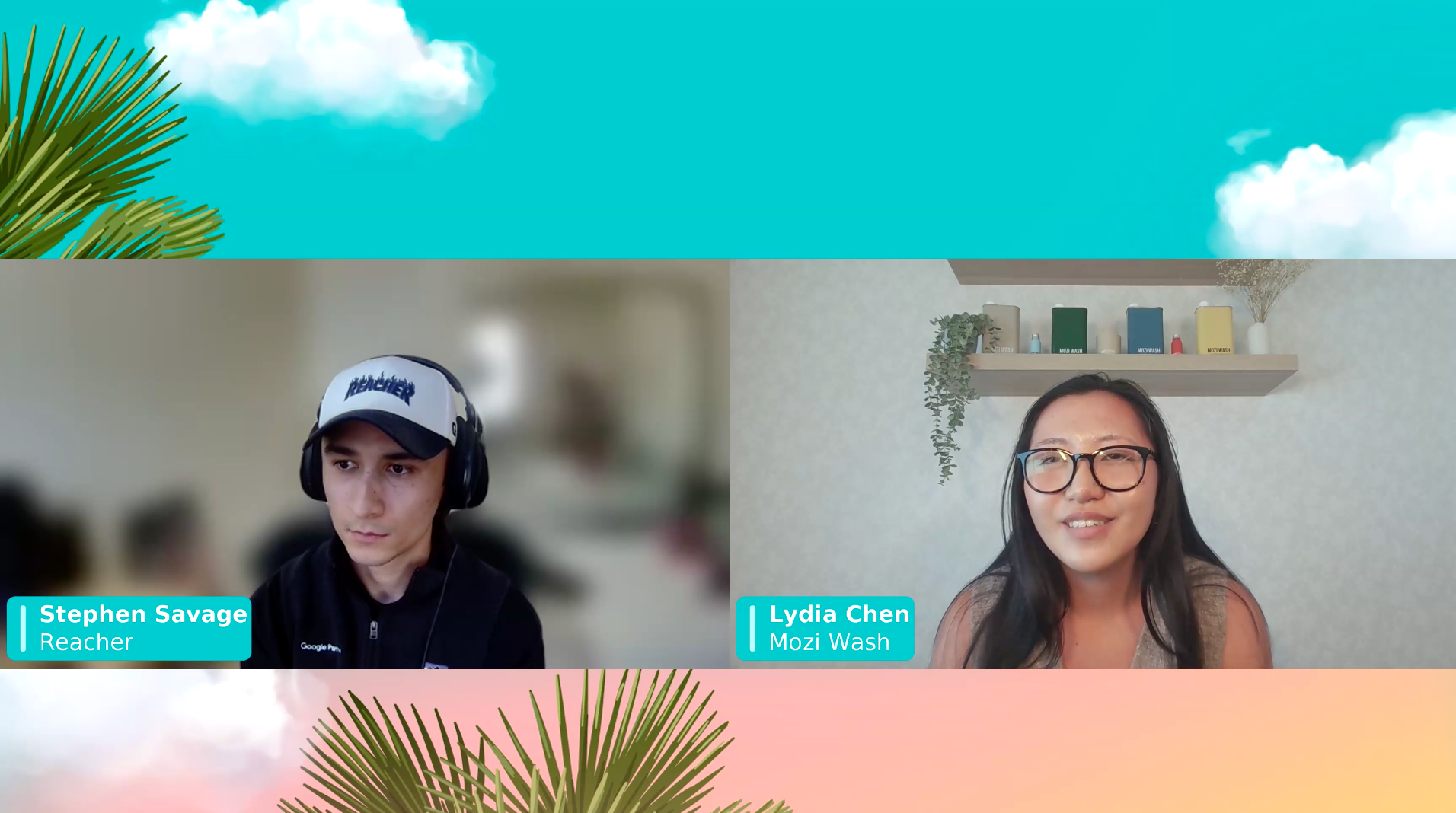
Lydia Chen, VP of Ecommerce at Mozi Wash, shared that selling a $60 laundry detergent on TikTok Shop requires a very different approach than selling a low-cost impulse purchase.
Rather than leading with ingredients, discounts, or product features, Mozi’s highest-performing creators focus on the emotional outcome of using their products.
"The content that's working isn't just: here's the ingredients... Instead, it centers around the emotion that comes with the product – whether it's the compliments they get from the amazing scent they're wearing or the joy they get from upgrading their laundry routine. Those are typically the hooks that work best."
Once customers connect with the transformation, they're far more receptive to the product itself.
11. Winning TikTok Shop brands prioritize creative velocity
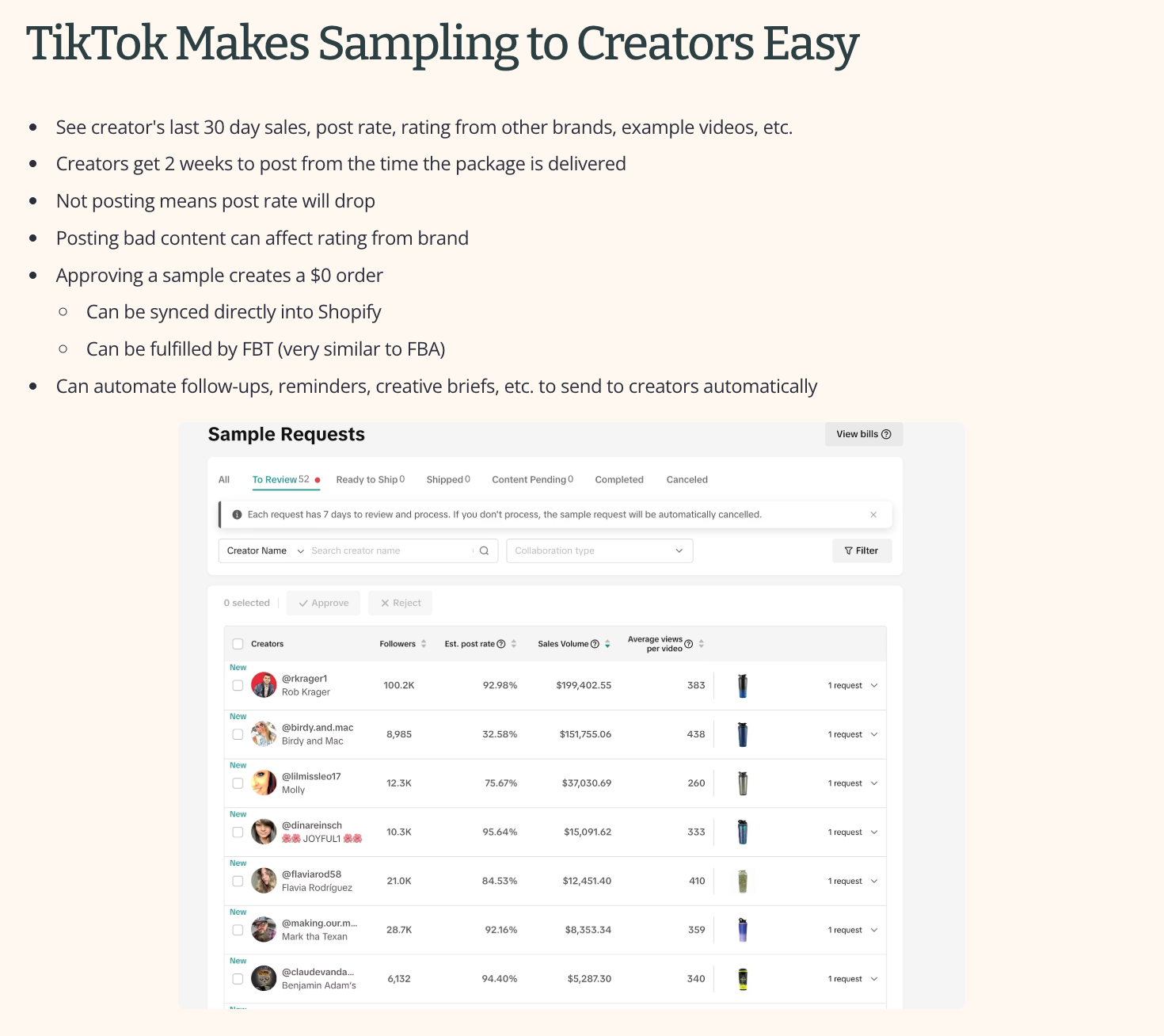
On TikTok Shop, success hinges on producing enough creative to keep learning.
Zain Ali (Co-Founder at Zainith Agency) explained that many brands now use TikTok Shop as a creative testing ground.
The highest-performing creator videos are repurposed into Meta ads, where some brands spend more than $100,000 per day behind creator content that's already proven to convert.
"You want to be sending out a thousand free samples per month. Brands doing over a million a month on TikTok Shop are getting at least 1,000 videos per month on the platform. That's when they get enough creative volume."
The value extends beyond TikTok Shop itself. Brands can secure usage rights for winning creator videos, repurpose them into Meta ads, and continue scaling the winners.
Build systems that generate new creative every week.
12. Treat creator content as a business asset
High-performing creator content should become a reusable marketing asset across the brand.
The best brands extend the life of high-performing creator content across paid media, email, landing pages, and other customer touchpoints, turning a single creator partnership into multiple marketing assets.
"If you look at how that creator has contributed to your performance across your business, it changes the conversation."
-Jeremy Fenderson
Lydia Chen, VP of Ecomm at Mozi, explained that this mindset has fundamentally changed how her team operates:
"We sell laundry detergent, but we are also a content and a media business."
-Lydia Chen
Rather than relying solely on in-house creative, Mozi repurposes creator content into Partnership Ads to reach new audiences on Meta.
Jose Gutierrez shared how Electro applies the same philosophy. Instead of treating athlete videos as one-off social posts, his team repurposes them into Partnership Ads that drive shoppers to personalized storefronts tailored to each creator.
By combining creator content with personalized shopping experiences, Electro increased ad ROAS from 1.5x to 7x and scaled those campaigns to six figures in revenue.
The common thread across these sessions was clear: don’t judge creator content by the performance of the original post alone. Look at how many additional marketing touchpoints it can support.
13. Build communities, not just campaigns
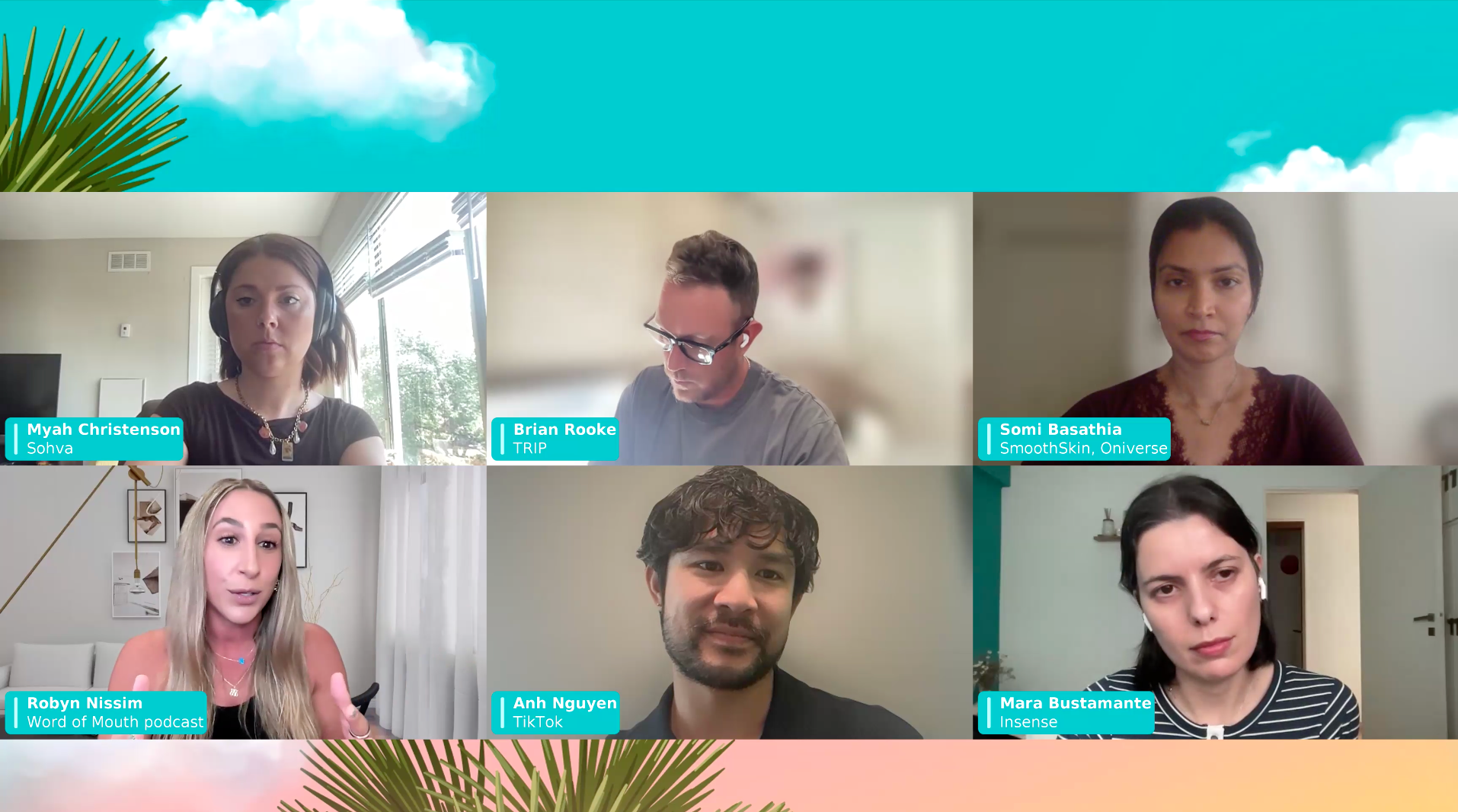
Anh Nguyen, Global Content & Product at TikTok, pointed to the rise of creator networks, where brands work with the same group of creators over time instead of starting from scratch for every campaign.
"Brands should build real relationships with their creators. Trust me, creators want to have that relationship with brands too."
That was echoed by Mara Bustamante, Influencer Marketing Lead at Insense, who recommends involving creators as creative partners earlier in the briefing process, rather than simply handing them a completed brief with no flexibility.
"We see a lot of brands treating creators like an asset instead of a person... Giving them room to actually be part of content ideation and brand strategy is very, very important."
Robyn Nissim, Host of the Word of Mouth podcast, doubled down on this theme as well – creators aren't just another acquisition channel.
"The more that you invest in creators, the larger the return your business will see."
14. Build creator programs around business goals
Every creator type serves a different purpose.
Macro creators may introduce your brand to new audiences, while micro creators or affiliates may drive more sales. The right choice depends on your business objective.
According to Somi Basathia, VP Global Brand Marketing (Fractional) at SmoothSkin, the first step isn't choosing creators. It's deciding what success looks like.
"What are your goals? What are your budgets? ... Do you want awareness? Do you want conversion? Do you want to really focus on sales? I think I would start there."
Brian Rooke, US Brand Director at TRIP, echoed that thinking:
"Goals will then trickle down to who you hire... you've got to think of creators as their own little media channels."
Rather than searching for the "best" creators, successful brands start by defining the role they need creators to play. That makes it easier to choose the right partners, set realistic expectations, and measure success against the outcomes that actually matter.
15. Your next top creator might already be your customer
Creator discovery doesn't always begin with influencer databases or cold outreach. Sometimes the best partnerships are already forming organically.
Myah Christenson encouraged brands to look inward before looking elsewhere.
"Go into your DMs. Who is already posting about your product? There's going to be a lot of hidden gems in there."
You can also use social listening tools to keep an eye out for whenever your brand is mentioned or tagged on Instagram and TikTok.
People who already buy, use, and talk about your products create authentic, genuine content. Even if their follower count is on the smaller side, the content they create can be powerful.
Before expanding your creator search, it's worth identifying the advocates you already have.
16. Creator operations should scale with your program
As programs grow, managing relationships, tracking performance, and coordinating campaigns quickly becomes difficult without the right systems.
Across the Summit, experts consistently emphasized removing operational friction so teams can spend more time working with creators and less time managing spreadsheets.
"You shouldn't be spending your time tracking manually on a Google Sheet when there are platforms out there meant to save you that time."
-Myah Christenson
Lydia Chen shared a similar approach, explaining that automation allows teams to handle outreach at scale while reserving one-on-one conversations for their most valuable creator relationships.
"It's almost like one-click automation... you can mass email any creator who's posted content for you... but for your top creators there's more of that one-on-one back and forth."
-Lydia Chen
The most mature creator programs aren't the ones with the biggest teams. They're the ones that automate repetitive tasks so they can invest more time where it matters most: recruiting, supporting, and growing relationships with creators.
What the best creator programs have in common
Whether you’re working with 10 creators or 10,000, the fundamentals stay the same: recruit deliberately, provide ample support, and invest in your creator relationships.
These lessons offer a practical blueprint for building a world-class creator program.
Social Snowball is the ultimate platform for creator-led growth. 3,500+ Shopify brands trust our platform to help them discover creators, manage influencer partnerships, automate payouts, and scale word of mouth marketing.


.avif)