Influencer marketing has become one of the most important growth channels for ecommerce brands.
The industry has crossed $30B, consumer behavior has shifted, and creators now sit at the center of how people discover, evaluate, and buy products. Over 60% of shoppers trust creator-led content more than traditional brand ads, and that shows up directly in purchase decisions.
But while the channel has evolved, most creator programs haven’t.
Many brands are still running influencer marketing the way it worked a few years ago – with campaigns, one-off posts, and short-term activations. That approach doesn’t hold up when you’re trying to drive consistent revenue. Growth now comes from systems where creators stay active and content keeps flowing.
The challenge is that most advice out there isn’t all that helpful. It’s either too broad or disconnected from how teams are actually operating at scale. You need tactics, not theory. Real guidance from operators in the arena.
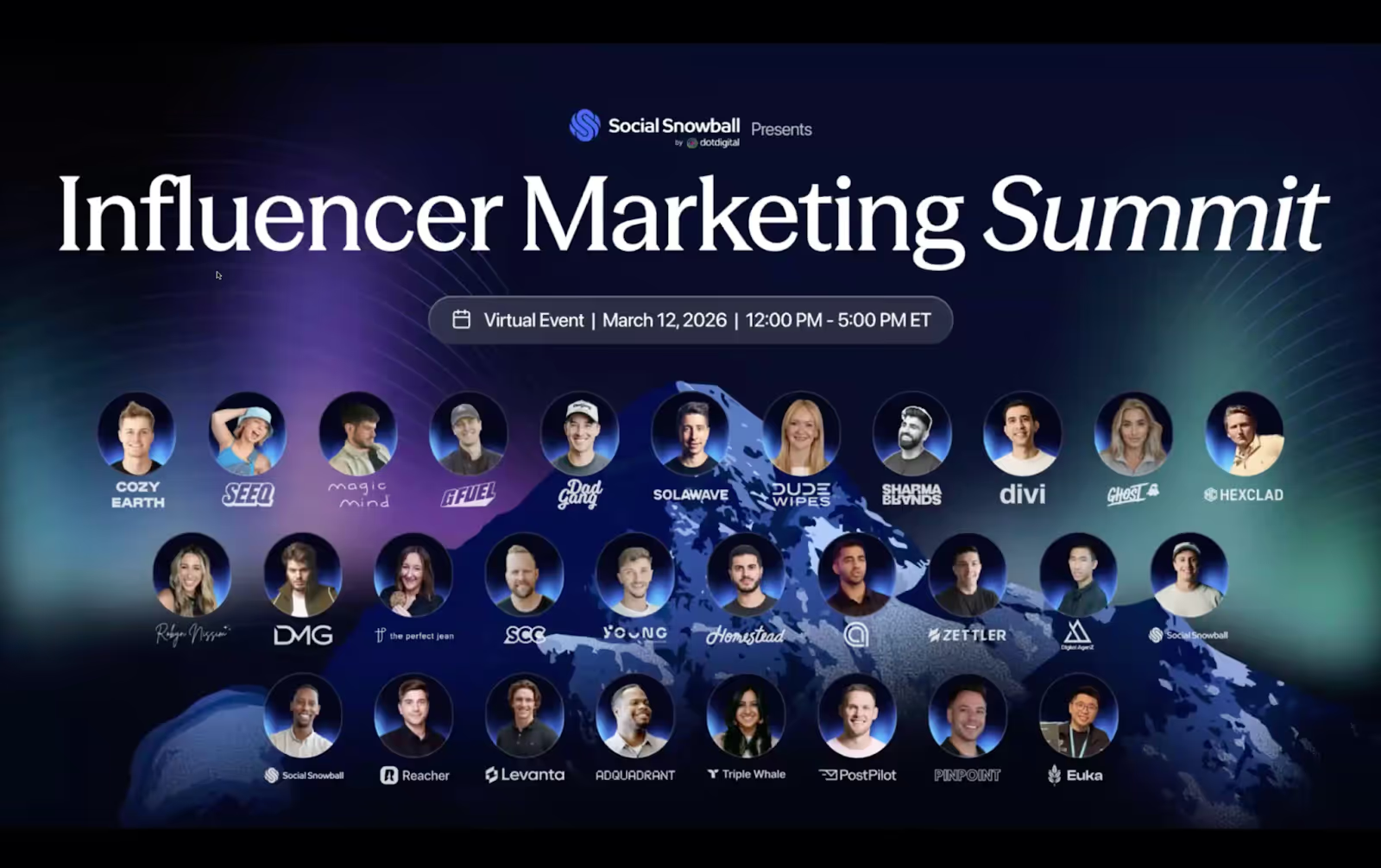
That’s exactly why we hosted the Influencer Marketing Summit.
We brought together founders, marketers, and operators running some of the most advanced creator programs in ecommerce. The conversations went deep on creator sourcing, content systems, retention, payouts, performance tracking, and more. They shared proven strategies that are battle-tested, applicable to your business right now, and will help you drive breakout growth.
- 30 speakers
- 5 hours of content
- 1,200+ attendees
- 6 masterclasses
- 4 fireside chats
- 3 expert panels
This recap breaks down the ideas that came up consistently across those sessions – what’s changing, what’s working now, and how to build creator partnerships that compound.
Here are the five shifts that define how top brands are approaching influencer marketing today.
Insight 1: Creator communities are replacing one-off activations
Most creator programs are built around moments, product launches, campaigns, seasonal pushes. The problem is, moments don’t build momentum.
When creators post once and move on, there’s no continuity. People see your product once, and then…they don’t. That makes it hard to build familiarity and trust.
Instead of activating creators for a single deliverable or campaign, brands are building communities, groups of creators who stay close to the brand and keep talking about it over time.
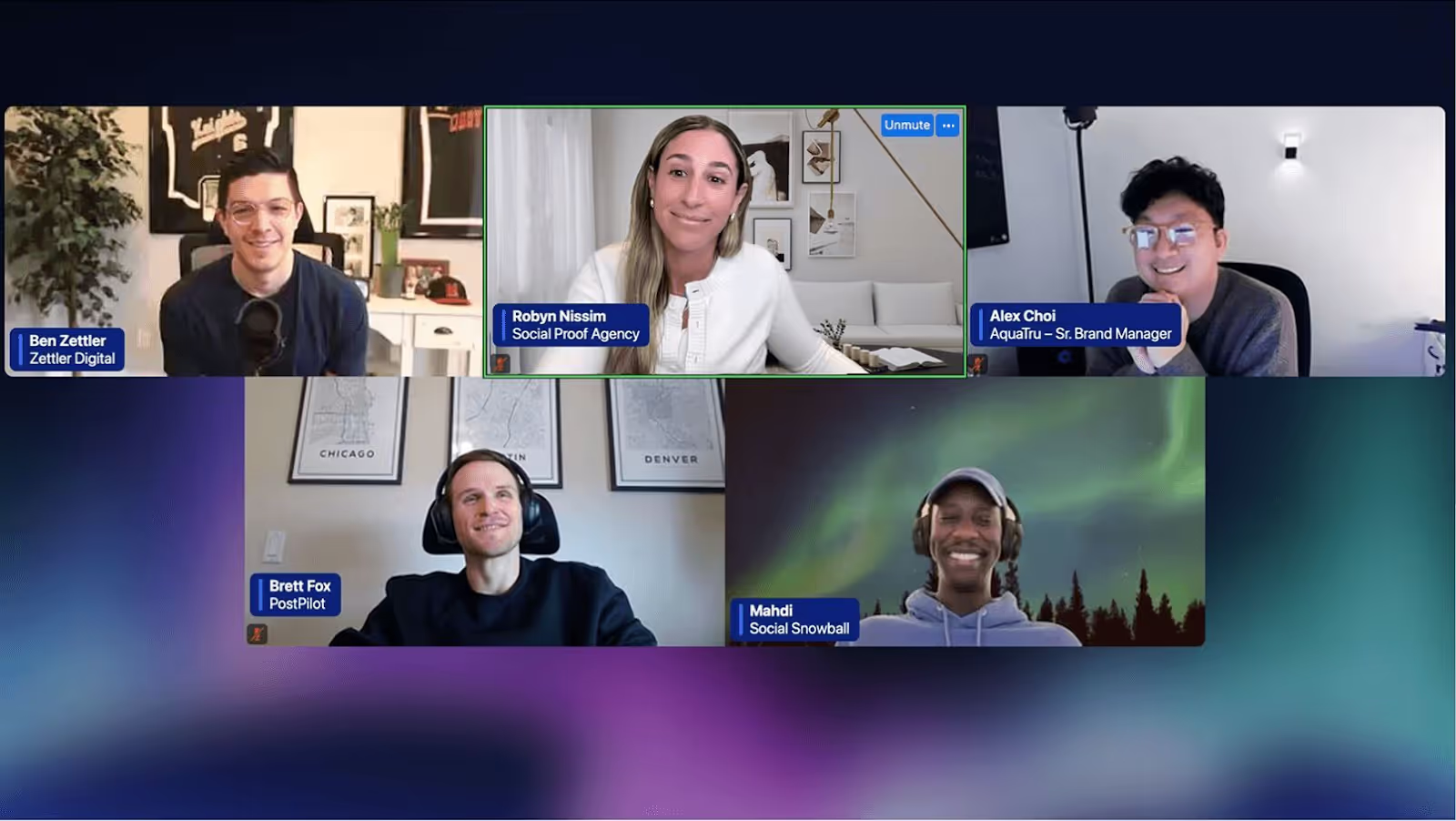
“A creator community is when people are consistently talking about your brand, not just posting once.”
— Robyn Nissim, CEO and Founder of Social Proof Agency
Once you have that, your program starts to behave differently.
Creators don’t need constant direction. They already understand your product, how it fits into their life, and how to talk about it in a way that feels natural. The content becomes more consistent because the relationship is ongoing.
That also changes how customers experience your brand. They see the product appear across different creators and in different contexts over time. That repetition builds credibility.
“Social proof is the thing that's gonna end up driving customers.”
— Brett Fox, Director of Marketing at PostPilot
The quality of that content comes down to how you build the community. It starts with alignment. You need creators who already resemble your customer and would naturally use the product. When that fit is right, the content doesn’t feel forced.
“Find people who closely resemble your customer—those who would naturally talk about your product.”
— Ben Zettler, Founder of Zettler Digital
From there, how creators show up matters. Brands that do this well focus on transparency, real use cases, and content that actually helps the customer understand the product. That’s what makes creators credible over time.
“Community is queen. Lead with transparency, stay true to your brand, and focus on real use cases and educational content.”
— Alex Choi, Senior Brand Manager at AquaTru
The challenge is sustaining that community as it grows. G Fuel built its entire brand through influencer marketing over ten years, with creators like PewDiePie, Ninja, and KSI. Managing hundreds of paid creators plus thousands of ambassadors and affiliates at the same time comes down to one principle: 90% automation, 10% personal connection.
"You need to automate as much as you can without the creator feeling like they're talking to a robot."
— Chris Chisholm, Director of Talent Management at G Fuel
The 10% is what matters most. A Discord DM instead of an email, a birthday gift preceded by a personal check-in, or a manager dropping into the general chat, creates the kind of human moments that make a creator feel like a partner rather than a vendor.
The medium matters as much as the message. Email alone creates a one-way street. Giving every top-tier paid creator a direct line on Discord means the conversations that follow aren't just relationship maintenance. At renewal, that relationship equity translates directly into better terms. For the broader affiliate base, dropping into public Discord chats to rally the group creates a sense of community without one-on-one overhead.
Most advice on building creator communities comes from brands. It rarely accounts for how creators experience those relationships on the other side. Getting both perspectives in the room changes the quality of the guidance.
"A lot of advice on creator communities doesn't encompass the creator economy side. You need to cover all perspectives in the social commerce space to actually get it right."
— Norman Chu, Founder and CEO of Digital AgenZ
That alignment starts before any system can work. The relationship only holds up when the product genuinely fits the creator's life and audience.
"Knowing why the influencers you're reaching out to create content that serves your audience and your niche, and making sure those two audiences are aligned, is absolutely paramount. And it might seem so simple, but a lot of brands overlook this and just look at numbers."
— Cassandra Bankson, Content Creator & Advisor at Digital AgenZ
A creator who turned down a lucrative steakhouse deal because her audience follows her for plant-based content put it plainly: promoting something that contradicts what a creator stands for does not just feel off. It hurts conversion for the brand too. Audiences who follow a creator for a specific reason will not convert on something that breaks that expectation, regardless of follower count.
Put together, this changes how creator marketing works. You're not chasing posts anymore. You're building a group of creators who keep showing up, keep creating, and keep reinforcing your brand.
That's what makes the system compound.
Insight 2: TikTok shop growth comes down to volume and systems
Most brands approach TikTok Shop the same way they approached influencer marketing: find a few creators, get content, and hope something works. That approach doesn’t hold up here.
TikTok Shop runs on volume. The brands doing serious numbers aren’t relying on a handful of creators. They’re running systems that produce a constant stream of content.
That starts with how you structure creator output. Instead of waiting for affiliates to post, teams are bringing in a set of creators on retainers and treating them like an extension of their content team.
The goal is simple: consistent, predictable output every week.
“90% of affiliates don’t convert. We rely on a small group of retained, in-house creators, around 8 creators for $5K/month producing 300 videos.”
— Kelsey Eyers from Collab Collective
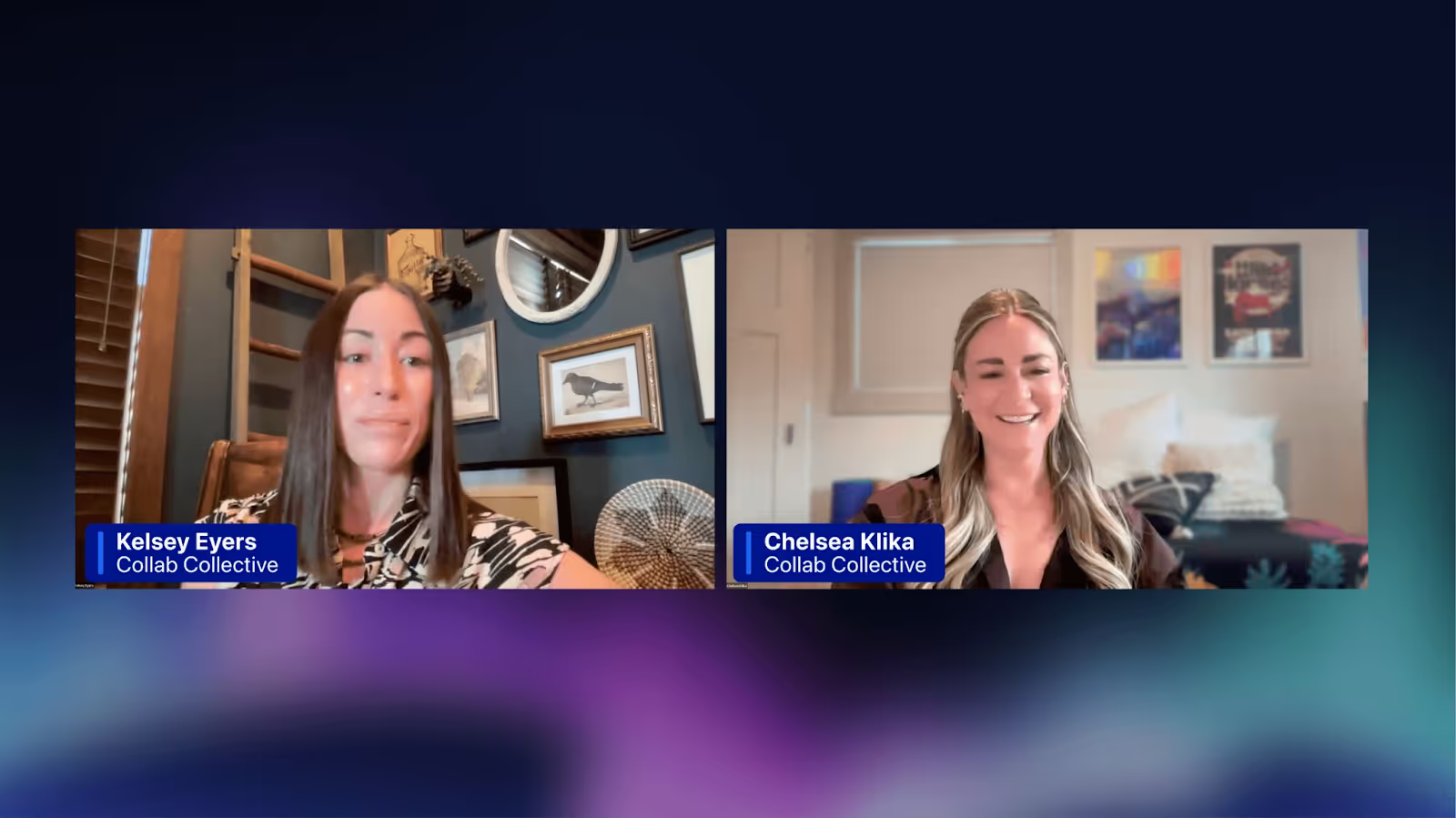
Once you have that level of output, performance becomes easier to manage. Most videos won’t convert. But when you’re pushing content at scale, patterns start to show up: specific hooks, formats, and creators that consistently drive sales. That’s what you double down on.
The second layer is distribution. Affiliate programs and TikTok Shop mechanics allow that content to keep moving. More creators posting means more entry points for the product to get discovered.
“Over 450,000 affiliates have posted for us. TikTok has opened the door to everything.”
— Nichole Munoz, Co-founder and Head of Marketing at EZ Bombs
That’s where the compounding effect kicks in.
One piece of content leads to more creators picking it up. Comments turn into new opportunities. Products move from TikTok into marketplaces like Walmart and Target because demand is already visible.
At that point, growth isn’t tied to individual creators. It comes from how many creators you activate, how much content you push out, and how quickly you can identify and scale what’s working.
Insight 3: Most brands are still measuring creator marketing wrong
Most teams still evaluate creator marketing the same way they evaluate social media. They look at likes, views, and engagement, and then try to connect that back to sales. The problem is that the view is too narrow for how this channel actually works.
Creator content doesn’t just drive immediate purchases. It influences discovery, builds intent, and often converts later through a different session, channel, or platform.
If you only look at last-click performance, you miss most of the impact. That’s why measurement needs to shift.
Instead of focusing on unit economics, you need to look at customer value over time. A creator might not look profitable on the first purchase, but if that customer comes back multiple times, the math changes completely.
“Shift your thinking from unit economics to LTV. Instead of capping payouts at $15 on a $100 AOV, LTV can support closer to $48 with repeat purchases and new customers.”
— Richie Carreon, VP of Marketing at Levanta
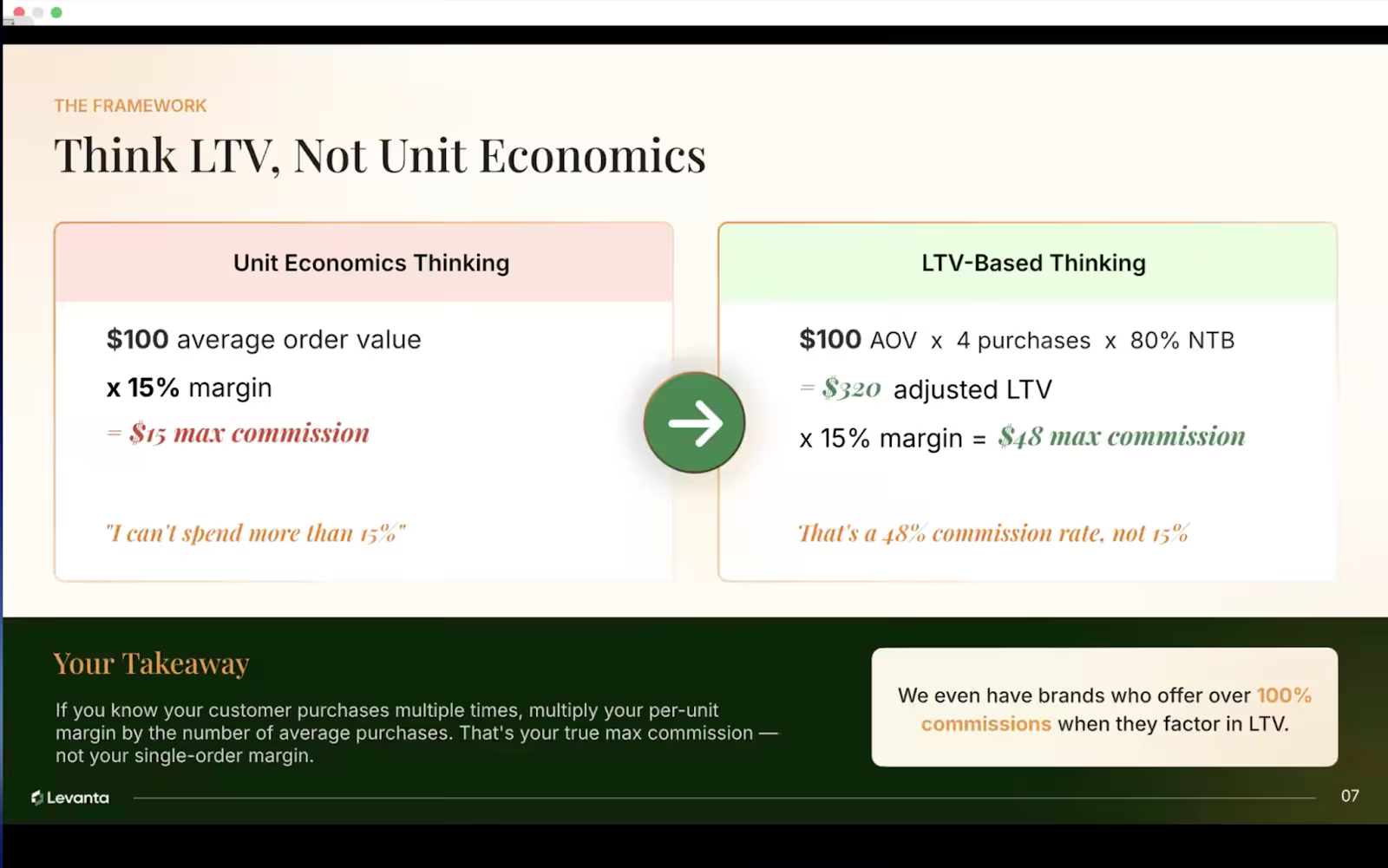
Once you start looking at LTV, your decisions change. You can afford to pay creators more, invest in relationships that don’t convert immediately, and scale without capping your own growth too early.
The second shift is around how you connect creator content to performance.
Creator content often ends up driving your best-performing ads, but most teams don’t track that connection properly. The influencer team runs partnerships, the paid team runs ads, and learnings stay siloed. That slows everything down.
When you connect those two, performance improves quickly. Content that already works organically can be amplified through paid, tested across audiences, and scaled based on actual results.
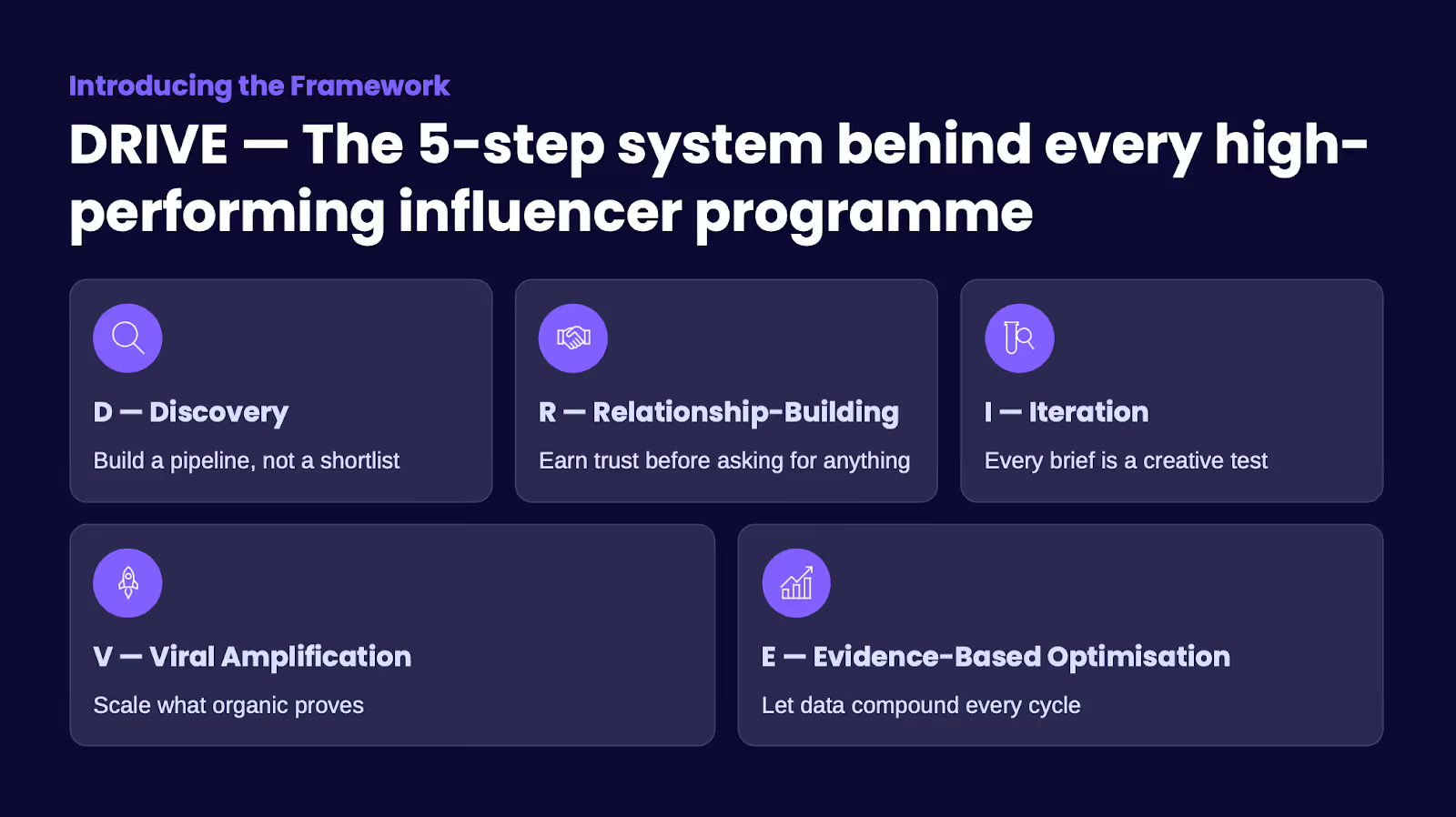
“Using our DRIVE framework, we’ve seen whitelisting reduce CAC by 15–20%.”
— Sambhav Chadha, Co-founder of Augmentum Media
At that point, measurement becomes much clearer. You’re no longer guessing which creators are valuable. You can see which content brings in revenue, which creators influence conversions, and where to invest more, letting you drive actual growth through creator marketing.
Insight 4: Transactional creator relationships don’t scale
Most brands still approach creators like vendors. You reach out, agree on a deliverable, get the post, and move on. It works in the short term, but it doesn't build anything you can scale.
Teams with winning creator marketing strategies approach this very differently.
They build ongoing relationships where creators stay close to the brand, keep creating content, and get better over time. That shift changes both the quality of content and the consistency of output.
It starts with how you structure your program. Instead of one-off deals, you need an always-on pipeline where creators keep coming in and existing ones keep posting. That continuity is what allows performance to improve over time.
"The old playbook doesn't work anymore. The new approach is always-on pipelines and consistent creator endorsements."
— Nik Sharma, CEO of Sharma Brand
The brands that scale fastest are the ones building creator relationships from the inside rather than managing them at arm's length.
"Building from the outside tends to be too transactional. If you as a brand get to own the relationship forever, that is your biggest asset you can get from influencers."
— Sebastian Borza, Influencer Marketing Manager at Magic Mind & Founder of Nv.Social
Magic Mind grew from a $1M brand to a $120M+ valuation by making creator relationships a core growth lever. Early on, the focus wasn't Instagram or short-form. It was long-form integrations with micro and mid-tier creators. YouTube videos and podcasts allowed creators to explain the product in depth, which built trust and drove stronger conversions.
Over time, as brand recognition grew, that early investment in authentic relationships changed the entire dynamic: creators were reaching out already knowing and loving the product, which meant less negotiation, less hand-holding, and stronger content.
The scaling reality is more complicated than most brands expect. Growing a creator team from 3 people to 37 does not give you a proportional output increase. The complexity compounds. Past around 15 people, having each team member handle sourcing, outreach, negotiation, content, and onboarding all at once stops working. When someone leaves, whoever takes over has to drop their own leads. When one person makes a mistake, it affects the whole pipeline. The model breaks.
The fix is a conveyor belt structure: the creator pipeline gets divided into specialized roles and departments, each owning one stage. Sourcing, outreach, negotiation, onboarding, content, and account management become separate functions with dedicated people. That structure is what allows scale without the whole system depending on any one person.
The other shift worth noting: affiliate is not a standalone program. It works best as one of three negotiation tools alongside flat fee and product barter. You slot creators into whichever structure makes sense for both sides. Running all three simultaneously gives you more flexibility to close deals and keep creators active across different engagement levels.
On retention, the insight is simple but often missed: if you re-sign creators on the same brief for five months, they will get bored. Give them new campaign angles and new ideas to work with, and they start generating ideas themselves. Pair that with white-glove account management, replying to stories, sending a DM, staying present as a person rather than a brand, and the relationship compounds.
When creators stay involved, the relationship itself becomes an advantage.
They understand your product better and know what resonates with their audience, which lets them create content that feels more like a recommendation than a promotion.
That's what drives strong outcomes.
“See creators as more than just salespeople. Educate them, support them, and treat them like part of your team.”
Nichole Munoz, Co-founder and Head of Marketing at EZ Bombs

Over time, that changes how creators show up.
They post more often, they stay longer, and they actively look for ways to integrate your product into their content. The relationship becomes ongoing rather than project-based.
That’s what allows the program to scale without constantly starting over.
Insight 5: The creator ecosystem is shifting toward performance and ownership
Creator marketing isn’t just changing at the tactic level. The entire model is shifting. Before, brands would pay creators for reach and move on. Now, the focus is on ownership of content, relationships, and the revenue they generate.
That starts with how they source creators. Instead of broad outreach, teams are getting more precise. They identify “lifequakes”, moments when behavior is already changing, and the product naturally fits into someone’s life, and reach out when that need is already present.
“Focus on ‘lifequakes’ moments like potty training. Use social listening to find creators in that moment, and lead with gifting to keep it authentic.”
— Kayla Marcum, Influencer Marketing Manager at Dude Wipes
Social listening is what makes this work in practice. The team at Dude Wipes continuously monitored creators posting about potty training or toddler routines. When those posts surfaced, the team reached out with a gift or to explore a paid partnership.
Timing the outreach to the moment the creator was actively in that life stage made the content feel like a recommendation rather than a promotion.
"We've seen a lot of organic posts from creators just from us gifting them, because we introduced the product right when they were looking for it."
— Kayla Marcum, Influencer Marketing Manager at Dude Wipes
The same timing logic applies to retail. When a launch is exclusive to one retailer, creator selection has to account for lifestyle fit, not just category fit. A creator who has never been inside a Walmart walking into one for a sponsored post reads as inauthentic regardless of how polished the content is, and their audience catches it immediately.
Working with creators whose lifestyle naturally matches where the product is sold lets them integrate it into shopping hauls, restocks, and routines without it feeling like a detour. The content fits because the creator already belongs in that context.
The goal is not a one-time post. It is becoming part of the routine. Introducing a product at the right life stage means parents, or whoever the target audience is, start to see it as a natural part of how they live, not something they tried because a creator mentioned it once. That is the difference between a campaign and a program that keeps compounding.
This changes how content performs. When creators are already in the life stage your product supports, the content feels like a recommendation, not a promotion. That makes it a stronger creative to reuse across channels and more effective at driving conversions.
At the same time, scale is becoming non-negotiable.
Working with a few creators isn't enough to drive consistent results anymore. The brands that are growing are partnering with hundreds of creators, who are active at the same time.
“If you only work with a creator once, you’re renting their audience. The brands that win are working with hundreds of creators at the same time.”
— McKoy Molyneaux, Director of Strategic Partnerships at Cozy Earth
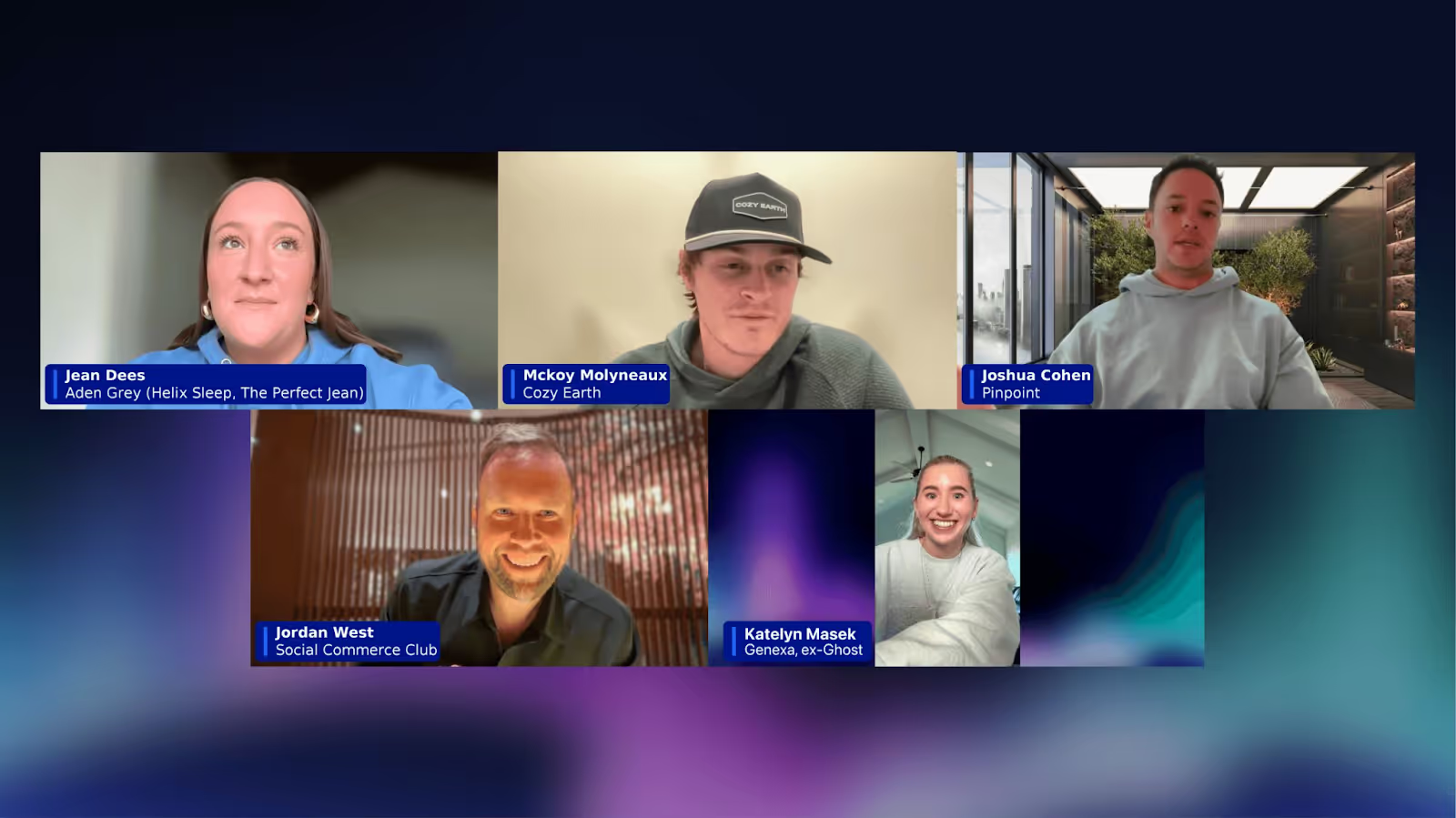
But managing creator partnerships at scale requires two core elements:
1. Systems: You need a way to continuously bring creators in, keep them active, and track what’s working. Prospecting can be supported by tools and automation, but retention still depends on how the relationship feels.
2. Incentives: When payouts are tied to performance, everything aligns. Creators focus on what drives sales, not just what gets posted. Platforms like TikTok Shop accelerate this because the connection between content and revenue is immediate.
“TikTok Shop aligns incentives. The goal is to build and own your creator community.”
— Jordan West, President of Social Commerce Club
Put together, this is where the ecosystem is heading.
You’re not just running campaigns. You’re building a network of creators who produce content, drive revenue, and stay motivated to engage with your brand over time.
How to build a creator program that compounds
Creator programs usually fail because there’s no system behind them.
You might already be working with creators, sending products, and getting content. But if that activity doesn’t translate into consistent output, clear learnings, and repeatable results, it won’t compound.
The teams that scale this channel do a few things differently. They structure their programs in such a way that creators stay active, content keeps improving, and performance becomes easier to predict over time.
Here’s how you can set that up.
1. Move from campaigns to continuity
Start by looking at how your program runs today.
If creators come in, post once, and disappear, you’re resetting performance every time. What you want instead is a steady flow where new creators keep coming in and existing ones continue to post.
That means keeping creators engaged after their first piece of content. The ones who already understand your product will always produce better content the second and third time around.
Over time, your program should feel like an ongoing system, where content is going live every week, and learnings carry forward into the next batch.
2. Switch payouts to performance
Once your structure is in place, look at how you’re paying creators.
When earnings are tied to sales, creators stay involved longer and put more effort into what they’re posting. You’ll start to see more variation in hooks, formats, and angles when creators experiment with different styles.
Set a clear commission structure and make it easy to understand. The goal is to give creators enough upside to keep testing and improving over time.
As repeat purchases come in, you’ll have more room to increase payouts and scale the program without relying on upfront spend.
3. Increase content volume intentionally
With the right structure and incentives in place, the next step is increasing output.
You want more creators posting and more content going live every week. That’s what gives you enough data to understand what’s working. As content comes in, start looking for patterns. Certain formats, hooks, or use cases will keep repeating. Those are your signals.
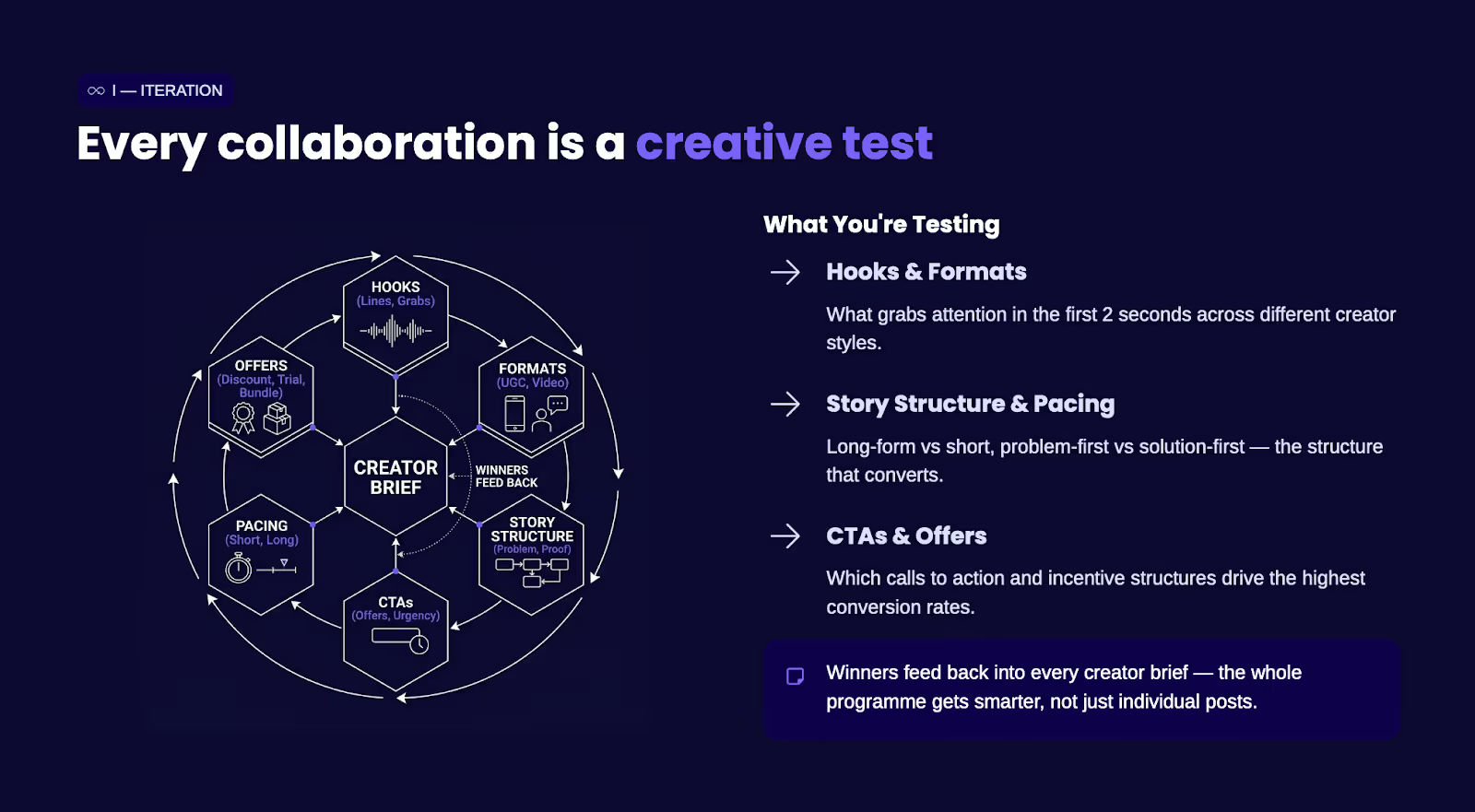
Take those learnings and feed them back into your program. Guide creators on what to try next, and keep the loop moving with more content, better insights, and stronger results.
4. Set up a structured content workflow
At this stage, content needs to move through a system. Work with creators to produce content in batches, so you always have assets ready to test. A steady pipeline helps you stay consistent and move faster.
From there, focus on how you use the content. Use the videos already driving sales across your ads, product pages, and email flows. The same piece of content should work in multiple places if it already resonates with your audience.
Over time, you’ll build a library of content you can keep using and learning from.
5. Invest in creator retention systems
As your program grows, retention becomes what holds it together.
Start with the basics: clear communication, fast responses, and reliable payouts. These are the reasons creators will continue working with a brand.
Then give them a place to stay connected. A shared space where creators can see what others are posting, get ideas, and stay updated keeps the program active between posts.
Layer in small touchpoints as well, like checking in, recognising strong performers, and giving top creators more access. When creators feel connected and supported, they keep showing up. That’s when your program starts to build momentum over time.
Ready to build a creator and affiliate program that actually scales?
The teams that stood out in the summit weren’t experimenting with creator marketing.
They were running it like a core acquisition channel, bringing in creators consistently, tying payouts to performance, and building systems where content and revenue keep growing over time.
To run a program like that, you need infrastructure that removes manual work.
Social Snowball is the perfect solution for this. Customers are automatically turned into affiliates after checkout, so your program keeps growing without constant recruitment. Each creator gets a unique fraud-protected referral link, which prevents coupon leaks and keeps attribution clean.
Payouts, gifting, and communication run from one place, so your team doesn’t spend hours managing spreadsheets or chasing creators. You can also track creator content, including TikTok Shop videos, and see exactly which creators and posts are driving revenue.
.png)