.png)
Most brands on TikTok Shop have a ton of content, but not a system to use it.
Creators are posting, videos are going live, and some of them even perform well. But there’s no clear system to build on top of that momentum. Winning ideas don’t get repeated fast enough, learnings stay scattered, and growth feels inconsistent even when the inputs are there.
At the Social Snowball Influencer Marketing Summit, the teams that scaled GMV treated TikTok Shop differently. They ran it like an engine. Content was constantly feeding insights, those insights were turned into clear direction, and creators built on what was already working instead of starting from scratch.
That’s what this guide focuses on. You’ll see how top brands structure creator programs, turn content into a learning system, and build the operational layer needed to scale GMV without slowing down.
If you’re new to affiliate marketing, read our blog on how to set up TikTok Shop affiliate marketing to get started.
1. Launch with controlled volume
Early traction on TikTok Shop starts to show up when you have clarity on how your product should be positioned. That usually comes from working with a small group of creators first.
You start to see how the product gets explained, what angles land, and which messages actually make people pay attention. Myah Christenson, Affiliate & Creator Partnerships Manager at SEEQ, put it simply:
“When you're starting, get really clear on who your target consumer is. You want that to match the target customer that you are targeting on your D2C side.”
That decision shows up directly in the user-generated content.
When the creator reflects your customer, the way they talk about the product feels natural. The use cases make sense, the problems are familiar, and the messaging clicks faster.
At this stage, the goal is to learn what works. A small group of the right creators gives you enough variation to test:
- How the product is introduced
- Which angles get attention
- What kind of explanation drives action
After a few rounds, patterns start to emerge. Certain formats repeat. Certain messages land more consistently. That is the signal you build on before increasing volume.

What you should be looking for in early content
At this stage, the goal is to understand how your product lands.
Watch how creators introduce it, the problem they tie it to, and how clearly they show the result. The strongest videos make the use case obvious within a few seconds and carry that clarity through the rest of the content.
Here, you’re defining how the product should be positioned.
How to know you’re ready to scale
Once patterns start repeating, you’re ready to expand your creator-led campaign.
You’ll notice similar hooks working across creators, certain angles driving consistent engagement, and a clear sense of what pushes someone to take action. At that point, you can describe how your product should be presented without second-guessing it.
That’s when adding more creators starts to compound results.
2. Design your affiliate program for participation
Creator output is influenced by program structure.
When creators join, they are trying to figure out if they can make this partnership work seamlessly. The faster they get that clarity, the more likely they are to create and keep posting.
Jeremy Yaoxin Ding, co-founder of Euka AI, explained what creators pay attention to in a program:
“How brands treat them in their program… do they actually welcome them, educate them, share tips, hooks, and selling points?”
Programs that guide creators see better content, faster. Creators understand what to say, how to position the product, and what’s already converting.
That clarity shapes how quickly creators find the program to work, and how confident they feel continuing to produce more content.
What keeps creators actively posting
Consistency comes from momentum.
When a creator’s first or second video performs, they come back with more. That only happens when they have a clear starting point, including:
- Proven hooks that consistently grab attention
- Cear use case to anchor the video
- Understanding of the outcomes they need to show
Instead of open-ended briefs, you’re handing them something they can act on immediately.
Quick feedback also plays a role here. When creators know which videos worked and why, they can adjust faster. Over time, their content starts improving without needing constant direction.
How strong programs run
High-performing programs stay close to the content. Instead of waiting for results to come in they actively circulate what’s working in real time
That usually looks like:
- Share a top-performing video with quick breakdowns.
- Call out specific hooks or formats within creator groups.
- Turn those into simple prompts for the next batch of content
Communication stays active. Creators know where to go for updates, whether it’s a WhatsApp group or Discord. That space becomes where ideas are exchanged and refined.
You also see structured testing. A brand might ask 15 creators to test the same hook over a weekend, each in their own style. That creates a cluster of content around one idea, making it easier to validate and scale.
How to tell if your program is working
You can see it in the creator's behavior within a few weeks. Creators post multiple times. Their second and third videos are stronger than their first. They start building on ideas that are already working.
You’ll also notice that new creators are creating better content. Their early videos follow patterns that have been established and so, require less trial-and-error.
At that point, your program is doing more than bringing creators in. It’s helping them produce content that drives results.
3. Build a content engine that learns and compounds
Scaling on TikTok Shop comes down to how quickly your content improves. That only happens when every video is treated as a signal, not just a deliverable.
Some hooks grab attention instantly and some formats make the product easy to understand, but some just don't land. The difference between average and high-performing programs is how quickly teams identify those signals and act on them.
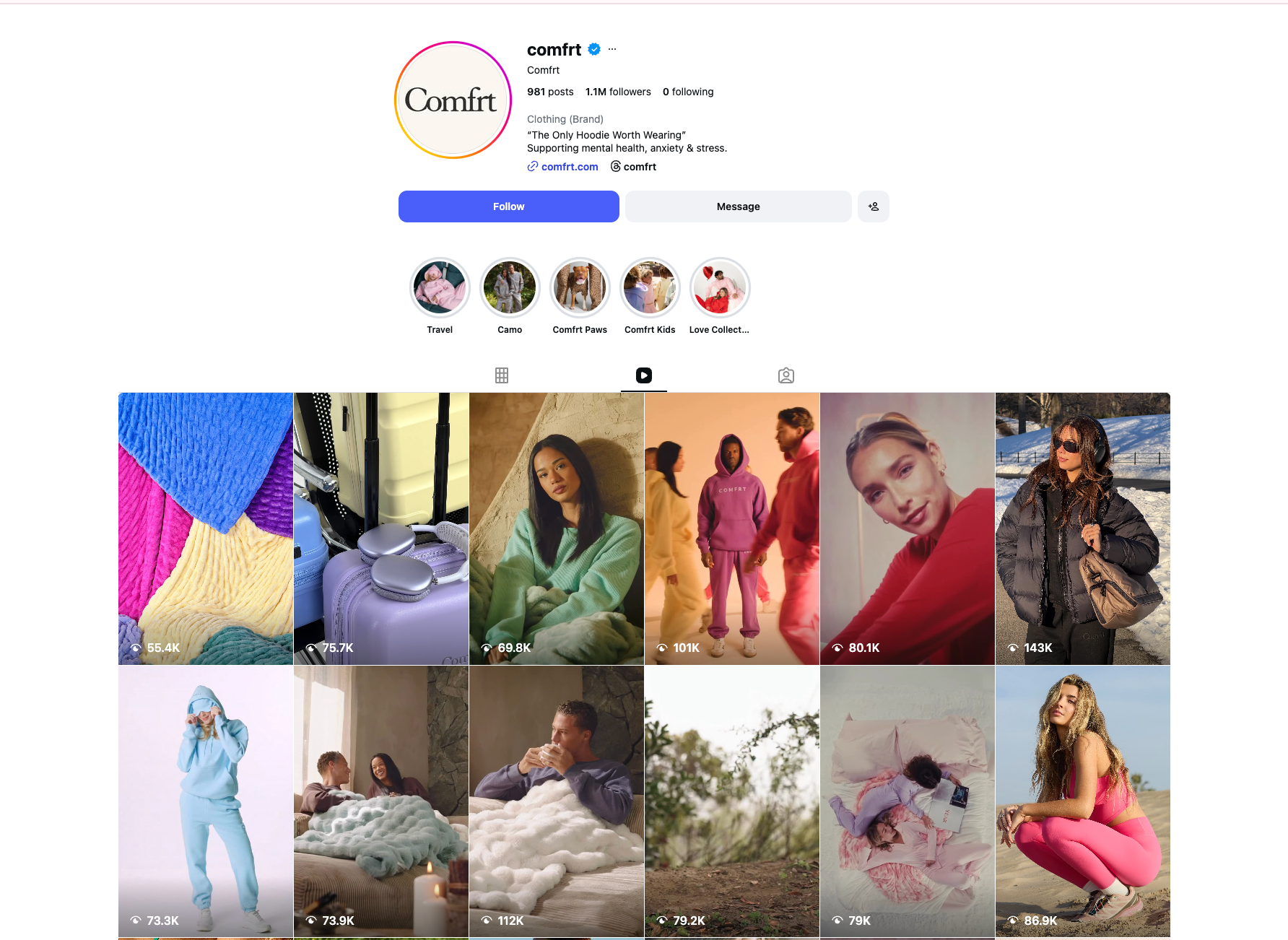
Sambhav Chadha, Co-founder of Augmentum Media, described this through Comfrt’s approach. They pushed hundreds of creatives each week across different niches. That volume gave them constant feedback, but the real advantage came from how quickly they turned that feedback into direction.
Break content down into testable variables
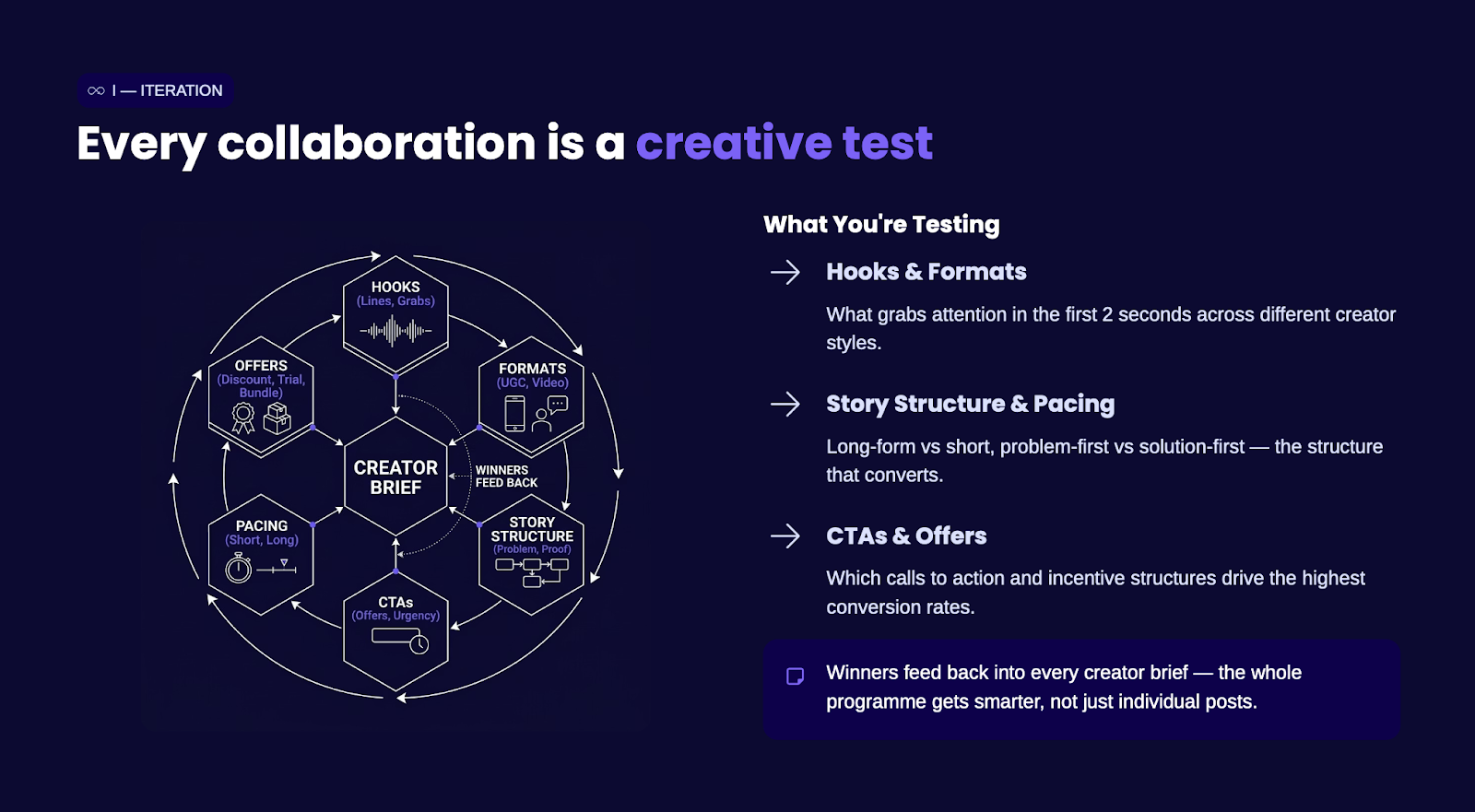
A single video carries multiple variables. Each of these can be tested independently.
Instead of evaluating the video as a whole, strong teams isolate what’s driving performance:
- Which hook kept people watching
- Which explanations make the product clear
- Which moments drive intent to buy
Jeremy Fenderson, Senior Director of Strategy at AdQuadrant, described this as identifying the converters as fast as possible and reallocating budget behind them. The goal is to spot what's driving results quickly and then put more weight behind it.
Turn winning videos into repeatable inputs
When a video starts converting, treat it like a blueprint. Break it down into the opening hook, the problem it frames, how the product is introduced, and the outcome it shows, and pass that structure to other creators.
Chadha described this as identifying which hooks are working best and asking more creators to build on those same ideas. Instead of asking a new creator to just make something, you tell them which hook to use, which use case to focus on, and which outcome to show. You get variations of something that’s proven.
Keep feeding learnings back into the system
This is where performance starts to compound. Each round of content gives you more clarity. The strongest hooks get reused, the clearest explanations get repeated, and new creators learn faster because they're building on what's already been tested.
Over time, you'll notice a shift. New creators don't need as much trial and error. Their first few videos already feel sharper: the product gets explained better, and the content gets to the point faster.
With Comfrt, this loop is what made it easy to scale. High volume gave them inputs, and shared learnings improved the next batch. That cycle kept tightening, and it's what makes your content feel intentional instead of random.
4. Scale GMV through repetition and distribution, not new ideas
Once your content engine is surfacing what works, the next job isn't to find something new, but to spread what you already have.
A strong hook or use case rarely drives results because it appears once. It works because people encounter it multiple times, from different creators, in slightly different ways. That repetition builds familiarity, and familiarity drives action.
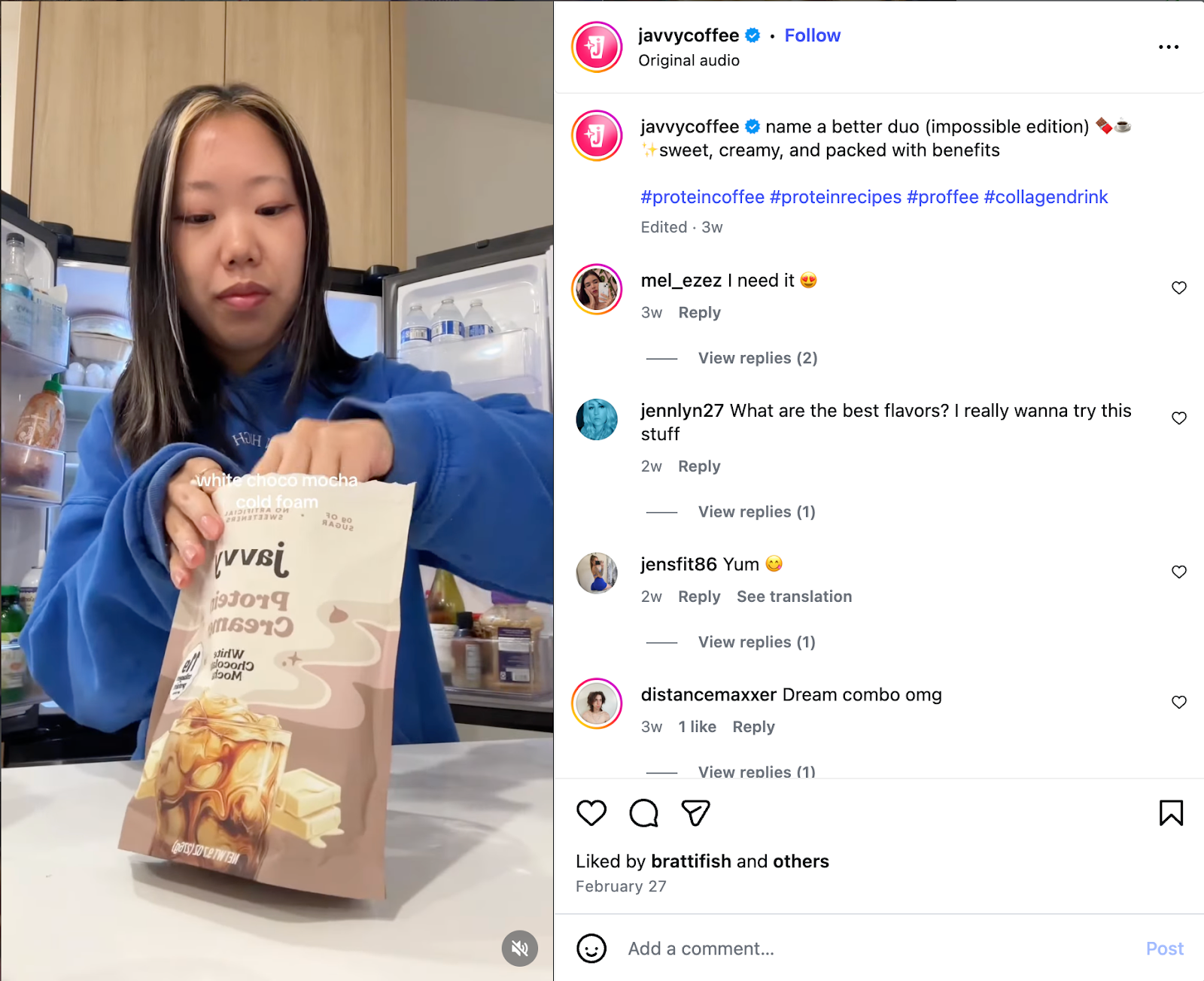
Robyn Nissim, CEO and Founder of Social Proof Agency, described this clearly with Javvy Coffee. The brand had hundreds of creators talking about Proffee (short for protein coffee), each showing it in their own routine. As the idea repeated across feeds, it became familiar, easy to understand, and easier to buy.
Viewers didn't need to figure it out from scratch each time as they'd already seen it before.
Turn one idea into many touchpoints
When a concept works, scale it across your creator base. Give the same idea to multiple creators and let them interpret it in their own style. The delivery changes, but the message stays consistent.
That repetition reinforces the use case and reduces friction.
For Javvy Coffee, repeating “Proffee” across creators turned a simple idea into a recognizable category. Viewers didn’t need to figure it out from scratch each time. They had already seen it before.
Use distribution to reinforce the message
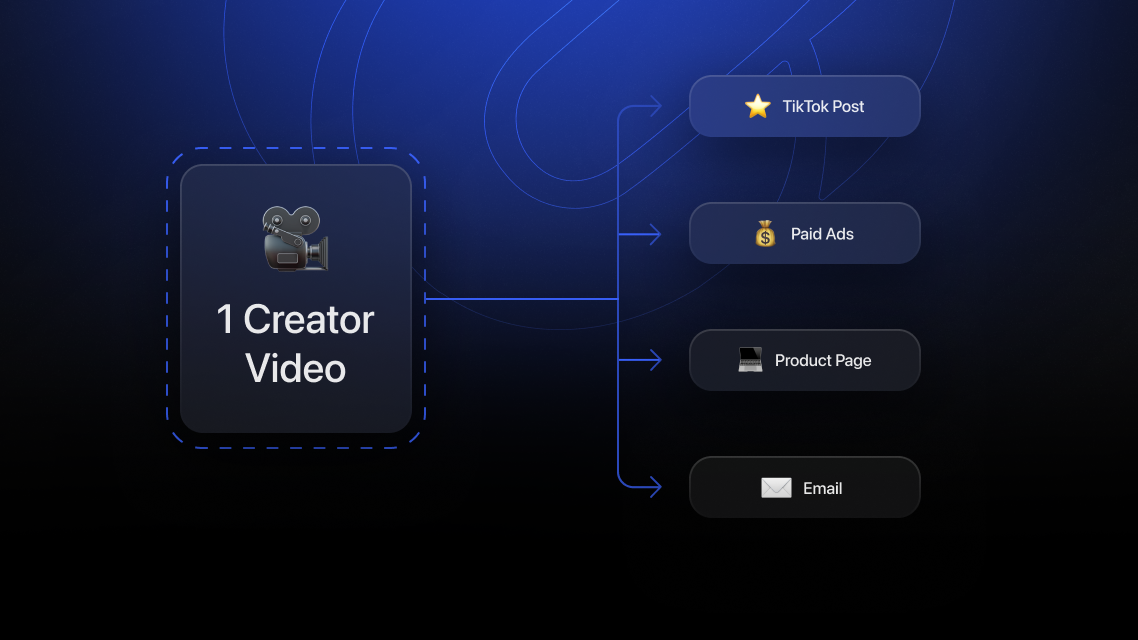
Repetition compounds when it shows up across placements. A viewer might see the product on TikTok, come across it again from another creator, and later, notice it in an ad or on a product page.
Each exposure builds on the last. As more creators post and new content shares similar ideas, the product becomes easier to understand, trust, and act on.
What this looks like at scale
You’ll notice a shift in how people respond. Viewers recognize the product before clicking, comments reflect familiarity, and creators start using similar language because they know it works.
At that point, growth is driven by consistency. The more widely and frequently your best ideas show up, the more they compound.
5. Expand distribution across channels once content converts
A strong piece of content doesn’t stay limited to one channel.
When a video starts driving interest or sales on TikTok Shop, you begin to see its impact on other touchpoints. People discover the product through content, but then continue that journey across other channels.
Jeremy Fenderson framed this clearly:
“What does success on TikTok Shop look like for your D2C brand, for your Amazon sales, for your retail sales?”
That question changes how you evaluate performance. TikTok often becomes the first touchpoint.
A video introduces the product, builds familiarity, and provides enough context for shoppers to consider it. Some buy immediately, while others continue researching, check your website, or look for the product on Amazon before making a decision.
Turn one video into a multi-channel asset
Once a video proves it can convert, start placing it where buying decisions happen:
- Run it as a paid ad to reach a larger audience.
- Add it to product pages so customers can see real usage.
- Use it in email flows to reinforce the product.
Each placement carries the same core message. The context changes, but the content stays consistent.
How this plays out in real growth
Nichole Munoz, Co-founder and Head of Marketing at EZ Bombs, shared how this worked for her brand. Creator content built strong demand on TikTok, which then carried into retail conversations. As products gained traction through creators, they started getting attention from larger partners like Walmart.
The content created interest that extended beyond a single channel.
What to do once you have a winning video
Treat it as a reusable asset:
- Scale it through paid for reach
- Place it on owned channels for conversion
- Use it to support expansion into new channels

6. Build the infrastructure to sustain scale
Scaling TikTok Shop exposes operational gaps quickly.
As more creators join, more videos go live, and more sales come in, what worked at a small scale starts to break—onboarding slows down, tracking becomes unclear, and payouts fall behind.
Sebastian Borza, Influencer Marketing Director at Magic Mind, captured this clearly:
“At scale, small gaps in your system affect everything.”
Get the operational layer right early
Teams that scale smoothly put structure in place before volume increases:
That includes clear onboarding so creators know exactly what to do first, reliable tracking to see which creators are driving revenue, and consistent payouts so creators stay engaged.
When this is set up properly, creators spend their time making content instead of asking for updates or chasing payments.
Invest in the creator relationships
The creators who stay tend to perform better over time. They understand the product more clearly, know which angles resonate, and start building on what has already worked. That familiarity shows up in how they explain the product and how consistently they convert.
Nichole Munoz shared how valuable these partnerships have been for their brand:
“Our growth wouldn’t have been possible without our affiliates.”
That kind of growth comes from ongoing creator partnerships, rather than one-time collaborations.
Keep creators close to what’s working
Teams keep communication simple and active. They share examples of high-converting videos, explain why certain hooks or formats are working, and give clear directionsonfor what to test next.
This often happens through shared channels like WhatsApp or Discord, where creators can quickly learn and apply what’s working.
Over time, output becomes more aligned. Creators stop guessing and start building on proven formats, making the entire system more consistent and easier to scale.
Ready to run TikTok Shop like a real growth channel?
Scaling on TikTok Shop comes down to building a system that keeps improving as it grows. You start with a focused group of creators to shape how your product is positioned. That clarity feeds into a steady stream of content, where each video gives you signals on what drives action.
As those signals get reused, content improves, repetition builds demand, and distribution expands across channels. Over time, the same system starts driving predictable GMV.
To keep this system running smoothly at scale, you need the right infrastructure in place.
Platforms like Social Snowball give you a clear way to track creator performance, automate payouts, and manage a growing network of affiliates without adding manual work. Features like Safelinks generate unique, single-use codes for each creator, so you can scale distribution while keeping attribution clean.