
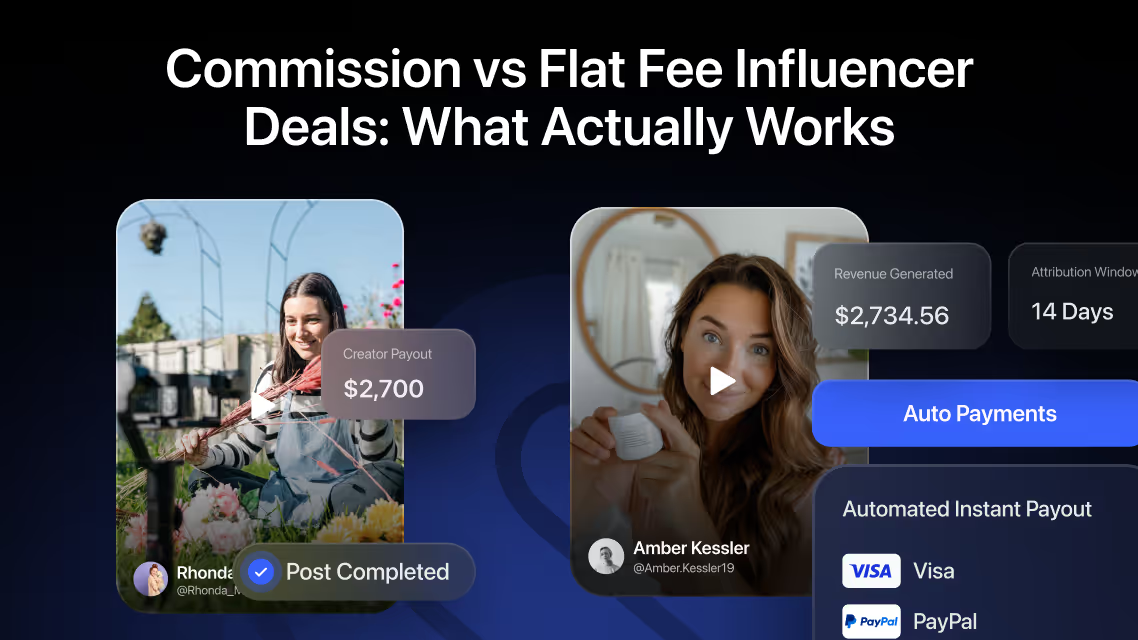
Most brands choose deal structures based on what they’ve seen before.
At the Influencer Marketing Summit, this pattern was obvious. Teams still default to flat fees because that’s how influencer marketing started. Pay for a post, get content, rinse, and repeat. But the model has changed.
Creator marketing today runs as an always-on channel. Brands work with hundreds of creators at once, track revenue directly, and scale what performs. With this strategy, your deal structure is not a detail. It decides whether your program grows or stalls.
Flat fees give you content and reach, but a commission gives you performance and scale. When you expect one to do the job of the other, you miss out on maximizing your results.
In this blog, we clearly break down what commission and flat-fee deals actually do and which model fits your stage and goals.
Flat fee influencer deals
In a flat fee model, you pay a creator upfront for a fixed set of deliverables—usually a defined number of posts, videos, or content assets.
The agreement is set before the campaign starts. The creator’s responsibility is to produce the content, and in return, you get guaranteed output.
For example, you might pay a creator $600 to post one TikTok video and one Instagram reel. Once the content is live, the deal is complete. The payout remains the same regardless of views, clicks, or sales.
This model works in two different ways depending on who you work with.
- Macro creators: If you work with macro creators, you are paying for distribution. You buy access to their audience and reach across platforms. This is common in brand campaigns where visibility matters more than attribution.
- UGC creators: If you work with UGC creators, you are paying for content production. You might pay $1200 for 10 videos and retain full usage rights. In this case, the value comes from using those assets for ads, landing pages, or creative tests.
Pros and cons
Pros
- You get guaranteed deliverables. You know exactly what content you will receive and when.
- You can work with macro creators who require upfront payment.
- You can secure usage rights and turn creator content into ads, landing pages, or email creatives.
- You can use UGC creators to produce content at scale for testing and performance marketing.
Cons
- You take on all the risk. The creator gets paid even if the content does not drive results.
- There is no incentive for the creator to optimize for conversions.
- ROI is hard to measure, especially with one-off posts.
- This model breaks for cold starts because you are spending before you have any signal on what works.
Which brands should use flat fees
Use flat fees if:
- You are running awareness campaigns and want to scale reach.
- You are working with macro creators who require upfront payment.
- You need a steady stream of content for ads or repurposing.
- You already have product demand and want to amplify visibility.
Commission-based deals
With commission-based deals, you pay creators a percentage of the revenue they generate. Every creator gets a unique link or code, and payouts are tied directly to sales.
This structure turns creators into performance partners. Their earnings depend on how well they sell your product.
For example, you offer a 20% commission on every sale. If a creator drives $1,200 in revenue, they earn $240. If they bring in no sales, you don’t have to pay them at all.
This is why commission deals are widely used in affiliate programs and among TikTok Shop affiliates. The model is designed for scale. You work with many creators, knowing that only a small percentage will actually drive results.
Pros and cons
Pros
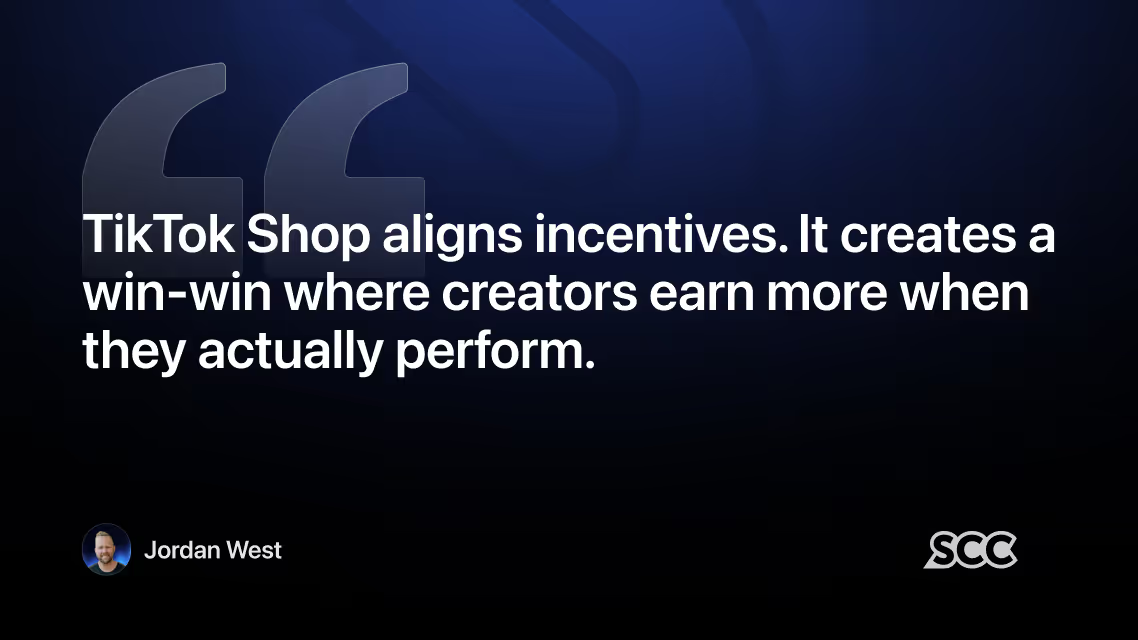
- Incentives are aligned. Creators earn more when they sell more, so they focus on content that converts.
- You can scale across hundreds or thousands of creators without increasing upfront costs.
- It works well for TikTok Shop and affiliate programs where tracking and payouts are built in.
- You reduce upfront risk since you only pay for actual performance.
Cons
- Performance is unpredictable in the early stages, especially when you are testing creators.
- Most creators will not convert, so you need enough volume to find winners.
- You need systems for tracking, payouts, and communication to make this work at scale.
Which brands should use commission
Use a commission-based payout model if:
- You are scaling a DTC or TikTok Shop brand and want consistent revenue from creators.
- You care about conversions and revenue, instead of just reach or impressions.
- You plan to work with a large number of creators and need a model that scales.
- You want predictable CAC and clearer attribution tied to performance.
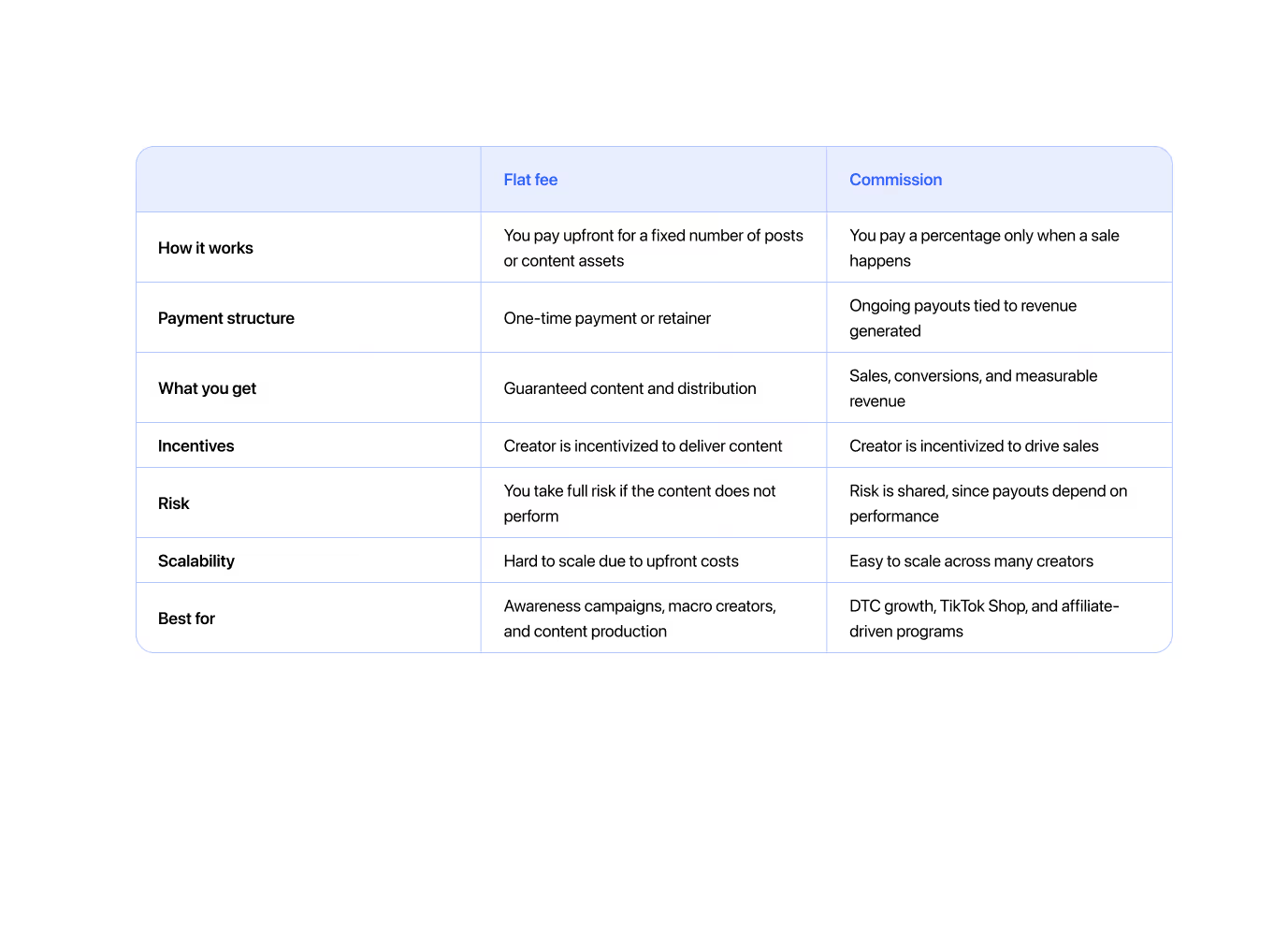
Commission vs flat fee: what’s the difference
The difference in the two approaches comes down to what you’re paying for and how risk is distributed between you and the creator.
Hybrid models: How most brands approach influencer deals
Most brands don’t stick to one model. They combine flat fees and commission based on what they need from each creator.
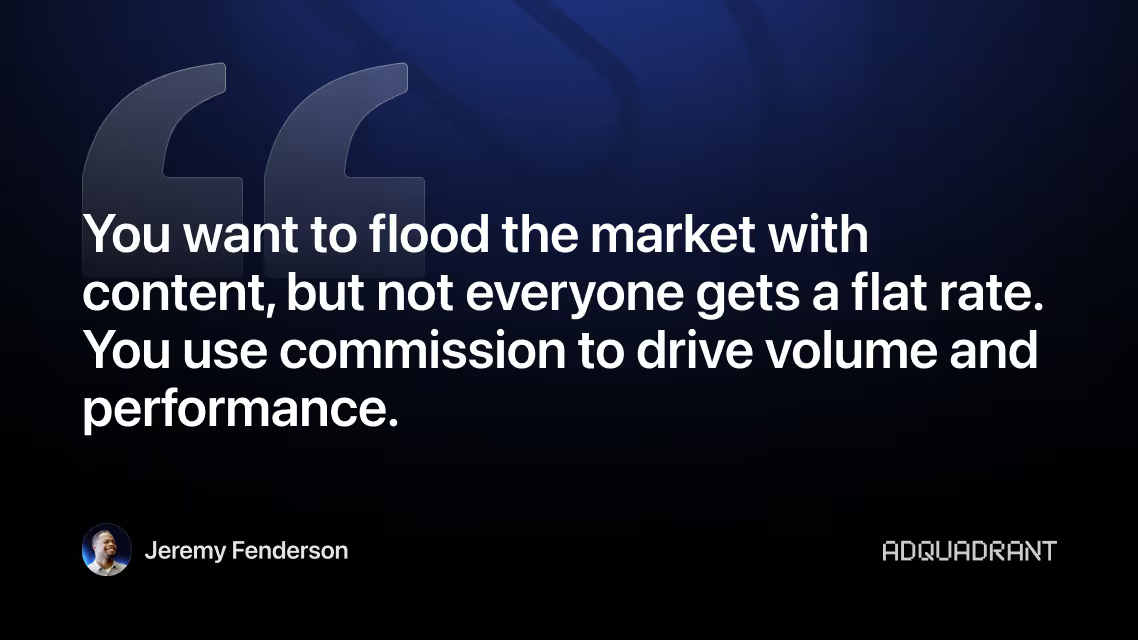
Use flat fees to secure content, access top creators, or lock in consistent output, and offer a commission to push performance and tie payouts to revenue. This gives you control where you need it and flexibility where it matters.
Some common examples of hybrid payout models are:
- Retainer and commission for top performers: Pay a fixed monthly fee to keep high-performing creators active, then layer commission on top to keep them focused on driving sales.
- Commission tiers: Increase commission rates as creators hit higher revenue thresholds. This pushes top performers to scale further.
- Bonuses for milestones: Offer cash bonuses or incentives when creators hit specific GMV targets or content goals, which helps drive short-term spikes in output and sales.
How to choose the right model
Your deal structure should match the problem you’re solving at each stage. Most brands get this wrong because they use the same model from day one to scale. But what works early on will slow you down later.
Here’s how to approach it:
Early stage: No proven creator channel yet
At this stage, you’re still figuring out what works. You don’t know what kind of content converts or which creators can actually drive sales. If you rely only on commission, strong creators won’t engage. If you rely only on flat fees, you’ll spend without learning.
Start with a hybrid approach. Pay a small flat fee to get initial content and offer a commission on top to track performance.
The goal here is not scale. It’s to find the first few creators who can reliably convert.
Scaling stage: You’ve seen creators drive revenue
Once you know your product converts, the problem shifts from testing to volume
This is where commission becomes the default. Move most creators to performance-based deals and increase the number of creators you work with. Instead of managing 10 creators closely, work with 100+ and let performance decide who stays.
Flat fees start to slow you down here because they lock budget into fixed output instead of revenue.
Mature brand: You have predictable creator revenue
At this stage, you already have creators driving consistent sales. Shift your focus to expand reach, improve content quality, and increase efficiency.
Keep commission as the foundation for ongoing revenue. On top of that, use flat fees more strategically, whether it’s to access larger creators, secure distribution during key launches, or produce high-quality content for reuse in ads.
Lock in top performers with a hybrid model by combining retainers and commission to keep output consistent and incentives aligned with performance.
Ready to structure your creator deals the right way?
Before you change anything, step back and look at what you actually need from creators right now.
If your goal is content, pay for output. If your goal is revenue, pay for performance. Mixing the two without clarity is where your budget gets wasted.
- If you’re a small brand, use small flat fees to get content and layer in commission to see what converts.
- If you’re scaling, move to commission and increase the number of creators you work with. Let performance decide where your budget goes.
- If you’re mature, use both. Pay for reach when it matters, and keep commission running as your base for revenue.
But, manually managing creators, tracking links, handling payouts, and keeping everything organized becomes frustrating fast.
Platforms like Social Snowball solve this by turning your deal structure into a system. You can automatically assign commission, track performance, manage payouts, and run hybrid models without adding operational overhead.
Ready to set up a high-performing creator program?

.avif)