
Customer referrals bring in high-intent buyers because they start with trust. When an existing customer recommends your product, that recommendation carries social proof, reduces hesitation, and shortens the path to purchase.
The challenge is execution. As volume increases, many referral programs break down: links aren’t tracked cleanly, rewards are handled manually, attribution gets messy, and teams fall back on spreadsheets. What starts as a high-ROI channel quickly becomes hard to manage and harder to trust.
A customer referral software fixes this. It automates tracking, applies rewards accurately, and shows you exactly how much revenue referrals are driving without adding operational overhead.
In this guide, we compare ReferralCandy, Yotpo, and Social Snowball to help you choose the customer referral app that fits your current needs and actually scales with your growth plans.
Key takeaways: ReferralCandy vs Yotpo vs Social Snowball
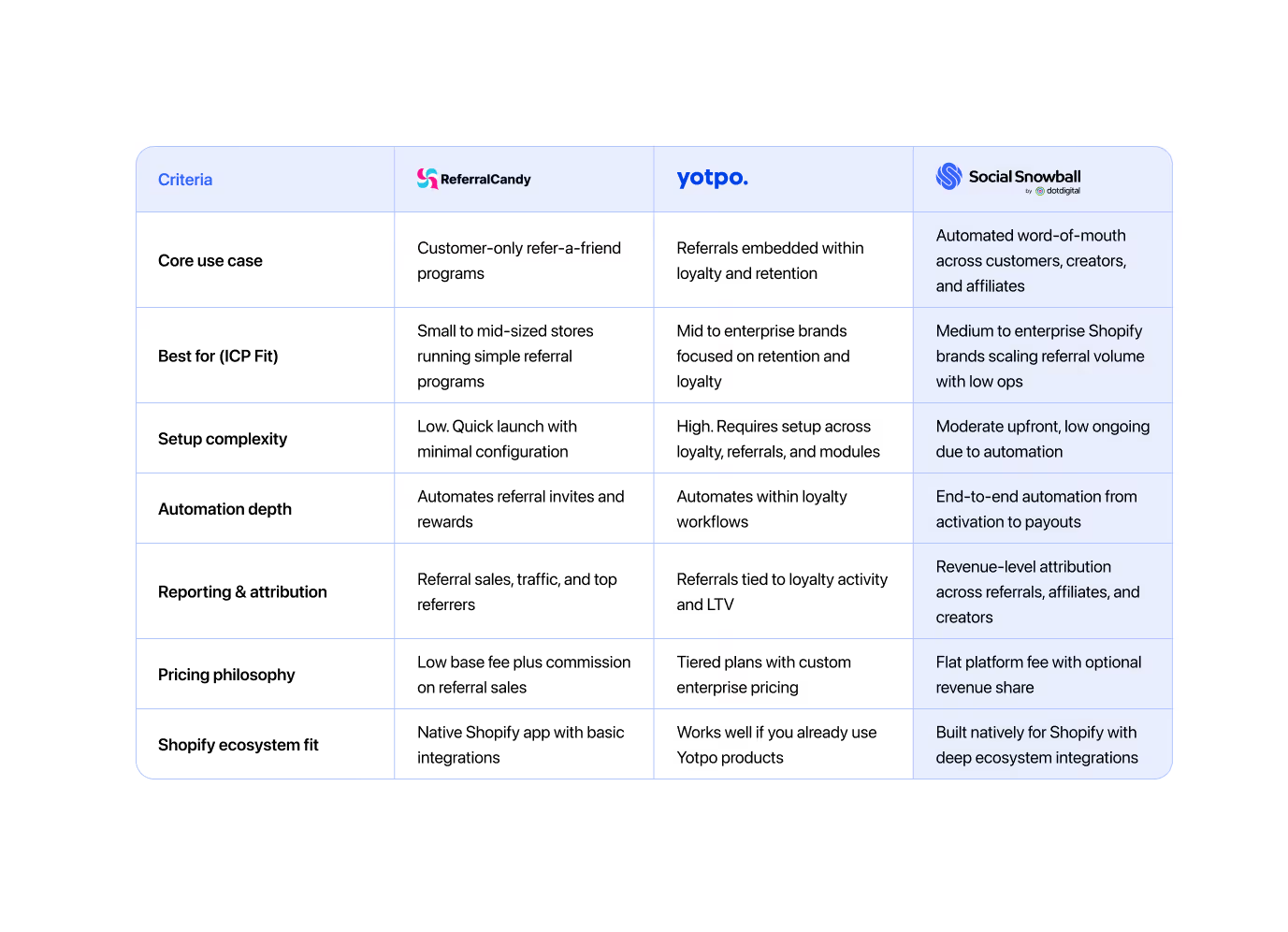
- ReferralCandy is best suited for small to mid-sized ecommerce brands that want to run a simple, customer-only referral program. It works well when your goal is to launch quickly, keep setup light, and use referrals as a supporting acquisition channel rather than a system you plan to scale across multiple audiences.
- Yotpo is designed for brands that treat referrals as part of a broader retention and loyalty strategy. It fits teams that already invest in loyalty programs, reviews, and customer engagement, and want referrals to reinforce repeat purchases, long-term value, and brand advocacy within a single ecosystem.
- Social Snowball is built for brands that want to scale word-of-mouth marketing with minimal operational effort. It suits medium to enterprise Shopify stores that run referrals through customers, creators, or influencers, and need automation, fraud protection, and clear revenue attribution as referral volume grows.
The best choice depends on how you plan to use referrals. If you want a simple, customer-only program, ReferralCandy gets you live quickly. If referrals are one part of a broader loyalty and retention strategy, Yotpo fits naturally.
If referrals are a scalable growth channel powered by customers, creators, and influencers, and you want minimal manual work, Social Snowball is the strongest fit.
Criteria for evaluating a customer referral app
Not all referral tools are built for scale. Before comparing features or pricing, it’s important to understand how each app handles the day-to-day realities of running a referral program.
These criteria help you evaluate whether a customer referral app will actually support growth or add friction as volume increases.
Level of automation
Evaluate how much work the app reduces after launch. This includes how referral links or codes are generated, how referrals are tracked to completed orders, how rewards qualify, and how payouts are handled.
Some tools automate link creation but still require manual reward reviews or payout approvals. Others automate the entire flow end to end, reducing follow-ups, exceptions, and operational drag as participation grows.
Program type support
Most referral programs start with customers, but they rarely stop there. Some apps only support customer referrals, while others also handle creators, affiliates, or influencers within the same system.
This is important if you plan to expand beyond basic referrals without managing multiple tools, rule sets, or reporting dashboards.
Referral logic and controls
Clean attribution depends on how the app handles sharing. Look for controls around single-use links or codes, referral eligibility rules, and basic fraud protection.
When multiple people share the same offer, the system should still assign credit correctly and apply rewards based on clear conditions rather than manual checks.
Operational complexity
Once the program is live, recurring tasks become the real test. This includes approving participants, reviewing referrals, issuing payouts, and managing edge cases like returns or disputed rewards.
A strong referral app keeps these workflows predictable and limits the number of decisions your team has to make each week.
Reporting and attribution clarity
You need to see how referrals translate into revenue, not just activity.
Reporting should connect referrals directly to orders, revenue, and payouts so you can see what’s working and where adjustments are needed. Clear attribution also makes it easier to justify increasing incentives or scaling the program.
Scalability
As referral volume grows, systems get complex. Codes get shared more widely, payouts increase, and reporting needs become more precise.
The right app maintains accurate tracking and rewards without adding manual review steps or slowing down operations as participation scales.
Fit within your Shopify stack
Your referral app should work naturally with Shopify and the tools you already use for email, SMS, analytics, and payouts.
Strong integrations keep data in sync and reduce the need for exports, workarounds, or duplicated workflows, especially once referrals become a recurring acquisition channel.
ReferralCandy: Best for simple, classic customer referral programs
Ideal for: Small to mid-sized ecommerce brands that want to build a customer referral program and prefer a quick setup over deep customization or complex workflows.
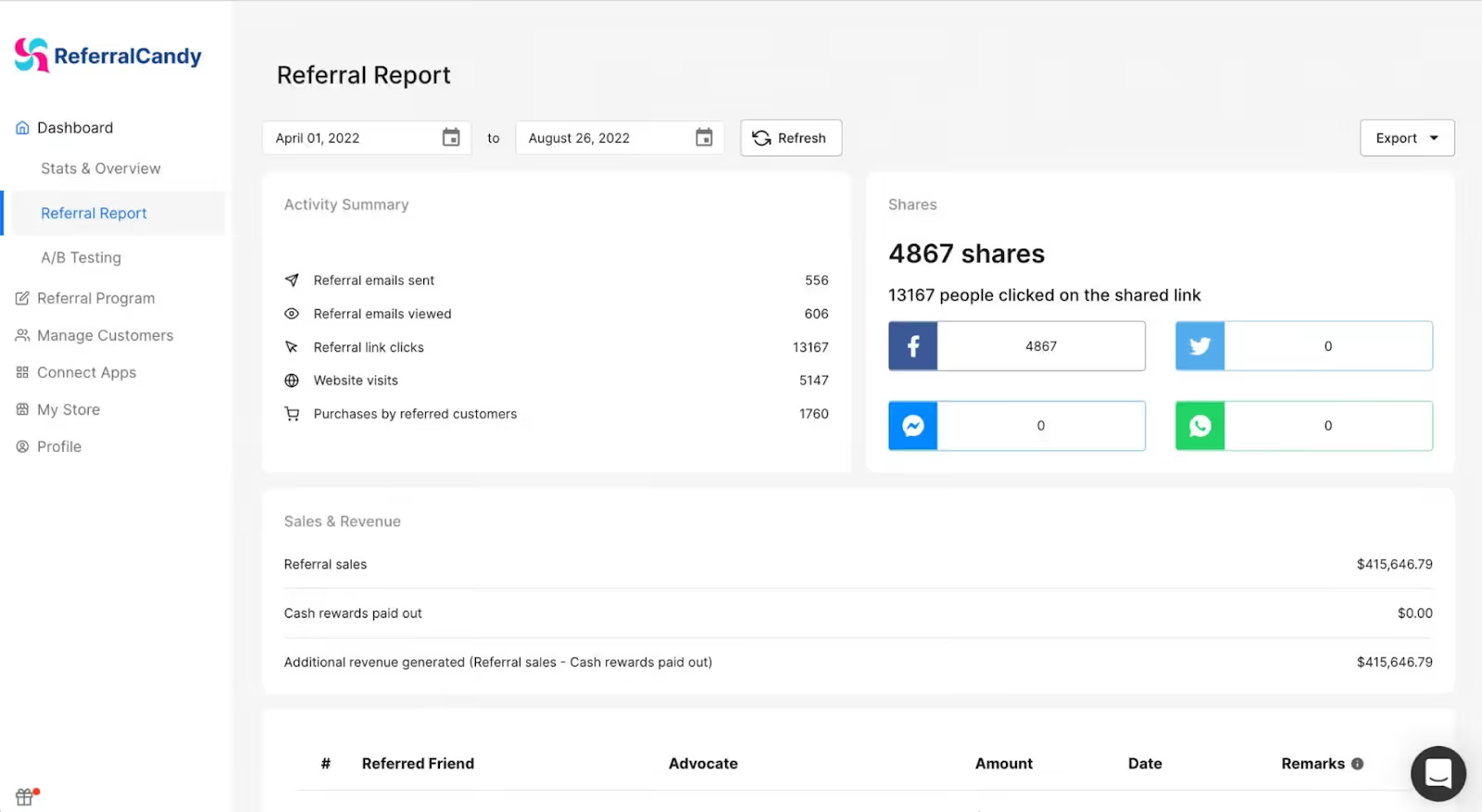
ReferralCandy helps you set up a basic customer referral flow where customers share a link or code, referrals are tied to purchases, and rewards are issued once an order is completed.
The platform keeps setup simple, with branded referral pages, basic reporting, and built-in fraud checks. It works well if your referral strategy stays focused on customers and predictable reward flows.
Pricing starts from $59 per month plus 3.5% commission on successful referral sales.
What it’s designed to do:
- Run classic “give X, get Y” customer referral programs.
- Launch quickly with minimal configuration.
- Track referral-driven revenue without complex workflows.
Strengths:
- Simple setup that doesn’t require technical expertise.
- Supports both referral and basic affiliate programs from one dashboard.
- Branded referral pages that match your storefront.
- Real-time reporting to track referral performance.
- Built-in fraud detection to limit self-referrals and abuse.
- Integrates with tools like Klaviyo, Mailchimp, and Recharge.
Limitations:
- Limited control over pausing or managing programs once live.
- Referral codes are harder to manage on platforms that don’t support direct links, like Instagram.
- Discount codes can clutter your Shopify admin as volume grows.
- Customization tools feel dated for teams that want more control.
- Cancellation and account changes can be frustrating for some users.
Yotpo: Best for brands using referrals as part of a broader retention strategy
Ideal for: Mid to enterprise ecommerce brands that already invest in loyalty, reviews, and retention, and want referrals to sit within that ecosystem rather than operate as a standalone program.
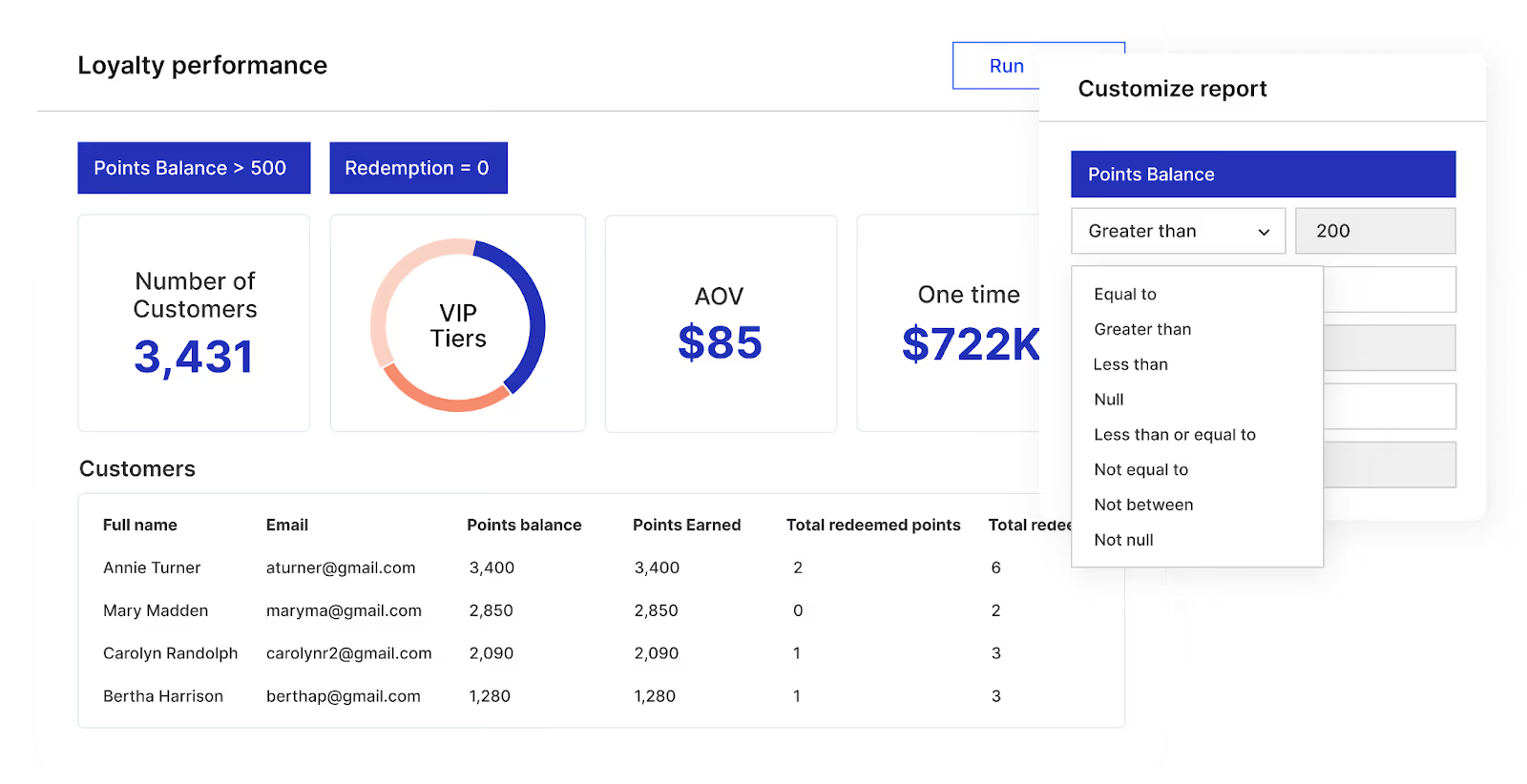
Yotpo treats referrals as one part of a larger customer engagement system. The referral program ties directly into loyalty and rewards, making referrals feel like a natural extension of how customers already earn points for purchases, reviews, and ongoing engagement.
This works well for teams that want referrals to reinforce long-term retention and customer lifetime value, not just drive one-off acquisitions.
Paid plans begin at $199 per month, which includes multiple ways to earn and redeem, fraud prevention, and live support. It also has a free plan with basic loyalty points and referrals.
What it’s designed to do:
- Run referrals as part of a broader loyalty and retention stack.
- Tie referrals to points, rewards, and customer engagement actions.
- Support multi-campaign referral setups within a unified system.
Strengths:
- Deep integration with Yotpo Loyalty and Reviews for a unified retention view.
- Flexible reward options, including points, discounts, store credit, and perks.
- Supports dual-sided referral incentives and multiple campaign types.
- Strong customization for brands with defined loyalty strategies.
- Dedicated support and strategic guidance for program setup and optimization.
Limitations:
- Pricing increases as you add more Yotpo modules.
- Setup and configuration can feel heavy for smaller teams.
- More functionality than most teams need if referrals are the primary focus.
Social Snowball: Best for automated word-of-mouth programs (including customer referrals)
Ideal for: Medium to enterprise Shopify brands that want to scale customer referrals, creator partnerships, and affiliate programs without adding manual work as volume grows.
Social Snowball is built for Shopify brands that want referrals to run with minimal ongoing work. It turns customers into referrers right after purchase and assigns unique links or codes automatically.
You can manage customer referrals, creator programs, and influencer partnerships from one dashboard, with tracking and payouts handled in the background. This setup is perfect for when referral volume increases, and manual management start slowing the team down.
Pricing starts from $199 per month plus 3% of affiliate-driven revenue. Custom plans are available for higher-volume brands.

What it’s designed to do:
- Turn customers, creators, and influencers into affiliates automatically.
- Run multiple word-of-mouth programs from a single system.
- Remove manual work from onboarding, tracking, rewards, and payouts.
Strengths:
- Automatically activates customers as referrers immediately after purchase.
- Runs customer referral, affiliate, and influencer programs side by side.
- Prevent coupon leaks and referral fraud with Safelinks.
- Handles bulk payouts in cash, gift cards, or store credit with minimal effort.
- Tracks referral revenue clearly across Shopify and TikTok Shop.
- Saves and organizes creator and UGC content for reuse.
- Integrates cleanly with tools like Klaviyo and Postscript.
Limitations:
- Entry pricing can be high for early-stage or low-volume stores.
- Designed exclusively for Shopify merchants, limiting use outside that ecosystem.
Feature set comparison between ReferralCandy, Yotpo, and Social Snowball
When evaluating customer referral platforms, it’s not enough to look at pricing or basic features. The tools you choose need to support real growth— automation, simplifying complexity, and adapting to scale.
Below, we compare ReferralCandy, Yotpo, and Social Snowball across the capabilities that matter most to growing ecommerce brands.
Feature set: Customer referrals
- ReferralCandy: Built specifically for customer referrals. It supports post-purchase referral prompts, automated emails, and straightforward “give X, get Y” rewards that are easy to launch and maintain.
- Yotpo: Referrals are part of the loyalty program. Customers earn points or rewards for referring friends, and sharing options span email, SMS, and social channels to drive participation.
- Social Snowball: Customers are automatically turned into affiliates and given unique, single-use referral codes the moment they’re eligible. Attribution stays clean, coupon leaks are prevented, and rewards are applied automatically so customer referrals scale without manual work.
Winner: Social Snowball, for brands that want referral programs that stay accurate, automated, and easy to scale.
Feature set: Automation
- ReferralCandy: Automates referral emails and reward delivery, but teams may still need to monitor edge cases as volume grows.
- Yotpo: Automation runs through loyalty workflows, which works well if referrals are a secondary engagement tactic.
- Social Snowball: Automates the entire referral lifecycle—customer activation, single-use code generation, attribution, fraud protection, and scheduled payouts—without breaking as volume scales.
Winner: Social Snowball, for end-to-end automation across tracking, rewards, and payouts at scale.
Feature set: Support for other referral models
- ReferralCandy: Primarily focused on customer referrals, with basic support for affiliates using codes and links.
- Yotpo: Referrals are loyalty-driven. Broader partner or affiliate models typically require additional tools outside the core platform.
- Social Snowball: Supports customer referrals, affiliates, and influencers in one system. Each program can run with its own rules, rewards, and tracking.
Winner: Social Snowball, for managing multiple word-of-mouth models from a single platform.
Feature set: Fraud prevention
- ReferralCandy: Includes built-in controls to block self-referrals, repeat customer abuse, and suspicious activity. It also monitors leaked or misused codes automatically, which covers most common referral fraud scenarios.
- Yotpo: Uses deeper detection methods tied to its retention stack. This includes analysing IP addresses, device data, and purchase timing to flag patterns that may indicate abuse or low-quality referrals.
- Social Snowball: Prevents referral abuse at the source using Safelinks. Each referral click generates a unique, single-use code, which removes the risk of leaked or reused discounts. As volume grows, teams can extend monitoring through integrations with loyalty or fraud tools, without changing the core referral flow.
Winner: Social Snowball, because Safelinks stops coupon leaks and misuse at the source, keeping attribution clean even at high referral volume.
Feature set: Loyalty program support
- ReferralCandy: Does not include a native loyalty program. It focuses on referrals and affiliates, with limited integrations for subscription or repeat purchase tracking.
- Yotpo: Built as a loyalty-first platform. Referrals are tightly connected to points, VIP tiers, and customer lifetime value, making them a core part of long-term retention programs.
- Social Snowball: Does not offer built-in loyalty features, but integrates with loyalty apps through APIs. Brands can also replicate tiered incentives using spend- or referral-based segments.
Winner: Yotpo, for brands that want referrals deeply embedded within a native loyalty ecosystem.
Feature set: Operational complexity
- ReferralCandy: Designed for speed and simplicity. Setup is quick, workflows are predictable, and ongoing management stays light, which works well for small teams running a single customer referral program.
- Yotpo: Offers a broad set of features, but that breadth adds complexity. Setup and day-to-day management require more time, especially when multiple modules are involved.
- Social Snowball: Runs multiple referral models from one system without adding operational overhead. Onboarding, tracking, fraud protection, and payouts are automated across programs. Integrations with loyalty and marketing tools reduce manual checks and exceptions as volume grows.
Winner: Social Snowball, as automation removes most ongoing tasks, keeping operational effort low even as referral volume and program complexity increase.
Feature set: Analytics
- ReferralCandy: Offers a clean dashboard showing referral sales, top referrers, traffic, and ROI. Reporting stays focused on referral performance rather than broader customer behaviour.
- Yotpo: Connects referral data to loyalty activity, repeat purchases, and lifetime value. This gives teams a wider view of how referrals impact retention and revenue over time.
- Social Snowball: Offers unified performance analytics across customer referrals, affiliates, and creators in one view, including who is driving revenue, how incentives perform, and how different word-of-mouth channels contribute to GMV. For brands that want retention or LTV context, Social Snowball integrates with loyalty tools without fragmenting reporting.
Winner: Social Snowball, for giving ecommerce teams a clear, revenue-focused view of referral, affiliate, and creator performance.
Which app should you choose?
The best referral app isn’t about features. It’s about fit. Your choice should reflect how complex your referral setup is today and how much manual work you’re willing to manage as it grows.
- Choose ReferralCandy if:
- You want a simple, customer-only referral program with fixed rewards.
- You plan to launch quickly and keep ongoing management light.
- Referrals support acquisition but are not a high-volume or multi-channel effort.
- Choose Yotpo if:
- You already use Yotpo for loyalty or reviews and want referrals in the same system.
- Referrals are tied closely to retention, repeat purchases, and customer engagement.
- You are comfortable managing referrals as part of a larger retention stack.
- Choose Social Snowball if:
- You run referrals across customers, creators, and influencers.
- You want referral setup, tracking, and payouts to run with minimal manual work.
- You need reliable attribution and fraud controls as referral volume increases.
Pick the right app for your customer referrals
The right referral app depends on whether referrals are a small experiment or a channel you plan to scale.
If you want to run customer referrals alongside creator or affiliate programs, Social Snowball gives you one system to manage them all. It automatically turns customers into referrers after purchase, generates unique referral links, prevents coupon misuse, and handles payouts in bulk.


.png)
.avif)


