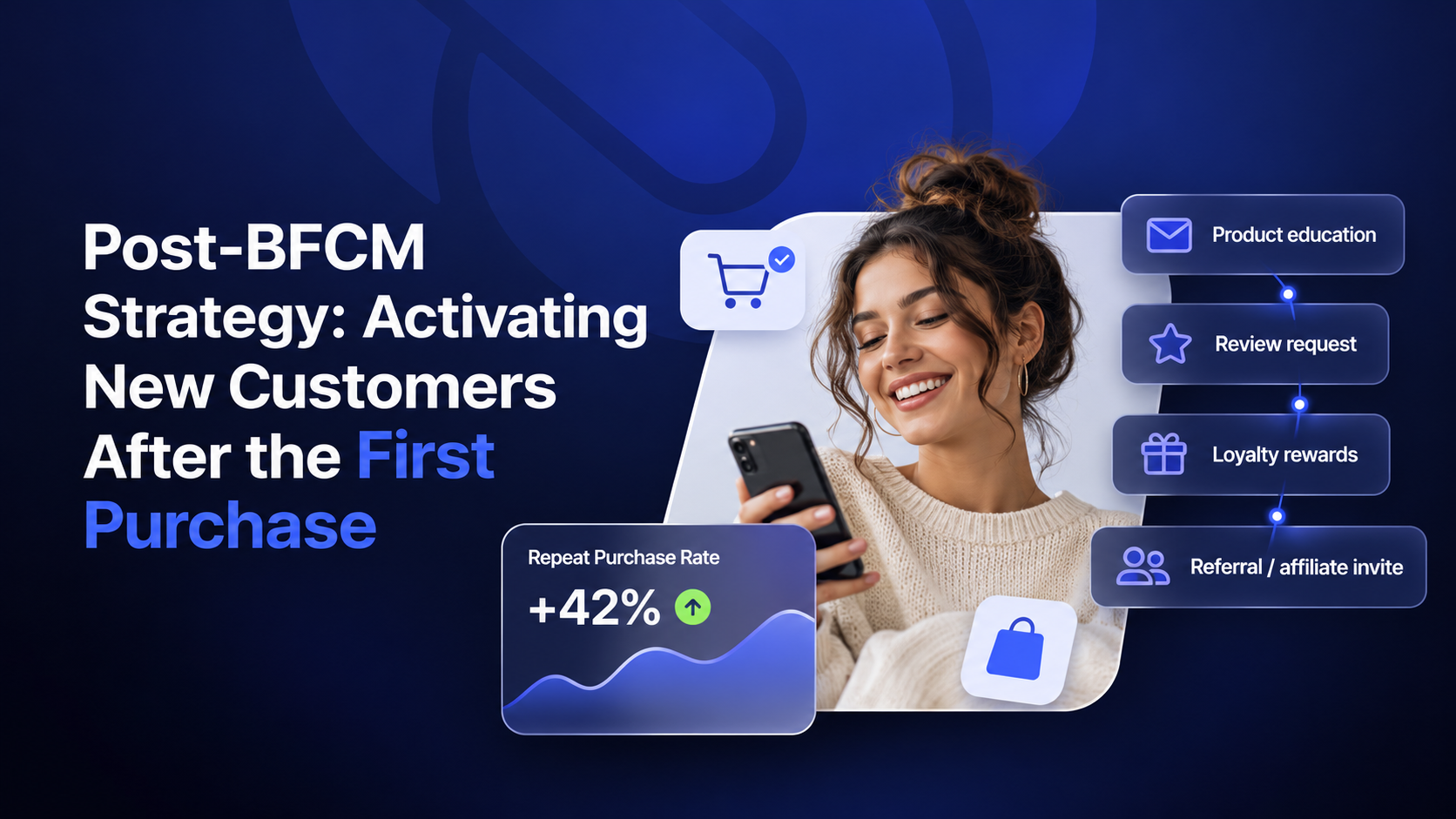
Shoppers who buy during Black Friday are often motivated by limited-time discounts, exclusive offers, or seasonal shopping rather than an existing affinity for the brand. For most brands, getting them to place another order after the promotional period ends is a challenge.
BS&Co analyzed 8,076 first-time BFCM buyers across multiple DTC brands and found that just 11.5% made a second purchase within 90 days. To increase your chances of retaining these shoppers, you need to give them reasons to return after the initial promotion.
This guide explores how to engage first-time BFCM buyers, encourage repeat purchases, and identify customers with the potential to become brand advocates, referrers, or affiliates.
Why BFCM customers require a different engagement strategy
Before planning your post-BFCM campaigns, consider why these shoppers bought from you in the first place, what they know about your brand, and what might bring them back.
- They came for the deal: Many first-time BFCM shoppers are motivated by discounts, limited-time offers, or seasonal needs. A discounted first order doesn't indicate that they'll return. Ometria found that just 4% of customers acquired during Black Friday 2024 made another purchase within 12 months. They were six times less likely to return than a typical new customer.
- They may know the product, but not the brand: A first-time buyer might be familiar with the product they purchased but not know what else you sell, what makes your products different, or which products they should consider next.
- Their next purchase may depend on your promotional calendar: If shoppers associate your brand with seasonal offers, they may wait until the next sale before buying again.
- A second purchase isn't their only potential next step: Some customers may be more inclined to recommend a product than to buy again immediately. Look for signals such as positive reviews, tagged social posts, and engagement with your brand to identify potential advocates.
Segment Black Friday customers
To make your post-BFCM follow-up more relevant, start with what each customer bought, how much they spent, and the offers they responded to. These details can help you identify opportunities for repeat purchases and shape the recommendations and incentives you send next.
- Products purchased: Look at the specific products customers ordered to identify opportunities for complementary purchases, upgrades, or replenishment.
- Product category: Group customers by the categories they purchased from to understand broader product interests. This can help you tailor recommendations, introduce related collections, and promote products that align with their preferences.
- Discount usage: Track whether customers used a discount, the offer they redeemed, and how much they saved. Compare their repeat-purchase behavior with those who bought at full price.
- Order value: A bigger first order doesn't guarantee a second purchase. Look beyond initial spend and compare order value with actual repeat-purchase behaviour before treating high spend as a sign of retention potential.
Purchase data isn't the only way to identify valuable customers. You can also look for early signs of brand affinity. Positive reviews, tagged posts, social mentions, and repeat engagement can help you identify customers who may be likely to refer friends or join your affiliate program.
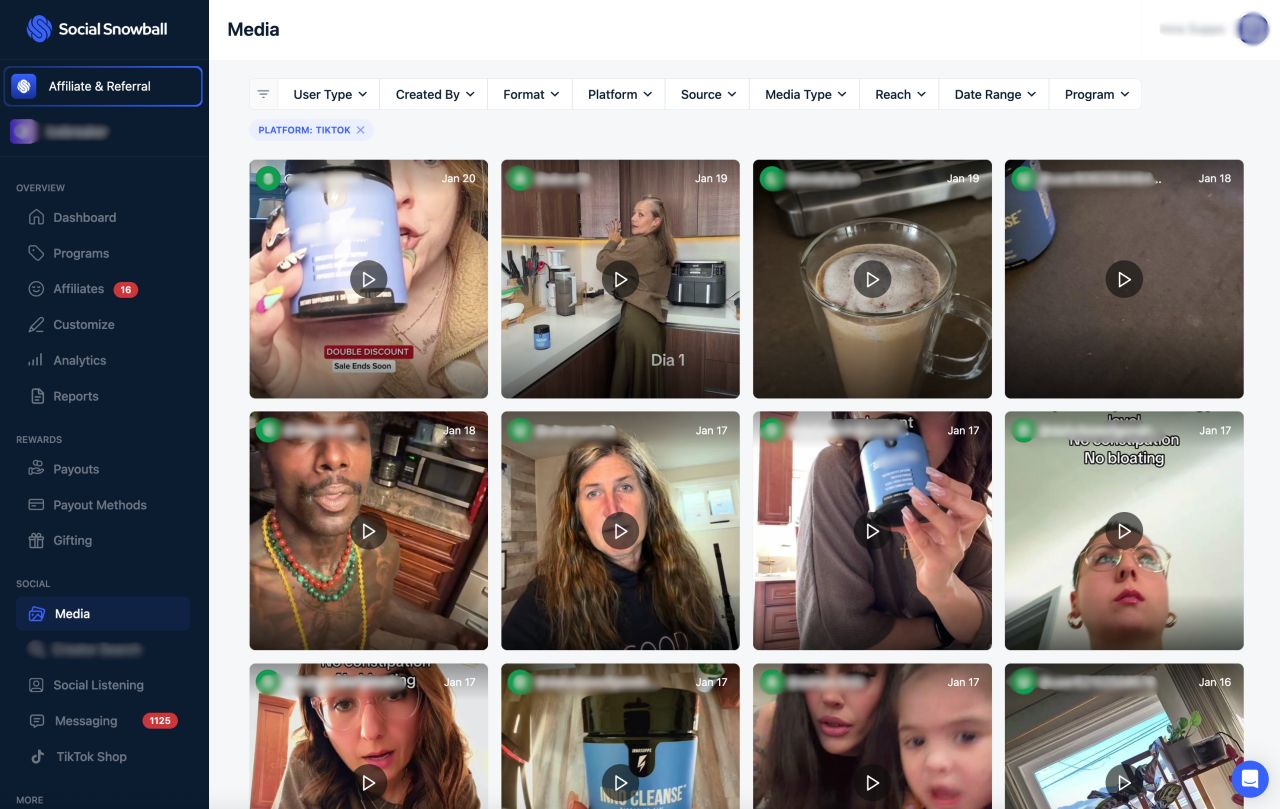
Social Snowball's social listening feature helps you find these potential advocates. The platform captures tagged and untagged brand content across social platforms and saves relevant posts to your media library. Your team can review who is already creating content around your brand or products and reach out with a relevant affiliate invitation.
Build a post-BFCM engagement sequence
Your first-time BFCM buyers are likely already receiving order confirmations, delivery updates, and post-purchase emails. Before adding new campaigns or automations, review your existing flows to avoid overlapping messages, repeated offers, and unnecessary sends.
Klaviyo recommends creating a dedicated segment for first-time BFCM shoppers. Use purchase history, product interests, and recent on-site activity to decide which messages they should receive and which products to recommend.
Once you've created these segments, review your existing flows and adjust their logic and timing:
- Add conditional splits: Create separate flows for first-time BFCM buyers and returning customers. You can also branch by product category, purchase value, or discount usage to tailor follow-ups to different customer groups.
- Coordinate campaign and automated flows: Review which campaigns and automations each segment receives. If a customer is already getting a product recommendation or offer through a flow, avoid sending the same message through a separate campaign.
- Adjust timing to product usage: Set follow-ups around when customers are likely to use, finish, or need more of what they purchased. A skincare buyer may need usage guidance shortly after delivery, while someone buying a consumable may need a replenishment reminder closer to when they expect to run out.
Post-BFCM example sequence
Use this as a starting point. Adjust the timing, content, and next touchpoint based on the product purchased, expected usage cycle, and how each customer engages.
Choose the right channel for each message
Your channel mix should reflect the purpose of each message, the customer's preferences, and their consent. Use each channel where it adds value rather than sending the same communication everywhere.
- Email: Use email for messages that need more context, such as product education, personalized recommendations, review requests, loyalty updates, and referral or affiliate invitations.
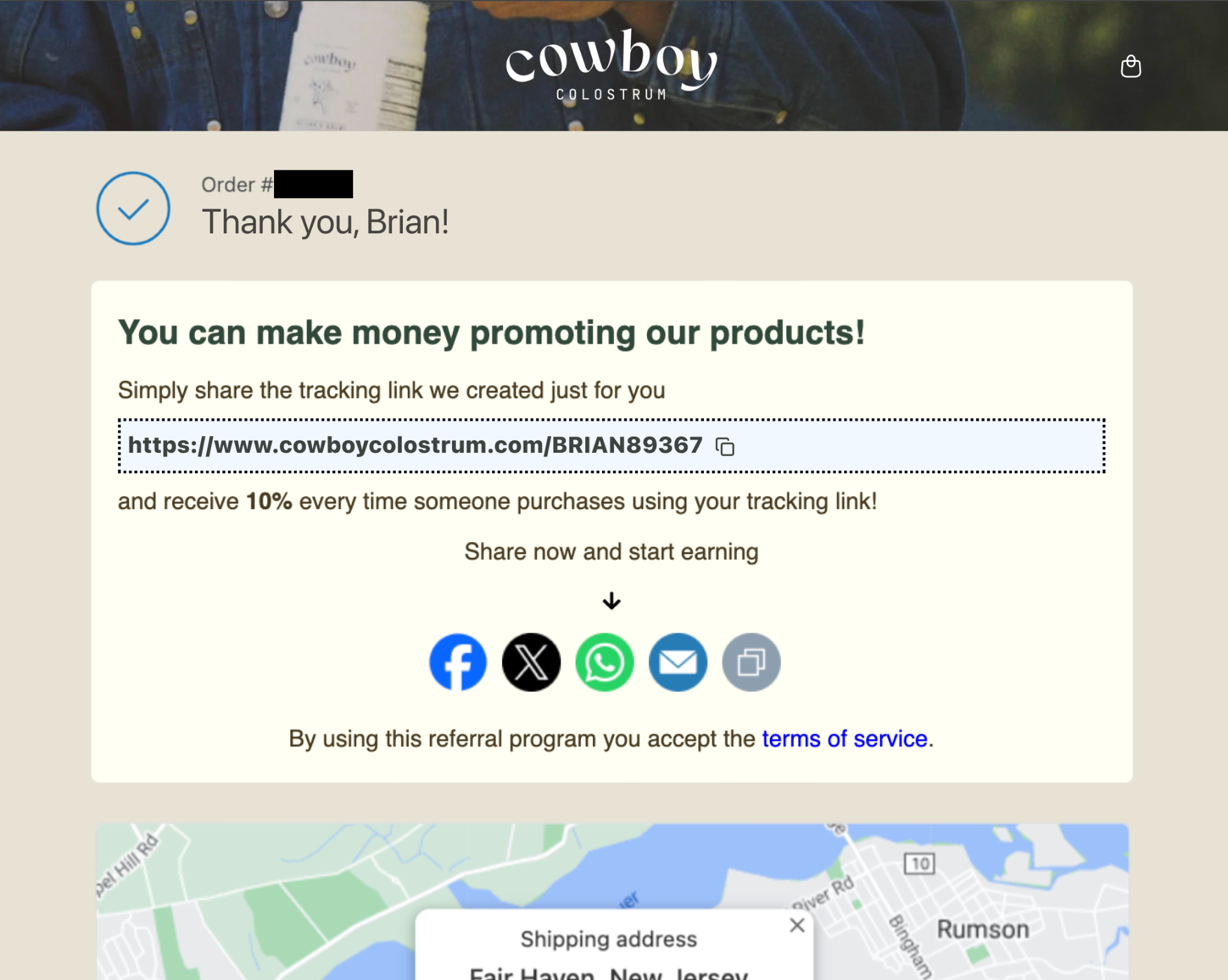
- SMS: Reserve SMS for concise, time-sensitive communication, such as order-related updates, replenishment reminders, and relevant offers. Only send promotional SMS to customers who have explicitly opted in.
- Paid retargeting: Re-engage customers who have viewed complementary products or engaged with your brand but haven't purchased again. Use product-specific ads and exclude customers who have already purchased the products being promoted.
- Onsite and customer account placements: Introduce referral and affiliate programs after purchase, or show existing partners their affiliate links and program details when they return to your store.
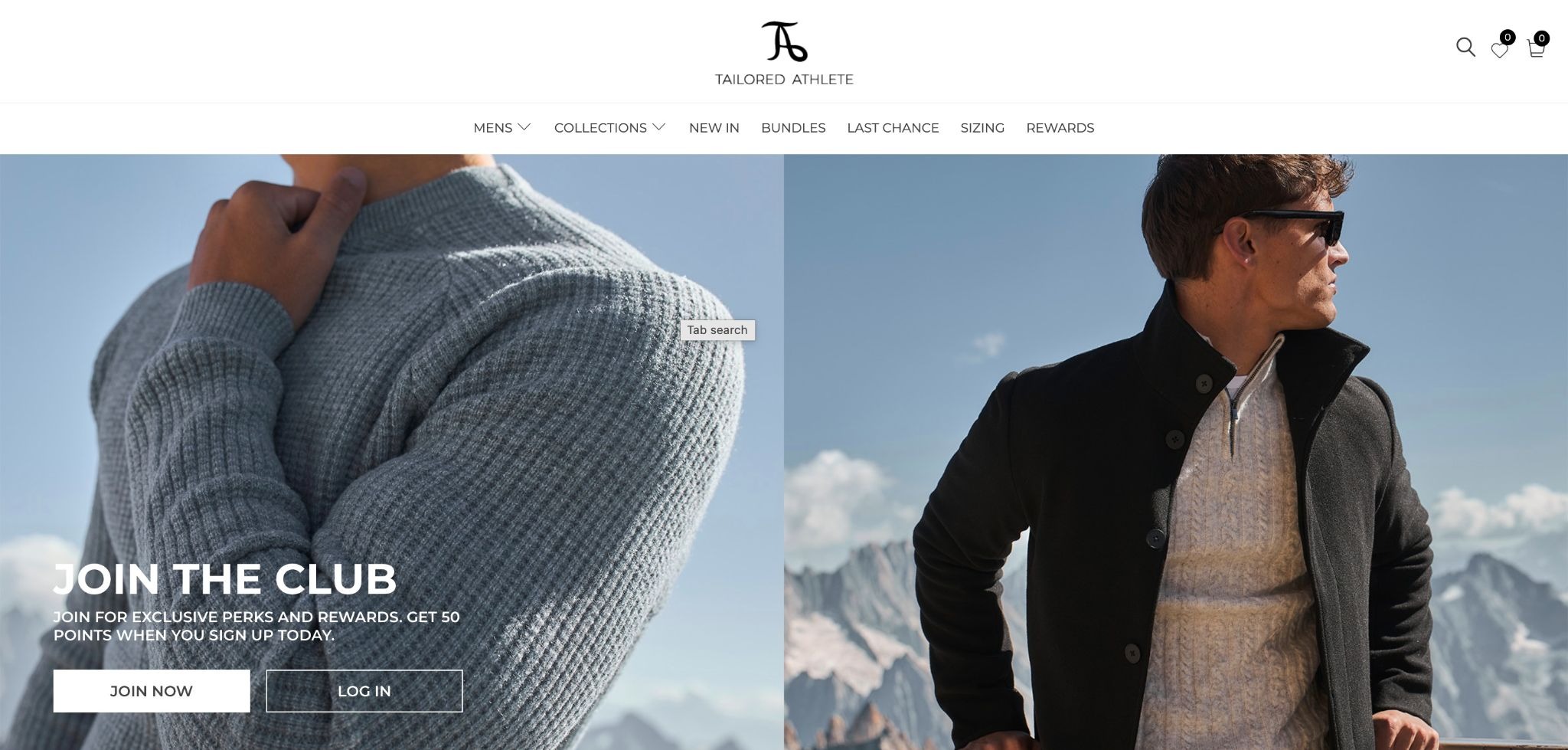
Tailored Athlete demonstrates how multiple touchpoints can reinforce a referral programme. The brand included its referral offer in post-purchase emails, landing pages, and in-account reminders, giving customers several opportunities to discover and engage with it.
This approach helped generate a 444% increase in referral revenue over its previous program and delivered more than 10x ROI.
Engage BFCM customers through your existing affiliate and referral programs
Your existing programs give you two ways to activate first-time BFCM customers: invite them to refer people they know or recruit those interested in actively promoting your products.
Each group requires a different approach.
- Separate referral and affiliate activation: Customers in your referral program typically share a link with friends and family in exchange for a reward when someone makes a purchase. Affiliates take a more active role in promoting your products and need more resources. Tailor each journey accordingly: keep referral invitations simple, while giving potential affiliates product information, campaign assets, commission details, and ongoing promotional opportunities.
- Match the incentive to the ask: Test incentives such as early access to new products, bonus referral rewards, exclusive affiliate commission rates, product gifting, or tier upgrades. A customer sharing a referral link with friends may respond to a different reward than an affiliate investing time in creating content and promoting your brand.
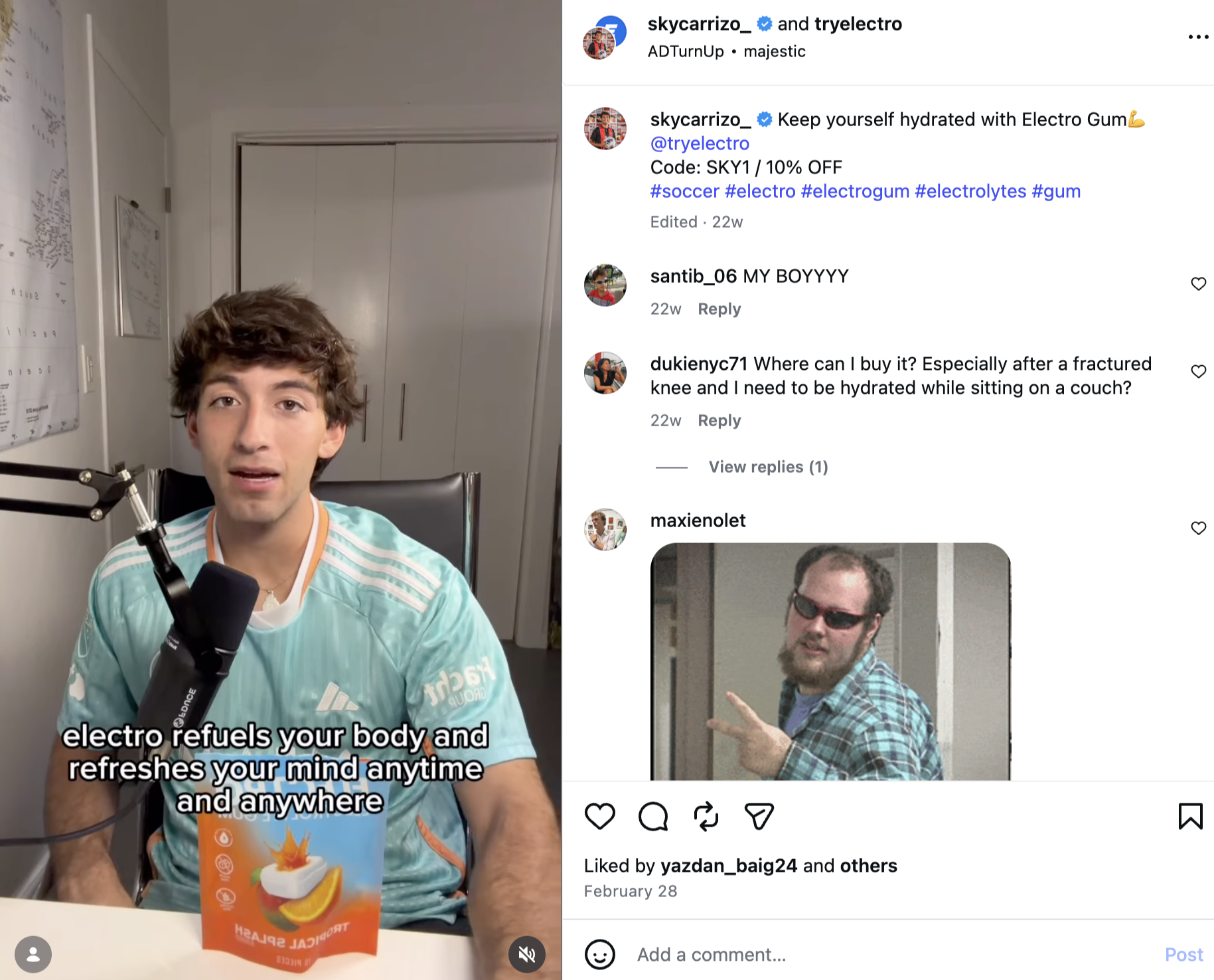
- Build an activation path for new affiliates: Give new affiliates the assets and incentives they need to start promoting your products. For example, Electro equips affiliates with fraud-protected links (Safelinks), five custom graphics featuring their photo, personalized Instagram messaging, a 10% commission, and a Notion onboarding doc outlining digital rewards.
- Re-engage existing affiliates who bought during BFCM: Your affiliate database may already include customers who bought from you during the sale. Identify these customers and follow up with recommendations for products they've recently purchased, along with relevant campaigns, new launches, or commission bonuses they can promote. Their recent product experience gives them a useful starting point for creating authentic content and recommendations.
Measure performance and optimize your strategy
Once BFCM customers enter your referral or affiliate programs, track whether they become active participants and generate revenue. Measure performance at both the customer and program level:
- Second-purchase rate by segment: Compare repeat purchase rates among discount users, full-price buyers, high-AOV customers, and customers grouped by product category. This helps you identify which BFCM cohorts are most likely to return and where additional retention efforts may be needed.
- Advocate activation rate: Track how many recruited customers share a referral link, publish affiliate content, or generate their first referral or affiliate sale. This helps you identify where potential advocates are dropping off and where onboarding or follow-up needs improvement.
- Revenue per advocate: Compare referral and affiliate revenue against the number of active participants. Review average order value and repeat purchase behavior among referred customers to understand the quality of the referral.
- Time to second purchase or first referral: Measure how long different customer segments take to make another purchase, share a referral, or generate their first affiliate sale. Use these patterns to adjust follow-up timing and identify friction in your activation journeys.
- Incentive performance: Compare participation and revenue across different referral rewards, affiliate commissions, and customer offers. Assess whether higher incentives drive enough additional activity and revenue to justify the added cost.
Use these findings to refine your post-BFCM engagement strategy. Send additional product education to customers who need more time with their purchase, use relevant recommendations to encourage repeat orders, and prioritize referral or affiliate invitations for customers showing signs of advocacy potential.
You can then adjust each activation path based on the actions customers actually take.
Turn your newest customers into a source of long-term growth
A first purchase during BFCM allows you to build a relationship that extends beyond the holiday shopping season. With the right post-purchase strategy, you can encourage customers to return, introduce them to more of your products, and identify those who are likely to recommend your brand to others.
Not every customer will become a repeat buyer, but some may be willing to refer friends or actively promote your products. By engaging customers based on their purchase behaviour and brand affinity, you can create more opportunities for both retention and customer-led acquisition.
Social Snowball helps you recruit customers as affiliates, run referral programs, manage partner relationships, track commissions, and measure the revenue they generate, all from one platform.