Most affiliate creator programs fail because there’s no system behind them.
At Social Snowball’s Influencer Marketing Summit, operators kept pointing to the same shift. Creator programs that drive revenue run as systems. Creators stay active, incentives are tied to sales, and content keeps building over time.
What separates high-performing brands isn’t how many creators they work with, but how their program is structured. Instead of one-off campaigns, they build continuous pipelines where new creators are always being onboarded, top performers keep producing, and proven content gets reused across channels. Every part of the program feeds the next, turning creator activity into a steady flow of content and conversions.
This guide breaks down how to build that system so creators drive consistent revenue, not just one-off results.
Start with program structure: This is where most brands fail
Program structure decides how creators behave, how content gets produced, and how revenue builds over time.
When the structure is loose, activity stays inconsistent. Creators post once, results are unclear, and the program resets with every campaign. A structured program keeps creators active, aligns incentives with outcomes, and turns content into a repeatable growth channel.
Here’s how to build an effective affiliate program structure:
Move from campaigns to an always-on program
An always-on program keeps creators producing content over time, with each post contributing to ongoing sales.
Inside strong programs, creators don’t stop at one deliverable. They create multiple videos around the same product, test different hooks, formats, and angles, and follow up based on comments and performance.
For example, one creator might post a first impression video, a results-based update after a few days, and a response to a common objection in the comments. Each video builds on the previous one. The creator improves its strategy based on what drives views, clicks, and conversions.
This is how large-scale programs operate on TikTok Shop. Brands keep hundreds of creators active, with continuous content being published and tested.
Over time, older videos continue driving traffic and sales, new content increases the chance of hitting another high-performing post, and clear patterns emerge around what converts.
The program starts behaving like a pipeline. Content flows in consistently, and revenue follows that output.
Combine affiliate and creator into one system
High-performing programs don’t separate content from revenue.
Creators now play both roles:
- Drive discovery through content
- Drive conversion through tracked links, storefronts, or TikTok Shop
This creates a direct path from discovery to conversion. A viewer watches a video, clicks the product, and completes the purchase within the same flow.
This is already visible in how TikTok Shop operates. Creators publish content, tag products, and generate sales directly from their videos. The same creator contributes to awareness and conversion within one system.
With this structure, every piece of content has measurable revenue impact, attribution becomes clearer at the creator level, and the program operates as a performance channel.

Design your incentive model properly
Incentives determine how much effort creators put in and how long they stay active. A strong structure includes multiple earning paths:
- Base commission tied to every sale (10% commission on all sales)
- Higher commissions unlocked at specific revenue milestones (15% commission after reaching $5,000 in revenue)
- An additional bonus for a video that crosses a performance threshold
“Higher commission is better, since we as creators can filter for it.”
— Cassandra Bankson, from Digital AgenZ
This gives creators a clear path to increase earnings. The more creators produce and convert, the more they earn.
Different creators respond to different incentives. For example:
- New creators focus on commission-based earnings
- Established creators respond to hybrid models with upfront fees
- High performers stay active when tiered rewards are in place
This structure keeps creators engaged and encourages consistent output.

Use LTV to set your commission strategy
Customer lifetime value defines how much can be spent to acquire a customer while maintaining profitability.
When commissions are based on lifetime value, the program can support higher payouts and stronger creator participation.
For example, a product with a $100 average order value and repeat purchases over time generates significantly more revenue per customer. This allows the brand to offer higher commissions, attract stronger creators, and scale participation faster.
This approach directly affects program growth:
- Higher payouts attract more capable creators
- Creators invest more effort into content that converts
- The brand can scale spend alongside revenue
Programs built on LTV scale faster because they’re not constrained by short-term margins.

Create a high-volume creator network
Scale comes from consistent activity across a large group of creators. High-performing programs keep onboarding new creators while maintaining steady content output from existing ones. This results in:
- Hundreds of creators posting at the same time
- Continuous content production across different angles
- Multiple entry points into the product from different audiences
Each creator contributes unique content. Over time, some videos outperform and become repeatable formats that get reused by other creators, increasing the volume of effective content.
“Consistency is key… I want to make sure that I know I have 30 videos or 20 videos coming from this creator.”
— Kelsey Eyers from Collab Collective
This is how brands reach significant scale on platforms like TikTok Shop. Large creator networks produce a steady stream of content, which drives continuous discovery and sales.
At this stage, the program becomes a content engine. Output increases with every additional creator, winning content compounds, and revenue follows.

Recruiting creators: How to actually get the right ones
Recruitment determines everything downstream—content quality, output consistency, and revenue potential.
Strong programs focus on finding creators who produce reliable content and stay active over time. The goal is to build a group that keeps creating, testing, and improving, rather than another list of one-time collaborators.
Stop chasing follower count
Follower count gives a rough idea of reach. But performance comes from how creators show up and how their audience responds.
The creators who drive results tend to:
- Post consistently over time
- Respond to messages and feedback quickly
- Produce clear, engaging content around the product
- Have an audience that trusts their recommendations
Inside active programs, these creators keep refining their content. They test new hooks, respond to comments, and refine content based on what performs.
This leads to steady output and repeatable results. Over time, the creators who stay active outperform those with larger audiences who post once.
Choose creators who match your product
Product alignment determines whether content converts. Creators who already fit your product understand the use case, communicate benefits clearly, and create content that feels natural within their feed
For example, a creator focused on plant-based content will struggle to produce strong results for a steakhouse. Their audience follows them for a specific reason, and that expectation carries into how they engage with recommendations.
“If I promoted this steakhouse, I wouldn’t be doing anyone any favors… the steakhouse wouldn’t get conversion.”
— Cassandra Bankson, from Digital AgenZ
When there’s strong alignment, content feels authentic, engagement stays high, and conversions follow naturally. This is why high-performing programs prioritise fit over size.

Recruit in layers
A layered recruitment approach allows the program to scale while maintaining quality. Most strong programs operate across three layers:
- Tier 1 (Core creators): A small group of creators who consistently perform. They get priority support, better incentives, and ongoing collaboration.
- Tier 2 (Scaled niche creators): A larger group recruited through outreach tools and marketplaces. These creators expand reach across different audiences and content styles.
- Tier 3 (Open affiliate base): A long-tail group of creators that joins through sign-up links or affiliate programs. This layer drives additional volume and surfaces new high performers.
This structure creates both control and scale, keeping top creators engaged while continuously feeding new ones into the system.
Use mass outreach, but make it feel personal
Outreach volume drives recruitment, but personalization drives response. Creators receive frequent messages, so generic messages get ignored. Strong outreach includes:
- The creator’s name
- A reference to a specific video or style
- A clear reason why the product fits their content
- A simple idea they can execute
For example, mention a recent viral video and suggest a similar concept with your product. Similarly, you can highlight how their audience overlaps with your category.
This level of detail shows intent and increases the likelihood of a response. Even at scale, structured personalization increases response rates and improves creator quality.

Treat creators like partners, not transactions
Ongoing communication keeps creators active and improves output.
In high-performing programs:
- Creators receive regular updates and feedback
- Brands share what content is working
- Teams stay in touch through channels like Discord or WhatsApp
This turns the relationship into a feedback loop. Creators feel involved. They post more, improve faster, and stay longer.
Over time, this leads to higher content output, better-performing videos, and longer retention of top creators. Programs that invest in these relationships build a stable group of creators who continue producing and improving, which strengthens the entire system.
Tracking performance: This is where programs break
Performance tracking determines how the program scales. It shows which creators generate revenue, which content converts, and where to allocate spend.
Without clear tracking, top performers go unnoticed, budget gets spread randomly, and content doesn’t improve over time.
With the right structure, everything changes. You can see what drives revenue, double down on it, and scale predictably.
To make this actionable, track performance across revenue, attribution, customer acquisition, and content performance.
Here’s how you can do this:
Measure revenue generated by creators
Revenue defines how each creator contributes to the program. Track:
- Sales per creator
- Revenue per piece of content
- Conversion rate from views to purchases
- Number of new customers acquired
These metrics show which creators drive results and which content generates sales. Clear patterns emerge across creators and formats, allowing you to allocate spend with confidence and scale what’s already working.
With this structure, the program operates as a measurable acquisition channel.

Use affiliate links and attribution properly
Attribution should tie creator activity directly to revenue.
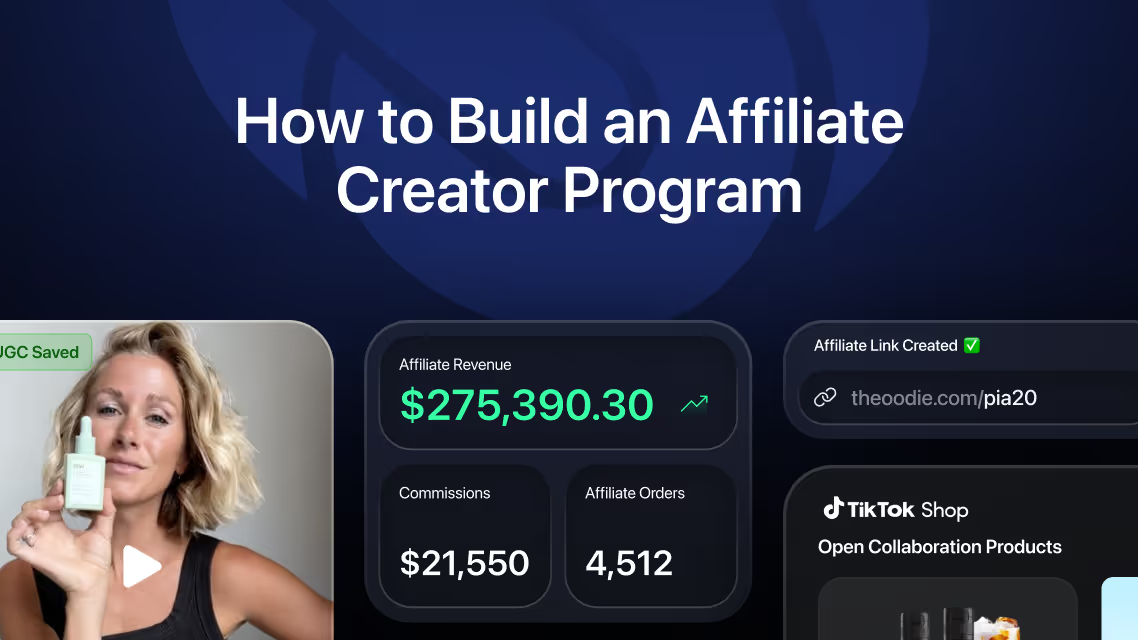
Every creator should have a unique tracking link and unique discount code. This connects every sale back to a specific creator and piece of content.
Tools like Social Snowball offer fraud protection with Safelinks. Every time a shopper clicks a creator’s link, a single-use discount code gets generated in real time. Each customer receives a different code, which keeps attribution clean and prevents codes from spreading across coupon sites.

The result is accurate revenue tracking, automated payouts, and direct comparison across creators. It gives both the brand and the creator full visibility into performance.
Measure true acquisition from creators
New customer acquisition shows how creators contribute to actual growth. Track:
- Number of first-time customers each creator brings in
- Revenue generated from those first purchases
- Share of total sales coming from new customers
This makes it clear which creators are introducing the brand to new audiences and driving fresh demand.
For example, a creator who consistently brings in first-time buyers increases your market reach with every post. That’s where you need to invest.
Identify which content actually drives sales
Creators produce the content but not all content performs equally.
Evaluate each piece of content based on revenue generated, conversion rate, and engagement that leads to clicks and purchases.
These metrics reveal which hooks, formats, and angles lead to sales.
For example, a results-focused video showing product outcomes can generate stronger conversions than a general overview. Once that pattern is clear, you can scale it across creators.
Build feedback loops into your program
Tracking only matters if it feeds back into execution. Strong programs close the loop:
- Share high-performing videos with creators
- Highlight hooks, formats, and angles that convert
- Run content challenges tied to specific themes or launches
This approach helps creators learn from real performance data and improve their output. As more creators adopt proven formats, content quality improves and revenue increases.
“They were pushing hundreds of creatives a week… ensuring that that content engine just learns and learns and learns.”
— Sambhav Chadha, Co-founder of Augmentum Media

Ready to build an affiliate creator program that actually drives revenue?
A strong affiliate creator program runs on structure.
It starts with an always-on system where creators stay active, and content keeps generating sales. It grows through aligned recruitment, clear incentives, and consistent output. It scales by tracking revenue at the content level and repeating what works.
As this comes together, the program becomes a steady acquisition channel, driven by continuous content and creator activity.
Social Snowball brings all of this into one system so you can actually run it at scale. You can:
- Automatically turn customers into affiliates after purchase
- Assign unique links and track revenue across creators and content
- Run tiered commissions, bonuses, and gifting campaigns
- Manage payouts without manual work
- Track and save UGC to identify top-performing content
This allows your team to focus on scaling creators and content, while the system handles tracking, payouts, and program management.