Influencer marketing has never been easier to measure.
Brands can track clicks, attribute sales, calculate ROAS, and monitor performance across nearly every stage of the customer journey. But despite better tools and bigger budgets, many creator partnerships still feel transactional and underperform expectations.
Why?
According to creator, entrepreneur, and wellness advocate Sophie Jaffe, many brands have become so focused on attribution that they overlook what makes influencer marketing effective in the first place: trust.
Creators are not simply producing content. They are putting years of audience credibility, personal reputation, and community trust behind every recommendation. And when brands treat partnerships like one-off media buys instead of long-term relationships, that trust becomes harder to build and easier to lose.
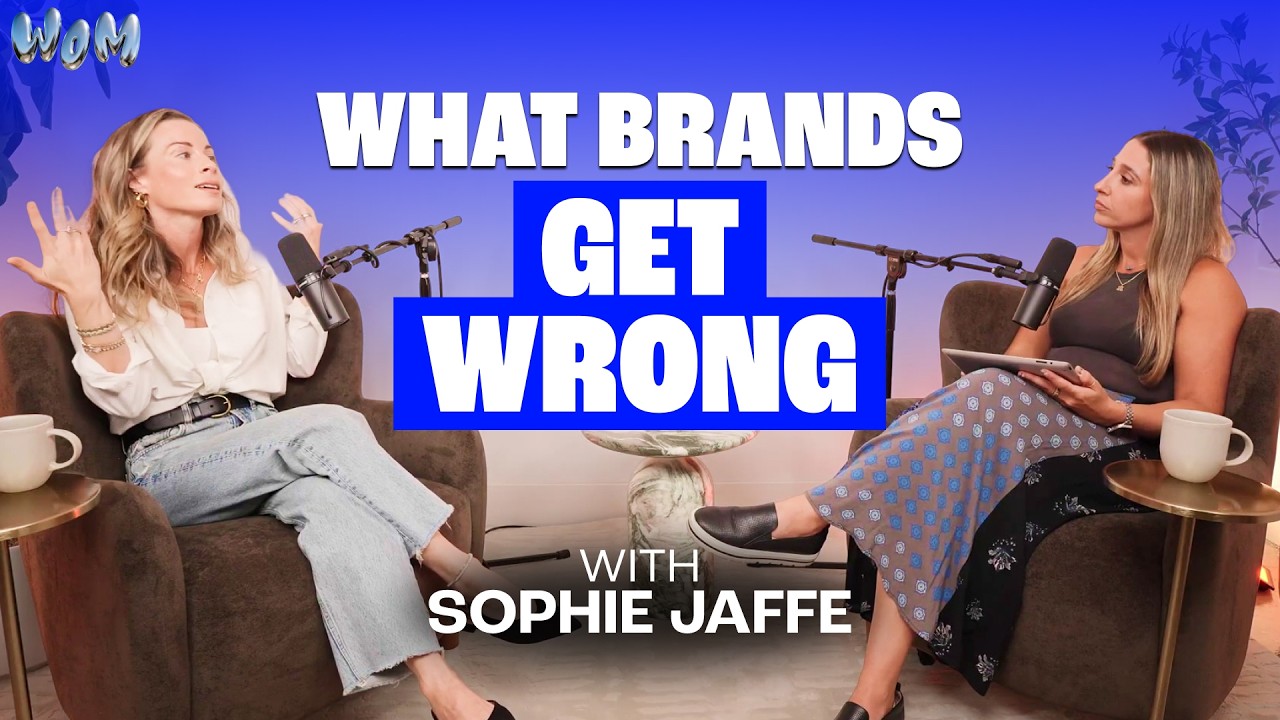
In an episode of Word of Mouth podcast by @Social Snowball, our host Robyn Nissim sat down with Jaffe to discuss how influencer marketing has evolved over the last 15 years, why long-term creator relationships outperform one-off campaigns, how brands should think about compensation, and why authenticity remains one of the most valuable assets a creator can build.
After more than a decade of building businesses, creating content, and cultivating a loyal community online, Sophie has developed a unique perspective on what separates strong creator partnerships from forgettable ones.
1. What are influencers actually saying about brands behind the scenes?
The conversation has changed a lot over the years because the industry itself has changed.
When I first started posting online, influencer marketing wasn't really a thing. Brands would send products and expect content in return, and at first it felt exciting. Then I realized I was spending money on photographers, coordinating shoots, creating content, and investing hours of work into something that was supposedly "free."
That was one of the biggest lessons I learned early on: nothing is actually free.
Every piece of content takes time. Every partnership requires effort. Every recommendation involves putting your reputation behind a product.
As creators, we're constantly evaluating whether a partnership is worth that investment. The brands that understand that tend to build much stronger relationships because they recognize the amount of work happening behind the scenes.
2. How did you accidentally become an influencer before influencer marketing existed?
I never set out to become an influencer.
I was building my superfood company, Philosophy, while raising two young children. At the time, social media felt more like a way to document my life than a career path.
I shared what was happening behind the scenes. I posted about entrepreneurship, motherhood, wellness, and the reality of trying to build something from scratch. Sometimes that meant bringing my kids to product demos because I couldn't afford childcare. Sometimes it meant talking openly about the challenges that came with running a business.
People connected with that honesty.
Looking back, I think what resonated wasn't the business itself. It was the fact that I wasn't pretending everything was perfect. I was simply sharing what life looked like at that moment.
Over time, that consistency helped me build a community. The creator side of things came much later.
3. What do brands misunderstand about creator partnerships?
One thing I wish more brands understood is what they're actually paying for when they work with a creator.
You're not just paying for a post.
You're paying for years of trust that have been built with an audience. You're paying for the relationship a creator has developed with their community. You're paying for the time spent researching a product, understanding a company, and deciding whether it's something worth recommending.
In my case, I've spent more than 15 years showing up consistently online. I've built credibility with my audience over a long period of time. When I decide to partner with a brand, I'm putting that credibility on the line.
That's part of the value.
You're also paying for access to an audience that trusts my opinion. You're paying for the platform I've built and for the confidence my community places in my recommendations.
A lot of brands focus only on the content itself, but the real value often comes from everything that happened before that content was ever created.
4. Why shouldn't creators be judged solely on direct sales?
I think one of the biggest mistakes brands make is assuming every creator's value can be measured through direct sales.
Of course, there are creators whose entire business model revolves around affiliate revenue and conversions. Their audiences are trained to shop through links and discount codes, and they're incredibly good at driving purchases.
But that's not how every creator operates.
I've spent years building a community, and that means I'm often one touchpoint in a much larger customer journey. Someone might discover a product through my content, see an ad a few days later, hear about it from a friend, and then finally make a purchase weeks later.
That's how buying decisions usually happen.
Awareness, trust, repetition, and long-term relationships all play a role in influencing purchasing behavior, even when those contributions don't show up neatly inside an attribution dashboard.
That's why I think brands need to evaluate creators more holistically. Not every partnership should be judged by the exact same metric.
5. What should brands do before reaching out to a creator?
I get partnership emails every single day, and it's usually pretty obvious when someone hasn't spent any time understanding who they're reaching out to.
Before contacting a creator, spend 20 minutes doing research.
Look at the content they're creating. Pay attention to how they engage with their audience. Understand what topics they talk about consistently and what makes their community unique.
A few questions brands should ask themselves include:
- Why is this creator a good fit for our brand?
- What type of content resonates with their audience?
- How do they typically work with partners?
- Are they affiliate-focused, community-focused, or awareness-focused?
- What value can we bring to the relationship?
I do that work when I approach a brand. If I've been using a product for months and want to collaborate with that company, I spend time learning about them first.
Creators deserve that same level of respect.
6. Why do long-term partnerships work better than one-off sponsorships?
Trust takes time.
If my audience sees me talking about a product once, that's one thing. If they see me genuinely using that same product for six months, that's something completely different.
Consistency builds credibility.
For example, if I'm recommending the same vitamin to my audience over an extended period, people can see that it's actually part of my life. They understand that I'm not promoting something simply because I was paid to post about it once.
That's why I believe long-term partnerships create more value for everyone involved.
Creators get the opportunity to build a genuine relationship with a brand. Audiences receive more authentic recommendations. Brands benefit from trust that compounds over time rather than disappearing after a single campaign.
The strongest creator partnerships don't feel like advertisements. They feel like natural extensions of a creator's everyday life.
7. What does fair creator compensation look like?
For me, it starts with recognizing that content creation is a business.
Behind every piece of content are real costs. There are photographers, editors, assistants, managers, contractors, and all of the other resources that help creators produce consistent work.
People sometimes see a finished post and assume it took a few minutes to create. In reality, there are often hours of planning, production, communication, and editing involved.
That's why I generally prefer a model that includes upfront compensation alongside performance incentives.
If it's a product I genuinely love, I'm happy to include an affiliate component. But I don't think creators should be expected to carry all of the risk.
The work still exists regardless of how a campaign ultimately performs.
8. Why are creators frustrated by attribution today?
One of the biggest frustrations creators have with modern influencer marketing is the lack of transparency.
Brands often ask creators to provide detailed audience insights, engagement data, click-through rates, and performance metrics. Most creators are happy to share that information.
The challenge is that transparency doesn't always go both ways.
In many cases, creators are expected to drive results without ever seeing the data that explains what's working and what isn't. If a brand wants me to help improve performance, I need visibility into how that performance is being measured.
I need to understand what success looks like. I need to know what's converting and what's not. I need context.
The best partnerships I've experienced feel collaborative. Both sides share information, learn from the results, and use those insights to improve future campaigns.
When creators are treated like partners instead of vendors, everyone benefits.
9. Why did you decide to shut down Philosophy after 15 years?
Philosophy was a huge part of my life.
I started it in my kitchen and spent years growing it into a real business. It created opportunities I never could have imagined and helped shape so much of who I became as an entrepreneur.
But eventually I reached a point where I had to make a decision. The business either needed another major growth push or it needed to close.
When I looked honestly at my life, I realized I didn't want to spend another decade grinding. I wanted to be present with my family. I wanted to enjoy the life I had built. I wanted to create space for new opportunities.
The reason I was able to make that decision is because I had already done the work of separating my identity from the company.
I wasn't Philosophy. Philosophy wasn't me. It was something I built, something I loved, and something I was proud of. But it wasn't my entire identity.
That distinction made it much easier to let go when the time came.
10. Do creators have a responsibility to use their platform for more than selling products?
I do.
Not everyone agrees with me, and that's okay, but I believe that if you're benefiting from a platform and building a community, you have a responsibility to care about the world around you.
That doesn't mean you need to comment on every issue or become an expert on everything happening in the news.
It simply means being willing to use your voice when something genuinely matters to you.
I've had conversations with people who disagree with me, and some of those conversations have been incredibly valuable. I don't think we grow by surrounding ourselves only with people who think exactly the same way.
At the end of the day, I'm a human being before I'm an influencer. I want my platform to reflect that.
11. Is it exhausting to be authentic online?
Honestly, I think pretending would be far more exhausting.
Trying to maintain a version of yourself that isn't real sounds incredibly difficult. Constantly filtering every thought, every opinion, and every experience would take so much energy.
When I share my life honestly, there's nothing to maintain.
People know who I am. They know my values. They know what I care about.
One of the best compliments I receive is when someone meets me in person and says, "You're exactly who I expected you to be."
That's what authenticity looks like to me.
12. What's your advice for creators who struggle to show up authentically?
I think people dramatically overestimate how much everyone else is paying attention.
Nobody cares as much as you think they do.
I mean that in the most liberating way possible.
People aren't analyzing every detail of your content. They're not obsessing over whether your hair looked perfect or whether you stumbled over a sentence.
I don't do endless reshoots. I don't spend hours chasing perfection. I trust that we got what we needed and move on.
The more perfectionistic you become, the harder it becomes to create authentically. Perfection creates distance. Authenticity creates connection.
If you're constantly waiting until everything feels perfect, you'll never post anything.
The best thing creators can do is start before they're ready, learn through the process, and trust that their audience is looking for something real rather than something flawless.
13. What do you hope people remember when they think about Sophie Jaffe?
I hope people feel empowered to be themselves.
That's really what it comes down to. Whether I'm talking about entrepreneurship, wellness, parenting, relationships, or content creation, the message is ultimately the same. I want people to trust themselves.
I want people to feel comfortable showing up as who they are rather than who they think they're supposed to be.
Authenticity isn't something you perform. It's something you practice.
The more aligned you become with who you really are, the easier everything else becomes.
Key takeaways from the conversation
Throughout the conversation, a few themes came up repeatedly around what creators actually value in partnerships and what brands continue to misunderstand about influencer marketing.
Here are the biggest takeaways:
- Creators are investing far more than a single post: Every partnership involves research, production, communication, audience trust, and the creator’s reputation.
- You are paying for trust, not just content: Brands are buying access to years of credibility and audience relationships built over time.
- Not every creator should be judged by direct sales: Some creators drive awareness, trust, and long-term influence that may not show up cleanly in attribution dashboards.
- Research matters before outreach: Creators can immediately tell when a brand has not spent time understanding their audience, content style, or values.
- Long-term partnerships build stronger trust: Repeated exposure feels more authentic than one-off sponsorships and creates credibility that compounds over time.
- Compensate creators fairly: Creating content is real work. Compensation should reflect the time, expertise, and resources required to produce high-quality content.
- Transparency should go both ways: Creators want visibility into performance data, attribution, and what success actually looks like for the partnership.
- Authenticity is still a competitive advantage: Audiences connect with people, not polished marketing messages. The creators who build lasting communities are often the ones willing to show up as themselves.
- Perfection often hurts content creation: Waiting for everything to feel perfect usually creates distance between creators and their audience.
- The best creators build connection, not just influence: Strong creator relationships are built through trust, consistency, shared values, and genuine community over time.
- Creators are people before they are marketing channels: The strongest partnerships recognize the human side of content creation, not just the performance metrics attached to it.
What brands can learn from this beyond creator marketing
One of the most interesting ideas throughout this conversation is that Jaffe’s advice extends far beyond influencer partnerships.
Whether you are working with creators, affiliates, ambassadors, employees, or loyal customers, the same principle shows up repeatedly:
People advocate for brands they trust.
The strongest word-of-mouth programs are not built around transactions alone. They are built around relationships.
Brands that consistently generate advocacy create systems where people feel valued, supported, fairly compensated, and genuinely connected to the product or company they are representing.
That is why the best creator and affiliate programs do not focus only on short-term conversions. They invest in trust first and create experiences that make people want to keep showing up over time.
For ecommerce brands, that matters more than ever. Sustainable growth comes from customers, creators, and advocates who genuinely believe in what they are sharing.
If you are ready to build a scalable word-of-mouth engine through creators, affiliates, ambassadors, and customer advocates, see how leading ecommerce brands use Social Snowball to turn authentic advocacy into measurable growth.
.avif)