.png)
New ecommerce brands often don't have the kind of budget they need to go big on creator partnerships.
So how do you get started if you’re working with a limited budget?
When Electro launched, they didn’t have any external funding or a big budget to work with large creators or send thousands of product samples.
Jose Gutierrez and his co-founders had to figure out how to build a creator program without the budget that their competitors had. So they dialed in a cost-effective strategy that went a mile deep and an inch wide – investing exclusively in college athletes as creator partners.
At the Influencer Marketing Summit: Summer '26, Kenyon Brown, co-founder of CreatorCommerce, sat down with Jose to break down how that decision took Electro from a single-product store to a 7-figure run rate, with athletes now driving 81% of their revenue.
Here’s how they did it…
1. Don't compete for the same creators everyone else wants
Big creators are usually the hardest to recruit. They already work with several brands, have a steady stream of partnership requests, and require a larger budget.
Jose Gutierrez, with his co-founders Michael Stefanov and Cade Higgins, took a different approach.
As former college athletes, they watched NIL opportunities (the ability for college athletes to earn from their name, image, and likeness) flow almost entirely to the biggest names in college sports.
Other athletes weren’t attracting brand partnerships despite having their own communities and audiences.
“Hundreds of thousands of athletes were being completely left behind with no NIL money, and no recognition.”
Teammates looked up to them, students followed them, and their communities already trusted their recommendations.
“A college athlete is a hero on campus. It's the most followed person in their school that has a fan base that already kind of looks up to them and trusts what they have to say.”
When building your own creator pipeline, pay attention to three things:
- Existing influence: Who do people already listen to in your niche?
- Audience connection: Does the creator have a relationship with their audience beyond content views?
- Brand competition: Are other companies already fighting for their attention?
2. Make it easier for creators to start promoting with ready-to-use assets
The first few days after creator onboarding are critical. That window determines if a creator pops or goes dark. Plan and give them assets, like products, links, and creatives that they can use immediately instead of making them wait.
That's exactly how Jose approached Electro's onboarding.
"We differentiated ourselves by never sending product first. Instead, we over-delivered on digital assets."
Jose’s team researched every athlete before sending an invitation. Their outreach and onboarding were personalized to the creator, making it feel intentional and genuine. This helped foster stronger partnerships, showing creators that the Electro team was invested in them.
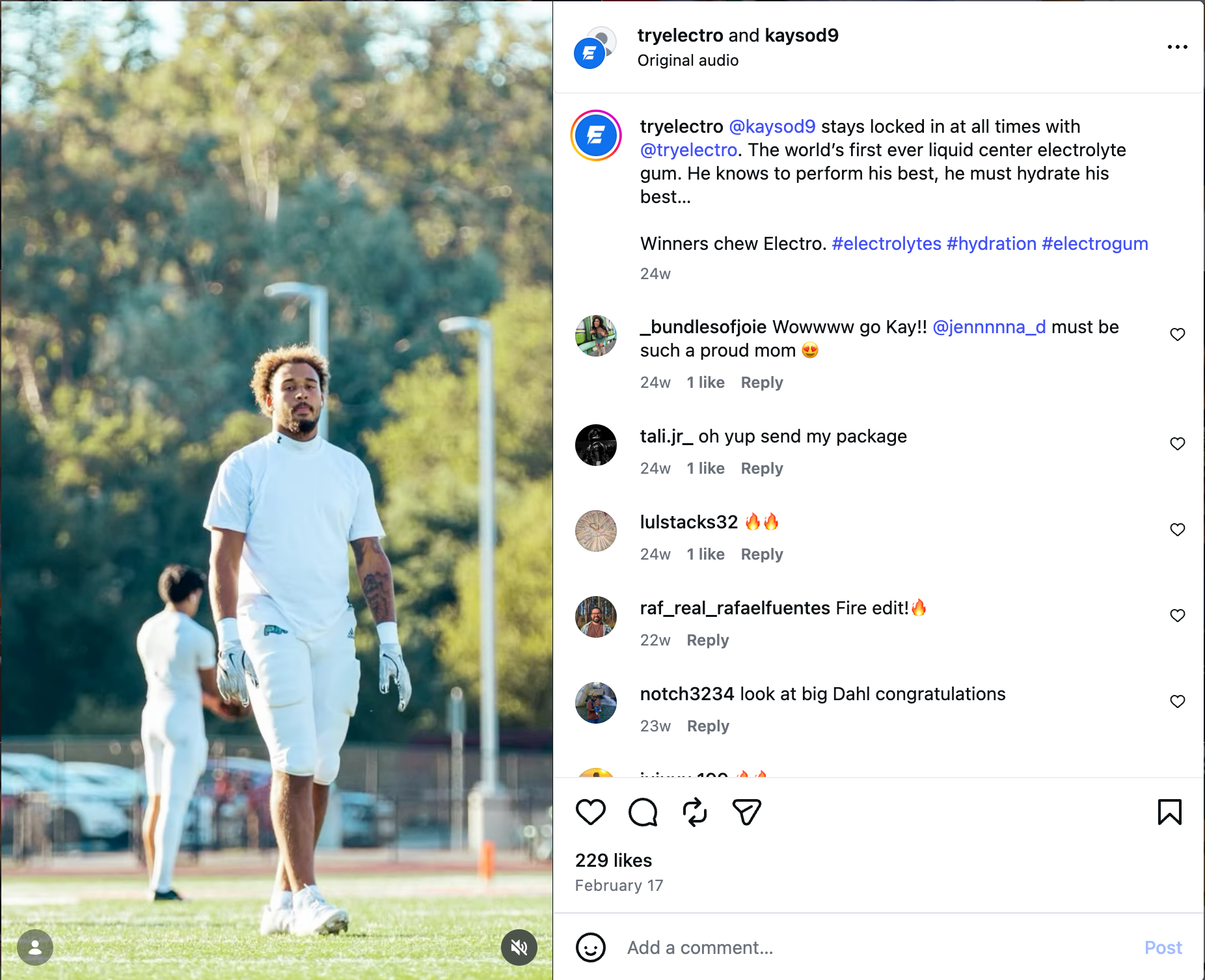
For athletes who joined their affiliate program, Jose’s team shared multiple digital assets at onboarding:
- Social Snowball’s Safelinks: fraud-protected affiliate links
- 5 custom graphics featuring the athlete's photo
- Standard 10% commission on sales
- Personalized messaging on Instagram
- Custom Notion onboarding pages with different digital rewards that resonated with the athletes
This way, athletes could post and start promoting Electro as soon as their partnership started.
"For almost every one of them, we were the first brand that ever reached out and cared about their image, so they felt so special that they went harder for us in pushing for sales than any other paid creator ever would."
Your onboarding experience sets the tone for the entire creator relationship. Start by reviewing how you onboard creators:
- Do creators receive branded assets they can publish immediately?
- Does your onboarding reference something specific about the creator, their content, or their community?
- Are creators searching for information about the campaign, or does onboarding answer their most common questions?
- Are you providing clear next steps and guidance beyond giving them an affiliate link?
3. Design your program around progress
Jose built Electro's affiliate program around measurable milestones. Their creators are all athletes after all, so it makes perfect sense to use a little friendly competition.
"Since athletes are competitive, they're wired to chase a number. They were out there trying to generate sales."
Every athlete starts as a Tier 1 ambassador. Reaching 10 sales or 5 subscriptions unlocks the next tier, along with additional products and branded merchandise.
Jose described the tier system as giving athletes a scoreboard.
"We stopped hoping creators would post, and we instead gave them a scoreboard and a clear direction on how they could scale with our program."
Milestones should reinforce the goals you have for your creator program. If sales matter most, reward sales. If you’re trying to generate more content, reward publishing consistently.
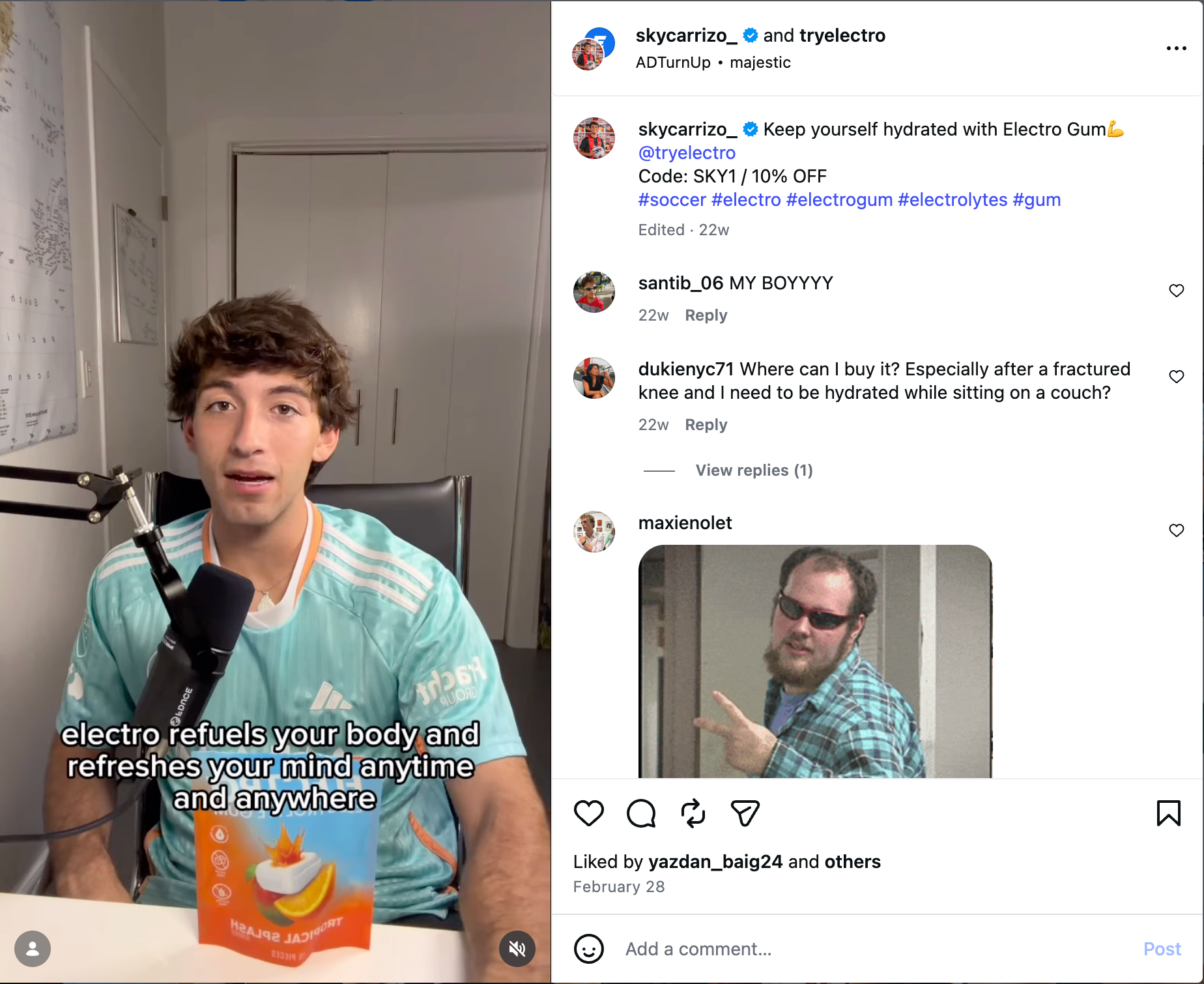
4. Make every creator feel like a part of your brand
Like most creator programs, Electro’s athletes were sending traffic to PDPs (Product Detail Pages), collection pages, and sometimes just the homepage. But that creates a fragmented experience for consumers and fewer conversions. Their discovery journey started with a specific product recommendation from a creator-athlete they trust. That should flow naturally into the post-click experience.
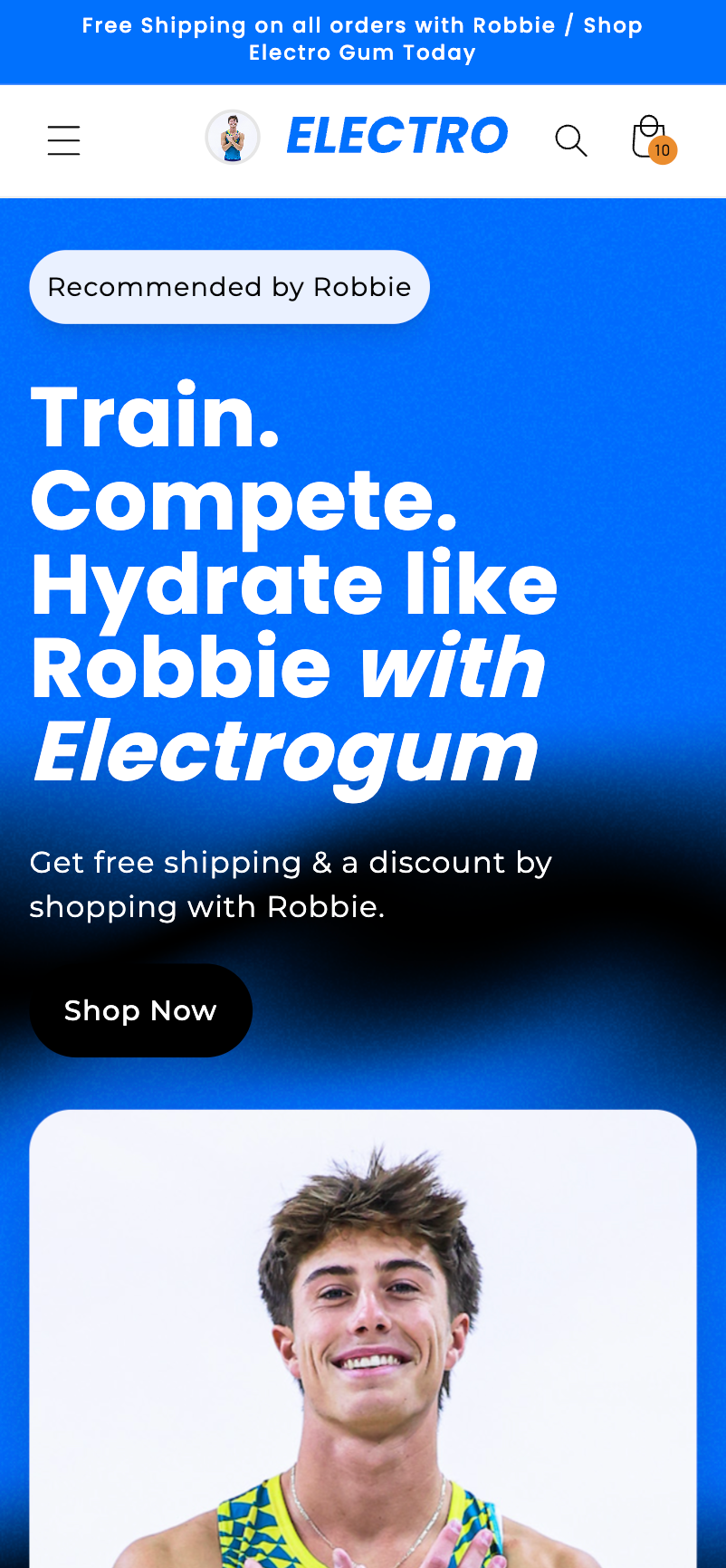
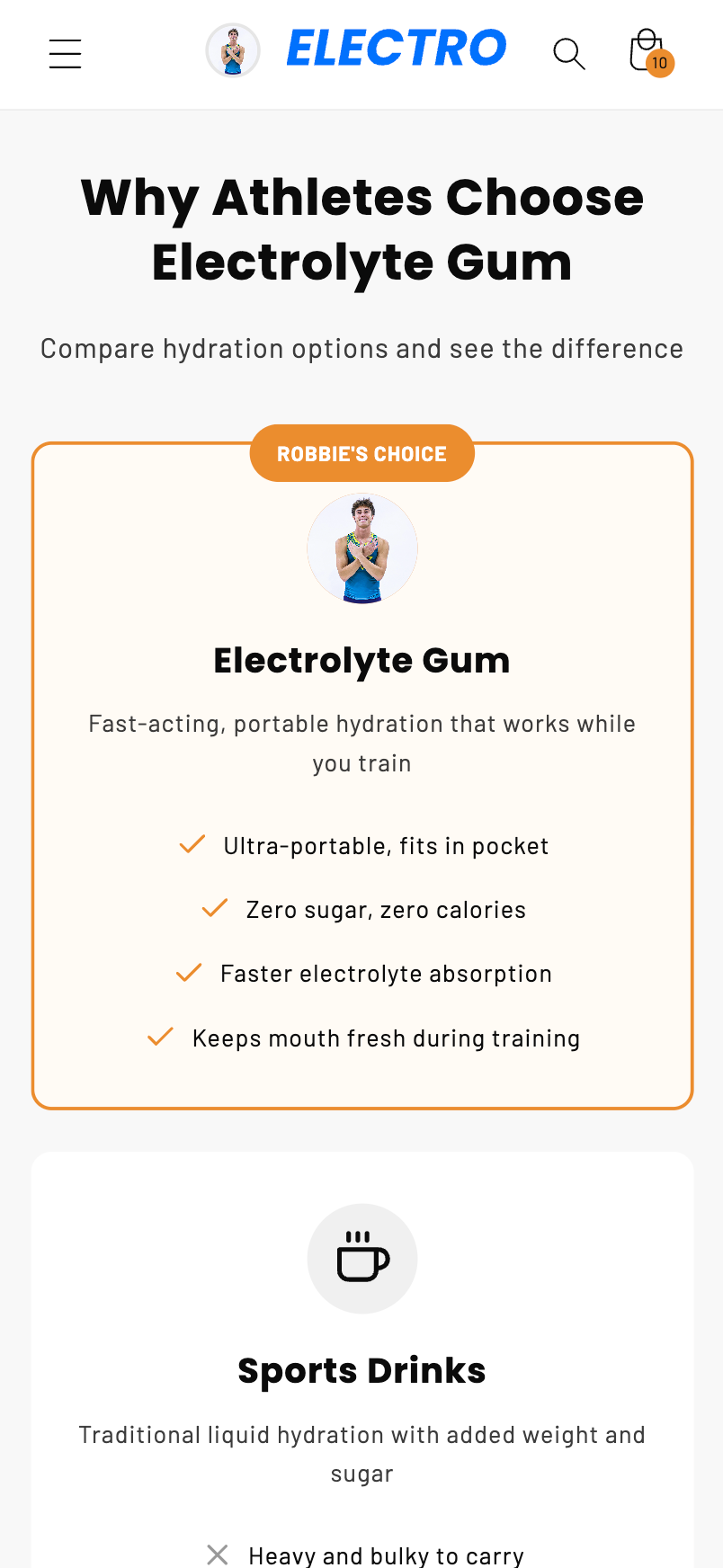
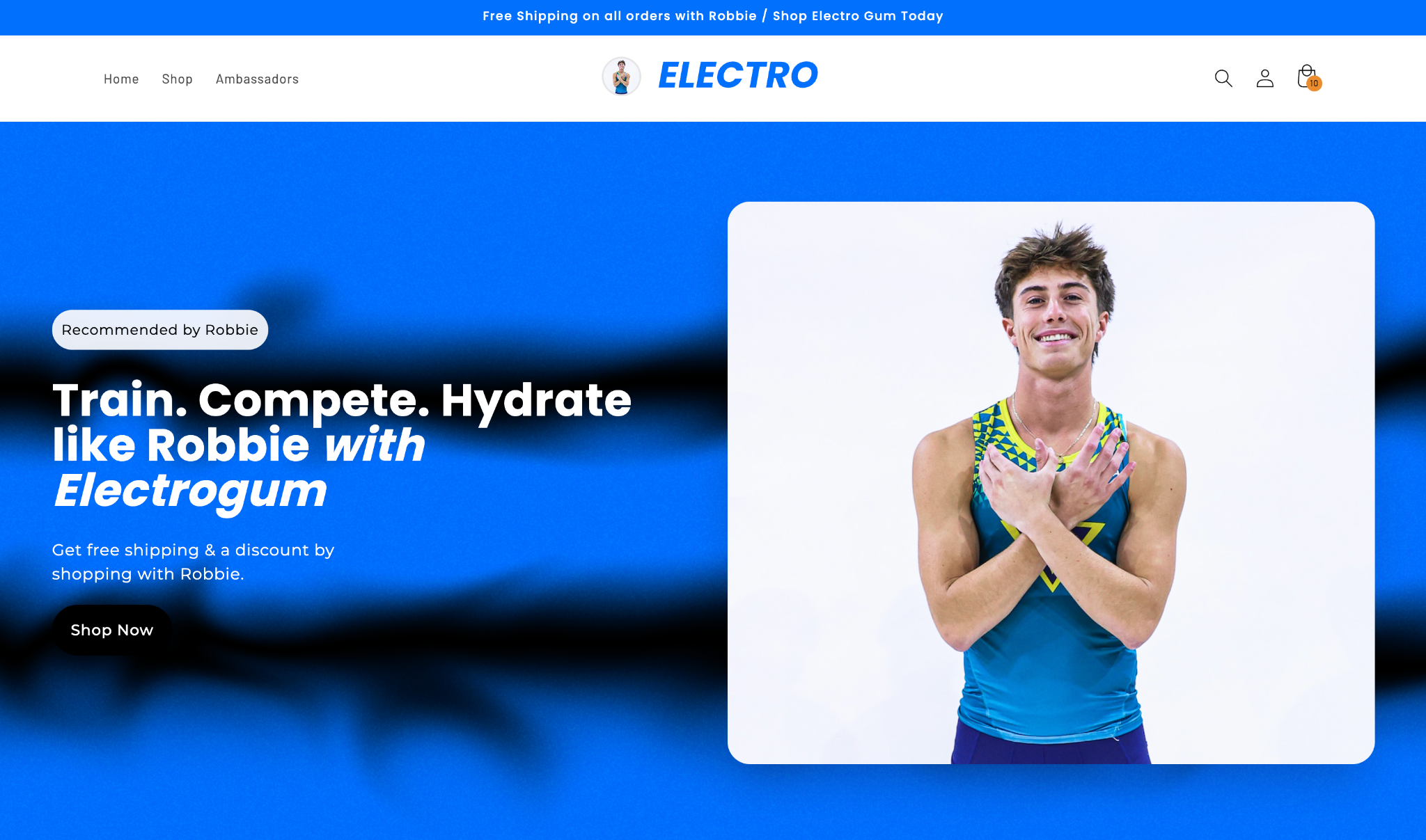
To fix this, Electro teamed up with CreatorCommerce to build co-branded affiliate storefronts: landing pages personalized to the creator. Each page featured the athlete's name, photo, and content alongside the products they recommended from Electro.
"Everyone sees their face on a real brand's website... it makes them feel like a professional player... and makes them sell even harder."
This personalization helped Electro double their conversion rates from 3% to 6% and doubled revenue generated per athlete.
With personalized affiliate storefronts, Jose’s team saw conversion rates increase by 174%.
“Overnight, with CreatorCommerce, we're able to double the revenue we're making per athlete and double the conversion rate.”
5. Turn creator content into a paid acquisition engine
Treat creator content like a full funnel asset, especially when it comes to producing ad creative.
To leverage creator content beyond an organic post, you need a process to identify top-performing creative, secure usage rights, and run them in paid ad campaigns.
The Electro team regularly sources high-performing ad creative from their creators and runs Partnership Ads on Meta, directing shoppers to the athlete's personalized co-branded landing page.
"Our ad account started performing at a 7x ROAS, up from 1.5x."
The combination of Partnership Ads and creator-specific landing pages helped Electro scale to seven-figures within a few months.
"It's not only the benefit of the top-of-funnel awareness and the community you're building, but also a direct ROI that converts like anything else you've ever seen on ads or a conversion rate level on the website."
6. Build repeatable systems that compound
Creator programs become more valuable when every part reinforces the next: niche creators, engaging content, a website experience personalized to the creator, top-performing creator content repurposed into ads.
This is how Jose’s team approached their creator program, and it now fuels their entire business.
"It's a replicable system, an engine that can apply to pretty much any product that an athlete can promote."
As your creator program grows, understand what consistently drives results:
- Which creator segment responded best?
- Which onboarding assets got creators publishing faster?
- Which milestones kept them engaged?
- Which creator videos performed well enough to use in paid?
These insights allow you to optimize your program and build more effective creator campaigns.
"Athletes quickly became 81% of our revenue. It went from a side channel and an idea to our biggest single revenue engine."
Build a creator engine, not just a creator program
As your creator program grows, you'll need to spend more time managing content, affiliate links, commission payouts, creator communication, and performance. Keeping those workflows organized becomes just as important as bringing new creators into the program.
Social Snowball unifies those workflows into one platform. Recruit creators, run gifting campaigns, turn customers into ambassadors, eliminate affiliate code leaks, process payouts, save creator content, and measure attributable revenue, all from one dashboard.