Most brands still run influencer marketing the same way: fixed-fee posts planned in campaigns and launched in bursts. While this approach creates visibility, it doesn’t scale into consistent revenue. Content comes in waves, results are hard to repeat, and every campaign starts from zero.
At Social Snowball’s Influencer Marketing Summit, this came up across sessions. Operators like Joshua Cohen (Co-founder & CEO, Pinpoint), Jordan West (President, Social Commerce Club), and Nichole Munoz (Co-founder, EZ Bombs) all pointed to the same shift.
Leading brands are moving away from campaign-based influencer marketing and building creator programs that run continuously.
This guide breaks down what’s changing, why it works, and how teams are actually implementing it.
Paying for posts doesn’t build a growth channel
Influencer marketing has always been easy to launch. You find a creator, agree on a fee, and get content live. Early on, that works because the goal is simple: get visibility and test what resonates.
But as brands push for consistent revenue, the same structure starts to limit growth.
Creator partnerships are still being treated as isolated transactions. Each post is expected to perform on its own without any connection to what came before or what comes next.
Joshua Cohen, Co-founder and CEO of Pinpoint, pointed out that from a creator program perspective, the metrics that matter most are impressions and CPM. These show how broadly and efficiently you're reaching new audiences over time.
Revenue doesn’t come from optimizing individual posts. It comes from consistently reaching new audiences over time. When every collaboration is isolated, that compounding reach never builds.
Nik Sharma, CEO of Sharma Brands, tied this back to how teams think about spend.
The core issue is treating influencer marketing like a media buy—paying for a post and hoping it performs, without a system behind it.
Over time, that structure creates a ceiling. Content output remains inconsistent because each collaboration must be negotiated and funded from scratch. Learnings don’t carry forward in a meaningful way and revenue depends on isolated wins instead of a system that improves over time.
The model keeps restarting. Without continuity, it’s difficult to turn creator marketing into a reliable growth channel.
Brands are moving from campaigns to creator ecosystems
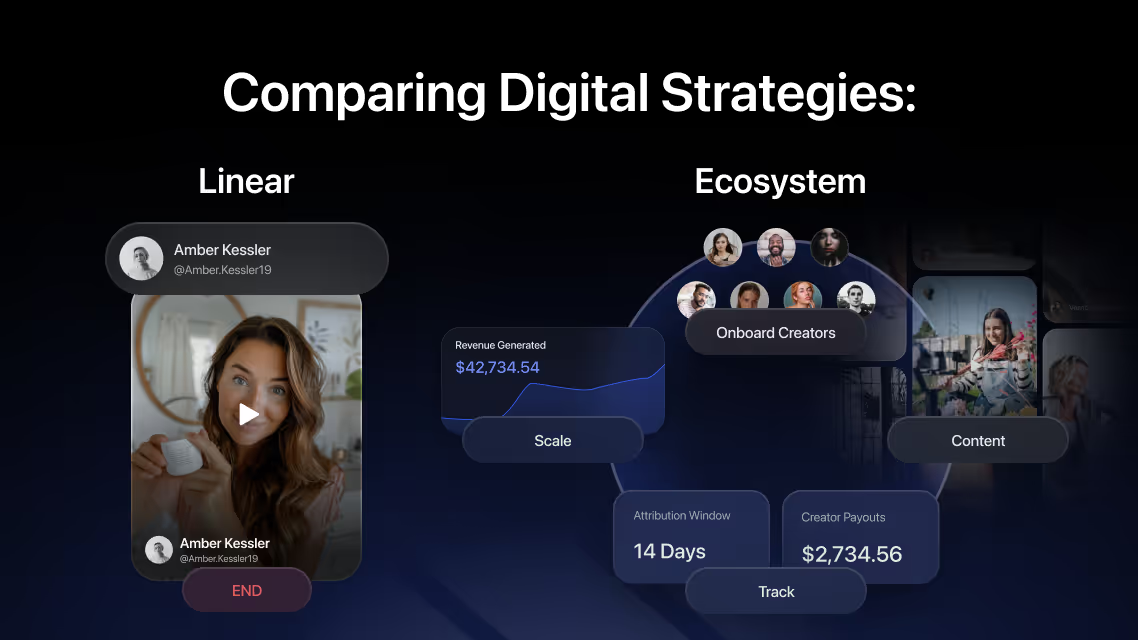
Creator campaigns follow a fixed cycle. You recruit creators, send out products or briefs, wait for content to go live, and review performance after it’s done.
Once the campaign ends, activity drops until the next batch of creators is lined up. That gap is where the problem shows up.
Norman Chu, Founder at Digital AgenZ, explained that one-off collaborations leave nothing to build on. Each post is treated as a separate effort, so even when something performs well, it doesn't turn into a repeatable approach.
Growth starts to look different once creators stay involved over time.
Instead of planning around launches, brands keep onboarding creators continuously. Content doesn’t come in bursts anymore. Instead, it’s shared every week across different creators, formats, and angles.
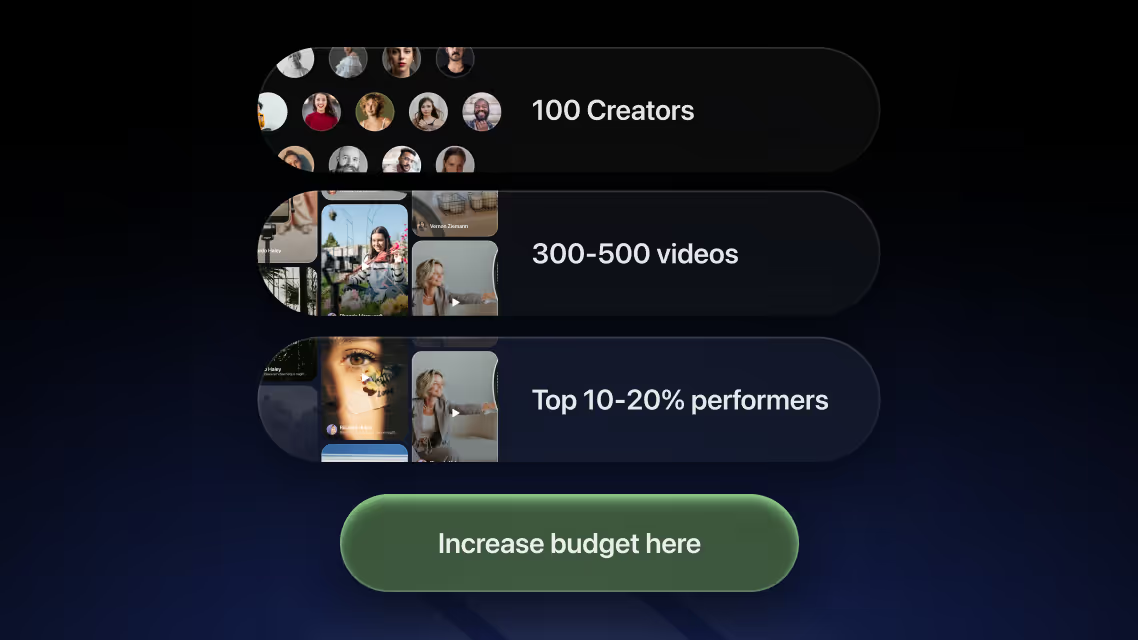
Nichole Munoz shared how her team approached this. The focus was on activating as many relevant creators as possible and keeping them engaged over time. To date, their program has had more than 450,000 affiliates post on TikTok Shop, a number that grew through consistent participation, not a few high-profile partnerships.
“We scaled by working with a large number of affiliates simultaneously.”
When a program is set up this way, performance improves through repetition. Creators understand the product better. Content becomes easier to produce. The team can see which creators and formats actually drive orders.
Jeremy Fenderson, Senior Director of Strategy at AdQuadrant, described the winning approach as building a system rather than running isolated campaigns. The goal is to get products into the hands of relevant creators quickly, identify who actually converts, and reallocate budget toward those performers.
When a program is set up this way, performance improves through repetition. Creators understand the product better. Content becomes easier to produce. The team can see which creators and formats actually drive orders.
Why performance-based payouts are replacing flat fees
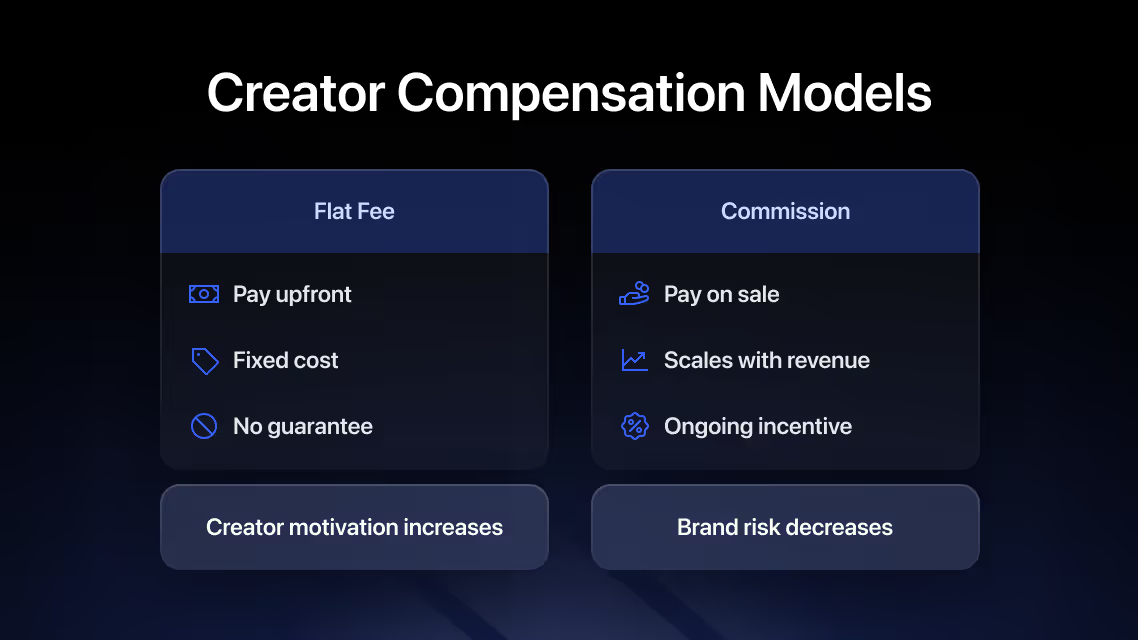
Once brands move beyond one-off campaigns, payment structure becomes the next constraint. Flat fees work when the goal is to get content live. But they become harder to justify when creator marketing is expected to drive revenue.
Cohen explained how this shift is already happening. Creator programs are starting to function like performance channels, where spend is tied directly to outcomes. That changes how both sides approach the partnership.
With upfront payments, the cost is fixed before the results are clear. A piece of content may perform or it may not. The structure doesn’t change either way.
Why affiliate payouts work
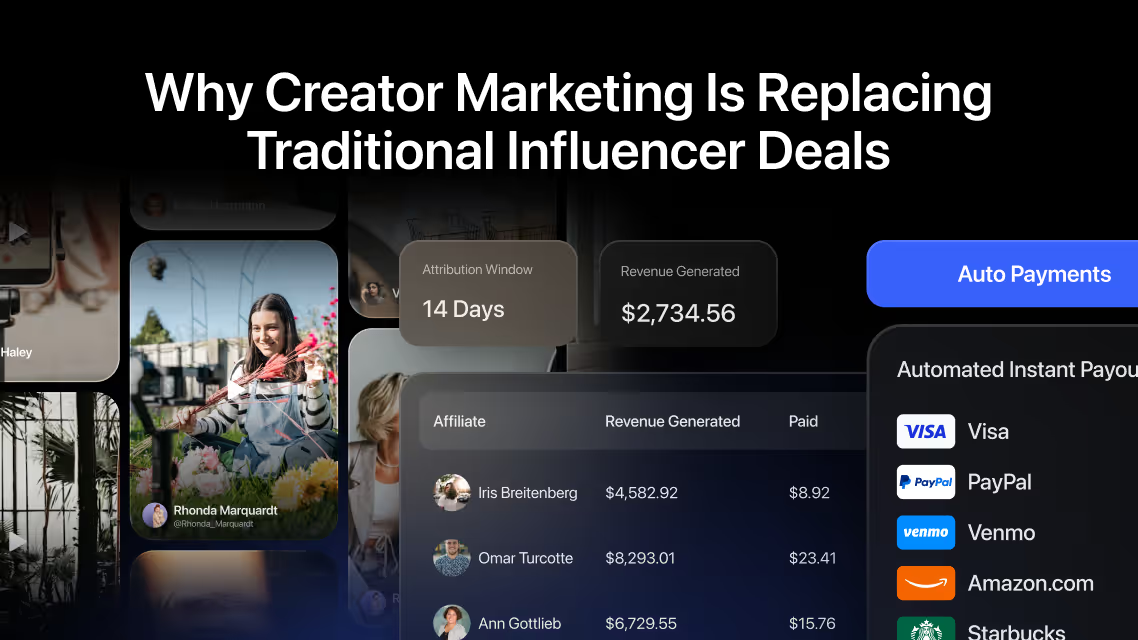
With performance-based payouts, the dynamic is different. Creators earn based on what they generate. That gives them a reason to keep testing and improving their content, rather than treating each post as a one-time deliverable.
The shift also changes how brands think about scale.
Richie Carreon, VP of Marketing at Levanta, pointed out that most teams limit creator payouts based on first-purchase margins. That keeps commissions low and restricts who you can work with. When lifetime value is factored in, the ceiling expands. Higher payouts become viable, and stronger creators stay engaged longer.
West connected this directly to TikTok Shop, noting that the platform's affiliate model is built around aligned incentives. Creators are motivated to keep producing because their earnings are tied directly to what they drive, not what they post.
That alignment simplifies decision-making. Spend increases where revenue is already coming in, and underperforming creators naturally drop off. Over time, the program grows based on performance signals, not assumptions.
Creators perform better when they control the content
Content performance came up repeatedly across sessions, and the pattern was clear. The content that drives sales usually comes from creators building it in their own style, not following a tightly written brief.
Kayla Marcum, Influencer Marketing Manager at DUDE Wipes, shared a framework her team uses when entering new categories. Rather than reaching out to creators broadly, they identify what she calls "lifequakes"— moments when consumer routines are already changing and new habits are forming.
For their Little Dude Wipes launch, that moment was potty training.
The team used social listening to identify creators already talking about that stage, then reached out while that content was actively surfacing. Timing did most of the work.
Since the product showed up when it was actually needed, the content landed as a recommendation, not an ad. Creators were already in the context, making the integration feel natural.
As a result, organic posts were driven by gifting alone without needing a paid brief to drive them.
Other teams approach content production in a similar way.
Chelsea Klika and Kelsey Eyers from Collab Collective pointed out that chasing polished, campaign-style content often limits performance. Brands that focus on volume see better results because creators are free to experiment and find what works within their own format.
What actually drives conversions
When creators take the lead, content starts from a real situation instead of a product pitch.
Tamanna Bawa, Tech Partner Manager at Triple Whale, highlighted that high-performing content tends to follow formats that show a clear before-and-after, like problem-solution demos, authentic personal stories, and real transformations.
These are effective because the viewer doesn’t have to figure out why the product matters. The context is already built into the content.
When creators shape the content themselves, that context feels natural because it matches how they usually communicate. That’s what makes the difference.
Long-term creator relationships drive repeat revenue
Creator marketing starts to generate consistent revenue when the relationship continues beyond a single post. Robyn Nissim, CEO and Founder of Social Proof Agency, described creator communities as people who keep talking about a brand over time. That continuity changes how the product shows up in content.
A single post introduces a product, and repeated mentions make it familiar.
Cassandra Bankson from Digital AgenZ added the creator’s perspective. When a creator works with a brand more than once, the content becomes easier to produce. The product fits into their routine, and the way they talk about it becomes more natural.
That shift shows up in performance.
How brands keep creators engaged over time
Sustained output comes from how brands manage the relationship, not just how they recruit creators.
At the summit, multiple speakers pointed to the same set of actions. Brands that scale creator programs stay in regular contact, share what content is working, and keep creators informed about new opportunities.
Communication moves out of scattered DMs into more structured channels. Many teams use WhatsApp or Discord to keep creators updated and aligned.
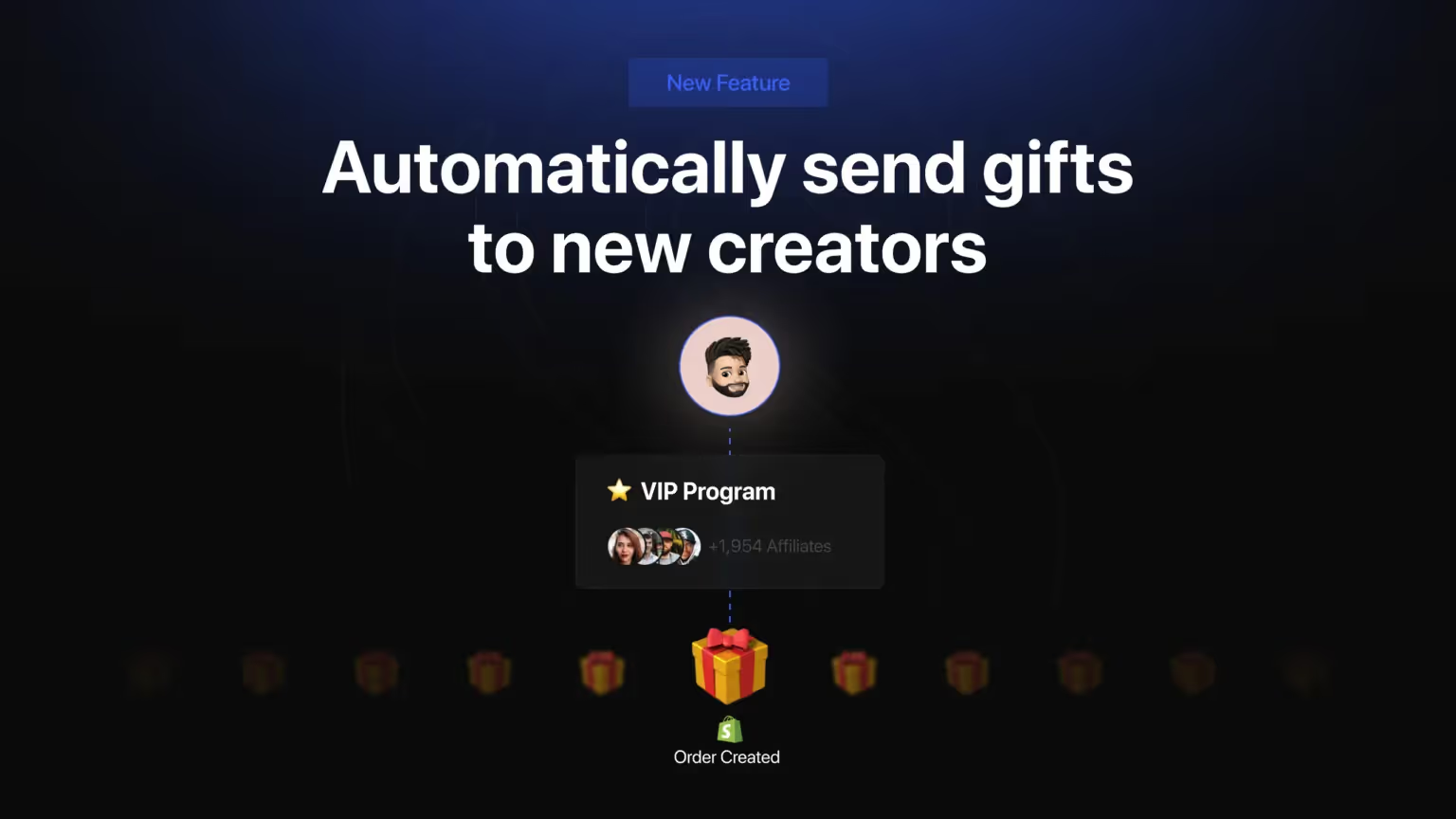
Recognition also plays an important role. Creators who perform well are given better commission tiers, early access to products, or more visibility within the program. These actions keep creators active without needing to restart the relationship each time.
What makes large creator programs actually work
As the number of creators increases, consistency becomes operational.
Alex Choi, Senior Brand Manager at AquaTru, explained that large programs depend on clear systems. Creators need straightforward onboarding, clear expectations, and reliable payouts. When those basics are in place, creators continue participating without friction.
Structure keeps the program running. But it’s the smaller details that keep creators engaged.
Chris Chisholm, Director of Talent Management at G Fuel, put it simply:
“Treat everybody as inherently valuable.”
His team builds personal touchpoints into the process, from recognizing milestones to sending tailored gifts. Those interactions make the relationship feel ongoing, even at scale.
How repeated exposure drives conversion
When creators stay active, the product appears multiple times across their content instead of once.
The first post introduces it, and later posts show how they use it in different situations. That repetition changes how the audience responds.
Viewers are no longer seeing something new. They’re seeing something that’s already been used, tested, and talked about more than once.
Several speakers highlighted that this kind of exposure often leads to conversions outside the initial post. A viewer might not buy immediately, but familiarity increases the likelihood of purchase later, whether on TikTok Shop, the brand’s site, or another channel.
Creator content now feeds your entire growth engine
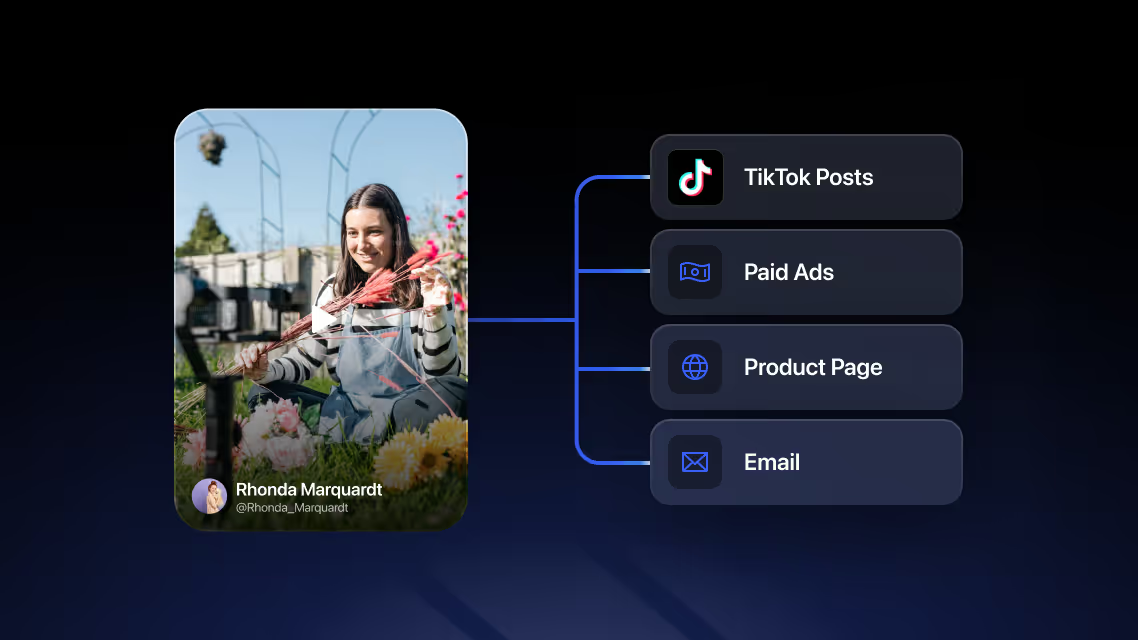
Creator content starts as a post. It becomes valuable when you reuse it across your growth channels. In his session, Sharma explained this shift clearly:
“Influencer content is like the new TV.”
That means you don’t treat it as a one-time deliverable. You treat it as a recurring input into your marketing. Sharma pointed to several ways brands are already doing this.
- The same content that performs organically can run as a paid ad without being reshot.
- Creator footage can replace static product descriptions on PDPs, showing the product in real usage context.
- In email flows, instead of announcing features, brands are showing how real people already use the product.
One piece of content starts working across multiple channels, making the overall effort more efficient.
Sambhav Chadha, Co-founder of Augmentum Media, backed this up with a concrete data point from his agency's work. Whitelisting and partnership ads, where creator content is amplified through paid, were delivering 15–20% lower CAC compared to content promoted directly from the brand's own handle on Meta.
The advantage comes from scaling content that has already proven it can drive results. Rather than constantly producing new creatives, the focus shifts to distributing what's already working.
What replacing influencer deals actually looks like
Moving away from one-off influencer campaigns changes how you run the entire program. The focus shifts from managing individual posts to building a system that continuously drives content and revenue.
Fenderson summed it up well:
"The losing playbook is, let me get 5 creators and get polished UGC, and we'll see what happens. But the winning playbook is actually building a machine that gets the product into the hands of relevant creators, and identifying the converters as fast as possible."
That system comes together in a few clear steps.
1. Start with a smaller creator set, then scale volume
Begin with a small group of creators who already align with your audience.
Myah Christenson, affiliate and creator partnerships manager at SEEQ, emphasised the importance of alignment. Look for creators whose content, audience, and positioning match your product, then track who actually drives sales.
Once you identify early converters, scale around them.
Add more creators with similar profiles and build from what’s already working.
2. Replace campaigns with continuous onboarding
Campaign-based outreach creates gaps. Once a campaign ends, content slows down and sourcing has to restart.
Instead, shift to continuous onboarding:
- New creators enter the program every week
- Existing creators stay active over time
This keeps content production steady and removes the stop-start cycle.
3. Prioritise content velocity over perfection
High-performing programs don’t rely on a few polished posts. They rely on volume.
Bawa pointed out that brands driving real revenue are producing content at scale, often dozens of videos per week.
The goal is to test more angles, not perfect each one. More output leads to quicker feedback, which makes it easier to identify what actually drives conversions.
4. Measure what actually reflects growth
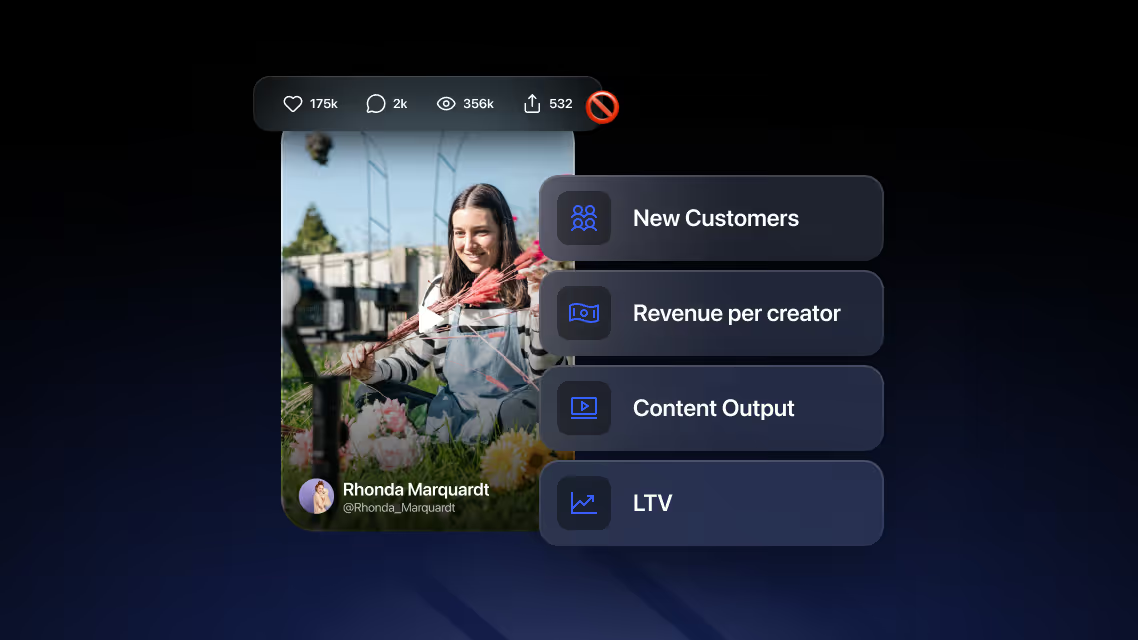
Creator impact rarely shows up in a single click or conversion.
Focusing only on direct attribution misses how content influences discovery, consideration, and repeat exposure.
Track what actually reflects growth:
- How many new customers are coming from creators
- How much revenue each creator is generating
- How consistently content is being produced
- How creator content supports other channels like paid ads
Want to build a creator program that actually drives revenue?
Creator marketing starts working when output stays consistent, and performance helps you decide where to invest. That requires a setup where new creators keep entering the program, existing creators keep posting, payouts reflect actual sales, and top performers are easy to identify and scale.
Without that structure, content slows down and results become unpredictable.
Social Snowball gives you the infrastructure to run this without manual work. It automatically turns customers into affiliates after checkout, assigns each creator a unique fraud-protected referral link for clean attribution, and centralises payouts, gifting, and communication.