Affiliate marketing can drive consistent revenue, but running the program often feels more demanding than it should. You’re reviewing affiliates one by one, checking performance manually, fixing tracking gaps, and spending time on payouts instead of growth.
That’s why ecommerce brands are adding AI and automation directly into their affiliate workflows. These tools help them find relevant affiliates, go them live faster, and track performance without managing each step manually.
This guide walks you through what AI affiliate marketing really means, where it fits into your workflow, and how to use AI tools to run an affiliate program that scales without extra overhead.
What is AI affiliate marketing?
AI affiliate marketing is the use of machine learning and pattern recognition to support how you run your affiliate marketing program. It works alongside your existing systems to help you find, evaluate, and manage affiliate partners based on real performance signals.
Instead of relying on static rules or manual reviews, AI looks at historical sales, content behavior, audience alignment, and conversion data in real time. You still decide who to work with and how to structure partnerships. AI simply supports your work, offering better inputs, so those decisions are faster and more informed.
Benefits of AI affiliate marketing
AI helps by reducing the manual effort that slows affiliate marketing down and by improving the quality of decisions you make at each stage of the program.
Some ways that AI helps streamline your affiliate marketing campaigns are:
- Better affiliate selection: You identify ideal affiliates based on buying intent, past performance, and audience relevance rather than follower count or surface-level engagement.
- Faster evaluation at scale: As your affiliate program grows, AI helps sort through large volumes of creators, bloggers, and content creators without requiring constant manual review.
- Clearer performance signals: You see which affiliate partners drive revenue, repeat purchases, and higher conversion rates.
- Smarter optimization over time: Patterns across commission rates, content formats, timing, and channels become easier to spot, making it simpler to refine your affiliate marketing strategy.
- Less operational drag: With automation handling tracking, attribution, and payouts, you spend less time managing spreadsheets and more time building relationships with quality affiliates.
Difference between AI and automation in affiliate marketing
AI and automation often show up together in affiliate tools, which is why the two get mixed up. They play different roles in how you run and scale an affiliate marketing program, and the distinction is important to know once volume increases.
While AI helps you make better decisions as the program grows, automation executes repeatable tasks without manual work.
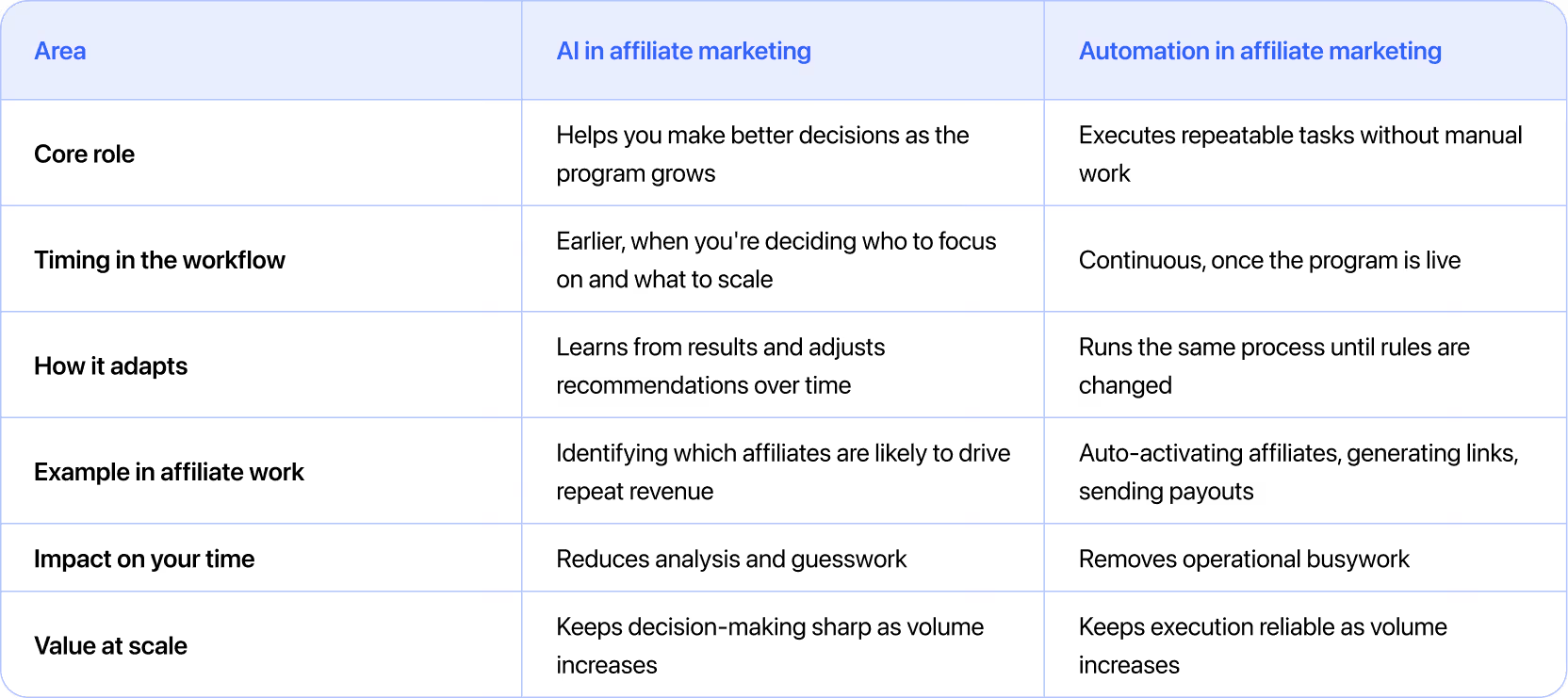
Together, they create momentum.
This is where Social Snowball fits naturally into your existing workflow. It offers AI-powered creator discovery, giving you accurate and quick insights into which partners are right for your brand. It also has automation built into the most time-consuming processes, including onboarding, tracking, payouts, gifting, and content capture.
This removes operational friction so you can spend less time executing and more time analyzing and making the right decisions.
Where AI fits into the affiliate marketing lifecycle
AI can support the decisions you make across your affiliate marketing lifecycle. It helps you choose the right affiliates, prioritize effort, and spot patterns as your program grows, while you stay in control of relationships and strategy.
Here’s how that support shows up at each stage of the affiliate marketing lifecycle, from discovery to optimization.
1. Creator discovery and vetting
Creator discovery sets the foundation for your entire affiliate marketing program. The goal is to find influencers who already drive buying decisions within your target audience.
AI helps you evaluate influencers, micro-influencers, and content creators based on audience alignment and content patterns. Instead of manually scanning social media platforms, forums, Facebook groups, hashtags, TikTok, or affiliate networks, AI helps you identify creators whose content already attracts potential customers and new customers.
Here are three ways that AI supports discovery:
- Audience-first vetting: Identify high-quality creators based on who they reach, how that audience engages, and whether the content maps to your landing page and offer.
- Lookalike sourcing from top performers: Use your best affiliates as a reference to find similar creators with matching audience behaviour, content style, and engagement patterns.
- Relevance over popularity: Prioritise metrics tied to buying intent over raw reach. Look at conversion rate, revenue per click, repeat purchases, and commission earned over time.
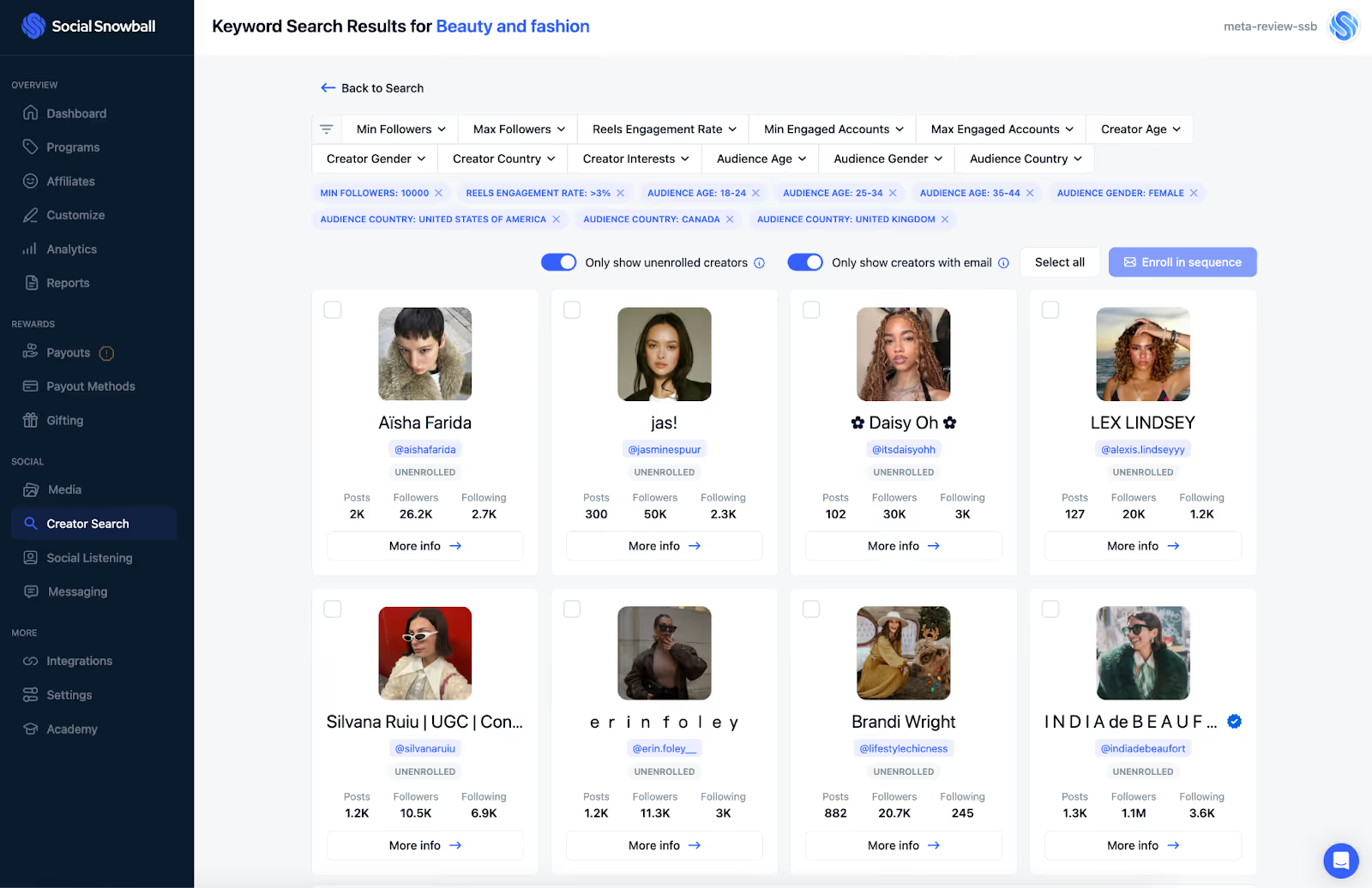
Social Snowball’s Creator Search helps Shopify brands source influencers using performance signals. It uses AI to surface creators based on content signals, audience quality, and historical indicators that indicate real purchase influence, so discovery starts with revenue potential, not just reach.
Once you identify the right creators, you can move directly into outreach, onboarding, affiliate activation, and tracking within the same system. Discovery stays connected to tracking, affiliate commission attribution, and payouts, so you spend less time vetting and more time scaling the right affiliates.
2. Outreach
Outreach works best when it feels personal. But AI can speed up the drafting process without turning messages into templates that get ignored. You can control who you reach out to, why, and how but AI can support how you say it.
Use AI to draft outreach messages based on a creator’s content, platform, and audience, then refine the final version yourself. This works across email marketing platforms, and social media, especially when you’re contacting influencers, micro-influencers, or potential partners at scale.
A simple prompt you can use:
“Write a short outreach message to an influencer who creates content about [topic]. Reference one recent post, explain why their audience matches our target audience, and invite them to join our affiliate program with clear affiliate commission details.”
This approach keeps outreach efficient while staying relevant. Automation can handle send times and follow-ups. This lets you focus on quality conversations so that you can capture high-quality new affiliates.
3. Performance-led optimization
Once your affiliates are live, performance should guide every decision that follows.
AI can help you understand which creators generate revenue and repeat purchases. You can quickly see which affiliates bring in new customers and which partnerships justify higher commission tiers.
Over time, patterns become clear across:
- Content formats that consistently convert
- Audience segments that respond and purchase
- Timing that leads to sales, not just views
With this clarity, you can scale deliberately. You can invest more into proven creators, reuse high-performing content structures, and adjust commission rates based on outcomes.
Instead of restarting campaigns, you can refine what already works and compound results across your affiliate program.
What AI can’t replace
AI can support decisions and reduce workload, but some parts of affiliate marketing still depend on human judgment.
- Relationship building requires intent: Strong affiliate partnerships develop through conversations, follow-ups, and shared goals. You decide when an affiliate is worth deeper investment, when to adjust commission rates, and when a personal check-in will move the relationship forward. These decisions depend on timing and context that AI can’t offer.
- Creative direction stays deliberate: Brand fit comes from how a product is positioned, not how often it sells. You guide affiliates on tone, claims, and storytelling so their content stays credible and aligned. AI can show which posts convert, but you decide which angles are worth repeating.
- Strategy sharpens as execution gets lighter: When tracking, payouts, and admin tasks run in the background, you get space to think clearly. That time goes into reviewing partner quality, refining commission structure, and deciding where to expand next. AI supports the analysis, but you define the direction.
Leverage AI in the right way within your affiliate management workflow
AI is most effective when applied to specific problems within your affiliate marketing program. It reduces the time you spend reviewing partners, tracking performance, and addressing operational gaps, letting you focus on decisions that drive revenue.
Brands that successfully scale affiliate programs focus their efforts where sales already occur. They look at which affiliates convert, which content drives repeat purchases, and which commission structures stay profitable. AI makes those patterns easier to see early, before resources get spread too thin.
The structure that works is simple.
- Use AI to surface insights about partner quality and performance.
- Rely on automation to handle onboarding, tracking, payouts, and communication.
Social Snowball supports this workflow end-to-end. Creator Search powers AI-driven discovery, while built-in automation manages onboarding, affiliate links, fraud protection, and payouts. Performance data ties directly to revenue, so scaling decisions stay grounded in outcomes, not assumptions.