
For many DTC brands, influencer marketing used to be a predictable growth lever. You paid creators, they posted content, and sales followed.
That model is breaking down.
As more brands compete for the same high-performing creators, influencer rates have skyrocketed. What once felt like a scalable channel now looks like an unpredictable cost center. At the same time, traditional affiliate tools haven’t kept up, plagued by code leaks, fraud, and manual work that makes scaling painful.
Qure ran into this exact problem.
Instead of doubling down on paid-only collaborations, they rebuilt their influencer program around a more sustainable model: performance-driven affiliates powered by automation.
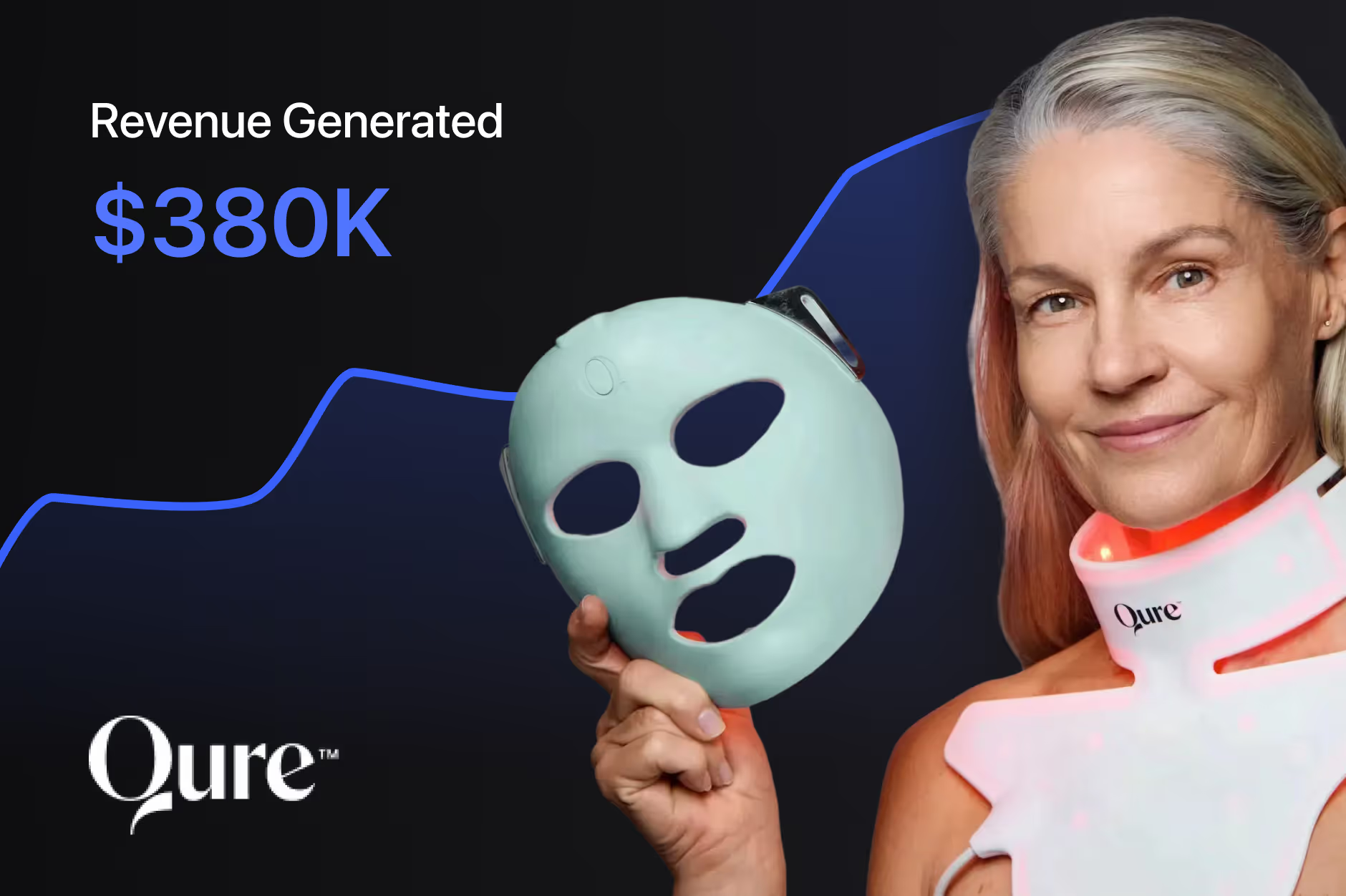
When Qure switched to Social Snowball, they were able to turn influencer partnerships into a scalable revenue channel. In just one quarter, they:
- Generated $380K in affiliate-attributed revenue
- Drove 75% of total influencer marketing revenue from affiliates
- Reduced manual work across onboarding and payouts
"Paid-only collaborations ended up generating only 25%, while our affiliate program drove the majority of revenue."
Katja Trbara, Affiliate Manager, Qure Skincare
Here’s how they did it, and how other brands can apply the same strategy.
About the brand
Qure is a skincare brand known for its science-backed devices and dermatologist-approved solutions for aging, acne, and dark spots. The brand has a strong creator and customer community, making word-of-mouth a natural growth lever, but only if the systems behind it can scale.

Challenge: Rising influencer costs and broken affiliate infrastructure
Qure didn’t struggle to attract creators. They struggled to make the model sustainable. What worked at a small scale broke as volume increased.
1. Influencer partnerships were becoming too expensive to rely on
High-performing creators were charging more every year, making paid collaborations harder to justify as a primary acquisition channel.
“The influencers’ rates have drastically increased over the last two years to the point where it’s no longer profitable for us to work with some of them.”
Qure needed a way to keep working with creators without tying growth to fixed fees.
2. Their affiliate setup created risk instead of leverage
Discount codes regularly leaked onto coupon sites, and attribution had to be manually checked inside Shopify. This made reporting unreliable and opened the door to fraud.
“We were often subject to scams and code leakage. We had to go through Shopify manually and check if the right commission was being attributed.”
Instead of scaling word-of-mouth, the system made the team babysit it.
3. There was no structure to motivate or retain affiliates
Creators could join, but there was no way to build momentum. No tiers, no milestones, and no communication layer to encourage consistent promotion.
“We weren’t able to create a gamified program, and there was no email integration to send branded newsletters.”
At the same time, many platforms charged both flat fees and revenue commissions, making it harder for Qure to offer competitive payouts without hurting margins.
“We already want to offer affiliates the highest commission possible, so losing an additional percentage to the platform just wasn’t sustainable.”
Qure knew word-of-mouth worked. What they lacked was a system that could protect it, scale it, and make it efficient.

Solution: Turning influencer marketing into a scalable affiliate engine
Instead of treating influencer partnerships as one-off paid campaigns, Qure reframed the channel as a system: take organic creator interest, convert it into long-term affiliate relationships, and automate everything around it.
“We wanted a way to take what was already happening organically and really pour fire on it.”
Here’s how that system came together.
Turning creators into tracked revenue partners
Qure replaced public discount codes with tracked affiliate links using Safelinks. Each creator received a unique link tied directly to their sales.
“Social Snowball eliminated that problem completely as Safelinks makes sure there are no code leakages.”
This allowed Qure to pay creators based on actual performance, without worrying about coupon abuse or misattribution.
Automating affiliate onboarding and management
New affiliates no longer needed to be set up manually. Tracking links were generated automatically, and creators could start promoting immediately.
“The process is so automated and doesn’t require much from me to acquire and onboard a new affiliate.”
This removed a major operational bottleneck and made it possible to grow the program without adding more people to manage it.
Motivating creators with tiered rewards
Qure replaced flat commissions with tiered incentives, giving creators meaningful milestones to work toward and increasing long-term engagement.
“We were able to create different commissions, and creators are very eager to unlock the next tier.”
With Klaviyo integration, they could see when affiliates were close to the next level and send automated reminders to nudge them forward.
“We can track if someone is close to achieving the next tier and send automated reminders to keep them motivated.”
Making payouts reliable and fast
Payouts were automated through Tremendous, removing the need for manual calculations and follow-ups.
“It allows us to keep track of all payouts easily, and every time a creator has a payment query, we can resolve it super fast.”
For creators, this made the program feel trustworthy. For Qure, it eliminated another layer of manual work.
Results: Driving $380K in Q4 and making affiliates Qure’s primary growth channel
By shifting from paid-only influencer collaborations to a structured, performance-based affiliate program, Qure turned influencer marketing into one of its most reliable revenue channels.
In Q4 alone, the Qure Affiliate Program generated nearly $380,000 in revenue, accounting for 75% of total influencer marketing revenue. Paid-only collaborations contributed just 25%, showing a clear shift in where performance was coming from.
“In Q4 of last year, we generated almost $380,000 US just from the Qure Affiliate Program.”
As the program scaled, Qure was able to onboard affiliates faster and grow revenue without increasing operational complexity or headcount.
“We were able to onboard affiliates much faster, which helped us scale our program and revenue quickly without adding extra strain on our team.”
At the same time, eliminating code leakage and attribution errors removed one of the biggest barriers to growth. What once required constant manual verification became a solved operational problem.
“We’re no longer struggling with the issue of code leakage. We can now focus on scaling the program rather than constantly troubleshooting.”
The combination of secure attribution, automated onboarding, and tiered incentives allowed Qure to turn creators into long-term revenue partners, building a channel that continues to grow without increasing the work required to run it.
“The Snowball gets bigger, but the amount of work to invest in it just becomes less as we grow.”
What other brands can learn from Qure’s approach
Qure didn’t win by finding better influencers. They won by building a better system.
If you’re trying to make influencer or affiliate marketing more sustainable, here’s how to approach it:
- Shift from paid-only deals to performance-based partnerships
- Protect attribution with links instead of codes
- Automate onboarding and payouts early
- Use tiers and milestones to keep creators engaged
- Treat word-of-mouth as infrastructure, not campaigns
Read how you can automate different aspects of your affiliate program.
Build a scalable affiliate program that compounds
Affiliate marketing is one of the most effective ways to acquire customers. But for many brands, it’s difficult to scale because incentives aren’t structured, onboarding is manual, and managing affiliates takes too much time.
With Social Snowball, brands like Qure have been able to turn creators and customers into affiliates instantly, protect attribution with secure tracking links, use tiered rewards to motivate ongoing promotion, and automate payouts.
With the right affiliate marketing system in place, Qure transformed influencer partnerships into a predictable, scalable revenue channel.



.avif)


