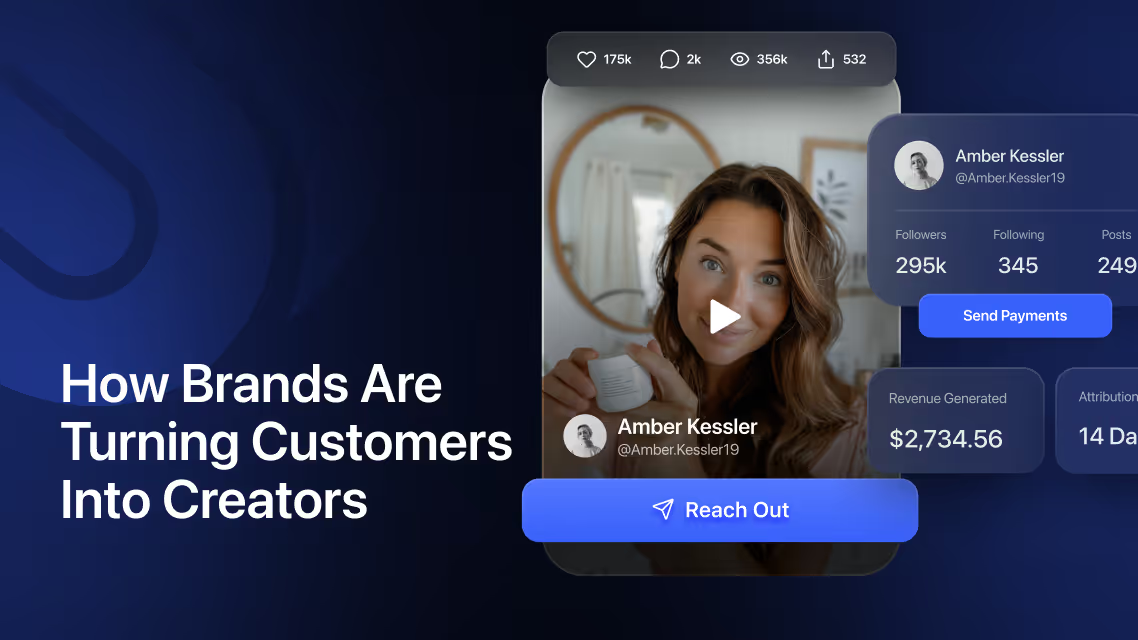
The best creators for your brand might already be buying from you.
At the Influencer Marketing Summit, this idea came up repeatedly. While most teams focus on sourcing creators externally, high-performing programs are starting from a different place, their own customers.
Customers already have context. They’ve used the product, formed opinions, and often share it without being asked. When brought into a structured program, that behavior turns into consistent content and measurable revenue.
This shift changes how creator programs are built. Instead of cold outreach, it starts with activation.
In this blog, we’ll break down how to identify the right customers, activate them into your creator program, and turn them into a consistent source of content and revenue.
Why customers make better creators

Customers create content that converts because they’ve already used the product in real situations. For example:
- A skincare customer walks through their routine and points out visible changes over a few weeks.
- A supplement buyer explains when they take it and what they notice after a few days.
- A parent using a kids’ product shows how it fits into a daily habit.
The content answers real questions because it comes from actual use. That level of clarity builds trust. Joshua Cohen, Co-founder and CEO of Pinpoint, spoke about this shift during the summit:
“People actually are starting to trust big-time celebrities less and less, and they're starting to trust UGC creators more and more.”
When someone sees a real user explaining a product in context, the decision becomes easier. The viewer understands what to expect and how it fits into their own routine.
There’s also a clear advantage in how quickly this content gets produced. Since a customer already knows the product, they don’t need a long onboarding process or detailed instructions. Instead, they can start creating right away.
Cohen tied this directly to how brands scale:
“If you're a newer brand and maybe you're getting 50 new customers a day, try to recruit them to create UGC content. It's gonna feel super authentic, it's gonna scale.”
Retention strengthens in the same way. Ben Zettler (Founder of Zettler Digital) explained that programs perform better as more real customers get involved:
“The more that you can get real customers involved, the more successful I think you're gonna have as a program.”
That success shows up in two ways:
- Content improves because creators have real product experience.
- Creators stay active because the relationship starts with genuine interest.
Over time, that compounds. A customer continues to create, tests different formats, and builds familiarity with the audience.
Why customer-created content drives better performance
Customer-created content performs because it carries built-in credibility. When someone shares their own experience with a product, the content answers real questions: how it fits into a routine, what changed after using it, and what someone can expect.
That clarity makes it easier for a new customer to take action.
One piece of content, multiple channels

Nik Sharma, CEO of Sharma Brands, treats creator content as an input across the entire marketing stack.
When a customer video performs organically, it has already proven that people respond to it. That same video can then move across channels without needing to be reworked.
A single piece of content has multiple purposes:
- Run as a paid ad
- Place on the product page
- Add to cart abandonment flows
- Reuse in lifecycle emails
The message stays the same, but the reach expands. Sharma frames it like this:
“Influencer content is the new TV.”
Its impact is based on how you use the content. When done right, it can become a recurring asset that drives performance across paid, organic, and retention.
The CAC advantage shows up quickly
Chadha shared how this translates into acquisition cost. At Augmentum, top-performing whitelisted creator content, including UGC from real customers, delivers 15–20% lower CAC than content run from the brand’s own handle on Meta.
The difference comes from how the content is received.
A customer explaining their experience carries immediate credibility. The viewer understands the context, sees the outcome, and connects it to their own use case. That shortens the path to conversion, especially with cold audiences.
Chadha also pointed to the kind of content that scales best:
“You're looking for creators whose content would make sense without context.”
Customer-creators tend to produce exactly that. They show the product in use, explain it through their own experience, and make the story easy to follow. The viewer doesn’t need additional explanation to understand what’s happening.
How to identify customers who can become creators

Most brands have a larger pool of potential creators than they think. The signal is already there; in purchase data, in organic social tags, in who's following competitor brands. The work is building a system that catches it.
Two approaches came up at the summit, each suited to a different stage of program maturity.
When your customer list is the starting point
Sambhav Chadha, Co-founder of Augmentum Media, starts creator discovery with a simple filter: find customers who are already creating content. You’ll find them by combining your customer list and your organic social mentions.
When you cross-check both, a clear group emerges. People who bought the product have an audience and already share content in your category.
Most teams also miss looking at who engages with competitor brands. Creators in your category already understand how to talk about the product, what angles work, and what their audience responds to. Many of them haven’t been approached yet.
What comes next is deliberate.
“There is a massive case for seeding at scale first, really not with the intention of generating content, but actually with the intention of building relationships with those creators.”
When someone has already bought from you, sending products strengthens an existing relationship. It gives them more reasons to create and more context to talk about the product.
When the signal is already coming to you
Some of your best creators don’t need to be found. They show up on their own.
Zettler described how brands track this using tools like Gatsby. When a customer tags your brand on Instagram, the platform pulls in their profile data and flags it for your team.
For example, when a customer with 150,000 followers posts about your product, it triggers an alert. Your team sees it immediately and reaches out while the interest is still high.
"This person who has 150,000 followers just mentioned us randomly, and they're a customer. Let's have a conversation with them."
The value is in finding creators at the right time. The outreach should happen at the moment of genuine enthusiasm, when the customer has already decided the product is worth talking about publicly. That window is worth capturing.
"The more that you can get real customers involved, the more successful I think you're gonna have as a program."
The signal worth prioritising
Cohen framed the underlying shift that makes both approaches worth building for:
"People actually are starting to trust big-time celebrities less and less, and they're starting to trust UGC creators more and more."
The customer who buys repeatedly, talks about the product in their content, and has an audience that follows them for that specific niche is already delivering on what brands are paying larger creators to manufacture.
A discovery system's job is to surface that person before the moment passes.
How to activate customers into your creator pipeline
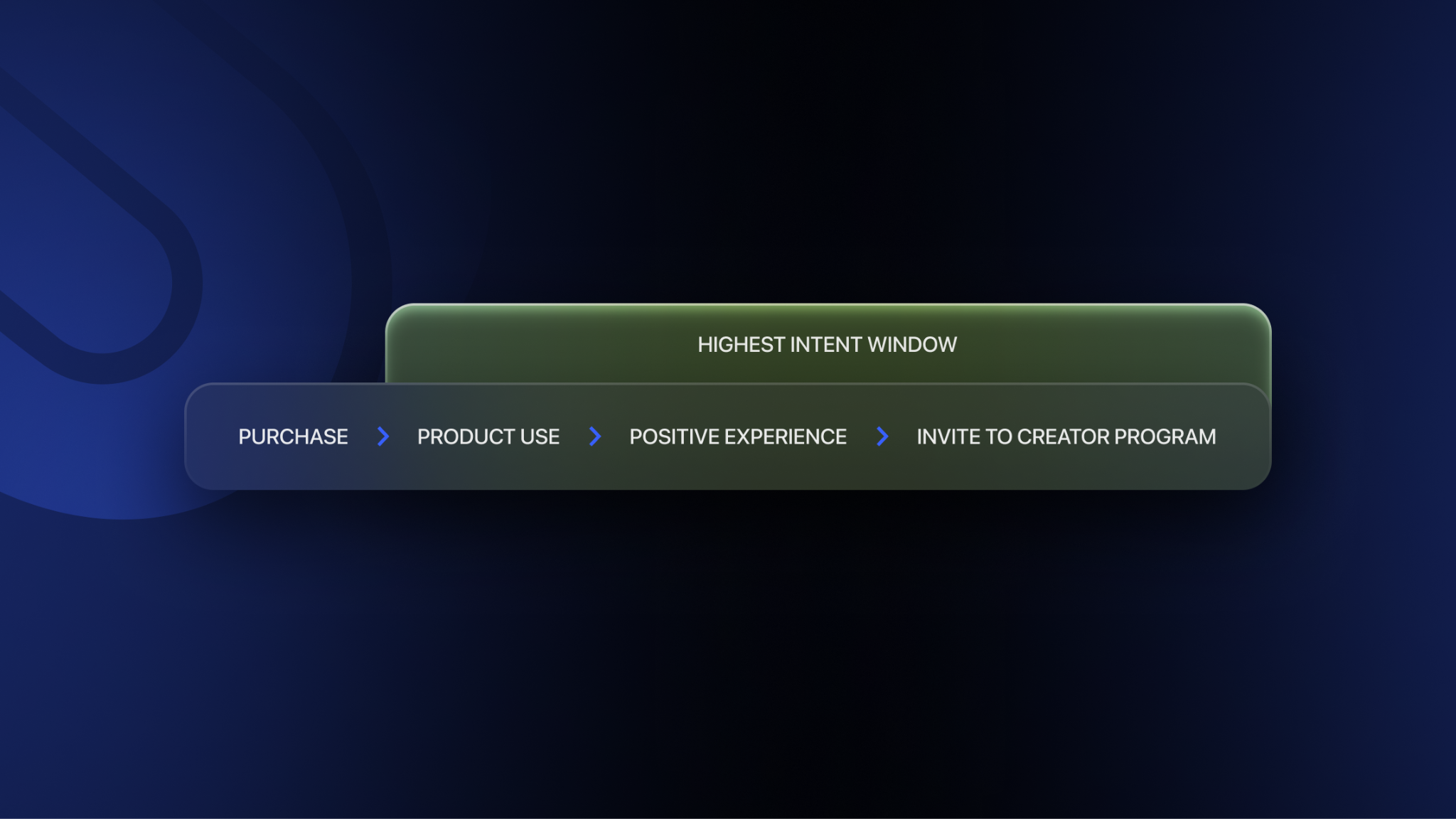
The moment right after purchase is when the customer is most invested. They have just bought, used the product, and formed an opinion. That’s when they’re most likely to talk about it.
Activation works when you give them a clear next step while that experience is still fresh. Here are a few ways to activate customers into your creator pipeline:
Match the creator to the customer
Myah Christenson, Affiliate and Creator Partnerships Manager at SEEQ, builds activation around alignment. When the person creating content is your actual customer, potential customers would connect to it faster. Same use case, same context, same reasons for buying. The content feels relatable because it comes from someone living a similar experience.
At SEEQ, that alignment shapes how customers enter the program.
Their Discord is positioned as a “money lab” where customers learn how to earn from a product they already use. That framing gives customers a clear reason to participate. They can see how content translates into revenue, apply what’s working, and improve with each post.
That’s what gets people to start.
Go where your advocates already are
Once you know who to activate, the next step is reaching them in the right place.
Robyn Nissim, CEO and Founder of Social Proof Agency, focuses on existing touchpoints. Your most valuable customers are already visible across your ecosystem. They are a part of your email list, Facebook groups, and community channels.
Activation starts by going directly to those spaces and inviting them in.
Nissim adds structure to this process. Entry is gated, with clear criteria for who gets in. That filter brings in customers who are already engaged and ready to participate. The program starts with the right level of intent, which shows up in how quickly creators begin producing content.
Reward early adopters from the start
Early creators set the tone for everything that follows. Alex Choi, Senior Brand Manager at AquaTru, builds his program by placing early adopters in the highest commission tier. Their content becomes the first layer of proof. It shows how the product is used, what results look like, and how others can talk about it.
That foundation supports future creators.
As the program grows, creators move through tiers based on performance. More sales, more referrals, and more content lead to higher commissions. The structure makes progression clear and ties output directly to rewards.
Creators can see how to grow within the program, and they continue producing content with that in mind.
How to get customer-creators to actually produce content
Most customers join your creator program with a genuine interest in the product. Execution is where they slow down. They get stuck figuring out what they should post, how they should structure it, and what actually drives sales.
Your role is to give them clarity so they can start creating immediately. Some ways to do this are:
Give them a framework they can follow

At SEEQ, the team builds creator onboarding around a clear framework. New creators receive a defined hook, a visual format, and examples of videos that have already generated GMV. This gives them a starting point they can act on right away.
Their community also supports this. Their Discord is positioned as a place where creators learn how to generate revenue with the brand. Creators can see what performs, apply it to their own content, and improve with each post.
That visibility drives output. Creators understand what works and continue creating with more confidence.
Build the relationship alongside the system
Once creators start producing content, consistency comes from how the program is managed. Chris Chisholm, Director of Talent Management at G Fuel, runs his creator program on a clear ratio of 90% automation and 10% personal connection.
The operational layer handles onboarding, updates, and performance tracking. Creators receive the information they need without delays.
The relationship is built through specific actions: a birthday message sent early with a request to confirm their address, a personalised gift based on something the creator has shared, and a public callout when a creator reaches a milestone.
He defines it through two principles:
“Accomplish more with less. Treat everybody as inherently valuable.”
For customer-creators, these moments reinforce the connection with the brand. They stay active, create consistently, and continue engaging with the program over time.
How to build a community that keeps creators active

A creator program grows when people keep showing up and creating consistently.
That consistency comes from how the community is run. Creators need a space where they can see what’s working, understand how to improve, and feel recognised for their output. When that structure is in place, content continues without constant follow-ups.
Run the community with a clear cadence
Christenson runs SEEQ’s Discord as an active working channel. The team posts several times a week, sharing:
- Which videos are driving GMV
- What specific hooks or formats are working
- Examples of content for inspiration
When a creator’s video performs, it gets highlighted within the community. The post is shared, the creator is named, and the hook is broken down. That creates a clear feedback loop.
Creators can see what drives results, apply it to their own content, and improve with each post. The community becomes a place where learnings are shared in real time and performance is visible.
Make performance visible and tie it to progression
Nissim builds communities where creators can track progress clearly. Leaderboards show who is generating sales and who is consistently creating. That visibility gives creators a reference point. They can see what others are achieving with the brand and understand how to move up.
She connects this directly to incentives. Commission tiers increase as creators perform. A creator who drives results moves into higher tiers and earns more. That progression keeps them engaged and encourages continued output.
Build retention into the system
Brett Fox, Director of Marketing at PostPilot, approaches creator programs with the same mindset as customer retention.
Activity patterns signal when attention is dropping. Fewer posts, fewer referrals, and lower engagement show when a creator is disengaging.
Whereas strong programs track these signals and respond early. Creators receive nudges, updates, and incentives that bring them back into the flow before they fully drop off.
Fox emphasises physical touchpoints as one way to do this:
"We recently came out with API-triggered campaigns; you can trigger a postcard directly out of an event, out of virtually any platform now."
This way, a milestone, a drop in activity, or a re-engagement window can automatically trigger something physical. It stands out, feels personal, and reinforces the relationship beyond digital channels.
The underlying principle, as Fox put it, is straightforward: set up your systems to catch the signals, so you're not the one who has to catch them manually.
Customer-creators already have a connection with the brand. When the community reflects that, they stay involved, create consistently, and contribute over a longer period.
Want to build your creator pipeline from within?
If you want creator marketing to drive consistent acquisition, you need a system that keeps creators coming in, content going out, and revenue moving every month. That’s what the brands from the summit are doing. They bring in new creators every week, tie payouts to performance, and build programs that run without constant manual effort.
However, to run a program like that, you need the right infrastructure. Social Snowball is built for that.
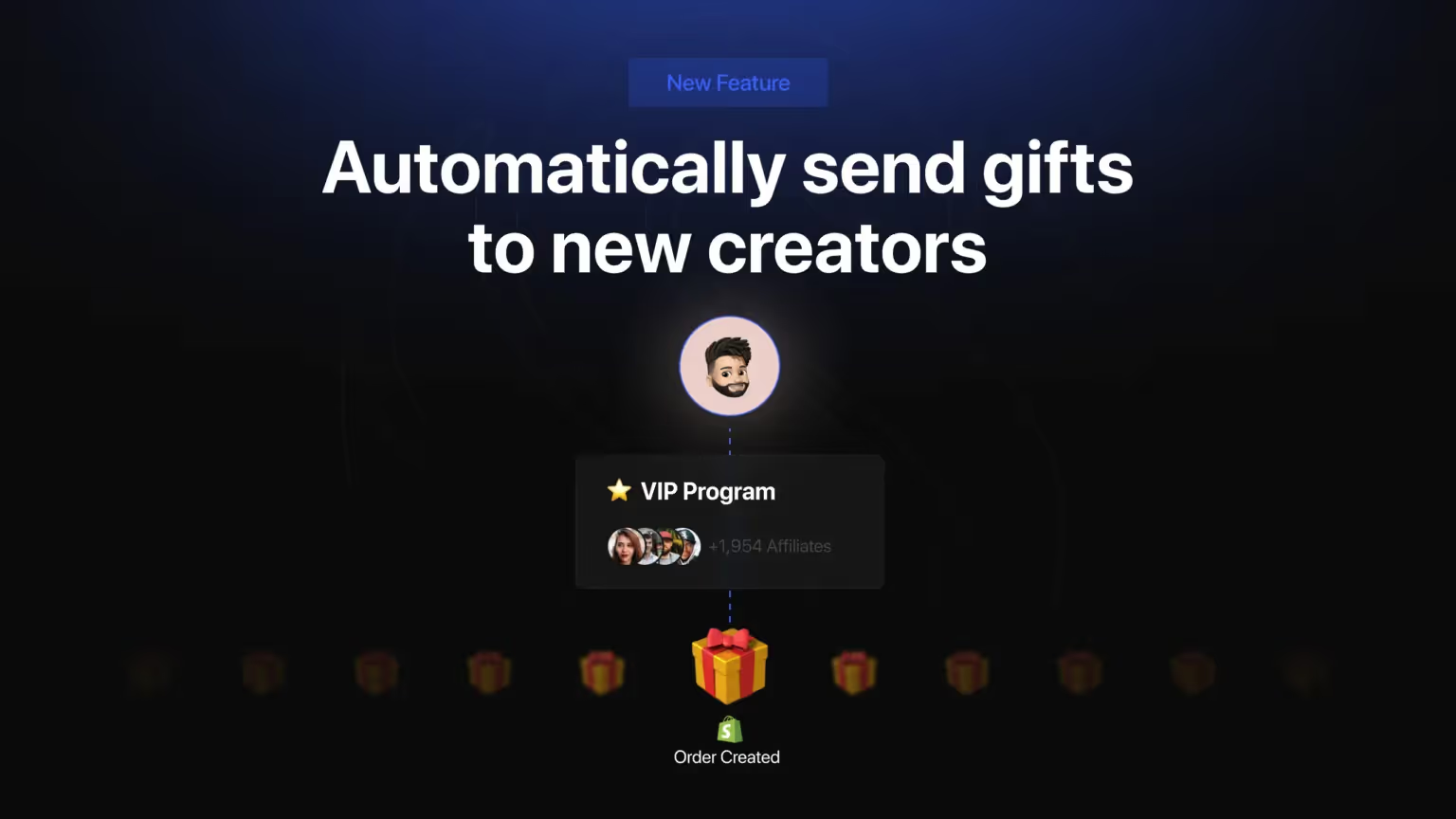
Customers become affiliates right after checkout, so your creator pipeline grows with every order. Each creator gets a unique, single-use referral link, which keeps attribution clean and prevents coupon leaks.
You can manage payouts, gifting, and communication in one place. You can also track which creators and posts are driving revenue, including TikTok Shop content. That visibility helps you scale what’s working to keep your program growing consistently.

.avif)