Most affiliate programs start small. You bring on a few creators, send them links or discount codes, and keep in touch through a couple of emails or DMs.
As you grow, the dynamic changes. As more affiliates join your program, coordination gets harder. Creators test different content ideas, new partners enter the program every week, and product launches require several affiliates to activate simultaneously.
At this stage, many brands introduce an affiliate community. An affiliate community brings your affiliates into one shared space where they can see campaign updates, share content ideas, ask questions, and learn how other creators promote the brand.
In this guide, you’ll learn how affiliate communities drive acquisition, when your program is ready for one, and how to set up a community that keeps affiliates engaged and promoting consistently.
How a community for your affiliates can compound acquisitions
An affiliate community is a dedicated space where your affiliates communicate with your brand team and with each other. It acts as the coordination layer for your affiliate program. Within the community, affiliates can:
- Access campaign announcements and product launches
- Share content ideas and performance insights
- Ask questions and receive guidance from your team
- See how other affiliates promote the brand
- Track progress through tiers, milestones, and rewards
Brands typically host affiliate communities on platforms such as Slack, Discord, WhatsApp groups, Facebook groups, or private forums. Some programs also combine these spaces with recurring events like creator calls or campaign briefings.
"We take our affiliates outside of TikTok a lot of the time. We have them in our WhatsApp group as well as our Discord, so we're able to run different challenges and incentivize them; whether that's driving them into Walmart or wherever the season calls for."
— Nichole Munoz, Co-founder and Head of Marketing at EZ Bombs
For example, Obvi, a health and beauty brand, runs private community spaces and UGC challenges where customers share results, routines, and product usage. This increases brand awareness and drives repeat purchases.
Benefits of building an affiliate community
An active affiliate community improves how information, motivation, and campaigns move across your program. Instead of managing affiliates one by one, you create a shared environment where insights, launches, and performance circulate quickly.
Here are the growth advantages a community creates:
- Shared learning across creators: Affiliates regularly test different hooks, formats, and platforms when promoting your product. A community allows these experiments to circulate. Creators can post examples of videos that drove sales, explain the angle they used, or share which platform performed best.
- Motivation through visible performance: When affiliates see revenue screenshots, top-performing posts, and leaderboard updates inside the community, they gain a clear picture of what success looks like in your program.
- Faster campaign coordination: Product launches, seasonal promotions, and discount campaigns require multiple affiliates to activate simultaneously. A community gives your team a direct way to distribute campaign briefs, product details, and creative assets to all affiliates in one place.
- Stronger relationships with the brand team: Affiliates interact with your team inside the community through questions, feedback, and content discussions. These conversations create familiarity with the brand and strengthen long-term partnerships.
- Consistent promotion across the program: Affiliates often publish content in cycles based on ideas and opportunities. A community keeps the brand present in those cycles. Your team can introduce new campaigns, product drops, and content prompts directly inside the group, giving affiliates constant reasons to create new posts.
"We have such a strong community, and so many of them have been with us from the beginning. I love our affiliates. We would not be where we are without them."
— Nichole Munoz
Signs your brand is ready for an affiliate community
An affiliate community becomes useful when your program reaches a point where coordination and engagement start slowing down growth. At this stage, you spend more time answering questions, repeating campaign details, and chasing affiliates to participate in launches.
These signals show that your program can benefit from a shared community space.
You manage a large group of active affiliates
Once your program reaches 30–50 active affiliates, communication starts repeating itself. Several creators ask the same questions about links, product positioning, or campaign details. Instead of replying individually, a community lets you post one update that everyone can access.
Affiliates also learn from the questions others ask, which reduces the number of repeated messages your team handles.
Your affiliates promote the brand irregularly
Many affiliates join a program, publish one or two posts, and then move on to other opportunities. A community keeps your brand present in their content cycle.
You can share weekly content prompts, highlight creators whose posts drove sales, and introduce new campaigns that give affiliates a reason to publish again.
Your campaign coordination takes hours of manual communication
Product launches and seasonal promotions require several affiliates to publish content around the same time. Without a shared space, your team sends individual messages, repeats the same instructions, and answers similar questions across multiple conversations.
A community allows you to post campaign briefs, content ideas, and creative assets in one place so affiliates can prepare their content together.
Your top-performing affiliates operate separately from the rest of the program
Your highest-performing affiliates often develop strong promotion strategies, but those insights remain private. A community allows you to feature their content, break down why their posts convert, and let other affiliates study the structure of successful promotions.
This raises the performance level of the entire program.
You want affiliates to stay involved with your brand long-term
Affiliates who feel connected to your brand stay active longer. A community gives them a place to interact with your team, celebrate milestones, discuss product launches, and share their content.
Over time, affiliates begin to see themselves as part of the brand’s creator network rather than occasional promoters.
"I do make drops in our Discord where I come by and jump in the general chat, talk with the people in the public chat. It gives them more of a sense of a personal relationship with me — I'm just tackling them all at once."
— Chris Chisholm, Director of Talent Management at G Fuel
Examples of affiliate communities
If you look closely, successful affiliate communities don’t feel like another marketing campaign. They feel like environments where creators already know what to talk about, how to show up, and why they stay involved.
Here are some examples of brands that have successfully built an affiliate community:
1. Gymshark
Gymshark is a fitness apparel brand that built its growth by staying close to creators in the fitness space.
What works here is clarity. Gymshark constantly publishes workouts, routines, and training content through its ecosystem.
As a creator, you don’t spend time figuring out what to say. You already know the formats that work. Creators turn these into their own posts, adapt them to their audience, and keep publishing consistently. Over time, this builds a shared understanding of how the brand shows up.
When a new product launches, creators continue with the same formats. The product fits into the content they already create.

2. DadGang
DadGang is a lifestyle brand built around fatherhood. The product connects people, but the community keeps them engaged.
The brand created a Facebook group where customers share photos, family moments, and personal stories that include the product. This type of content spreads because it reflects real experiences. People talk, post, and stay connected to the brand even between purchases.
This community is also a reason why DadGand’s affiliate program, powered by Social Snowball, scaled quickly, generating 4,000+ affiliates and $190K+ in revenue.

3. Amazon
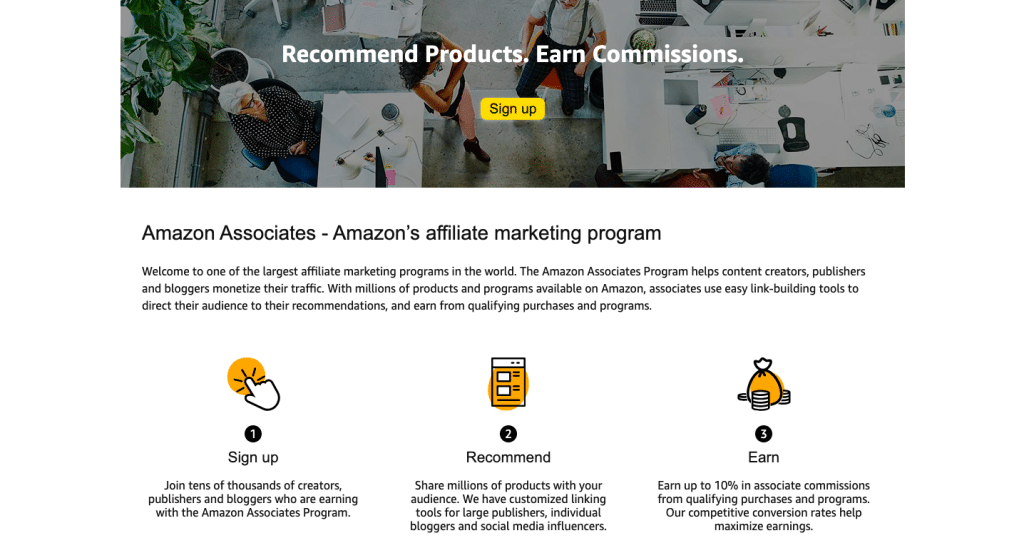
Amazon runs one of the largest affiliate ecosystems through Amazon Associates. As an affiliate, you choose products, create content, and share links. That simplicity allows creators to build their own content systems, like reviews, comparisons, and recommendations.
Over time, creators observe what converts and repeat those formats. Other affiliates pick up the same structures and apply them to different products. This creates a continuous flow of content without direct coordination.
How to set up a community for your affiliates
A strong affiliate community doesn’t come from opening a Slack group and inviting people in. It works when every part of it (what you share, how you structure it, and why affiliates join) pushes them to create and promote consistently.
Here’s how you set it up so it actually drives activity.
1. Define what your community is for
Start by answering one question: What should an affiliate be able to do better after joining this community?
Your answer shapes everything you post. Most high-performing communities focus on 2–3 clear functions:
- Give affiliates content they can use immediately: Share hooks, angles, and real examples. For example: “This video drove 27 sales; here’s the exact structure.”
- Show what’s working right now: Post screenshots, winning creatives, and breakdowns. Affiliates copy patterns faster when they see proof.
- Coordinate campaigns in one place: Share launch details, timelines, and assets so affiliates can act without asking follow-up questions.
Now layer this with who your affiliates are. If you work with creators, focus on content ideas, trends, and formats. If you work with customers, focus on simple prompts and incentives.
Then segment:
- Top performers: Scaling strategies and higher incentives
- Mid-tier: Consistency and repeatable formats
- Inactive: Easy re-entry (simple campaigns, low effort posts)
2. Choose the right platform and community mix
Define how activity flows inside your community. Affiliates can learn by observing and sharing each other’s content, rely on your team for campaign direction and updates, and follow top creators who drive discussions and set the tone for the group.
Then match that to a platform:
- Slack / Discord: Best for structured discussions and ongoing activity
- WhatsApp: Works for quick updates and smaller, high-engagement groups
- Facebook groups: Useful for community-style interaction and user posts
- Email and weekly calls: Works when you want controlled communication with periodic interaction
"Once they hit a certain point in the funnel, pull them into your Discord. Post multiple times a week in there, share what content's working and what's not, host giveaways, and run leaderboard contests.
— Myah Christenson, Affiliate and Creator Partnerships Manager at SEEQ
3. Launch the community with a strong campaign
Affiliates won’t join just because the community exists. They join when there’s a clear upside. Give them a strong entry point, like:
- Limited-time incentive for community members
- Higher commission for a specific campaign
- Early access to an upcoming product launch
4. Anchor the community around shared interests
Your community works best when conversations go beyond your product. Bring affiliates together around what they already care about. For example, if you work with fitness creators, discussions can include workout routines, nutrition habits, training splits, and creator workflows.
These conversations keep the community active even when you’re not running a campaign. They also give affiliates more angles to create content that naturally includes your product.
5. Create shared momentum
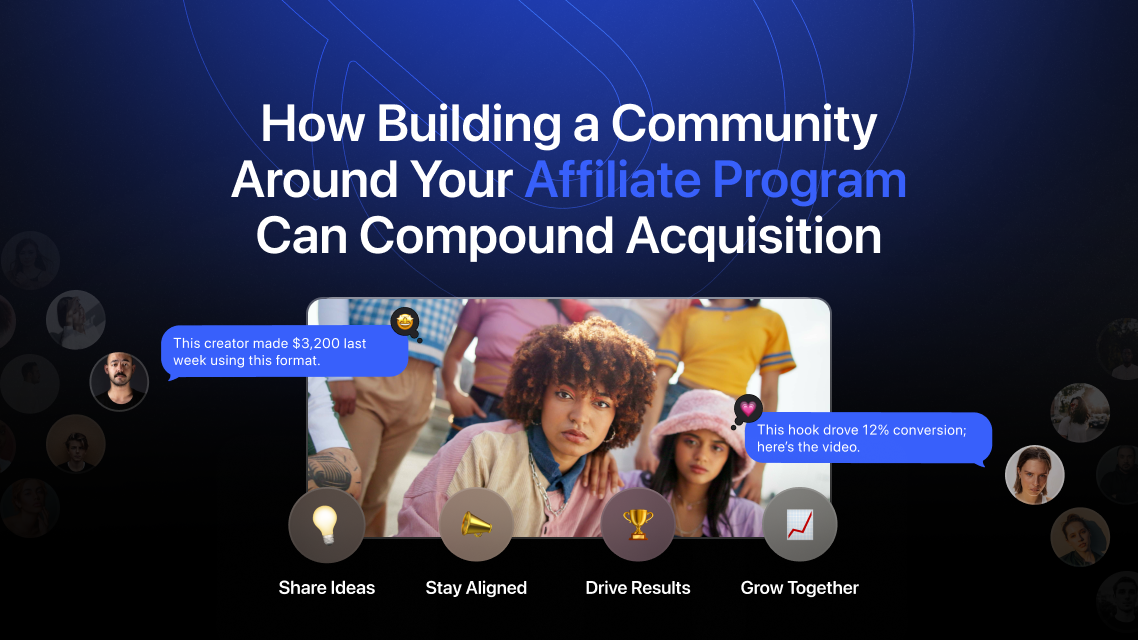
Affiliates act when they see proof, so make sure to show them what’s working. For example:
- “This creator made $3,200 last week using this format.”
- “This hook drove 12% conversion; here’s the video.”
Break it down so others can replicate the opening line, format, and the CTA. This reduces guesswork and increases output across your program.
6. Introduce progression and tiers
Give affiliates a clear path to grow inside your program. Structure this through tiers:
- Higher commissions as affiliates drive more sales
- Early access to launches or campaigns
- Exclusive product drops or gifts
- More visibility inside the community
"The question is shifting from being transactional to turning something into a partnership — by being transparent, communicative, and encouraging them: 'Hey, you're right there at the tip of the threshold, keep going.'"
— Robyn Nissim, CEO and Founder of Social Proof Agency
Mistakes when building affiliate communities
Your community only works when affiliates open it, engage with it, and use it to create content. These mistakes break that behavior:
- Grouping all affiliate types into one space: A TikTok creator, a coupon site, and a blog affiliate look for completely different inputs. When you put them together, conversations become irrelevant for most of the group.
- Launching the community without a clear payoff: Affiliates decide within a few minutes whether a community is worth checking again. If they don’t find anything useful, like campaign details, content ideas, or earning opportunities, they stop coming back.
- Keeping top performers separate from the rest of the group: Your highest-performing affiliates already know what converts. When their work stays private, everyone else keeps experimenting blindly.
- Letting the community go inactive between campaigns: When nothing happens in the community for days or weeks, affiliates stop checking it. Once they drop off, getting them active again takes effort.
- Sharing updates that don’t lead to content: Posting “new product live” or “campaign starting soon” doesn’t help affiliates take action. They still need to figure out what to say and how to position it.
"If you make automated emails 100% of your outreach, it can destroy the community you're trying to build. You need to automate as much as you can without the creator feeling like they're talking to a robot."
Turn affiliates into long-term brand partners
When you build an affiliate community the right way, you change how affiliates interact with your brand. Instead of showing up for one campaign, they stay involved. They learn what works, see how others promote, and keep creating content because they have a steady stream of ideas and opportunities.
That consistency is what compounds acquisition. You get more frequent content from the same affiliates, faster campaign rollouts across creators, stronger alignment in how your brand shows up, and repeat sales driven by ongoing promotion.
Social Snowball streamlines this by handling the operational side of your affiliate program. It offers features that let you:
- Automatically turn customers into affiliates after checkout
- Generate unique links and track every sale accurately
- Share campaigns and incentives with your affiliates at scale
- Track performance across creators, including TikTok Shop
- Manage payouts in bulk without manual calculations