
The beauty industry loves breakthrough products. But building a successful product and building a sustainable brand are not always the same thing.
Wilding Beauty helped bring Gua Sha into the mainstream and built a loyal customer base around its tools and rituals. As the brand grew, however, it faced a new challenge: how do you evolve when customers know you for one product above everything else?
In an episode of the Word of Mouth podcast by Social Snowball, host Robyn Nissim sat down with Wildling co-founder Gianna De La Torre to discuss building a category-defining brand with limited resources, navigating explosive growth during the pandemic, and the lessons she's learned about entrepreneurship, burnout, and resilience along the way.
De La Torre is a licensed acupuncturist and healer who co-founded Wildling in 2018. Since then, she has helped grow the brand from a small bootstrapped business into one of the most recognizable names in holistic skincare while continuing to draw on her background in wellness and Chinese medicine.
Here are the biggest lessons from the conversation.
1. What does it feel like when your product becomes part of people's daily lives?
I was on vacation in the Caribbean and ended up having a conversation with a woman I had just met. We were talking about life, business, and everything that was happening at the time when she suddenly said, "Oh my God, I have your tool."
One of her friends had gifted her a Wildling tool, and it was sitting on her bedside table. It felt like a full-circle moment.
As a founder, it's easy to get caught up in all the things that need attention. There are always problems to solve and decisions to make. Then you have a moment like that, where someone you've never met tells you that your product has become part of their daily routine.
It reminded me that what we're building is reaching people. At the same time, it highlighted a challenge we've been thinking about for years. Our Gua Sha tool is still our bestseller, and it's the product most people associate with Wildling.
The question we're always asking is: how do we build that same connection with everything else we create?
2. How did Wildling spot the opportunity in Gua Sha before it became mainstream?
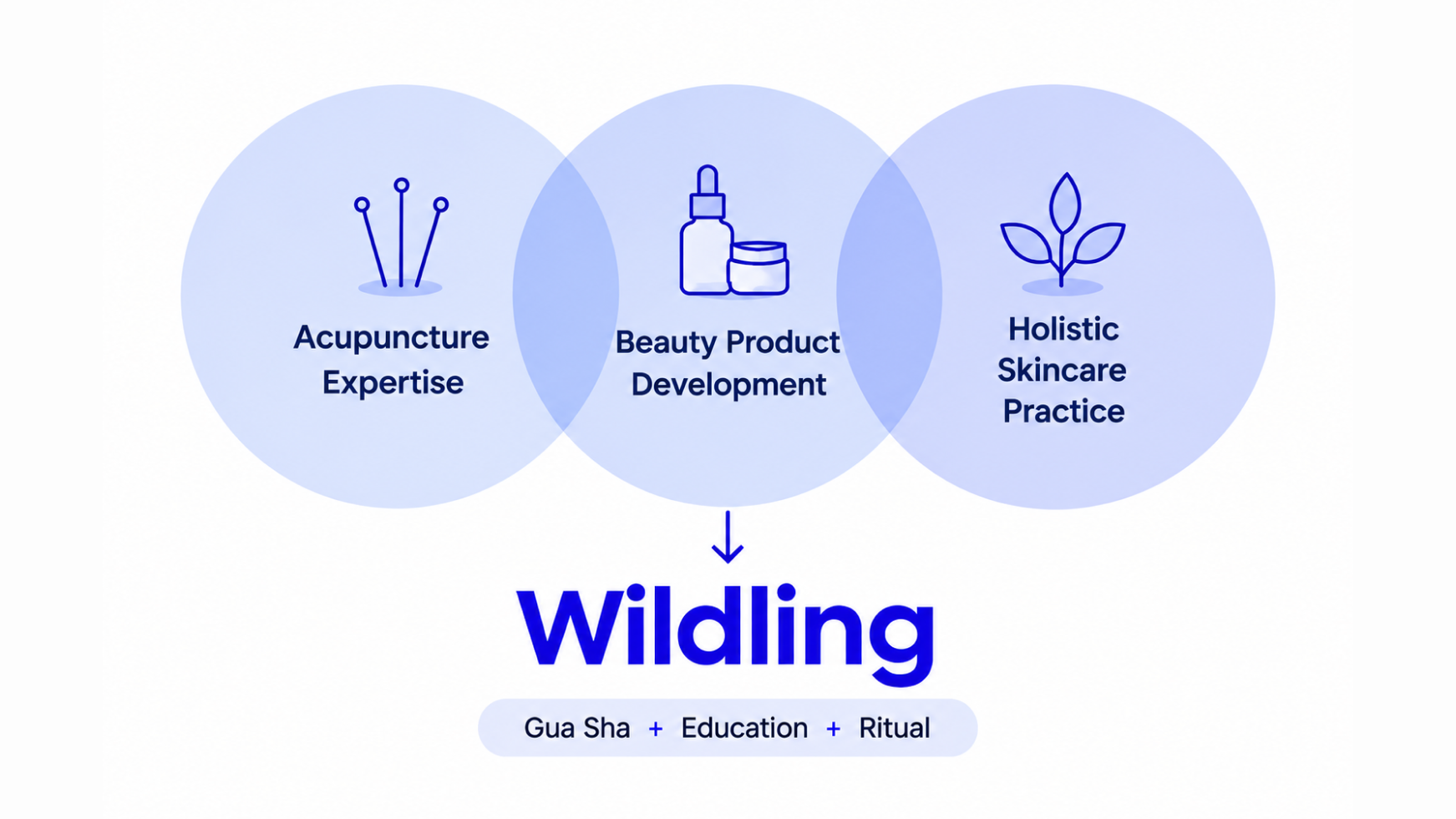
I've been an acupuncturist since 2009, and one of my co-founders was a holistic aesthetician who was seeing incredible results from Gua Sha treatments in her practice. Another came from the beauty industry and had spent years helping develop products for major brands.
We all saw the same opportunity.
At the time, most people in the United States had never heard of Gua Sha. We believed there was an opportunity to introduce the practice in a way that combined education, skincare, and ritual.
From the beginning, we knew the tool was only part of the experience.
You can't do Gua Sha on dry skin. It needs to glide, which is why we launched with our Empress Collection that included a mist, an oil, and the stone itself.
Education was also a huge part of the brand from day one. Gua Sha requires guidance, and once people learn how to use it properly, they start noticing how much tension they're carrying in their face, jaw, neck, and body.
That combination of education, ritual, and results became the foundation of Wildling. This feels much closer to the reference blogs: cleaner, more scannable, and focused on the strongest ideas from Gianna's answers.
3. Why did Wildling grow so quickly during the pandemic?
The pandemic was a pivotal moment for the brand.
My acupuncture practice essentially stopped overnight because people weren't coming in for treatments. At the same time, I had more energy and attention available to dedicate to Wildling.
People were also spending more time at home and looking for things they could do for themselves. They weren't getting facials or other treatments, so there was a growing interest in at-home wellness and skincare rituals.
We started hosting Zoom classes, creating educational content, and teaching people how to use Gua Sha. Then Melissa Wood Health posted a video using our tool, and things really took off.

We also received support from a number of incredible influencers, most of it completely organic. Combined with the broader rise of Gua Sha, it created a period of growth that was hard to anticipate and even harder to keep up with.
4. What problems come with explosive growth that nobody talks about?
It feels like you're always three or four steps behind.
When Wildling started growing quickly, we didn't have the infrastructure to support that level of demand. We didn't have a fulfillment center. I was packing orders with my baby strapped to me, working out of a small warehouse, and making multiple trips to the post office because we physically couldn't fit all the orders into one vehicle.
Then opportunities started showing up. I remember when Free People reached out and wanted to carry the collection. My first thought wasn't excitement. It was, "How do I pack a box for a retailer?"
At the time, I was doing marketing, creating content, managing the business, and trying to figure out operations all at once. Every new opportunity revealed another area where we needed help. We needed operational support, systems, and processes.
The learning curve was incredibly steep, and it often felt like we needed solutions weeks before we realized we needed them.
At the same time, that's part of what made the experience exciting. We built the business with roughly $30,000 to $40,000 of our own money, and every stage of growth forced us to learn something completely new.
Video to add: https://www.youtube.com/shorts/1jgg4LvNnEg?si=1nBNkXA44iXaYvow
5. What happens when your bestselling product becomes your biggest branding challenge?
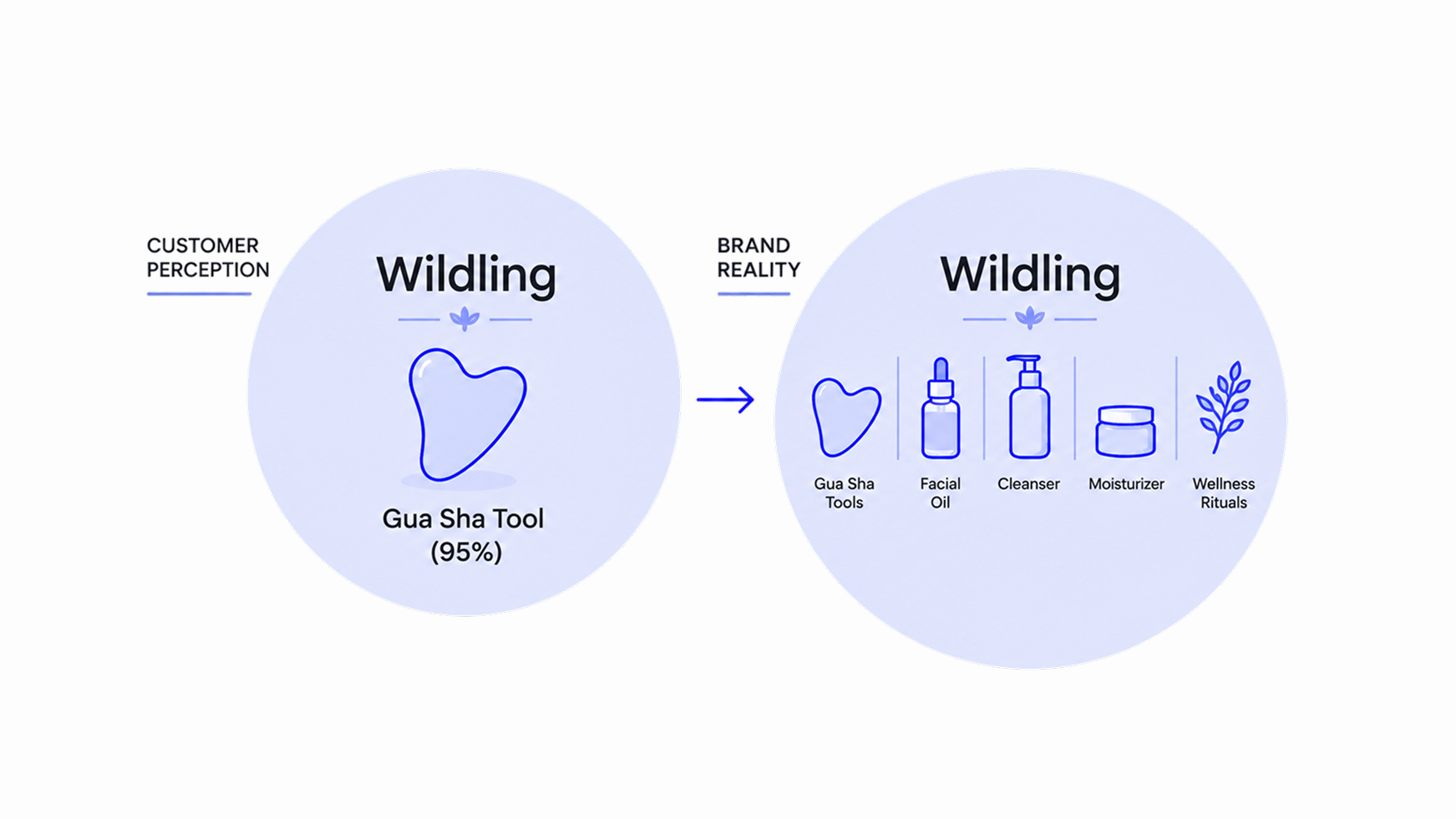
At some point, we realized that Wildling had become synonymous with Gua Sha.
That's an incredible thing because the tool helped introduce so many people to the brand. But it's also a unique challenge because a Gua Sha tool isn't a replenishable product. Most customers only need one.
We always had skincare. Our Empress Oil was part of our original launch collection, and it's still one of our bestselling skincare products. But over time, the tools became the center of the story.
A few years ago, we started expanding the skincare line with products like our cleanser and moisturizer. We knew we had products that were just as special and intentional as the tools, and we wanted people to understand that side of the brand as well.
That's where things started to feel like a second startup. As a small, self-funded company, we had to figure out how to introduce customers to a different part of Wildling while staying true to what people already knew us for.
I don't think we've completely cracked that code yet.
We're still thinking about how to tell that story in a way that feels natural and helps people understand the full scope of what we offer. When someone recognizes me as "the Gua Sha girl," it reminds me how powerful that association is and how much work it takes to expand it.
6. Why is educating customers harder than creating great products?
Education has always been a huge part of Wildling. When we launched, most people had never heard of Gua Sha. We spent years teaching customers how to use the tool, why it worked, and how it fit into a broader wellness ritual.
Now we're facing a different educational challenge.
We have products that have been part of the brand from the beginning, along with newer skincare products we've introduced over the years. The challenge is helping people understand that Wildling extends beyond the tool they're already familiar with.
Influencer marketing is part of that conversation, but it's become more complicated.
As a small brand, you have to be thoughtful about where you invest. Some creators have highly engaged audiences and drive incredible results. Others don't. It's not always obvious who will convert.
We can seed products and get them into people's hands, but education is still important. The more someone understands the ritual and the philosophy behind the products, the better they're able to communicate that experience to their audience.
That's something we're continuing to work on as we grow.
7. How has healing work shaped the way you approach entrepreneurship?
My background as an acupuncturist has given me a deep understanding of stress, burnout, and the nervous system.
The interesting thing is that being a founder forces me to use those tools every day.
When I was primarily focused on my acupuncture practice, stepping into that healing space felt natural and restorative. Running a company is different. There are always decisions to make, problems to solve, and competing priorities.
That means I have to actively practice the things I talk about with other people. I rely on tools like breathwork, movement and exercise, acupuncture, therapy, and nervous system regulation practices.
Being a founder has given me a real appreciation for how difficult it can be to stay grounded when you're carrying a lot of responsibility.
It's also helped me relate more deeply to the people I work with. Stress looks different for everyone, but the underlying experience is often the same. We all need tools that help us come back to ourselves and regulate our nervous systems when life becomes overwhelming.
8. What does burnout actually look like for founders?
I've absolutely experienced burnout. The challenge is that burnout doesn't always arrive at a convenient time. You might know you need a break, but your business still needs you. Your family still needs you. Life keeps moving.
I'm a mom, and I'm a founder. Neither of those responsibilities pause when I'm feeling exhausted. That's why I've become focused on what I call micro moments of recovery.
Most people can't disappear for a month or take a long retreat every time they're overwhelmed. What we can do is find small opportunities throughout the day to disconnect, slow down, and let our nervous systems recover.
For me, the non-negotiables are exercise, sleep, acupuncture, therapy, time away from screens, and moments of stillness throughout the day.
Sleep is especially important. If you're not sleeping, everything becomes harder. You're not thinking clearly, you're not recovering properly, and eventually it catches up with you.
I also think we need more tools for managing stress. If you can't put your phone down for 20 minutes, lie down, and fully relax, that's a sign that your nervous system needs support.
For people who struggle with meditation, I often recommend Yoga Nidra because it is accessible, restorative, and a great place to start. Burnout recovery doesn't always come from taking a huge break. Sometimes it comes from consistently creating small moments to recharge.
Video to add: It starts with the Micro-moments - YouTube
9. How did a conversation about cultural appropriation change the company?
In 2021, there were conversations online about cultural appropriation and whether brands outside the Chinese community should be sharing Gua Sha and traditional Chinese medicine practices.
For me, it became an opportunity to listen and learn.
I've spent many years studying Chinese medicine and have always approached the practice with respect. At the same time, I understood why people were asking important questions about representation, ownership, and cultural traditions.
Rather than becoming defensive, we wanted to be part of the conversation. We brought in guidance, listened to different perspectives, and spent time thinking about how we could better support the communities connected to these traditions.
That period also led us to deepen relationships within the AAPI community. We worked with AAPI creators, supported organizations like Hate Is A Virus, and focused on understanding how we could show up more thoughtfully.
One of the biggest lessons for me was the value of curiosity. I don't think founders need to have all the answers. Sometimes the most important thing you can do is listen, ask questions, and stay open to learning.
Looking back, it was a meaningful experience for both the company and me. It strengthened relationships, introduced us to new perspectives, and created conversations that continue to inform how we think about the brand today.
Key takeaways for DTC founders
- Build products that become habits, not just purchases. Wildling's biggest success wasn't selling a Gua Sha tool. It was becoming part of customers' daily routines. The strongest brands create products people return to every day, making them harder to replace and easier to recommend.
- If you're creating a new category, invest in education as much as the product. When Wildling launched, most customers had never heard of Gua Sha. Tutorials, classes, and educational content were essential to driving adoption and helping customers see results.
- Sell an ecosystem, not a hero product. Wildling launched with a Gua Sha tool, facial oil, and mist because the ritual mattered as much as the product itself. Complementary products can improve customer outcomes while increasing average order value.
- Prepare your operations before demand catches up. Rapid growth often breaks fulfillment, inventory, packaging, and internal systems before it breaks marketing. Investing in operational infrastructure early makes it easier to capitalize on new opportunities.
- A bestselling product can become a branding challenge. Hero products build awareness, but they can also overshadow the rest of your catalog. As your flagship product grows, start educating customers about adjacent products before you need to diversify revenue.
- Customer education is an ongoing process. Once customers understood Gua Sha, Wildling had to teach them that the brand offered much more than facial tools. Every stage of growth brings a new education challenge.
- Organic advocacy compounds over time. Wildling's growth wasn't driven by one campaign. It came from education, changing consumer behavior, and authentic creator support that reinforced each other over time.
- Founder wellbeing is part of business performance. Burnout doesn't always allow for extended breaks. Building micro moments of recovery through sleep, movement, therapy, and time away from screens can help founders sustain high performance over the long term.
- Approach criticism with curiosity instead of defensiveness. Wildling used conversations around cultural appropriation as an opportunity to listen, learn, and build stronger relationships. Difficult conversations can become opportunities to strengthen both your brand and your community.
Ready to build a brand customers keep coming back to?
Wildling's story highlights a challenge many founders face after finding product-market fit.
Success creates new opportunities, but it also creates new expectations. Customers form strong associations with specific products, operations become more complex, and growth demands new systems, skills, and strategies.
For Gianna De La Torre, the journey wasn't just about turning Gua Sha into a category-defining product. It was about figuring out how to educate customers, expand the brand's story, and continue evolving alongside the business.
As your brand grows, customer acquisition is only part of the equation. Long-term success comes from building relationships that keep customers engaged long after their first purchase.
That's where affiliate marketing can help. Social Snowball helps ecommerce brands turn customers, creators, influencers, and ambassadors into scalable acquisition channels with automated tracking, payouts, attribution, and affiliate management tools built for growth.