
.avif)
Super Bowl advertising has traditionally leaned on celebrities to drive instant recognition, using star power to stand out during the biggest ad moment of the year.
But this year, one ecommerce brand took a different approach. Instead of anchoring its Super Bowl spot around a celebrity, Tree Hut, a body-care brand, built their entire promotion around creators they already worked with.
This was a strategic move. Tree Hut leveraged influencer marketing principles for its biggest advertising debut, betting that familiarity, cultural relevance, and creator equity would outperform traditional star power.
This piece breaks down how and why Tree Hut made that choice, how the ad was constructed, what kind of impact it drove, and what it signals for brands thinking about creator-led mass marketing.
Breaking down TreeHut's creator-led Super Bowl ad
Tree Hut is a body-care brand that has consistently relied on creators to drive product discovery, education, and cultural relevance, particularly on platforms like TikTok, where sensorial, routine-based content performs best.
When the brand picked up an advertising spot during the Super Bowl commercial break, they chose to lean into their already successful marketing strategy and amplify it.
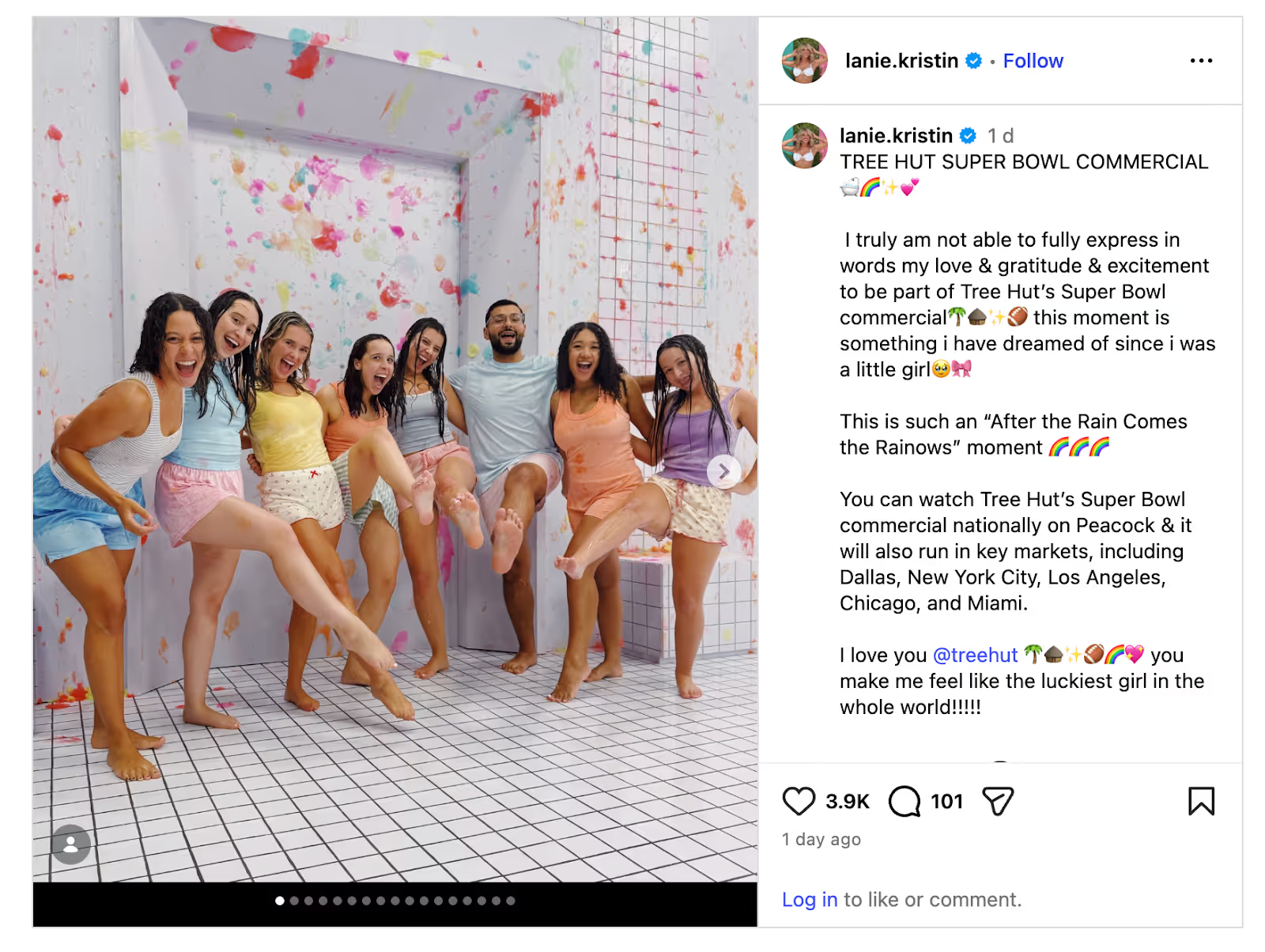
Tree Hut’s first-ever Super Bowl commercial, titled “Uncontain Yourself,” was a 30-second spot starring seven beauty and lifestyle creators pulled directly from Tree Hut’s online community rather than professional actors or celebrity endorsers.
The idea behind the ad was to break out of the “clean girl” stereotype. It opens with rigid scenes of uniform beauty routines that suddenly erupt into vibrant color, energy, and playful self-expression.
Bold visuals, movement, and sensory cues emphasize Tree Hut’s core message that self-care is joyful, expressive, and personal, not restrained or formulaic.

Philosophy behind the ad
Tree Hut’s strategy was to elevate the voices of creators who helped build their brand’s community:
- It intentionally chose creators with authentic relationships to the brand rather than one-off paid endorsers.
- They brought the energy of TikTok to broadcast, turning the fast-paced, participatory culture of social media into mass-market storytelling.
- For Tree Hut, creators aren’t a channel or marketing add-on. They’re storytellers and cultural leaders whose voices carry existing trust and engagement.
“Our goal was to take Tree Hut to a bigger stage without losing the brand’s voice. By centring our first Super Bowl spot on creators, we stayed true to our community-driven roots while bringing ‘Uncontain Yourself’ to life in a bold, expressive way. Tree Hut turns everyday routines into moments of sensorial joy, and this spot is an invitation to stop holding back.”
Luis Garcia, Chief Marketing Officer at Tree Hut
This approach mirrors a broader shift in brand storytelling: moving away from aspirational perfection toward community-rooted expression and relatability.
What Tree Hut gained from a creator-led Super Bowl ad
Tree Hut’s decision to anchor its Super Bowl debut around creators had clear economic and audience advantages.
1. Cost efficiency at Super Bowl scale
While Super Bowl airtime costs are generally fixed, talent costs are not.
Celebrity talent fees for last year’s Super Bowl ads ranged between $3 million and $5 million per star. In contrast, the average mega-influencer on TikTok (1M+ followers) costs around $2,500 per post.
While Super Bowl appearances involve different contracts than standard social posts, the delta is still meaningful.
By working with multiple creators instead of a single A-list celebrity, Tree Hut avoided seven-figure talent fees while still driving on-screen recognition, cultural relevance, and post-game amplification across social platforms.
The brand redistributed budget from fame rental to creator equity.
2. Extended distribution beyond the broadcast
Typically, a traditional celebrity-led Super Bowl ad peaks during the broadcast but declines immediately after. A creator-led ad works differently.
Since creators also own distribution, Tree Hut’s commercial didn’t stop driving traction after it aired. The creators reshared the ad (as well as behind-the-scenes moments from filming) across TikTok, Instagram, and other platforms. That extended the campaign’s lifespan and kept it circulating well beyond game night.
Instead of a single, centralized spike in attention, Tree Hut unlocked multiple trusted entry points into different audience clusters, turning a single media moment into sustained social reach.
3. Stronger resonance with Gen Z audiences
For Gen Z shoppers in particular, creators often outperform celebrities on trust and relatability.
Influencers are familiar personalities and part of this demographic’s daily content consumption. Their recommendations feel closer to peer validation than a traditional endorsement. This matters most in categories like beauty and personal care, where credibility, routine usage, and real results heavily influence buying decisions.
By featuring creators that their audience already follows, Tree Hut met shoppers where trust already existed, instead of asking them to buy into a celebrity they don’t relate to.
4. Brand association, not just brand recall
Besides awareness, the ad placed the brand in the right context.
Audiences didn’t just learn about Tree Hut through their Super Bowl spot. They saw the brand through creators they already follow and trust, in the same feeds they scroll every day. That made Tree Hut feel familiar and relevant, not just memorable.
That distinction matters. For brands competing for attention, relevance compounds more reliably than recognition alone.
When a creator-led Super Bowl ad strategy doesn’t work
This approach isn’t always applicable. Using creators in a big broadcast moment can fall flat when:
- The brand doesn’t already have real creator relationships
- Creators are picked for reach instead of genuine fit
- The product needs deep technical authority or credibility that creators can’t naturally explain
Without real alignment, creators stop adding trust.
Ready to leverage creators to promote your brand?
Tree Hut’s Super Bowl debut signals a broader shift in how influencer marketing is evolving. What started as a performance channel is moving into brand storytelling, mass reach, and cultural positioning.
For brands with strong creator ecosystems, the question is no longer whether creators belong in big-budget moments, but whether celebrity-led models still justify their cost.
To make this work at scale, creator partnerships need more than one-off campaigns. They require structure, automation, and clear attribution.
That’s where Social Snowball comes in. Instead of treating creators as a standalone channel, Social Snowball lets you align creator partnerships with measurable performance, whether it’s for everyday campaigns or high-impact brand moments.
Want to build a creator strategy that’s ready for prime time?