Many affiliate programs slow down after the first few weeks.
Affiliates sign up, share a few links, maybe drive some early sales, and then gradually stop posting altogether. This isn’t because they were a poor fit, but because there was nothing pushing them to stay involved after joining.
The brands that grow strong affiliate programs long term don’t just recruit more affiliates. They build systems that keep affiliates consistently active, competitive, and motivated to keep driving revenue.
That’s exactly what Noah Tucker, Founder and CEO of Social Snowball, breaks down in his gamification course. From reward tiers and giveaways to leaderboards and holiday promos, these are the same strategies ecommerce brands use to turn affiliate programs into long-term acquisition channels instead of short-term campaigns.
If you want affiliates to keep posting, referring, and generating revenue long after signup, this guide will show you how to structure your program properly.
Build reward tiers that keep affiliates pushing for the next milestone
One of the fastest ways to lose affiliate momentum is to keep every affiliate on the same reward structure forever.
A flat 15% commission only goes so far. If nothing changes as creators perform, motivation tends to fade once the initial excitement wears off.
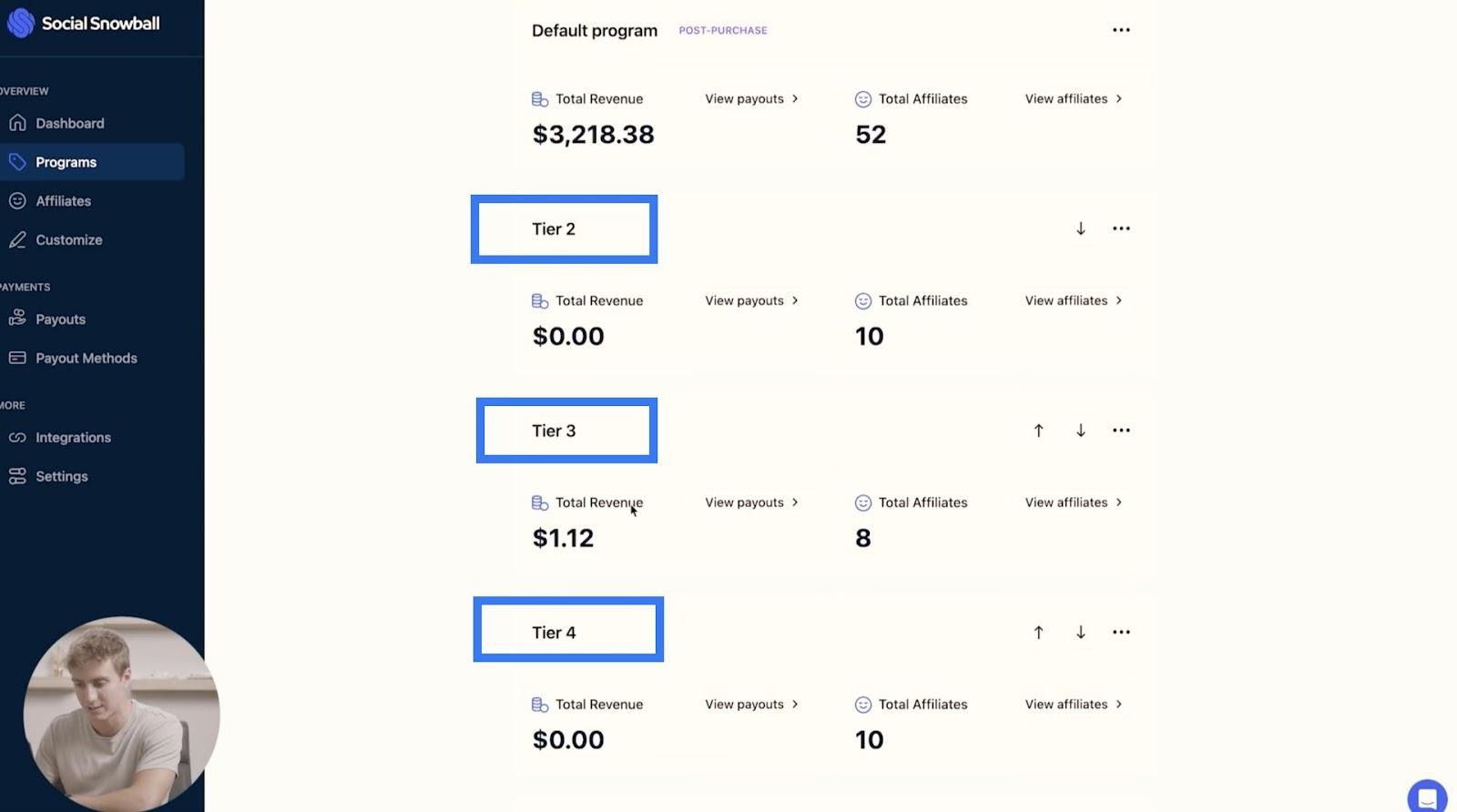
Reward tiers solve that problem by creating a sense of progression. Instead of treating affiliate commissions like a static setup, you turn the program into something affiliates can actively move through. Every milestone gives them a new target to chase and a stronger reason to keep driving sales.
"You can create performance milestones that your affiliates can move through. Then, once they reach each performance milestone, they can receive a bonus or a higher incentive. For example, if all of your affiliates are starting at a 15% commission rate, you could create different reward tiers based on how many referrals they've made. After an affiliate refers 10 referrals, their commission jumps to 20%. After they refer 50 referrals, their commission bumps up to 25%."
Here are some tips to build reward tiers that keep affiliates pushing for the next milestone:
Use progression instead of flat commissions
The best reward structures feel clear and achievable. A simple progression might look like this:
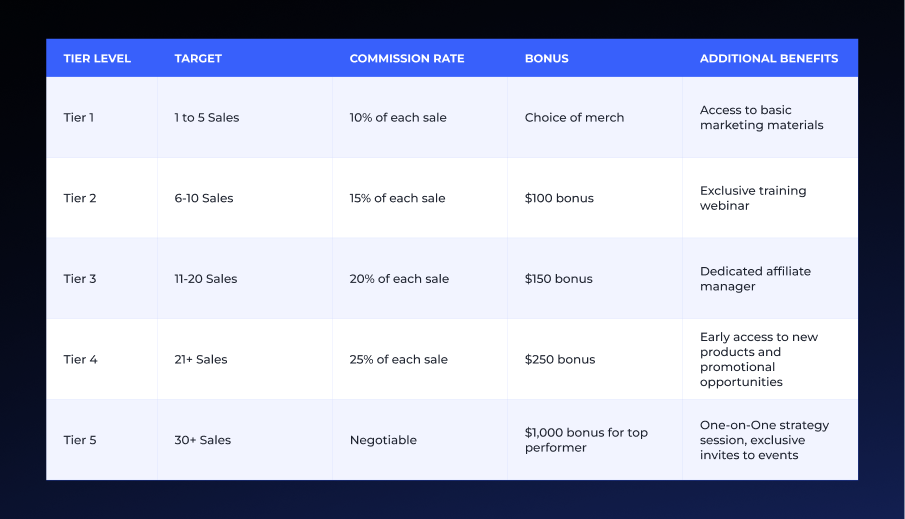
The psychology here matters. Once affiliates get close to the next milestone, they naturally start pushing harder because the reward feels tangible and within reach. That’s why multiple tiers are important. If your structure ends after one milestone, motivation usually drops again right after affiliates hit it.
"It's important that you build out multiple tiers because after someone moves from tier one to tier two, you want them continuously motivated to move to tier three, tier four, tier five. You could create incentives that are not commission-based too. Maybe after someone refers 100 sales, they get a free gift. After 200 sales, they get a higher-value gift as a thank you."
You want affiliates thinking:
- “I’m close to the next commission bump.”
- “I only need a few more sales.”
- “If I post another video this week, I’ll probably hit the next tier.”
The milestones themselves can vary depending on your program structure. Some brands tier affiliates based on total referred orders, total referral revenue, number of TikTok Shop sales, and subscription signups.
For example, a supplement brand might increase commissions after 25 subscription conversions, while a fashion brand could reward creators for generating a certain amount of UGC or tagged content.
The important part is keeping the progression easy to understand and worth working toward.
Add non-cash incentives after higher milestones
Commission increases are effective early on, but higher-performing affiliates usually respond better when you layer in rewards beyond payouts. That’s where non-cash incentives become powerful.
Once affiliates start driving meaningful revenue, exclusivity and recognition often become just as motivating as extra commission points. For example:
- Send free products after 100 referred orders
- Unlock early access to launches
- Offer higher creator discount codes
- Give top affiliates access to limited-edition drops
- Create VIP affiliate groups for high performers
- Send surprise gifts after milestone achievements
These rewards make the program feel more personal and memorable. A creator is far more likely to stay engaged when they feel like they’re getting insider access to the brand rather than simply earning commissions through a dashboard.
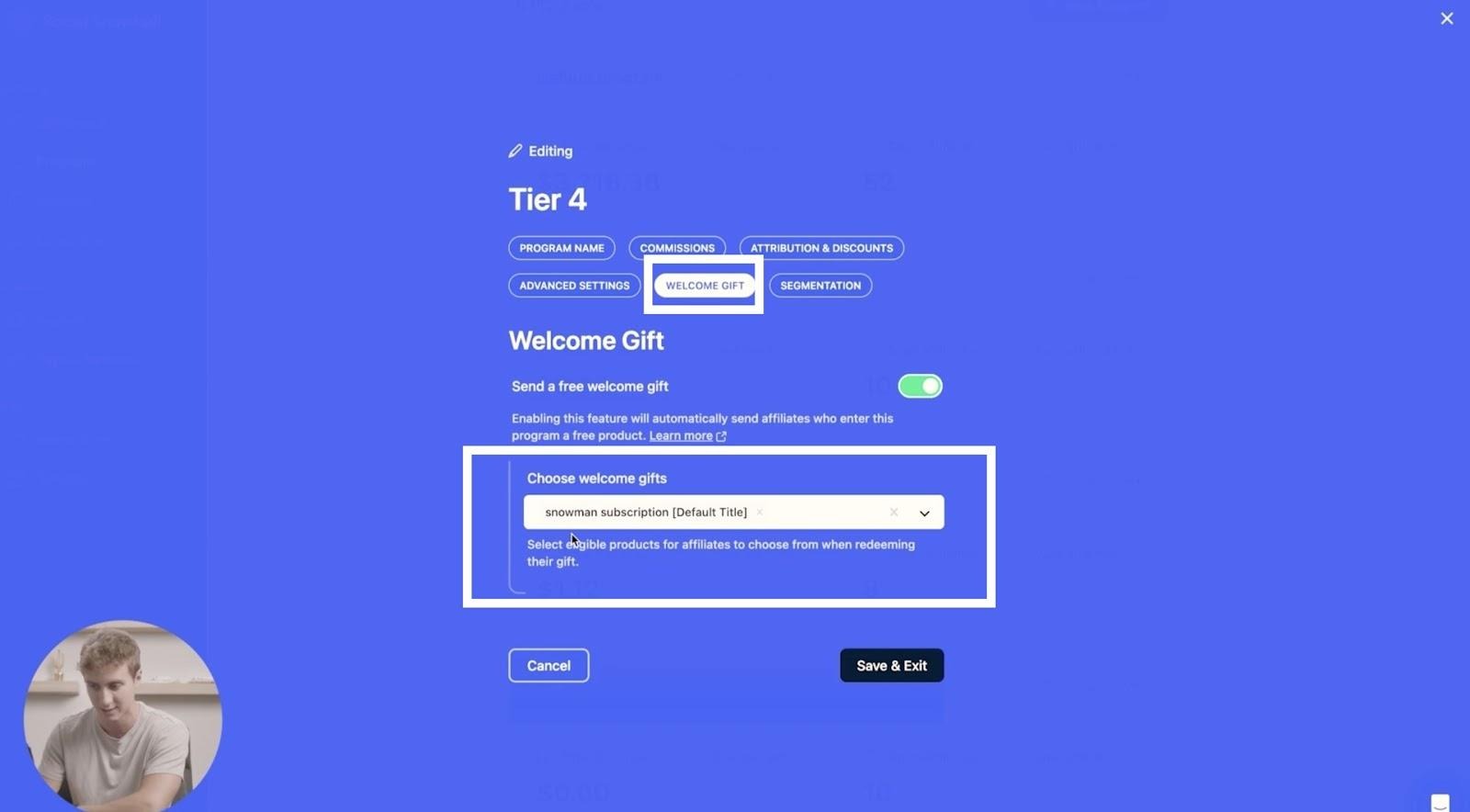
This is also where gifting campaigns become useful. Inside Social Snowball, brands can automatically send gifts to affiliates who reach higher performance tiers without managing fulfillment manually. That removes a lot of operational friction as your program scales.
Make milestone tracking visible
Reward tiers stop working the moment affiliates forget they exist. A lot of brands spend time building commission structures and milestone rewards, but barely talk about them afterward. Affiliates join the program, receive one onboarding email, and then never hear about the next milestone again.
That completely removes the momentum you’re trying to create. The brands that keep affiliates active constantly remind them what they’re working toward.
For example, if an affiliate is only a few sales away from unlocking a higher commission rate, that should feel obvious to them. A quick email saying, “You’re 3 referrals away from unlocking 25% commissions” can easily push someone to post another TikTok, send another email, or share another story that week.
The same applies when affiliates actually hit a milestone. Celebrating those moments matters more than most brands think. Something as simple as a commission upgrade email, a milestone SMS, a reward unlock notification, or a dashboard update showing their new tier helps affiliates feel a sense of progress in real time.
"It's really important that the reward structure is very clearly communicated to affiliates. If affiliates don't understand the structure, they're not going to be motivated to continue pushing and continue driving sales because they just won't know what the additional rewards are in store for them. Through email and SMS are definitely the most important channels for communicating these structures."
Use monthly giveaways to keep affiliates consistently active
Reward tiers are great for long-term motivation because affiliates always have another milestone to work toward. But you also need something that keeps affiliates active right now, especially the ones who haven’t reached higher tiers yet.
That’s where giveaways work really well.
A good giveaway structure gives affiliates a short-term reason to keep posting consistently, even if they’re still early in the program. It creates recurring bursts of activity without requiring constant campaign launches or manual nudges to keep creators engaged.
Why rolling incentives work better than one-time contests
One-time contests usually create a temporary spike in activity. People participate for a week or two, winners get announced, and then engagement drops again.
Monthly giveaways work differently because they reset continuously. Affiliates know there’s always another opportunity coming up, which naturally keeps them more active month after month.
For example, if your giveaway runs every month:
- Affiliates keep posting consistently
- Creators stay engaged longer
- Smaller affiliates still feel like they have a chance to win
- Your program avoids long inactive periods
This is especially important for creator programs where content output matters just as much as direct sales.
A creator who didn’t win this month still has a reason to stay active next month instead of disappearing from the program entirely. That consistency is what actually compounds affiliate revenue over time.
Structure giveaway entry around achievable goals
The best giveaway structures feel attainable. If the qualification threshold is too high, most affiliates mentally check out before they even try.
Instead, structure giveaways around milestones that feel realistic for the majority of your program. For example:
- Five referred sales in a month
- Three TikTok videos posted
- Ten successful referrals
- A minimum revenue threshold
- A certain number of affiliate link clicks
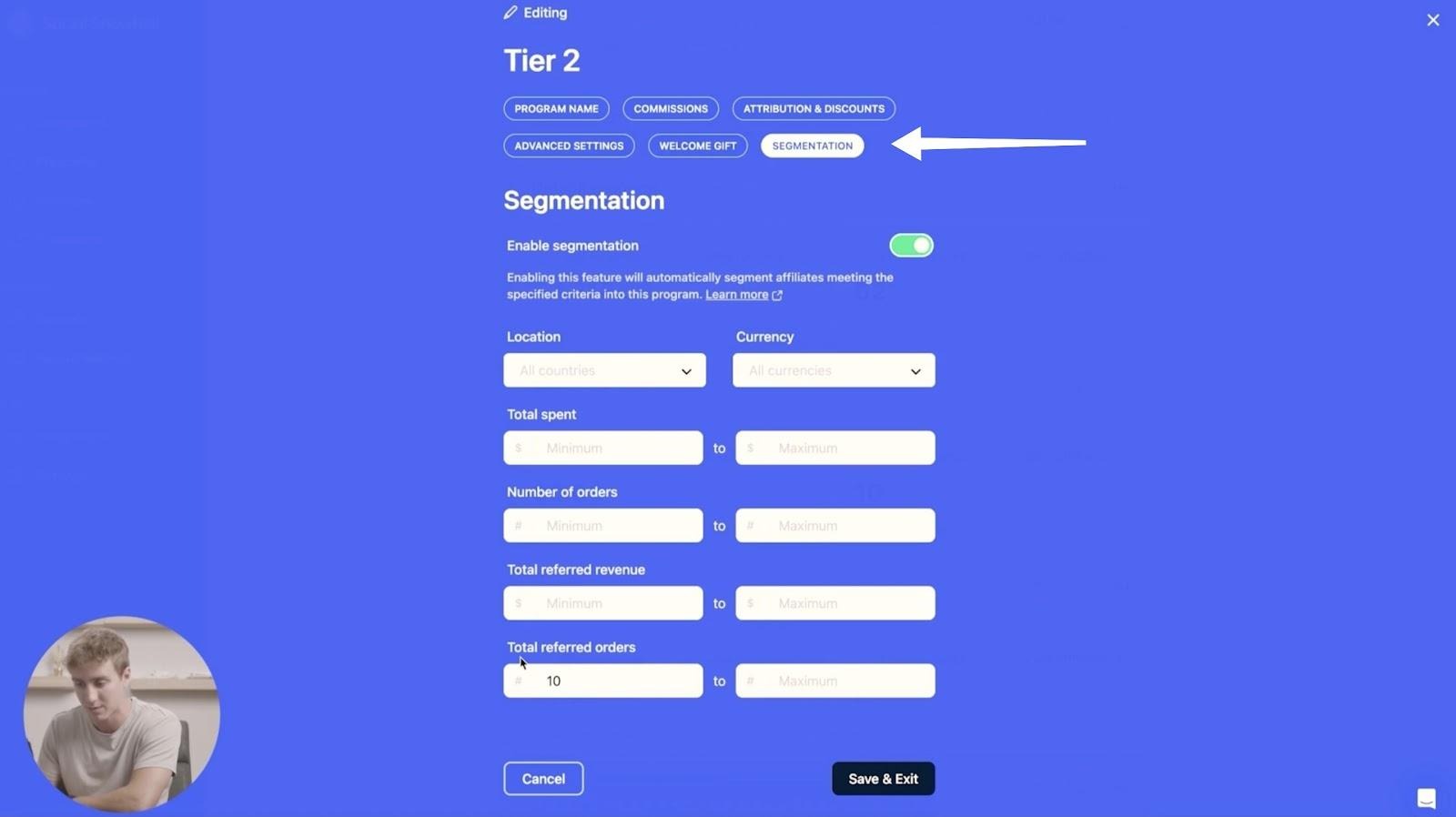
"Every month, every affiliate that hits this milestone will qualify into the giveaway. You can set the qualifying milestone to be five referral sales. Every affiliate who hits that milestone gets opted into the giveaway automatically. Then once they hit it, you can send them a message saying, 'Congratulations, you've hit five referrals and you're now entered into this giveaway.'"
This works particularly well because it keeps smaller creators involved, too. Not every affiliate has a massive audience. But many smaller creators can still hit achievable milestones consistently when the goal feels within reach. The giveaway itself doesn’t need to be overly complicated.
Brands usually see strong participation with free products, store credit, cash rewards, exclusive product bundles, and early-access launches. The important part is choosing rewards that your affiliates actually care about.
"Things like this are really key to keep affiliates engaged because they only get entered into the giveaway if they hit the milestone for that period. If they drove a lot of referrals last month but they failed to do so this month, they're not going to get entered into the giveaway. It's a great way to keep affiliates actively engaged month over month."
A beauty brand might offer unreleased products or PR packages. A fitness brand could give away limited-edition apparel or supplement bundles. The closer the reward feels to the brand itself, the more engaging the giveaway usually becomes.
Publicly announce winners to create social proof
One of the most overlooked parts of affiliate giveaways is what happens after the giveaway ends. Announcing winners publicly creates a second layer of motivation across the entire affiliate base.
When affiliates consistently see other affiliates winning rewards, hitting milestones, and getting recognized by the brand, the program starts feeling active and competitive.
You can share winners through affiliate emails, Instagram stories, Discord or Slack communities, creator newsletters, and leaderboard updates. This kind of visibility helps affiliates feel like real participants in the brand ecosystem rather than anonymous people generating links in the background.
Within Social Snowball, brands often combine giveaways with automated segmentation and milestone tracking so affiliates are automatically entered once they hit a certain goal. That makes it much easier to run recurring campaigns without manually tracking every creator each month.
Turn your affiliate program into a leaderboard competition
Leaderboards are effective at keeping affiliate programs active. It gives affiliates something visible to compete for. Instead of promoting in isolation, creators can see where they stand, who’s performing well, and what they need to do to move up.
"This is really powerful because it builds a bit of a community within your affiliate program and it helps keep everyone engaged. It also builds a little bit of friendly competition amongst your affiliate program.”
Most brands run leaderboards monthly and rank affiliates based on referred revenue, total orders, TikTok Shop sales, UGC output, or conversion volume. Then they reward the top performers.
For example:
- The top affiliate gets a premium reward
- Second through fifth place receive smaller prizes
- Everyone on the leaderboard gets public recognition
The prizes matter, but visibility is usually a bigger motivator. Affiliates like seeing their names attached to results. It creates friendly competition, keeps creators engaged longer, and gives your program a stronger sense of community.
“Not only do affiliates get the community-building aspect of the competition, but they'll also be rewarded with different prizes depending on where they land on the leaderboard."
This also gives you a steady stream of content for emails, affiliate groups, and social updates without constantly inventing new campaigns.
Use holiday promos to drive affiliate spikes during peak sales periods
Holiday sales periods are when affiliate programs can drive some of the highest revenue volume of the entire year. But many brands underuse affiliates during campaigns like BFCM because they focus almost entirely on paid ads and email marketing.
Meanwhile, creators are posting more content, customers are actively shopping, and purchase intent is already high. That’s exactly when affiliates become most valuable.
Below are a few tips to make the most of holiday seasons and boost affiliate revenue.
Don’t pause affiliate programs during major sales
During major sales periods, affiliates promote multiple brands simultaneously. The brands offering the strongest earning opportunities are usually prioritized.
That’s why temporary commission increases are effective during campaigns like BFCM, product launches, holiday sales, and seasonal promotions.
"I think a lot of brands make the mistake of turning off their affiliate program temporarily during BFCM or other similar sale periods, where you can actually turn your affiliates into a really large contribution towards the promo that you're running. During BFCM everyone's going to want their product promoted, so you want to make sure you're giving affiliates the highest commission you can possibly offer."
For example, you can:
- Increase commissions from 20% to 30% during BFCM
- Offer bonus payouts after a certain revenue threshold
- Reward top holiday performers with additional incentives
Even a temporary increase can drive significantly more creator activity because affiliates know they can earn more during that window.
Avoid coupon code conflicts during sitewide sales
This is one of the most overlooked parts of holiday affiliate campaigns. A lot of brands run into problems when affiliates share creator discount codes while the brand runs a separate sitewide BFCM code. Due to this, the discounts don’t stack properly and attribution breaks at checkout.
That creates confusion for customers and usually hurts conversion rates. Most brands solve this in one of two ways: allow affiliate codes to stack with sitewide promos or temporarily switch affiliates to tracked links instead of discount codes.
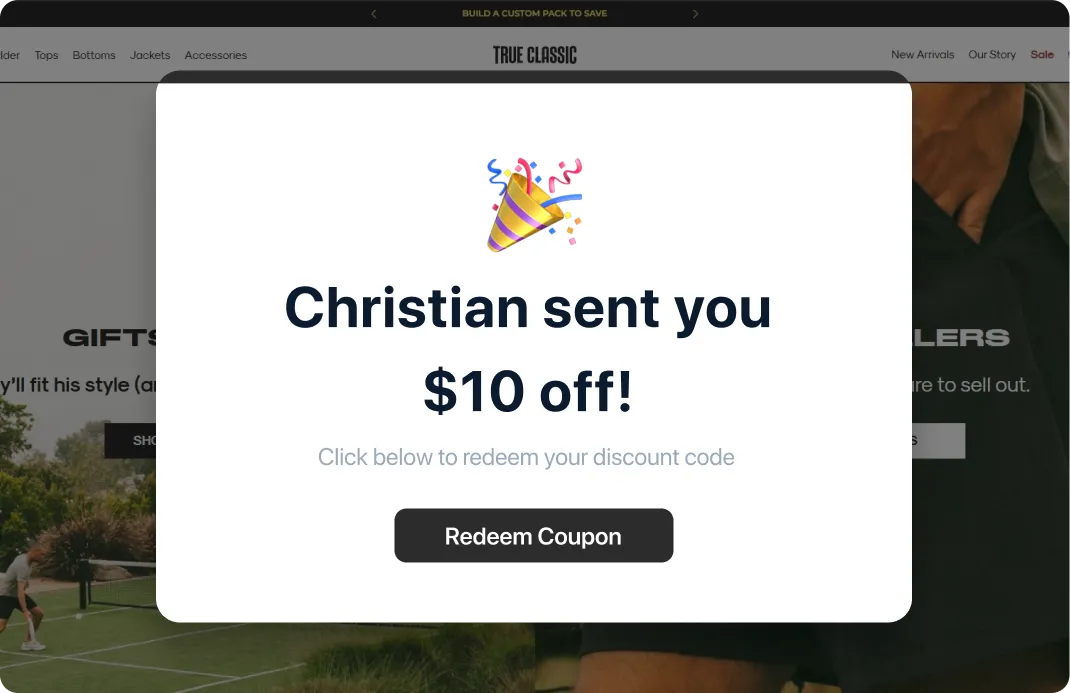
This is where Safelinks, a feature by Social Snowball become especially useful. Every affiliate click generates a unique single-use code automatically, which helps protect attribution and reduce coupon leakage during high-volume sale periods.
Turn new customers into affiliates during holiday traffic spikes
Holiday promos are one of the best opportunities to grow your affiliate program because customer acquisition is already happening at scale.
Most brands focus entirely on converting that traffic once. The smarter move is turning new customers into an additional acquisition channel immediately after purchase.
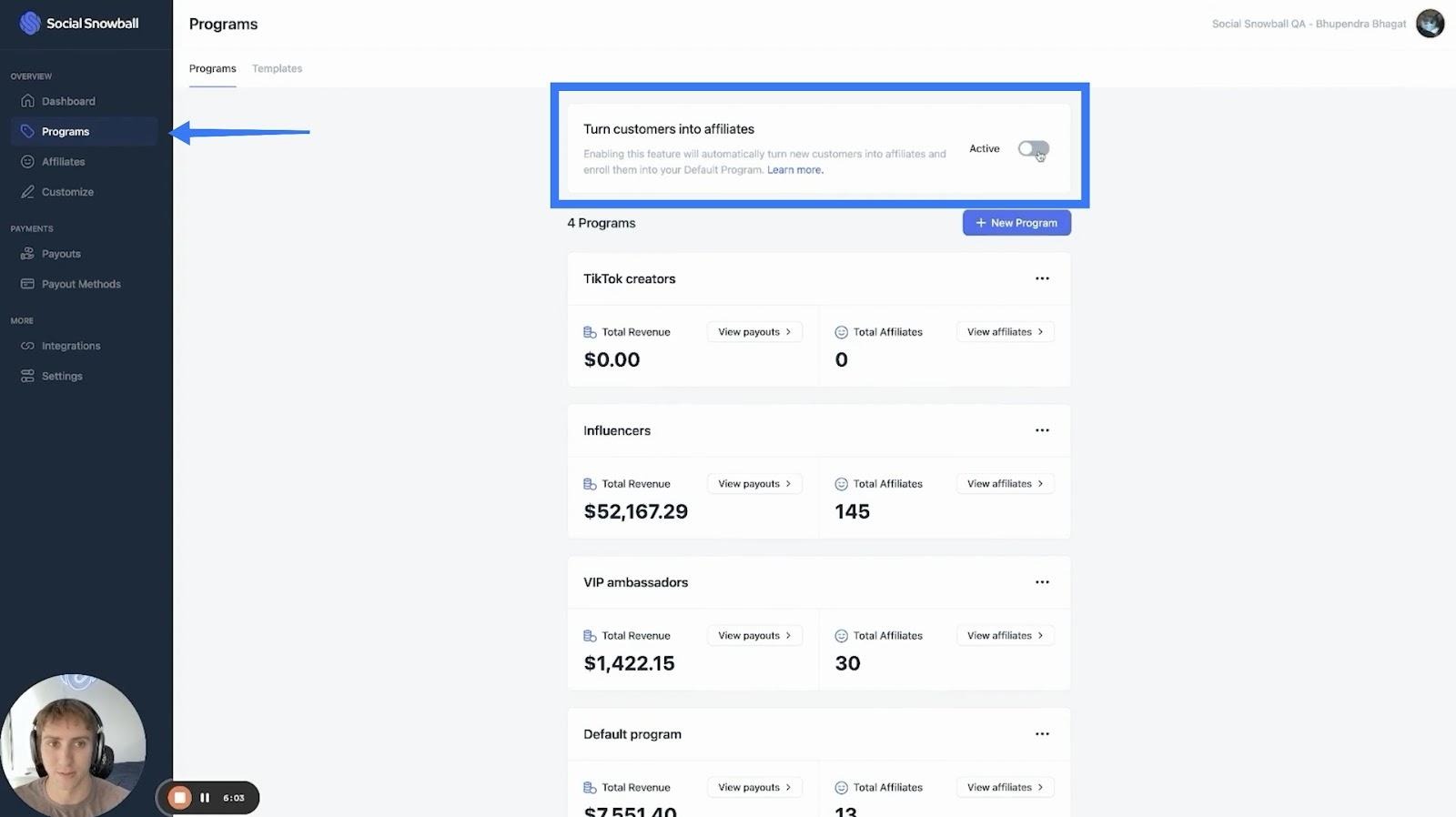
"Turning customers into affiliates is a really powerful mechanism that you could use to get more value out of your new customers during a sale period. During BFCM you're getting a huge influx of new customers that are probably buying from you for the first time. If you could get all those new customers to maybe refer one or two friends, that's an extremely powerful customer acquisition channel."
During periods like BFCM, customers are actively shopping. Social sharing naturally picks up since purchase intent is already high. That combination creates the perfect environment for referrals.
For example, a customer buys during your holiday sale, receives an affiliate link after checkout, and shares it with friends who are still shopping during the same promotional window. Even if only a small percentage of customers refer one or two people, the revenue impact adds up quickly during high-volume periods.
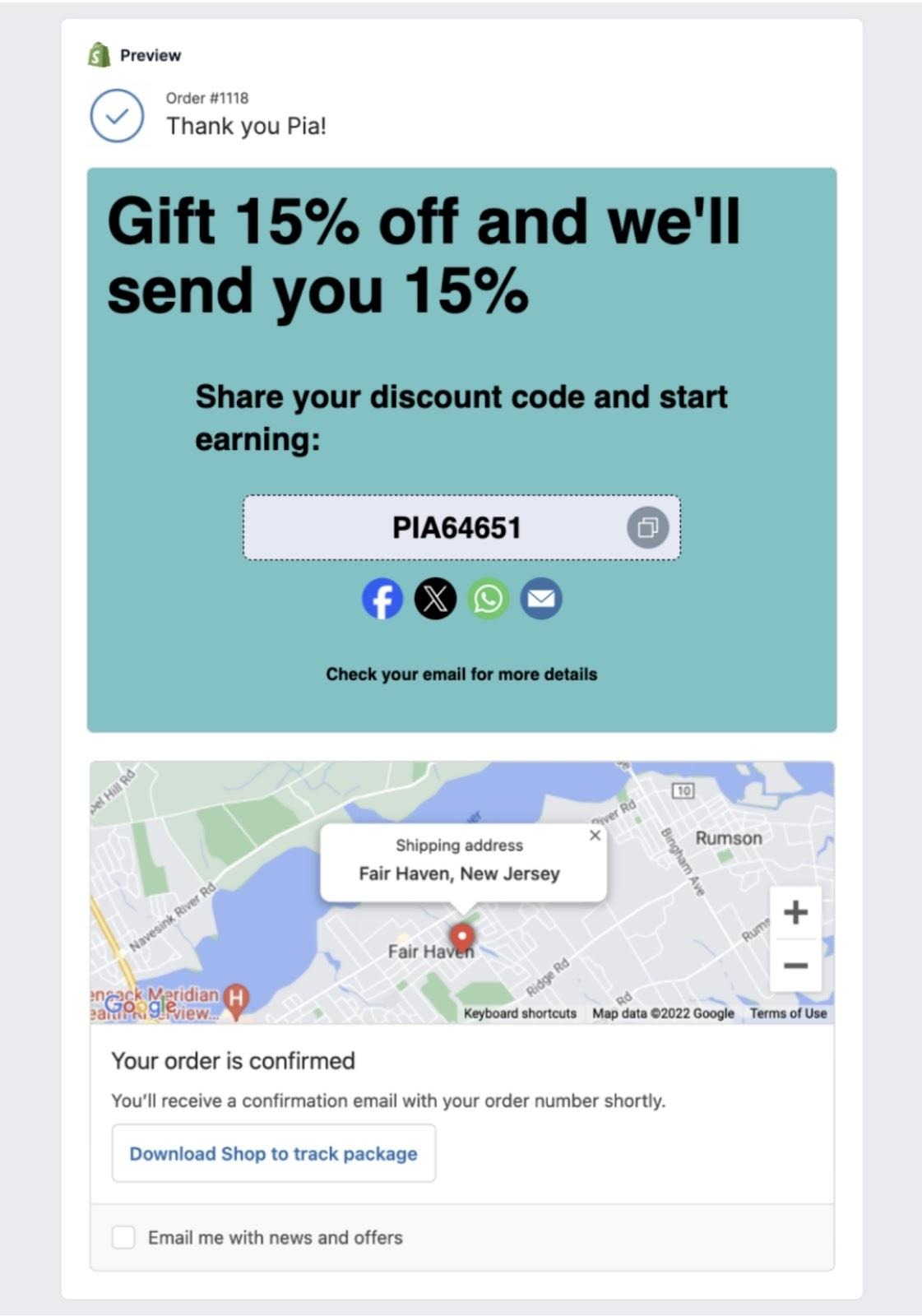
This is why Noah Tucker mentions customer-to-affiliate activation as such a key part of holiday affiliate strategy. You’re getting more value from customers you already paid to acquire.
Using Social Snowball, brands usually automate this directly through the Shopify checkout flow. Customers are automatically enrolled into the affiliate program post-purchase, making it easy to start sharing immediately without filling out a separate application.
How to automate affiliate gamification without manual work
Gamification strategies work really well when your affiliate program is small. But once it scales and you start managing dozens or hundreds of affiliates, manual workflows become difficult very quickly.
You can’t realistically:
- Track milestone upgrades manually
- Calculate giveaway entries every month
- Monitor leaderboard rankings in spreadsheets
- Send reward notifications one by one
- Manage gifting workflows across creators
That operational work becomes very difficult to manage, and this is where automation matters most.
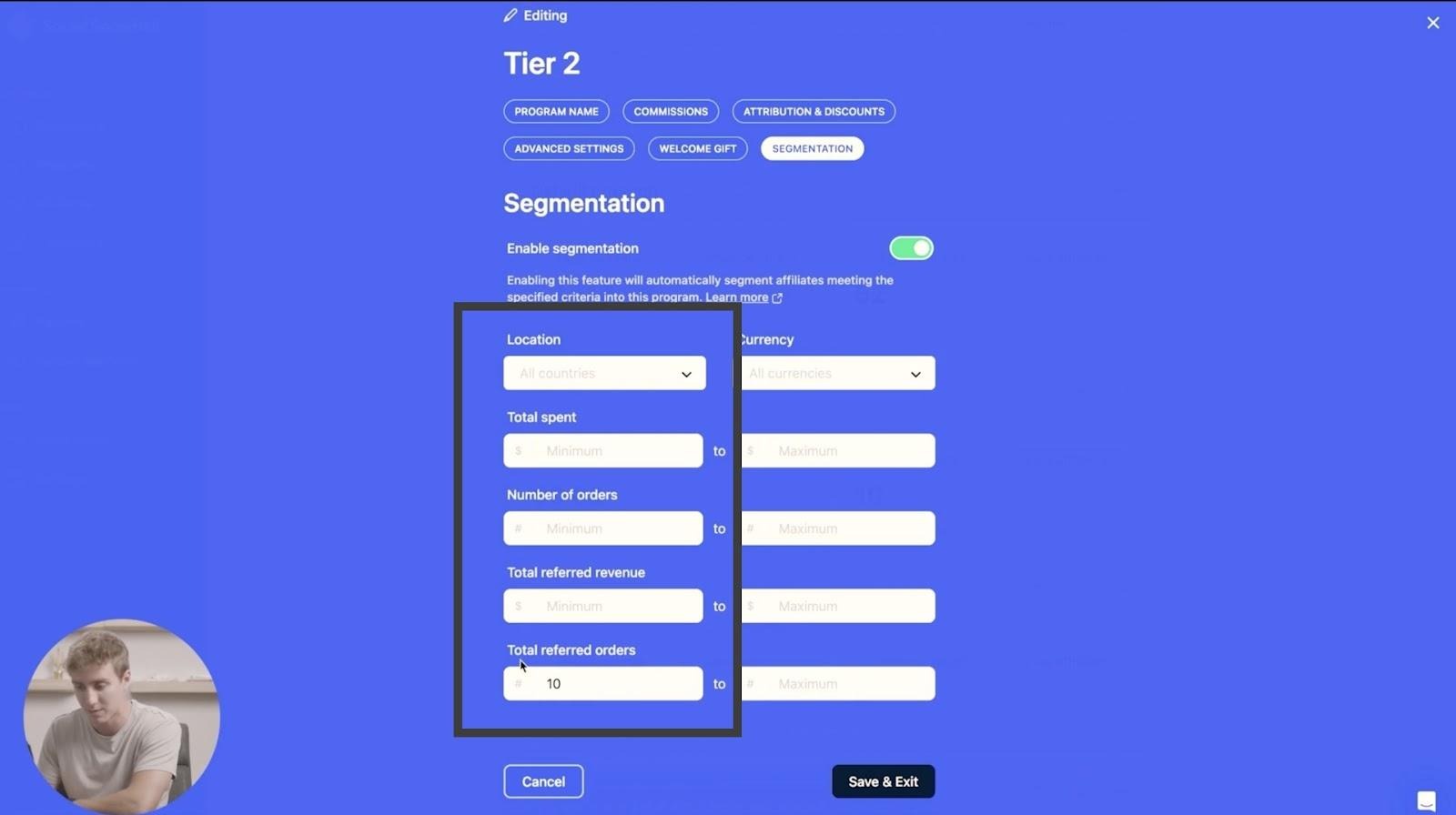
Using Social Snowball, brands typically automate affiliate tier upgrades, milestone tracking, giveaway qualification, leaderboard segmentation, gifting campaigns, payout workflows, and so much more.
For example, once an affiliate crosses a certain referral threshold, they can automatically move into a higher commission tier, receive a milestone email, unlock a reward, and qualify for additional incentives without your team manually updating anything.
That’s what allows affiliate programs to keep scaling without turning into an operational mess behind the scenes.
Ready to use gamification to grow your affiliate program?
Affiliate programs grow when affiliates have a reason to keep promoting consistently, not just sign up once and disappear a few weeks later. The strongest programs create ongoing momentum through:
- Reward tiers affiliates want to reach
- Giveaways that keep participation high
- Leaderboards that create friendly competition
- Holiday promos that drive spikes in referral revenue
- Automated systems that keep the program running at scale
As your affiliate program grows, managing all of this manually becomes difficult. Tracking milestones, moving affiliates between tiers, running giveaways, sending rewards, and managing payouts can quickly turn into a full-time job.
That’s why brands use Social Snowball to automate affiliate gamification at scale. From post-purchase affiliate activation and tiered commission structures to gifting campaigns, leaderboards, payouts, and milestone tracking, everything runs from a single platform built for Shopify brands.
Ready to build an affiliate program that drives more referrals without creating more operational work? Book a demo!
.avif)