.avif)
Celebrity partnerships look glamorous from the outside. A breakout brand tied to a familiar face brings press, social buzz, and awareness among entirely new audiences.
What’s less visible is everything underneath: capital planning, contract negotiations, legal structure, performance expectations, creative control, and the many ways a partnership can quietly underdeliver.
That’s why we spoke with Danielle McBride, a 10+ year talent veteran who has worked across reality TV casting, digital influencer scouting, and celebrity brand incubation, to teach DTC teams what actually goes into building a successful celebrity partnership.
If you’re considering a celebrity partnership for your brand, this tactical guide will help you approach it with clarity, structure, and realistic expectations.
What are celebrity partnerships?
When you hear ‘celebrity partnership,’ you probably picture a famous face and a spike in sales. In reality, you are structuring a business deal.
A celebrity partnership defines a role, compensation, and level of involvement. The outcome depends on how you design that structure. These partnerships fall across a spectrum:
- Endorsement deals
- Equity partnerships
- Creative director roles
- Co-founder structures
- Licensing deals
- Capsule collections
- Incubated brands from day one
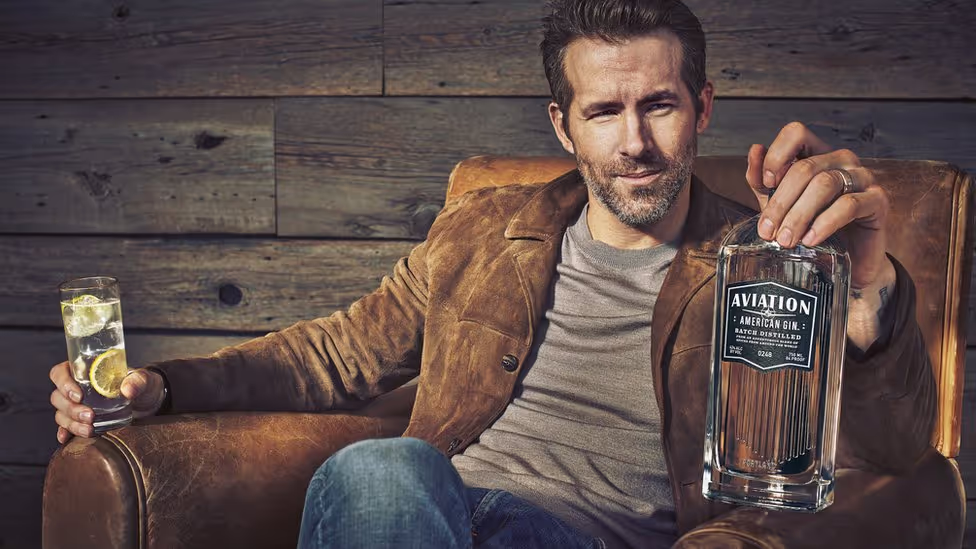
For example, Aviation Gin existed for seven years before Ryan Reynolds joined as an equity partner. His involvement went beyond posting. He shaped the brand voice, leaned into humor, and drove earned media.
Now look at BÉIS with Shay Mitchell. The brand was incubated with her from day one. She built it as a founder. Product, positioning, audience targeting, and storytelling are all centered around her identity. That is a different model.
The brand reportedly crossed $100 million in revenue because the structure supported long-term brand building rather than short-term promotion.

Why should you partner with celebrities?
Brands typically pursue a celebrity partnership to change the trajectory of your growth. Most brands do it for three reasons:
Press and earned media
A recognized name increases your surface area overnight. Media outlets cover the story. Buyers take your meeting. Investors return your email.
That attention compresses timelines that would otherwise take years.
Retail expansion
Retail often moves more quickly, too. A celebrity partner can help you secure buyer meetings faster and strengthen your positioning inside those conversations. Buyers care about sell-through. A public figure with an audience gives them confidence that demand exists.
Investor credibility
Capital follows visibility. When a celebrity attaches their reputation and sometimes their own money to your brand, it reduces perceived risk for other investors. You move from being another emerging DTC brand to a brand with cultural relevance.
But the key insight that McBride emphasizes is that a celebrity partnership should come when you’ve hit a growth ceiling and need acceleration.
If your product does not convert, if retention is weak, or if your margins cannot support growth, adding a celebrity will only amplify those weaknesses. Attention increases demand. It also exposes cracks.
What most brands miss about celebrity partnerships
This is where many DTC teams slip. You can sign someone as big as Dwayne Johnson or Kylie Jenner but it still won’t replace your growth engine.
Instead, you need:
- A real marketing team
- A clear paid acquisition strategy
- Affiliate or micro-influencer infrastructure
- Strong operators running the backend
A celebrity brings attention, but they do not build systems.
Top-tier talent expects you to show up prepared. That means a campaign plan, defined deliverables, tracking in place, and a team that can move fast. They aren’t signing up to figure out your funnel.
Their audience can spark demand. Your job is to convert and retain it. If you assume their audience alone will carry sales, you’ll just burn cash and blame the partnership. The issue is usually execution, not the celebrity.
If you are activating a celebrity partnership, you also need the backend to support it. That includes affiliate tracking, creator infrastructure, and performance attribution.
Platforms like Social Snowball help you track influencer codes, manage micro-creator programs, and measure incremental revenue when celebrity attention drives new traffic.
How to actually secure a celebrity partnership deal
You do not secure a celebrity partnership through a casual DM.
Most celebrities work through management and talent agencies. The largest agencies include Creative Artists Agency, United Talent Agency, and William Morris Endeavor. Their managers handle deal flow, filter opportunities, and protect their time.
Your first step is clarity. Before you approach a potential partner, you need to define:
- The role you want them to play
- Compensation structure
- Specific deliverables
- Long-term vision for the brand
Present these details in a formal proposal. Management evaluates whether the opportunity aligns with the celebrity’s brand, financial upside, and time commitment.
According to McBride, the part that most founders overlook is the team dynamic.
You aren’t just partnering with the celebrity. You’re entering a working relationship with their manager, agent, lawyer, and sometimes publicist. Every campaign approval, contract revision, and content deliverable flows through that team.
If the team is slow, misaligned, or difficult, execution suffers. You’ll feel it in delays, missed windows, and strained communication.
Choosing the right partner includes evaluating how their team operates.
The common types of celebrity partnership deal structures you will encounter
Once interest exists, the conversation moves to structure. The deal you choose sets expectations for budget, involvement, and timeline. Here are the primary structures you will see.
- Endorsement deals: You pay straight cash for defined deliverables over a set period. This usually includes posts, appearances, or campaign usage rights. The term is often shorter and focused on awareness.
- Collections or collaborations: You launch a limited edition drop tied to the celebrity. Compensation often includes a smaller upfront payment plus royalty or profit share on sales. This model allows you to test demand before committing to a deeper partnership.
- Licensing deals: The celebrity licenses their name and likeness. Compensation typically comes through royalties. You handle operations, production, and distribution. They monetize brand equity without daily involvement.
- Cash plus equity: This structure creates long-term alignment. The celebrity receives upfront cash and an ownership stake. That equity ties their upside to company performance.
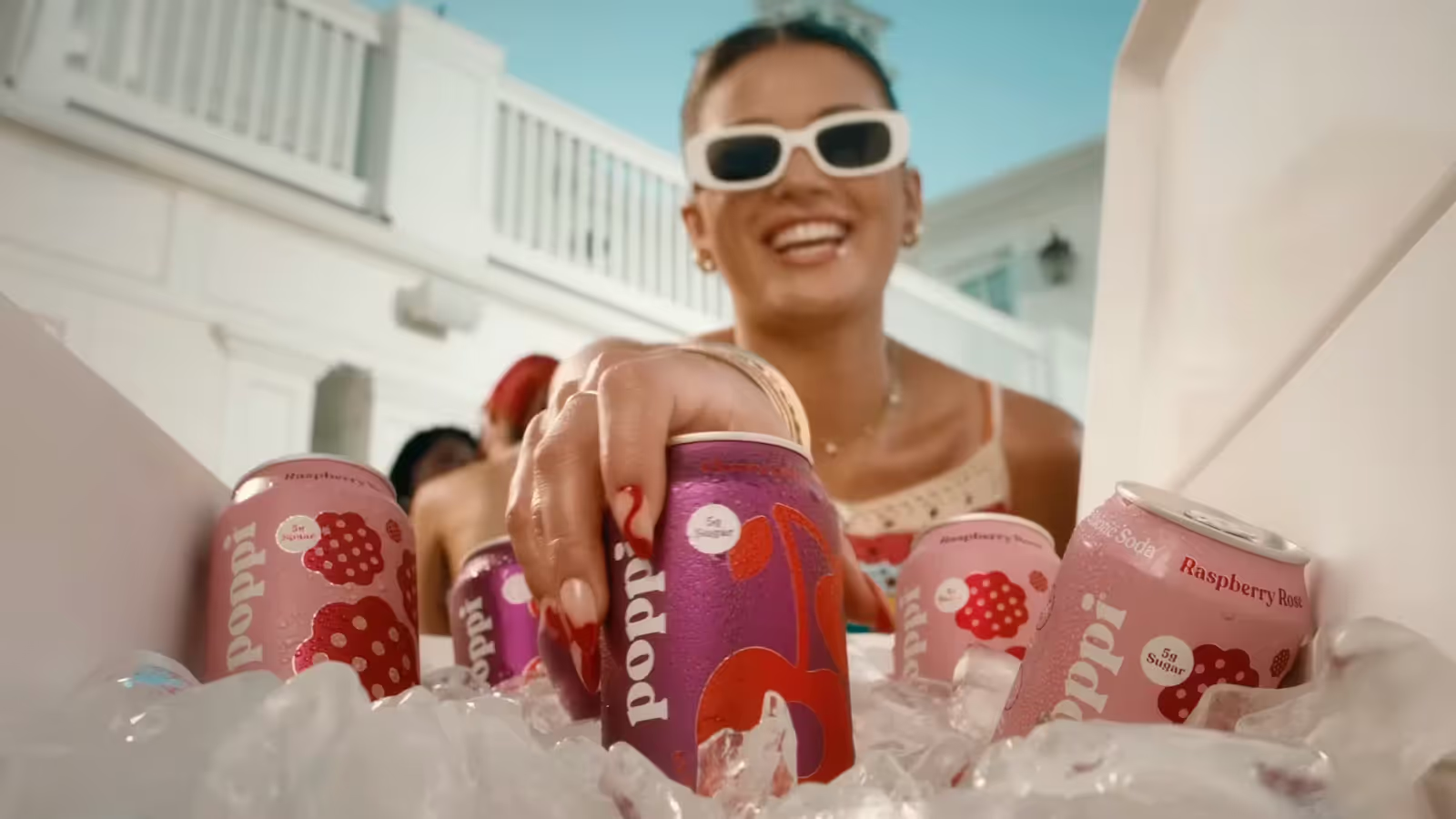
For example, Alix Earle partnered with Poppi, a prebiotic soda brand, under a cash plus equity structure. That deal gave her financial upside tied to growth, which supports deeper involvement beyond a single campaign cycle.
How to track ROI in celebrity partnerships
You should define ROI before you sign the deal.
There is no single formula for celebrity returns. The value shows up in different places depending on the structure and your goals. Returns can come from:
- Direct sales through tracked links or codes
- New retail doors
- Earned media value
- Investor access
- Overall brand lift
If you’re running an endorsement or collection, you can track direct revenue using unique links, custom codes, or landing pages. You should know exactly what sales tie back to that activation.
Additionally, if you are structuring an equity deal, you need benchmarks defined within the agreement. That includes:
- Revenue milestones
- Retail expansion targets
- Activation requirements such as posts, appearances, or campaign days
Any additional equity being offered should be tied to performance. When the celebrity hits agreed targets, they unlock more upside. This keeps incentives aligned and gives you accountability.
If you’re layering in micro-influencers or customer referrals around a celebrity launch, you need centralized tracking. Social Snowball allow you to generate unique links, manage affiliate payouts, and see how creator-driven revenue stacks against your celebrity activation.
How to identify the right celebrity for your brand
Start with your target audience. Ask yourself:
- Who is buying your product?
- Who influences their decisions?
- What cultural conversation are they part of right now?
If you cannot answer these clearly, you aren’t ready to choose a partner.
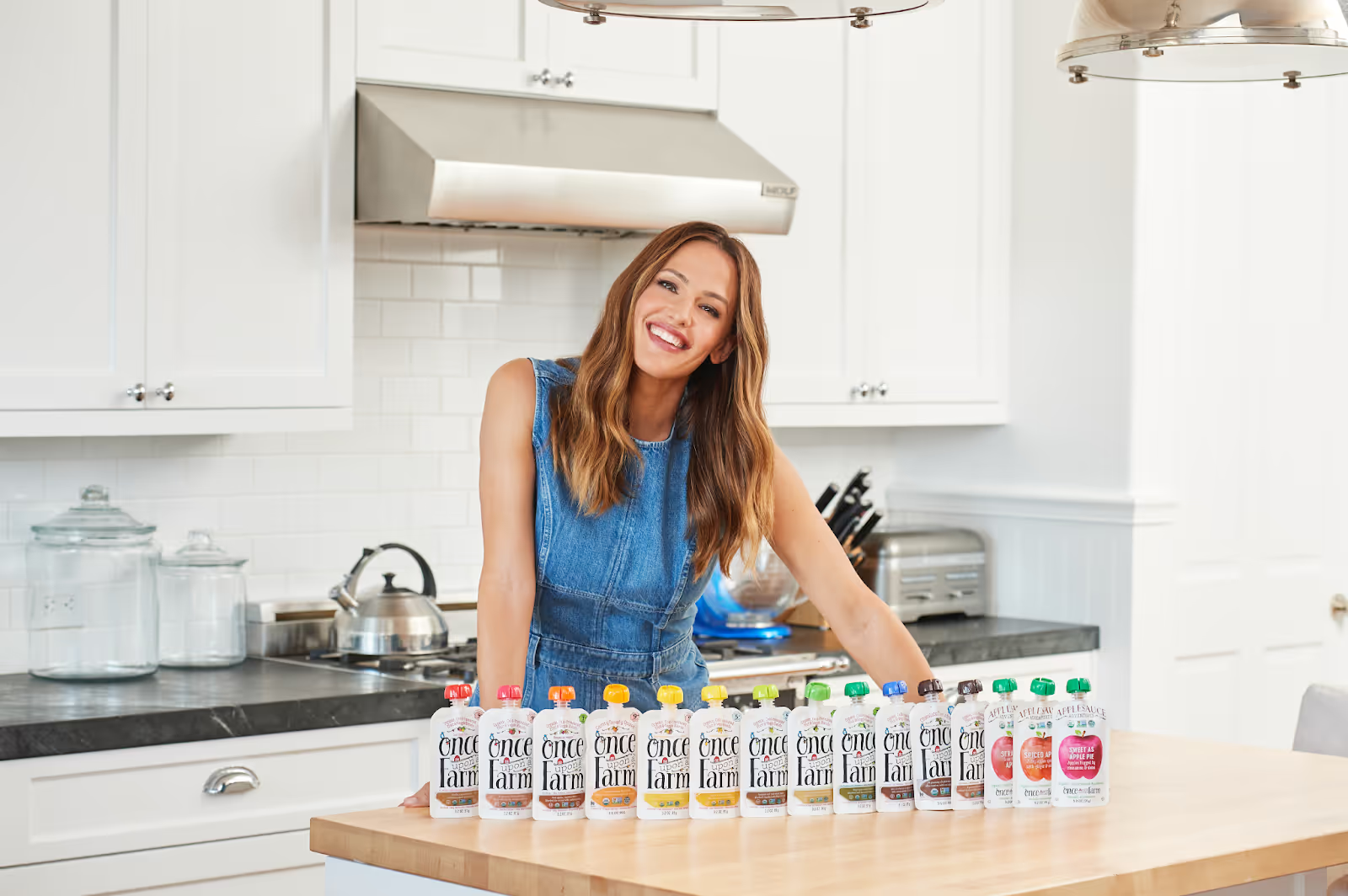
Look at Jennifer Garner and Once Upon a Farm. She co-founded the company because the product aligned with her personality as a mother, reflecting her credibility. Retail buyers understood the fit. Consumers trusted the story.
Sometimes, a celebrity can help you expand into a new demographic. That move requires intention. You need to know why you’re shifting and how that audience connects to your product.
How to manage celebrity partnerships when expanding internationally
When you expand into new markets, your celebrity choice affects distribution speed.
Start with clarity on your roadmap:
- Are you focused only on the U.S.?
- Are you entering Europe next?
- Are you building in LATAM or Asia?
Your answer changes who makes sense as a partner.
A celebrity who dominates in one country may carry limited weight elsewhere. For example, David Hasselhoff has historically had stronger cultural relevance in Germany than in the U.S. If Germany is your target market, that strength is very important.
When global expansion is part of your plan, look for talent with cross-border reach or strong credibility in the specific region that you are entering. Retail buyers and media outlets respond to familiarity. Local resonance shortens trust cycles.
You should also consider language, cultural alignment, and audience overlap. A celebrity with global recognition may still skew heavily toward one region’s consumer base.
Examples of successful celebrity partnerships
When a celebrity partnership works, you see depth of involvement. The celebrity treats the brand like a business, and not another campaign. Here are a few examples of what successful celebrity partnerships look like:
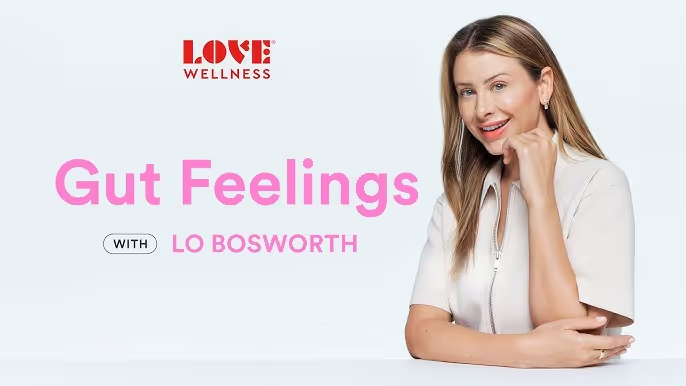
Love Wellness × Lo Bosworth
Lo Bosworth is a reality TV personality who founded Love Wellness.
She built the company from the ground up, stayed active in education and content, supported retail growth, and consistently positioned herself as part of the mission. That sustained involvement helped the brand scale past $50 million in value.
The growth came from operating discipline combined with visible, ongoing leadership.
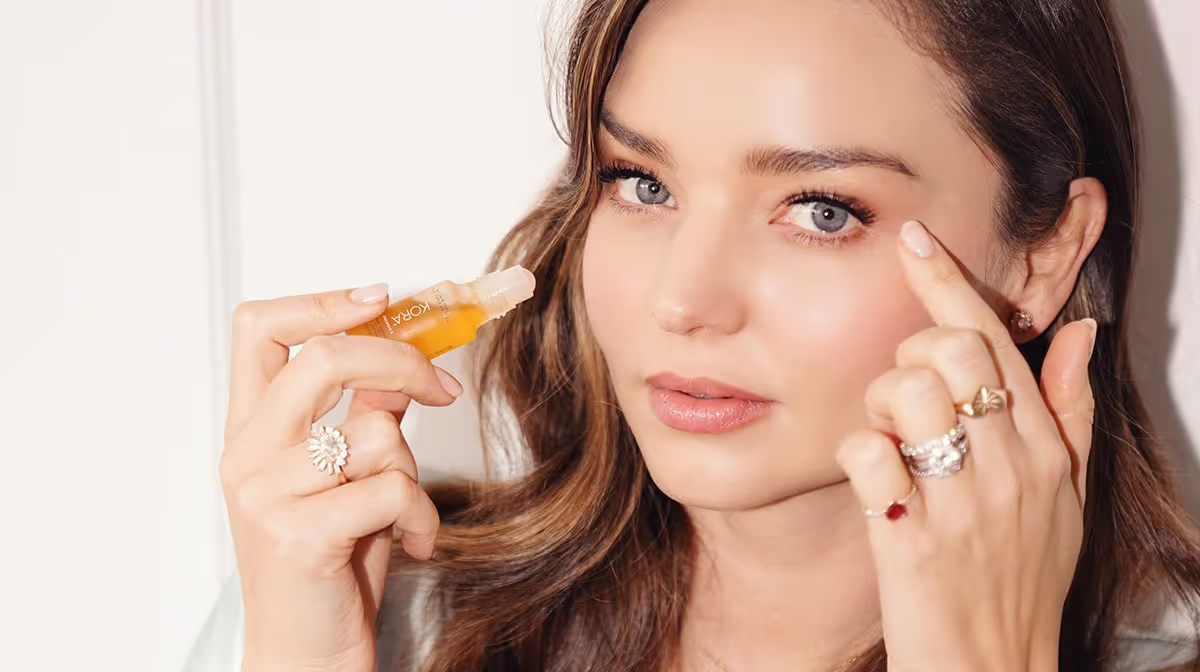
KORA Organics × Miranda Kerr
Miranda Kerr is a Victoria Secret model who founded KORA Organics.
The brand’s focus on clean beauty and wellness connects directly to her long-standing public identity. She remains visible across launches and campaigns, reinforcing credibility. The alignment feels natural because the product category fits her lifestyle.
That consistency builds trust with both consumers and retail partners.
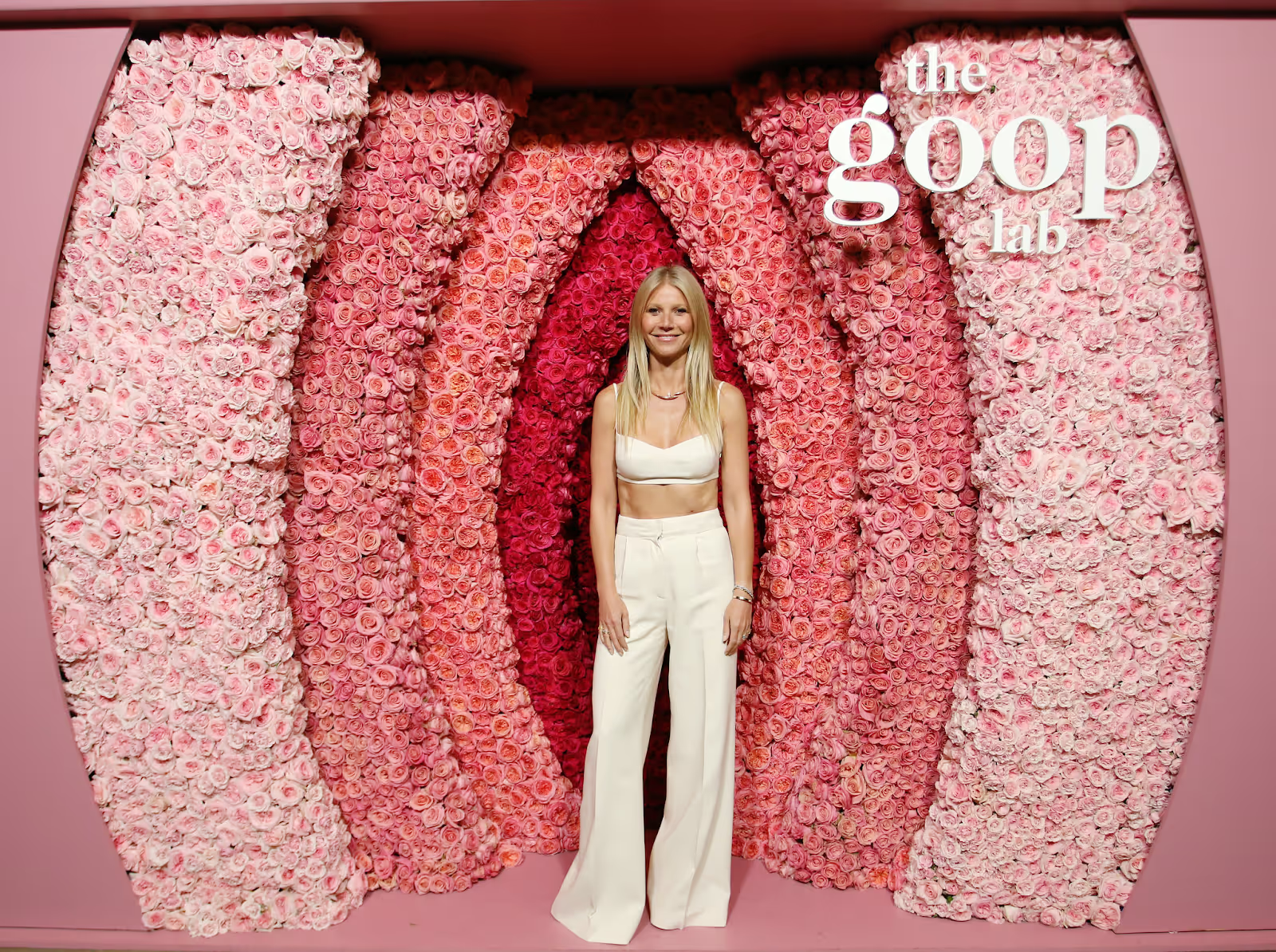
Goop × Gwyneth Paltrow
Goop was founded by Gwyneth Paltrow and a classic example of founder-driven position and marketing.
The brand extends from her worldview. Content, product lines, and messaging all tie back to her personal identity. That cohesion created a recognizable ecosystem rather than a short-term collaboration.
Ready to explore if celebrity partnerships are right for your brand?
A celebrity partnership can accelerate your brand when you approach it with structure and discipline. Before you move forward, make sure you have these in place:
- Sufficient capital to support the right deal
- Operational infrastructure to handle increased demand
- A deal structure that matches your growth stage
- Clear value alignment with the talent
- Performance benchmarks written into the agreement
Approach the partnership the way you would approach hiring a co-founder.
You are choosing someone whose reputation, incentives, and level of involvement will directly shape your company’s trajectory. The brands that grow through their celebrity partnership prioritize alignment, shared upside, and long-term commitment.
If you want a deeper breakdown of how to structure, negotiate, and execute these deals, enroll in our ‘Celebrity Partnerships 101’ course by Daniella McBride and learn directly from her decade of experience in talent and brand incubation.