
Affiliate and creator programs move fast once you set them up. Links get shared across platforms, creators post at different cadences, and payouts stack up quickly.
A dedicated tool gives structure to this chaos. It centralises onboarding, tracking, and payouts so partnerships stay reliable as volume grows. More importantly, it lets your team focus on scaling distribution and improving performance instead of managing exceptions.
Different creator management and affiliate tools solve related problems, but they serve different needs. Creator management focuses on sourcing, outreach, contracts, content delivery, and relationship tracking. Affiliate tools focus on activation, attribution, reward logic, fraud control, and payouts tied directly to sales. Most growing brands need elements of both.
This blog breaks down the top tools—GRIN, Upfluence, and Social Snowball to help you choose the software that fits how you run creator and affiliate programs today.
Key Takeaways: GRIN vs Upfluence vs Social Snowball
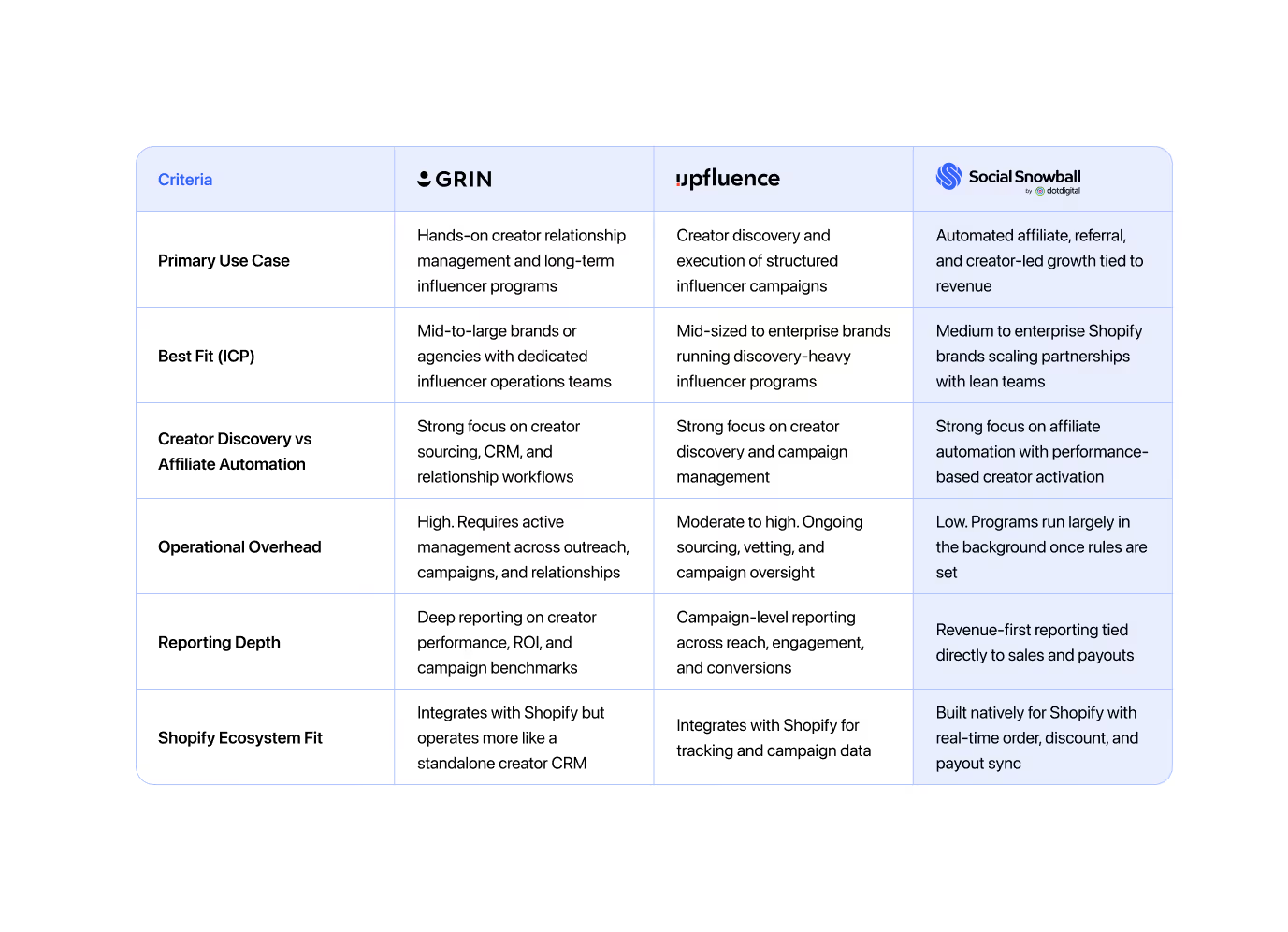
- GRIN is best suited for brands that run influencer marketing as a structured, in-house function. It fits teams that manage long-term creator relationships, handle outreach and contracts internally, and need a CRM-style system to organise campaigns, deliverables, and performance across a large creator roster.
- Upfluence works well for teams that centre their influencer strategy on discovery. It supports brands and agencies that regularly source new creators, evaluate audience fit at scale, and run managed influencer campaigns across multiple platforms with defined briefs and timelines.
- Social Snowball is built for Shopify brands that want creator and affiliate programs to operate with minimal ongoing work. It suits teams that run partnerships through customers, creators, or affiliates and need automated onboarding, clean revenue attribution, and predictable payouts as volume grows.
- The right choice depends on how you plan to run partnerships day to day.
- If creator relationships are a managed, hands-on channel, GRIN fits that operating model.
- If finding and activating new creators is central to your campaigns, Upfluence aligns well.
- If partnerships are a performance-driven growth system that needs to scale without added operational load, Social Snowball is the strongest fit.
Criteria for evaluating a customer referral app
You should evaluate a referral app based on how it behaves once referrals start coming in consistently. Early traction is easy. The real test shows up when links get shared widely, payouts stack up, and your team needs answers without slowing things down.
These criteria help you judge whether a referral app can support real growth without creating operational drag.
Automation and day-to-day workload
Start by mapping what happens after someone joins your referral program.
A reliable referral app handles participant activation, referral tracking, reward qualification, and payouts without requiring regular checks. Once the program runs, you should not need to approve referrals, verify eligibility, or trigger payouts manually.
For example, when a customer shares a referral link and a friend places an order, the system should automatically assign credit, apply the reward rules you defined, and queue the payout. If your team steps in to review or fix this flow, the app adds work instead of removing it.
Creator sourcing and affiliate enablement
Referral apps differ in how people enter the program.
Some programs rely on actively recruiting creators or partners. Others focus on enabling people who already buy from you or engage with your brand. You need clarity on which motion fits your growth model.
If customers, creators, or partners can join immediately after purchase or signup and receive everything they need to start sharing, the program scales faster. If entry depends on outreach, approvals, or manual onboarding, growth depends on how much time your team can invest.
This distinction affects speed, volume, and consistency of referrals.
Tracking, attribution, and payout accuracy
Referral performance only matters if attribution stays accurate.
You need to see a direct link between a referral action and a completed order. This includes clear handling of refunds, repeat orders, and overlapping referrals. A strong system maintains accuracy even when links circulate beyond the original audience.
For example, if a referral link appears on a public page or gets reshared, attribution should still assign credit correctly without manual intervention. When payouts rely on clean attribution, trust stays intact with both your team and your referrers.
Operational complexity as volume grows
Referral programs are easy to manage at low volume. Complexity appears when participation increases.
As more people share links, edge cases become common. Orders get refunded. Discounts overlap. Multiple referrals touch the same customer. Your referral app should absorb this complexity without creating new workflows.
You should not need to add recurring checks, manual approvals, or exception handling as volume grows. If operational effort increases alongside referrals, the system limits scale.
Reporting clarity for performance decisions
Referral reporting should support decisions, not just visibility.
You need to understand how much revenue referrals generate, which participants drive results, and how rewards affect margins. Clear reporting lets you adjust incentives, pause underperforming segments, and double down on what works.
For example, when you consider increasing referral rewards, you should see how current payouts compare to referral-driven revenue without exporting data or stitching reports together.
Fit with ecommerce and Shopify workflows
A referral app should work in sync with how your store already operates.
Orders, customers, discounts, and payouts should stay aligned with Shopify data in real time. Integrations with email, SMS, and payout tools should reduce coordination work rather than create parallel systems.
When referral data lives inside your existing ecommerce workflows, the program stays reliable and easy to manage as it becomes a core growth channel.
GRIN: Best for hands-on creator relationship management
Ideal for: Mid-to-large ecommerce brands and agencies that run influencer programs in-house and have a dedicated team managing creator relationships day to day.
GRIN is built for teams that treat creator partnerships as a long-term channel, not a one-off campaign. It gives you a central system to source creators, manage outreach, coordinate product seeding, track deliverables, and measure performance across campaigns.
GRIN lets teams actively manages creator pipelines, handles contracts and briefs internally, and needs visibility across dozens or hundreds of ongoing relationships. The platform supports this depth by functioning more like a creator CRM than a lightweight campaign tool.
Pricing is not publicly listed. Third-party reports suggest plans typically start around $999 per month, with costs scaling based on usage and team size.

What it’s designed to do:
- Run end-to-end creator relationship management from sourcing to reporting.
- Support influencer outreach, contracting, product gifting, and collaboration tracking.
- Help teams organise and maintain long-term creator partnerships at scale.
GRIN is suited for teams that already have influencer operations in place and need structure, control, and reporting depth to manage complex creator programs without relying on external marketplaces.
It's not the right fit for smaller teams or brands without dedicated influencer staff.
Upfluence: Best for creator discovery and influencer-led campaigns
Ideal for: Mid-sized to large ecommerce brands and agencies that prioritise finding new creators at scale and running structured influencer campaigns across multiple platforms.
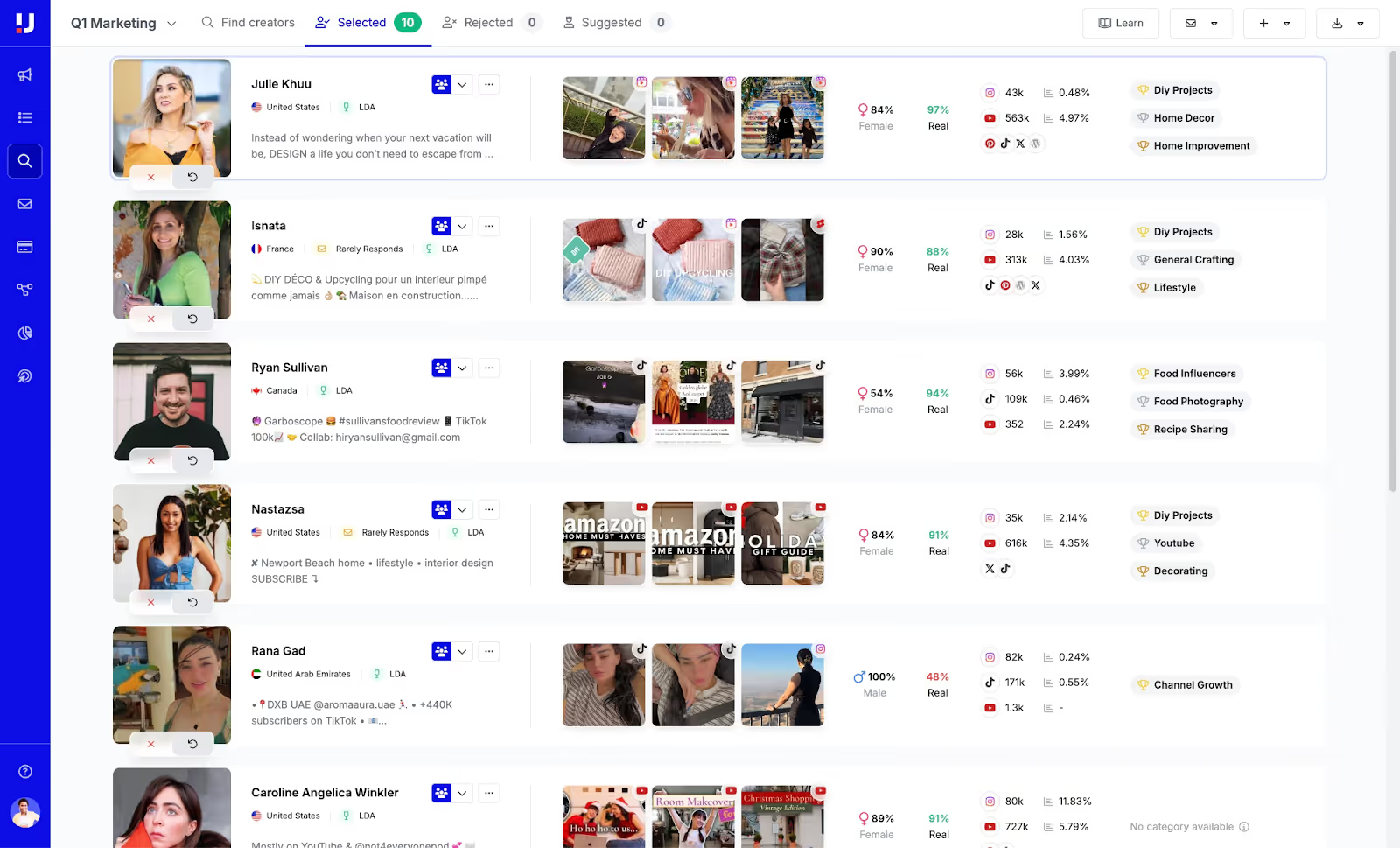
Upfluence is built for teams that centre their influencer strategy on discovery. The platform gives you access to a large creator database and tools to identify, evaluate, and activate influencers based on audience data, content patterns, and campaign goals.
Upfluence lets teams source new creators and actively manage outreach, campaign briefs, approvals, and deliverables. The platform supports this workflow by keeping discovery, communication, and campaign execution within a single dashboard.
Pricing is custom and not publicly listed. You need to contact the sales team for a quote. Plans are typically structured for medium to enterprise-level teams running ongoing influencer campaigns.
What it’s designed to do:
- Power large-scale creator discovery using database-driven search and filtering.
- Support influencer campaign execution from outreach to content delivery.
- Centralise sourcing, communication, and performance tracking in one system.
Upfluence works well when your growth depends on consistently identifying new creators and running managed influencer campaigns with clear structure and oversight.
However, it's not a strong fit for brands looking to build and automate an affiliate or ambassador program with existing customers or followers
Social Snowball: Best for automated affiliate and creator-led growth
Ideal for: Medium to enterprise Shopify brands that want affiliate and creator programs to run as a repeatable growth system, without adding manual work as volume increases.
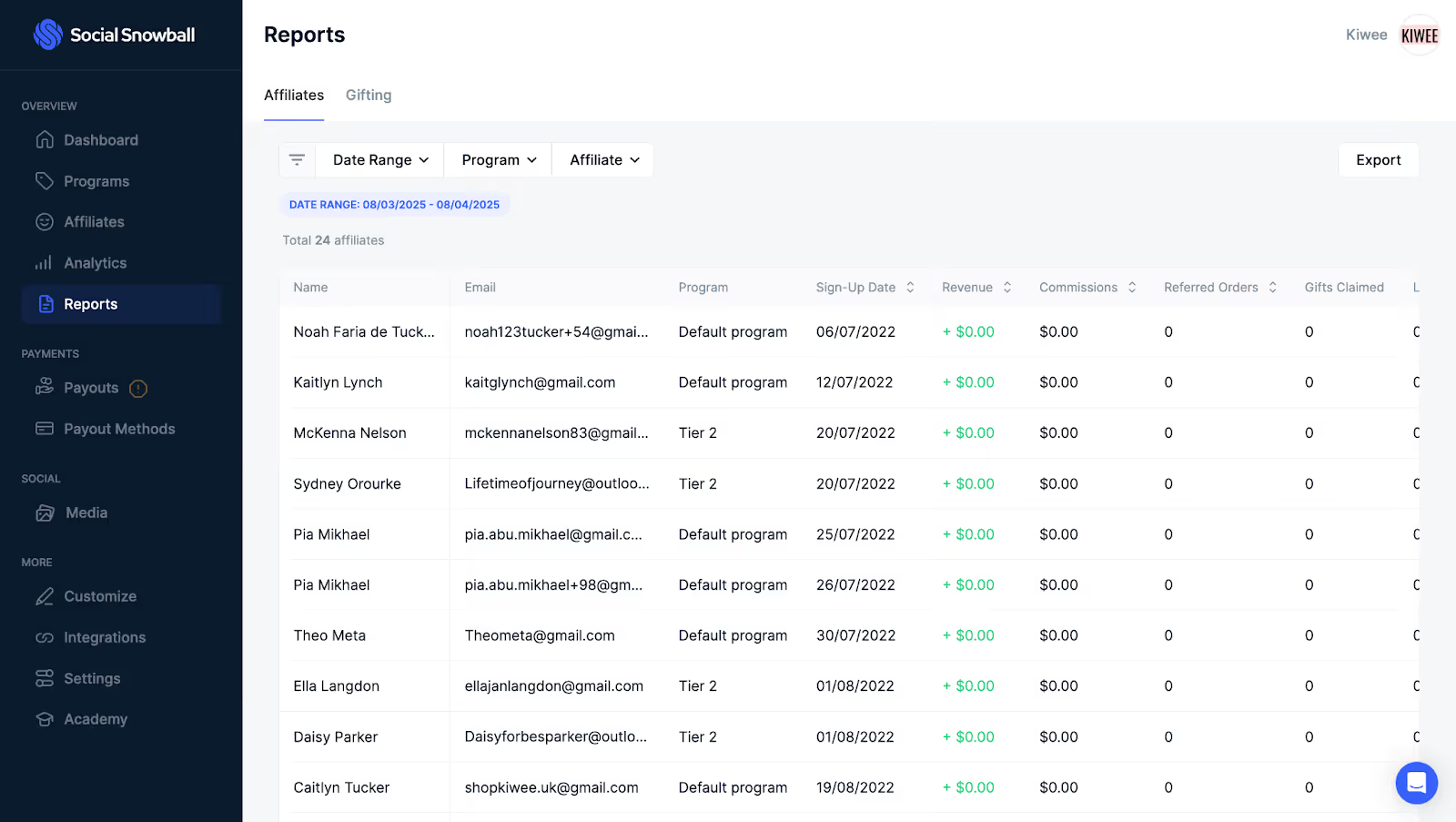
Social Snowball is built for ecommerce teams running affiliate and referral programs at scale. It automates the operational layer that most teams manage manually: affiliate onboarding, link and code generation, sales tracking, and payouts.
Customers can be enrolled as affiliates immediately after purchase, while creators join through customizable sign-up forms. For teams managing large rosters, the platform supports bulk messaging so you can segment affiliates and send targeted commissions, updates, or offers without doing it one by one.
Pricing starts at $199 per month plus 3% of tracked revenue. Flat-rate plans are also available, starting at $599 per month with no revenue share.
What it’s designed to do:
- Automatically activate customers and creators as affiliates.
- Run affiliate, referral, and creator programs from one system.
- Handle tracking, fraud protection, and payouts with minimal manual work.
Social Snowball fits ecommerce teams running affiliate or referral programs at any scale — from brands just launching a customer referral program to larger teams managing hundreds of creators. It removes the manual work of tracking, onboarding, communicating with, and paying out affiliates so teams can focus on growing the program rather than managing it.
Pros & cons of the top 3 creator and affiliate management tools
Each of these platforms solve a different operational problem. The value shows up in how the tool fits your team structure, workflows, and growth plans once partnerships are live.
Looking at strengths and limitations side by side helps you understand where each platform creates leverage and where it may introduce friction.
GRIN
Pros
- Gives you a structured system to manage long-term creator relationships at scale.
- Strong CRM-style workflows help you organise creators, campaigns, contracts, and deliverables in one place.
- Supports detailed influencer operations, including product seeding, briefs, and performance tracking.
- Reporting helps teams understand creator performance across campaigns and channels.
Cons
- Requires a dedicated influencer or partnerships team to operate effectively.
- Setup and day-to-day use come with a learning curve due to the platform’s depth.
- Pricing sits at the higher end, which limits accessibility for smaller or lean teams.
- Certain workflows still require hands-on management unless custom processes are built.
Upfluence
Pros
- Large creator database makes it easier to source influencers across multiple platforms.
- Advanced audience and demographic filters support better creator vetting before outreach.
- Centralised tools for outreach, briefs, content tracking, and campaign execution.
- Works well for teams running structured influencer campaigns at consistent volume.
Cons
- Discovery-led workflows require ongoing sourcing and campaign management effort.
- Platform depth can feel heavy for teams without dedicated influencer resources.
- Pricing is custom and not transparent upfront.
- Database-driven discovery can prioritise reach over purchase intent if not managed carefully.
Social Snowball
Pros
- Automates onboarding, tracking, coupon fraud protection, and payouts for affiliates and creators.
- Turns customers and creators into affiliates without manual setup or approvals.
- Handles affiliate, referral, and creator programs from one system.
- Clear revenue attribution ties creator activity directly to sales.
- Bulk payouts and fraud protection reduce operational work as volume grows.
Cons
- Built specifically for Shopify, which limits use for non-Shopify stores.
- Entry pricing can feel high for early-stage brands without steady order volume.
- Best suited for performance-led programs rather than flat-fee influencer deals.
Feature set comparison between GRIN, Upfluence, and Social Snowball
This section looks at how each platform handles the features that matter once creator and affiliate programs move beyond experimentation and into repeatable growth.
Feature set: Creator sourcing & discovery
- GRIN supports creator sourcing through AI-powered search, social listening, Chrome extensions, and branded landing pages. These tools help teams build and manage creator pipelines they actively control.
- Upfluence centres discovery around a large creator database. Teams search creators using audience demographics, engagement metrics, platform data, and brand affinity signals before activating them in campaigns.
- Social Snowball approaches discovery through performance signals. Its Creator Search uses AI to surface creators based on content behaviour, audience quality, and historical indicators tied to buying intent. This makes it easier to identify creators who already drive conversions, not just reach, and activate them quickly as affiliates.
Winner: Social Snowball. Since the Creator Search tool prioritises creators with proven performance signals, which aligns discovery directly with revenue outcomes instead of surface-level metrics.
Feature set: Automation
- GRIN includes AI-assisted support for outreach and workflow coordination, with teams defining how campaigns progress.
- Upfluence automates payments, commission calculations, and parts of campaign workflows, while execution remains actively managed.
- Social Snowball automates onboarding, tracking, gifting, payouts, and notifications through predefined rules and triggers.
Winner: Social Snowball. Its automation covers the full lifecycle, allowing programs to run with minimal ongoing intervention as volume grows.
Feature set: Onboarding and enrollment
- GRIN uses landing pages and CRM-style pipelines to guide creators through onboarding stages.
- Upfluence supports onboarding through contracts, briefs, and approval workflows tied to campaigns.
- Social Snowball enables self-serve enrollment through sign-up forms and post-purchase activation, allowing participants to start sharing immediately.
Winner: Social Snowball. Since it’s automated, self-serve enrollment removes delays and reduces friction when onboarding large numbers of creators or affiliates.
Feature set: Commission and reward logic
- GRIN supports sales-based commissions tied to ecommerce tracking.
- Upfluence offers flexible commission structures, including percentage-based payouts, fixed fees, promo codes, and negotiated terms.
- Social Snowball supports tiered rewards and performance-based incentives across affiliates, creators, and customers.
Winner: Social Snowball. Its commission flexibility and the ability to set up tiered performance-based rewards support negotiation-heavy influencer campaigns with varied payout models.
Feature set: Payout management
- GRIN manages creator payouts and tax documentation within structured workflows.
- Upfluence supports automated, multi-currency payouts using integrated payment providers.
- Social Snowball supports bulk payouts with hundreds of payout options, including cash and gift cards, through self-serve portals.
Winner: Social Snowball. It allows bulk payouts and flexible payout options, reducing operational load at high affiliate and creator volume.
Feature set: Attribution and reporting
- GRIN provides detailed dashboards showing creator ROI, campaign performance, and benchmarks.
- Upfluence reports on reach, engagement, conversions, and ecommerce performance.
- Social Snowball tracks affiliate and creator sales attribution tied directly to revenue and ecommerce data.
Winner: GRIN. Its reporting depth supports teams managing complex, multi-campaign creator programs with long-term performance analysis.
Feature set: Fraud prevention
- GRIN includes standard tracking safeguards without dedicated fraud tooling.
- Upfluence focuses on data accuracy and campaign integrity.
- Social Snowball uses fraud-protected unique links (Safelinks), self-referral blocking, and coupon misuse controls to protect attribution.
Winner: Social Snowball. Its fraud prevention is built directly into link and code generation, reducing risk without manual review.
Feature set: Communication
- GRIN includes in-platform email, templates, sequences, and AI-assisted outreach.
- Upfluence supports outreach and communication within campaign workflows.
- Social Snowball relies on automated notifications and integrations to keep participants informed.
Winner: GRIN. The tool’s native communication tools support hands-on creator relationship management at scale.
Feature set: Integrations
- GRIN connects with ecommerce platforms, communication tools, storage systems, and workflow apps.
- Upfluence integrates with Shopify, CRMs, and APIs to support discovery and campaign execution.
- Social Snowball integrates with Shopify, Klaviyo, Zapier, TikTok Shop, and marketing tools to keep affiliate data in sync.
Winner: Social Snowball. Its broad integrations support complex creator operations across multiple internal systems.
Which app should you choose?
The right choice depends on how you plan to run partnerships day to day and what kind of operational load your team can support.
- Choose Social Snowball if
- You want affiliates and creators to start sharing without manual onboarding or ongoing oversight.
- You plan to run partnerships across customers, creators, or affiliates from a single system.
- You need partnerships to scale without adding operational work as volume increases.
- Choose GRIN if:
- You run structured creator programs and treat influencer relationships as long-term assets.
- You have a dedicated influencer or partnerships team that manages outreach, contracts, briefs, and ongoing communication.
- You need a central system to organise creator relationships across campaigns, channels, and timelines.
- Choose Upfluence if:
- You are building an influencer program from the ground up and need access to a large creator database.
- You plan to invest time in sourcing, evaluating, and onboarding creators before activating them.
Pick the right tool to manage creators and affiliates
The right creator and affiliate management tool depends on your goals and your team’s specific requirements.
If you want to manage affiliates, creators, and customer-led word-of-mouth from one dashboard, Social Snowball gives you a single system to do that. It turns customers and creators into affiliates automatically, assigns trackable links or codes, and handles tracking and payouts in the background.
You can run multiple partnership programs without adding manual checks or separate workflows as volume grows. Revenue attribution stays clear, payouts stay predictable, and your team stays focused on growth instead of operations.


.avif)