Creator marketing used to be a channel for reach but now, brands use it to drive revenue. Instead of focusing on how many people saw the content, brands are now looking at what results it drove.
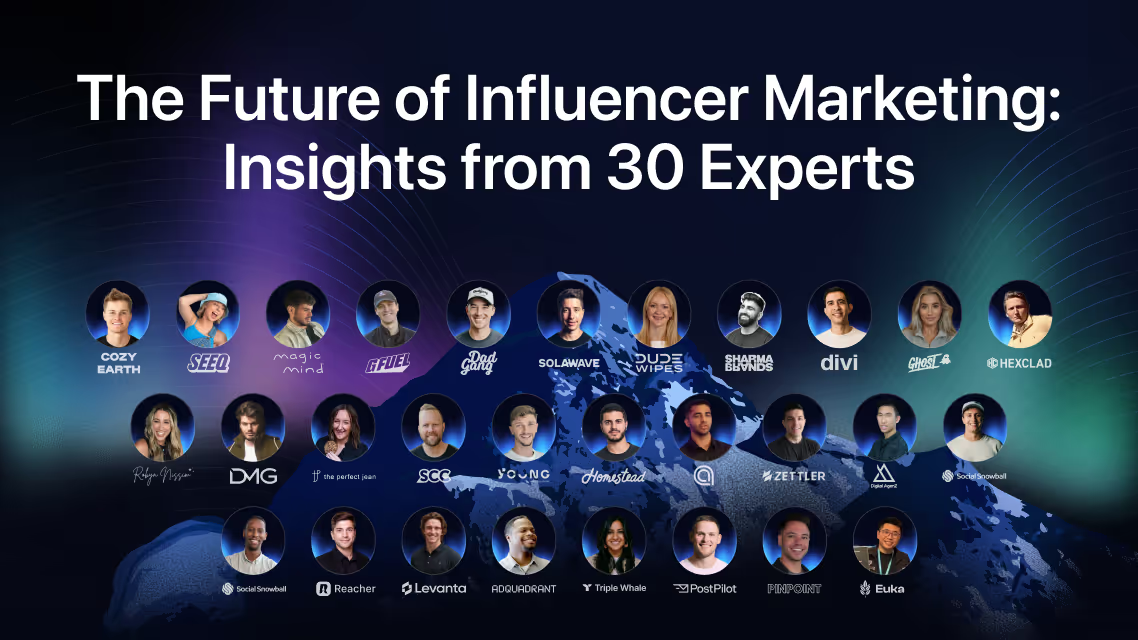
To understand where this shift is heading, we hosted the Influencer Marketing Summit.
We brought together 30 operators (founders, growth leaders, and creator marketing teams) who are actively scaling these programs. Every session focused on execution: how creators are sourced, how content is produced at scale, and how revenue is tracked and grown.
Across sessions, the same patterns kept coming up.
- Creator programs are moving from one-off campaigns to continuous systems
- Payouts are tied to performance, aligning spend with revenue
- Customers are becoming creators, and content is powering ads, product pages, and retention
Each expert approached it from a different angle, but the underlying shift was consistent. This blog brings those insights together—what’s changing, what’s working right now, and where influencer marketing is headed next.
Performance-based creator models are replacing flat-fee deals
Creator marketing is now held to the same standard as any other growth channel: it needs to drive revenue. Once that becomes the goal, the payout model naturally shifts.
Flat-fee deals lock in spend before results are achieved. That limits how many creators you can work with and how fast you can test. Scaling starts to feel expensive and unpredictable.
Why the affiliate model is winning
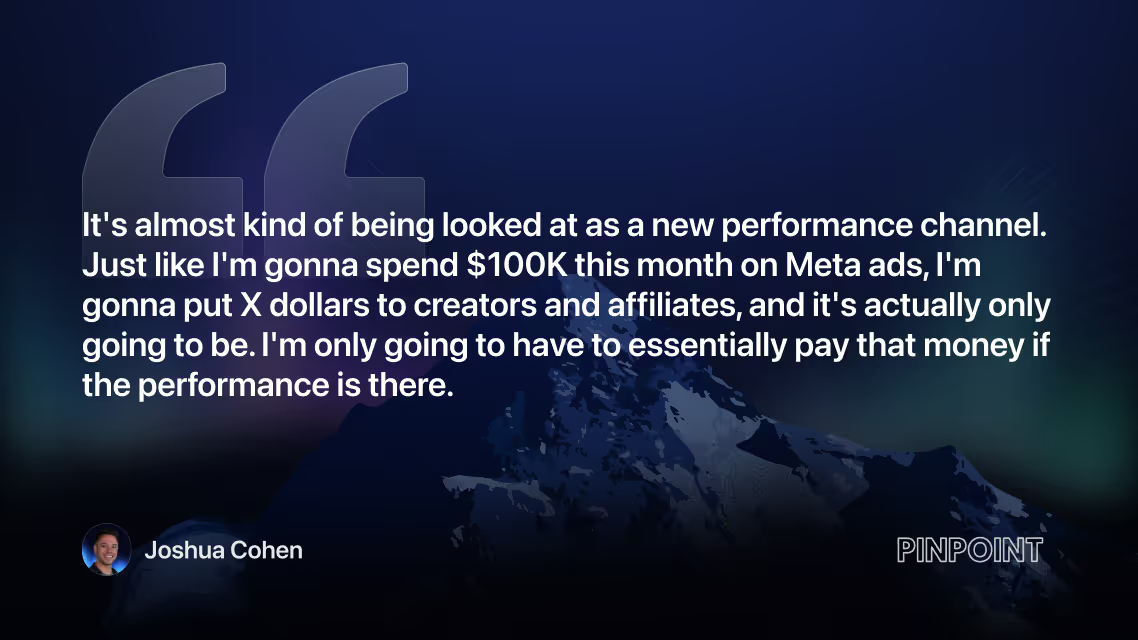
Joshua Cohen, Co-founder and CEO of Pinpoint, described the shift directly: brands used to pay an influencer upfront and hope for the best. Now, creators are being treated like a performance channel.
When payouts are tied to outcomes, you quickly see which creators actually convert. Instead of committing budget upfront, you scale based on what’s already working.
How to structure deals as you scale
Sebastian Borza, Founder of Nv.social, and Influencer Marketing Manager at Magic Mind, explained that no single payout model works across all creators. The brand uses a mix of flat fees, affiliate commissions, and product barter simultaneously, matching the structure to the creator and the moment.
"We haven't used affiliate as a program by itself for growth. We've mostly used affiliate as a negotiation tool in our partnerships. We either have a flat fee, or we have an affiliate, or we have product barter."
That flexibility is what lets them scale from a team of 3 to 37 people managing thousands of creator partnerships. Early on, when no one knew the brand, they had to sell creators on the product through calls, hand-hold them on positioning, and negotiate heavily.
As brand recognition grew and creators started conversations with "I love Magic Mind," the dynamic flipped. Less convincing, better content, and faster deals.
Start aggressive, then tier down
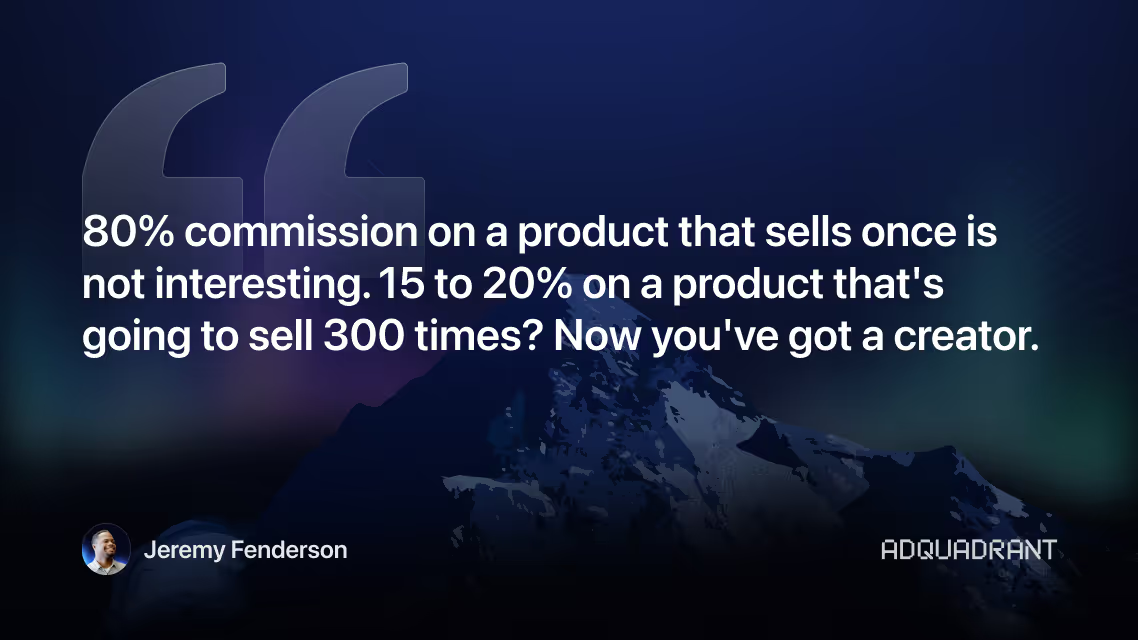
Jeremy Fenderson, Senior Director of Strategy at AdQuadrant, laid out how commission strategy should evolve with your lifecycle on TikTok Shop.
"When you're first starting out, you're going to pay a premium. But think about it strategically. You need that social proof. You might have top creators at a really great commission, maybe 25%. Something ridiculous that makes them think, amazing product, amazing commission, I have to try it out."
Once social proof builds and creators can see that the product sells, the open-plan commission can drop to 10–17%. Creators at that point are looking at earning potential. As Fenderson put it:
The key is calculating your contribution margin down to the cent before setting any rate. Don't set commissions because they feel generous, but because your math supports them.
What happens when you start too low
Myah Christenson, Affiliate & Creator Partnerships Manager at SEEQ, shared how underpaying early slowed growth.
"We set our commissions way too low because we were a startup, and it just wasn't gonna work with our margins. I think we started at like 10% commission, which is not gonna fly for these affiliates."
In categories like health and wellness, competitive commissions typically range between 15% and 30%. After testing, SEEQ landed on a tiered structure: 15% to 25% depending on creator level, with top sellers moving into monthly retainers that include usage rights. That gives the brand repurposable content across channels, offsetting the retainer cost.
Her advice: have a structure mapped out before you start. They didn't, and it cost them time.
When payouts are tied to performance, the entire system changes. High-performing creators stay active and drive a larger share of revenue over time. Creators test more by refining hooks, angles, and formats because their earnings depend on it.
On the brand side, you can invest more in proven performers instead of restarting with every campaign.
Over time, creators stop acting like one-time promoters. They become an ongoing distribution layer for your product, driving consistent content, reach, and revenue.
Your best creators are already your customers
Creator programs scale faster when they start with people who already buy from you. They understand the product, trust it, and talk about it the way real shoppers do, not the way a brief tells them to.
Sambhav Chadha, Co-founder of Augmentum Media (clients include Lululemon and AG1), made this the first step in his discovery framework:
"First is finding creators that are already buying from the brand. Whether that's through their email, or whether that's through them tagging you organically on social."
Someone who tags you unprompted is already a believer. The content they make reflects that, and audiences can tell.
Alex Choi, Senior Brand Manager at AquaTru, saw this play out directly. When the brand led with mission, advocates showed up without being recruited:
"Creators will naturally come to you. A lot of your strongest advocates are your loyal customers. They hear from friends and family and approach the brand."
Before you start cold outreach, look at who's already tagging you, reviewing your product, or replying to your emails. These are your first-mover creators, and they'll outperform cold recruits.
Turn your highest-intent customers into affiliates
Nik Sharma, CEO of Sharma Brand, who has worked on brands including Feastables and Rare Beauty, put it plainly: referral programs don’t unlock real growth. Affiliate structures do.
"Customers can actually be an insane customer acquisition channel for you, but you have to actually treat them as affiliates."
That means real commission, tiered incentives, and tools that make sharing easy. When structured this way, customers stop being passive buyers and start acting like motivated growth drivers.
Timing is also an important factor. Reach out to them within the first few days while the product experience is fresh. That’s when intent is highest and content feels most natural.
Why pure affiliate programs stall at scale
The difference between a creator campaign and a creator community shows up over time. Campaigns end, but communities keep producing.
Kelsey Eyers, from Collab Collective, who has worked with over 200 brands across influencer and affiliate programs, was direct about what pure affiliate programs actually deliver:
"90% of affiliates don't convert. Content is inconsistent. And there's no predictable revenue when you're just relying on affiliates to produce."
Her solution: contract a small group of creators for a set number of videos per month at a flat fee, running parallel to your affiliate program. With a $5,000 monthly budget, her team generates roughly 300 quality videos per month. Send 300 free products to open affiliates, and she estimates fewer than 10% of those videos actually perform.
"The winning brands on TikTok Shop are not lucky, they're just more structured."
Alex Choi echoed the same from the brand side. When AquaTrue stopped scripting creators and let them layer their own story onto the brand's:
"That's where we get the scalability; instead of providing a script to our influencers."
Build two tiers. A broad affiliate layer for volume and discovery. A smaller paid tier for top performers with usage rights and real briefs. The community forms around the first; the content engine runs on the second.
TikTok Shop is changing how creators drive revenue
Most brands still approach TikTok Shop like traditional influencer marketing. They pick a few creators, aim for polished content, and hope something lands.
Jeremy Fenderson, Senior Director of Strategy at AdQuadrant, called this out directly:
"The losing playbook is, let me get 5 creators and get polished UGC, and we'll see what happens. The winning playbook is building a machine that gets the product into the hands of relevant creators and identifying the converters as fast as possible."
What actually drives results on TikTok Shop is evaluating a creator based on output and conversion.
- Can they demo the product clearly?
- Can they post consistently?
- Can they test multiple angles?
That shift changes how you recruit and scale.
More videos per creator beats more creators posting once
Sampling strategy is where most brands get this wrong. Jeremy Yaoxin Ding, co-founder of Euka AI, shared the underlying math:
"On average, you need to post at least 3 to 5 videos to have a 50% chance of one video driving a sale. If you just post one video, the chance of getting a sale is very, very low."
At scale, the pattern is clear. Shops doing $100K–$500K a month have 800 creators actively posting and generate around 2,300 videos per month. Shops doing $1M–$2M per month have 4,300 active creators and produce roughly seven times more videos.
Working with fewer creators who post multiple times outperforms sending products to hundreds of one-time posters.
Volume doesn’t come from more creators. It comes from more content per creator.
Prove conversion before you scale awareness
Most teams default to awareness first. Fenderson's full-funnel advice flips that instinct:
"Awareness without a conversion piece is just very expensive entertainment. You have to earn the right to go higher in the awareness funnel."
Before spending on awareness, confirm the product actually sells on the platform. Run a small group of creators, identify which hooks and video formats drive purchases, then scale those specific angles.
Pouring volume into unproven creative is how brands waste their sampling budget.
Creator content doesn't stop working after the first post
The brands getting the most out of creator content aren't just using it once. They treat it as a reusable asset.
Chadha was direct about the mechanics:
"Our best whitelisting content is performing 15–20% lower CAC than content promoted from the brand handle."
The same video that a creator posts organically, when run as a whitelisted partnership ad, outperforms brand-produced creative on Meta. This is because it doesn't look like an ad.
Nik Sharma put the CPC impact in simpler terms:
"If you start whitelisting their content, you can usually drop CPCs in the platform from 30% to 50%."
Get usage rights built into every deal
None of this works if you don’t own the content. Christenson made usage rights a standard part of SEEQ’s retainer structure:
"We put a lot of our top sellers onto a retainer where we're paying them a monthly fee, but we get usage rights to their content."
That single clause turns a creator relationship into a content library. Instead of briefing new creators every time you need ad creative, you're drawing from a bank of proven, authentic videos you already paid for.
Eyers runs the same logic across her clients:
"Winning creatives will always be moved multi-channel. If a brand isn't running Meta ads specifically, they're not going to get as much value out of a program like this."
Your PDP, ad account, and email flows all need creator content
Creator content shouldn’t stay on TikTok. Nik Sharma laid out the full scope of it
"Use it as a conversion asset on your landing pages, as alternate images in your PDP carousels, in your cart abandonment emails. It provides much better social proof and feels a lot more legit than the AI slop you're probably using on your website right now."
A video that converts on TikTok Shop will usually work as a Meta ad. That Meta ad becomes a PDP image, which goes into your email flows.
Each placement reinforces the same message, increasing the likelihood of purchase.
Creator selection is shifting from reach to relevance
Brands that chase reach over relevance keep paying for audiences who will never buy their product.
Cassandra Bankson, creator and advisor at Digital AgenZ, shared her own experience with it. She once received a lucrative offer to promote a steakhouse. She's plant-based, and so is most of her audience.
"Even if I have millions of followers online, even if I promote it, they're not going to get the same ROI that they would if this were a vegan, plant-based burger reaching out to me. It might seem so simple, but a lot of brands actually overlook this. They just look at numbers."
Sending your product to a creator with a misaligned audience doesn't just underperform. It costs you the sample, the relationship, and the commission on sales that never happen.
This is why brands need to focus on relevance, not reach, when picking creators.
Find creators at the moment they need your product
Relevance isn’t just about who you work with. It’s also about when. Kayla Marcum, Influencer Marketing Manager at Dude Wipes, built her entire launch strategy for “Little Dude Wipes” around this idea.
Dude Wipes had always being targeted at adult men and women. Launching a kids' product meant entering an unfamiliar category with a new audience: parents. Rather than targeting parenting creators broadly, her team used social listening to identify creators who were actively in the potty training stage with their kids.
"When those posts surface on our social listening streams, that's our signal that that creator is actively in the potty training stage, or about to be, and their audience is along for the journey with them."
At that point, the team reached out and introduced the product. The content that followed didn't need to be scripted or positioned carefully. The creator was already living the problem the product solved.
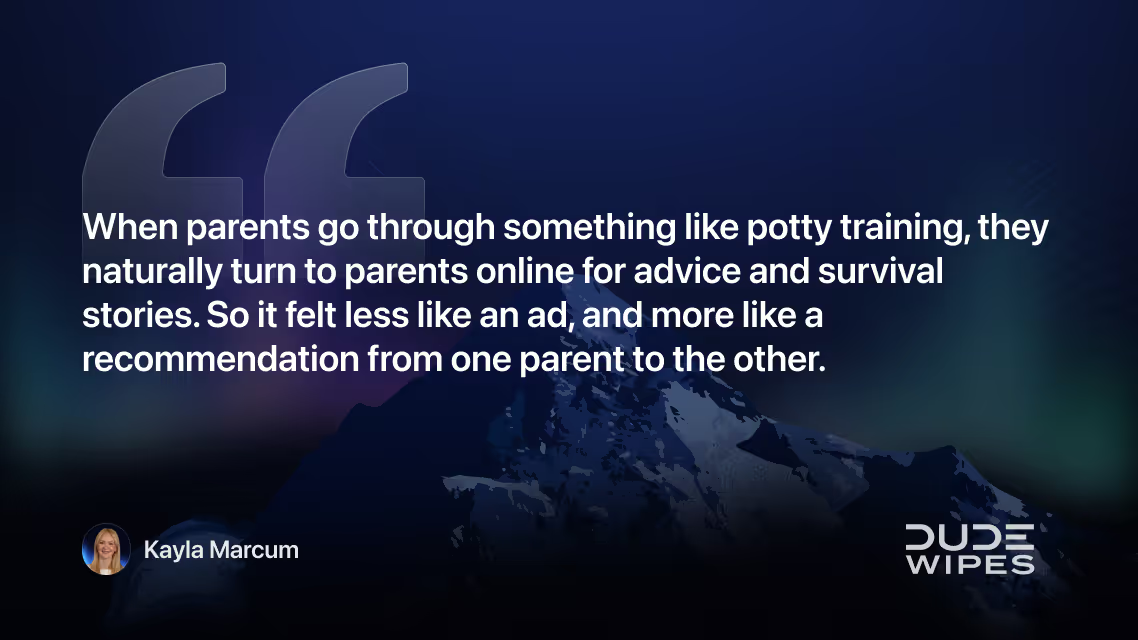
Marcum calls these moments “lifequakes”: points when someone's routine suddenly changes and new habits form. These include potty training, starting school, a new job, a move, and even a first pregnancy.
These are the moments when people are most open to discovering new products, and when creator recommendations land hardest.
Whatever your category, there's a version of this: a life moment when your product becomes newly relevant, and creators actively experiencing that moment whose audiences are experiencing it alongside them.
Social listening is how you find them before your competitors do.
The signal most brands ignore: conversion consistency
Follower count is easy to see. Conversion consistency is what actually matters. Tamanna Bawa, Tech Partner Manager at Triple Whale, flagged this.
"We also see brands focus too much on follower count. The better signal is conversion consistency. If a creator can actually generate repeat sales across multiple posts, that reliability is going to matter so much more than virality."
A creator who drives steady sales across three posts is more valuable than one who goes viral once and converts nobody. That's the creator worth building a long-term relationship with.
Before reaching out, check a creator's last 30 to 90 days of performance. Look for consistent sales, category relevance, and an audience that resembles your actual buyer. Those three signals tell you more than follower count ever will.
Always-on creator programs are replacing campaign bursts
Brands with the most consistent output aren't running campaigns. They've built a network of creators who are always on.
Sharma described what this looks like in practice, pointing to brands like Ridge and Jones Road:
"They just have a network of creators who are always on for them. Maybe they have a new product drop, a new colorway, a new feature they want to talk about, and they know they've got a group of creators who will turn it around. Think of it as a conveyor belt leading into the paid ads world, where you've always got a pipeline of creative coming in."
The longer you stay in the market, the clearer it becomes what hooks convert, which creators outperform, and which formats to replicate.
Mckoy Molyneaux, Director of Strategic Partnerships at Cozy Earth, described the same shift from his own experience:
"Three or four years ago, it was a really big focus on running campaigns. They used to run with 10 influencers to launch a product, and then you'd move on. But the brands that are winning today are running hundreds of creators simultaneously, and programs are always on."
He also added something most brands miss: it shouldn’t stop at the post. Each content should be distributed across digital channels, repurposed as UGC across social, and fed back into the program. Working with a creator once means renting their audience. Working with them repeatedly means building distribution.
"If you only work with a creator one time, you're renting their audience. If you're working with them repeatedly, you're building larger distributions."
The best programs run as ecosystems, not channels
Top-performing brands don’t rely on a single creator strategy. They run multiple layers at once.
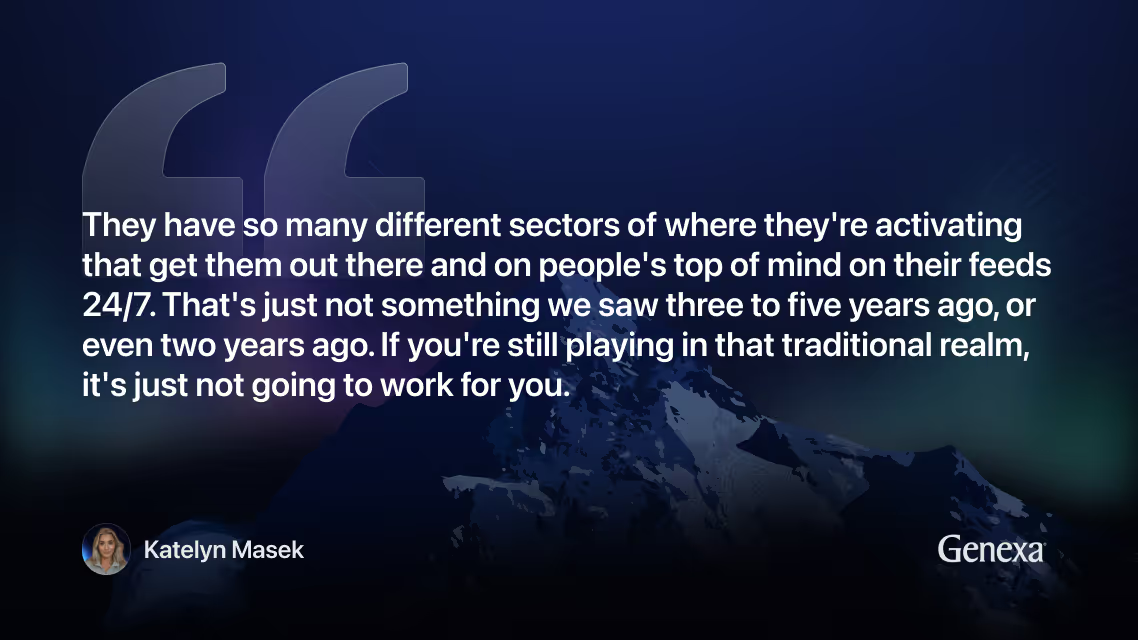
Katelyn Masek, Social and Creator Lead at Genexa, broke this down.
"They have affiliates, they have a UGC program, they have always-on creators, they have specialty campaigns, lead creators. They're doing each of the sectors to drive an overall program, and they're keeping that program active 24/7."
Each layer plays a role:
- Affiliates: Volume and discovery
- UGC: Reusable content
- Always-on creators: Consistent output
- Campaigns: Spikes and moments
Together, they create constant presence across feeds.
She used Comfrt as an example. Hudson, the brand’s founder, consistently posts 30-plus affiliate videos a day on TikTok Shop, alongside brand ambassadors, and NFL players spotted wearing the product on the walk to their plane. Multiple tiers, all running at once.
Turn content into a feedback loop
Volume alone isn’t enough. The advantage comes from learning.
Sambhav Chadha described a similar principle at work through his own clients. The brands that sustain high output don't just produce at volume. They also run a feedback loop. Winning angles get shared back across the creator base, more creators test variations of what's already working, and performance compounds over time.
"They passed those learnings back. They were distributing what hooks are working best and asking other creators to create them, what concepts are working best and asking other creators to create them, and ensuring that that content engine just keeps learning."
The result is a program that doesn't depend on any single creator or moment. Content keeps coming, performance data keeps building, and the program gets more efficient over time.
Automation is becoming the backbone of creator programs
Managing hundreds of creators manually doesn't scale. Onboarding slows down, payouts get delayed, and the relationships that make programs work start to erode.
Chris Chisholm, Director of Talent Management at G Fuel, manages hundreds of paid creators and thousands of affiliates. He built his entire department around one principle: automation.
"You need to automate as much as you can without the creator feeling like they're talking to a robot. I run my department with the goal of 90% automation, 10% personal connection."
The 90% handles the operational load: segmented emails, onboarding flows, payout triggers, and content reminders.
The remaining 10% is what keeps creators engaged.
Chisholm’s team doesn’t send generic birthday emails. They trigger a message weeks earlier, confirm shipping details, and send a gift. It feels intentional, but runs automatically. It lands before the inbox floods with birthday promotions, feels personal, and requires almost no manual effort.
"You create automated moments that allow personal connections."
The distinction is very important at scale. Creators who feel like a line item stop posting. Creators who feel seen stay in the program, improve their content, and advocate for the brand without being asked.
At G Fuel, top-paid talent get Chisholm's Discord DM directly. This is something that has helped negotiate lower renewal rates at contract time. Affiliates and ambassadors get community engagement through group channels, where he drops in regularly to give thousands of creators the sense of a personal relationship without requiring one-on-one time with each.
Tip: Use tools like Social Snowball to automate every repeatable touchpoint, like onboarding, briefs, payments, and performance updates. Protect your manual efforts for moments that build loyalty: a personal DM to a top performer, a surprise gift, a public callout in your creator community when someone's video takes off.
The shift from retainers to revenue-share
The old model was simple: pay an influencer, get a post, hope it performs. Jordan West, who runs one of the largest TikTok Shop agencies in North America, was direct about why that stopped working for him:
"I hated just paying an influencer some sort of retainer and then hoping that I got more value out of it.”
The new model ties earnings to results.
“TikTok Shop works because it actually aligns incentives. It creates win-wins."
When creators earn based on what they sell, the dynamic shifts. They test angles that convert, post more frequently, and stay invested in the outcome. The brand stops guessing whether their investment is paying off.
Cohen described the same shift from the brand side:
"We're moving to more of the affiliate model, where incentives are really aligned between the creator and the brand. The creator's gonna make a ton of money if they perform well. It scales as a more effective channel than ads."
Long-term creator relationships outperform one-off deals
As programs mature, the biggest advantage is ownership of the relationship.
Borza’s agency shifted away from managing external creator campaigns entirely. The reason was simple: when someone else owns the creator relationship, the brand loses its most durable growth lever.
"Building it from the outside sometimes tends to be a bit too transactional. But if you, as a brand, get to own the relationship forever, that is the biggest asset you can get from influencers."
At Magic Mind, affiliate commission is one option among several, including flat fees, product barter, and hybrid deals, chosen based on what makes sense for each creator. While the deal structure changes, the relationship stays consistent.
Want to turn creator marketing into a predictable revenue channel?
Creator marketing starts working when all the different workflows connect. Creators keep joining, content keeps going live, and revenue builds on top of what’s already working.
That structure comes from a few pieces working together: a steady flow of creators, customers joining as creators right after purchase, payouts tied to performance, and content and sales tracked in one place across TikTok and your store.
Once these pieces are in place, the program runs with consistency. You know where revenue is coming from, which creators to scale, and how to keep the system moving.
Social Snowball brings this together in one place. Customers are automatically activated as affiliates, every creator gets a unique tracking link, and payouts, gifting, and content are managed without manual work.
.png)