Customer referrals drive growth because they carry trust. When someone recommends your product, the decision feels easier, and the path to purchase shortens. This is why referrals consistently bring in loyal customers.
The challenge starts when volume picks up. Without a system, teams end up managing referrals in spreadsheets, checking orders manually, and fixing edge cases one by one. The channel becomes less reliable and harder to scale.
A referral program software can bring structure to this.
It creates and tracks referral links, applies rewards based on defined rules, and connects every referral to revenue. You can see which customers drive sales, which incentives perform, and how the program grows without adding operational load.
This guide breaks down the best referral program software and helps you choose the right setup for customer-led growth.
Best Referral Program Software for Customer-Led Growth
A referral program works when it consistently turns your existing customers into a source of new purchases, with every referral tracked, rewarded, and tied back to revenue.
Referral tools vary in how they support this system. Some focus on simple “refer-a-friend” setups with basic tracking and rewards. Others support broader programs across customers, affiliates, and creators, with automation, fraud control, and revenue-level reporting built in.
Below are the best referral program software options based on the problems they solve, the teams they fit, and the kind of customer-led growth they enable.
1. Social Snowball
Ideal for: Shopify brands running referrals, affiliates, and creator programs at scale
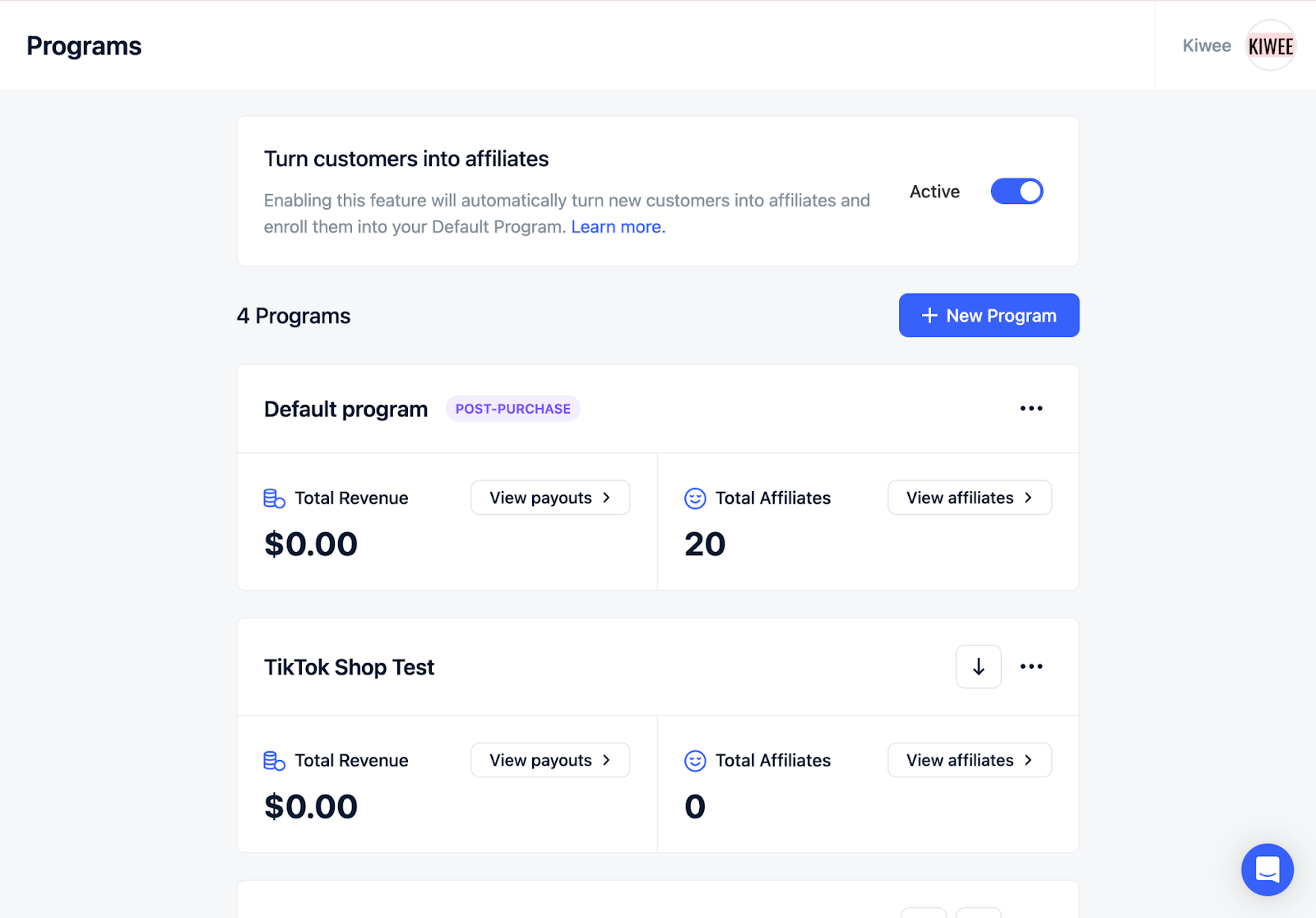
Social Snowball runs referral programs as a fully automated system. Customers get activated as affiliates right after checkout, receive unique tracking links or codes, and start sharing immediately.
The platform tracks performance across channels, including TikTok Shop, and manages payouts, rewards, and content tracking from one place. Safelinks, another Social Snowball feature, generates single-use codes on every click, keeping attribution clean as volume grows.
Pricing starts at $199/month + 3% of affiliate-driven revenue, with flat-rate plans available for higher-volume brands.
Pros
- Activate customers as affiliates instantly after purchase
- Run referrals, affiliates, and influencers in one system
- Keeps tracking accurate and prevents code misuse with fraud-protected affiliate links
- Bulk payouts and automation reduce weekly operational work
- Clear revenue-level reporting across channels
Cons
- Works only with Shopify
- Entry pricing requires consistent volume to justify ROI
Rating: 5.5 stars on G2
2. ReferralCandy
Ideal for: Small to mid-sized ecommerce brands launching a simple customer-only referral program.
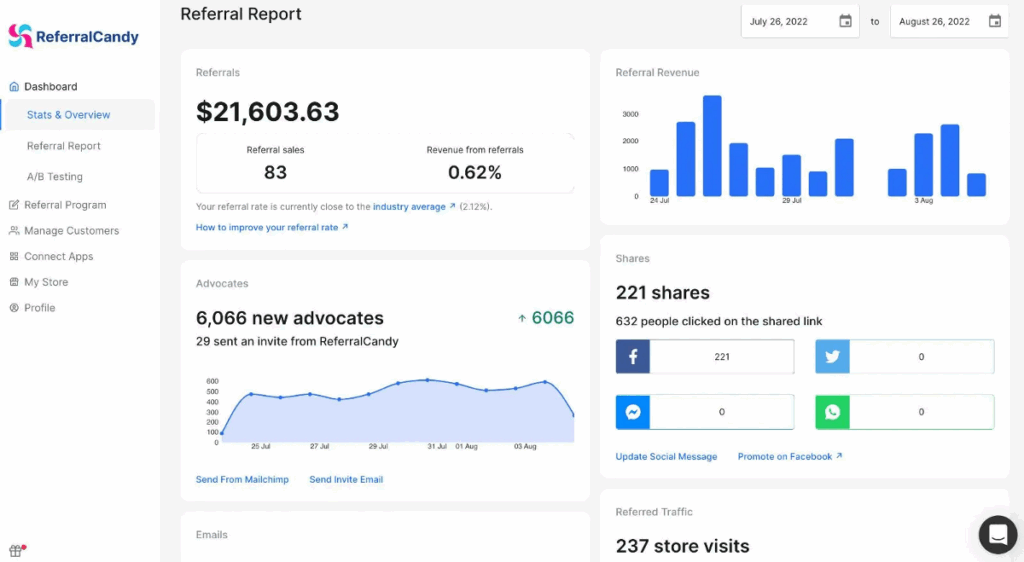
ReferralCandy focuses on straightforward customer referral flows. It sends post-purchase emails, assigns referral links or codes, and tracks conversions tied to those shares.
The platform supports flexible rewards such as discounts or cash incentives and works across Shopify, WooCommerce, and other ecommerce platforms. It fits teams that want a quick setup with predictable referral workflows.
Pricing starts at $59/month + 3.5% commission on successful referral sales.
Pros
- Quick setup with minimal configuration
- Supports multiple ecommerce platforms
- Flexible reward options (discounts, cash, store credit)
- Clear analytics dashboard for referral performance
Cons
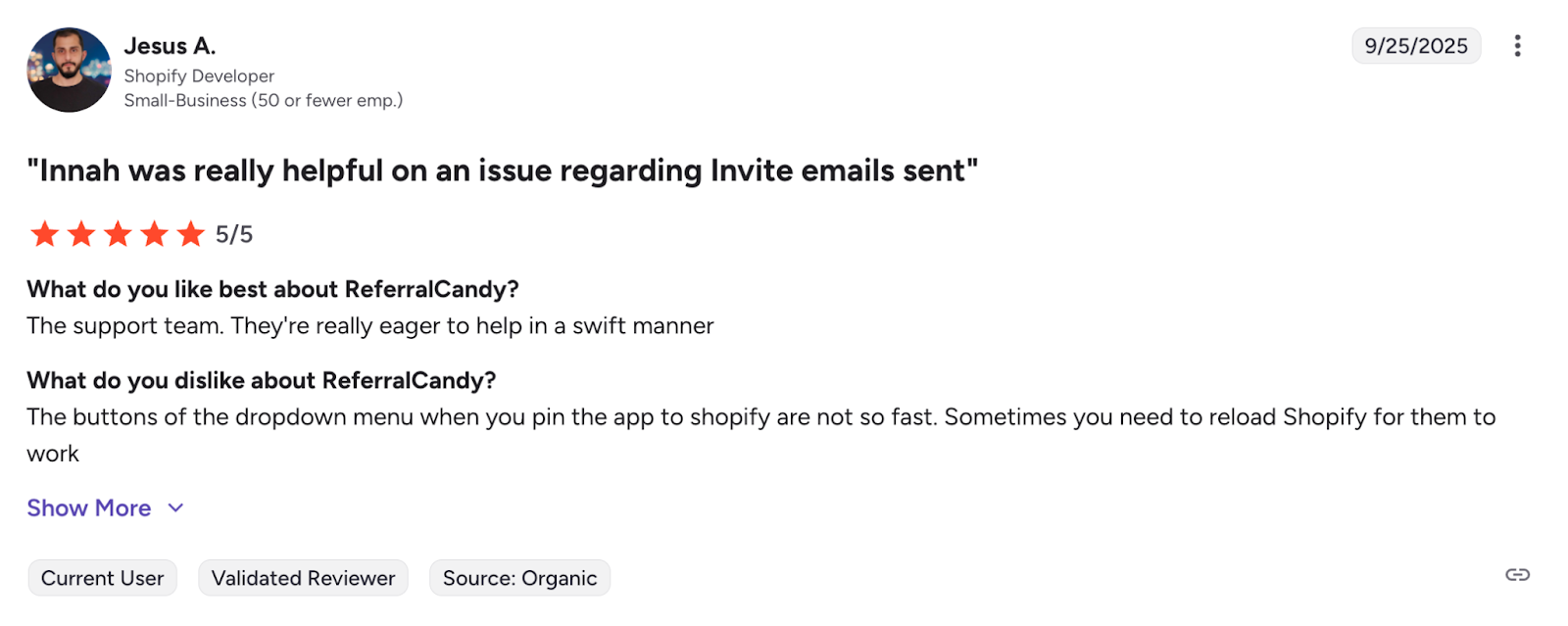
- Success fees increase as referral volume grows
- Reward processing and tracking can lag during peak activity
Rating: 4.5 out of 5 stars on G2
3. Rewardful
Ideal for: Small to mid-sized SaaS companies running affiliate marketing programs tied to subscriptions and recurring revenue
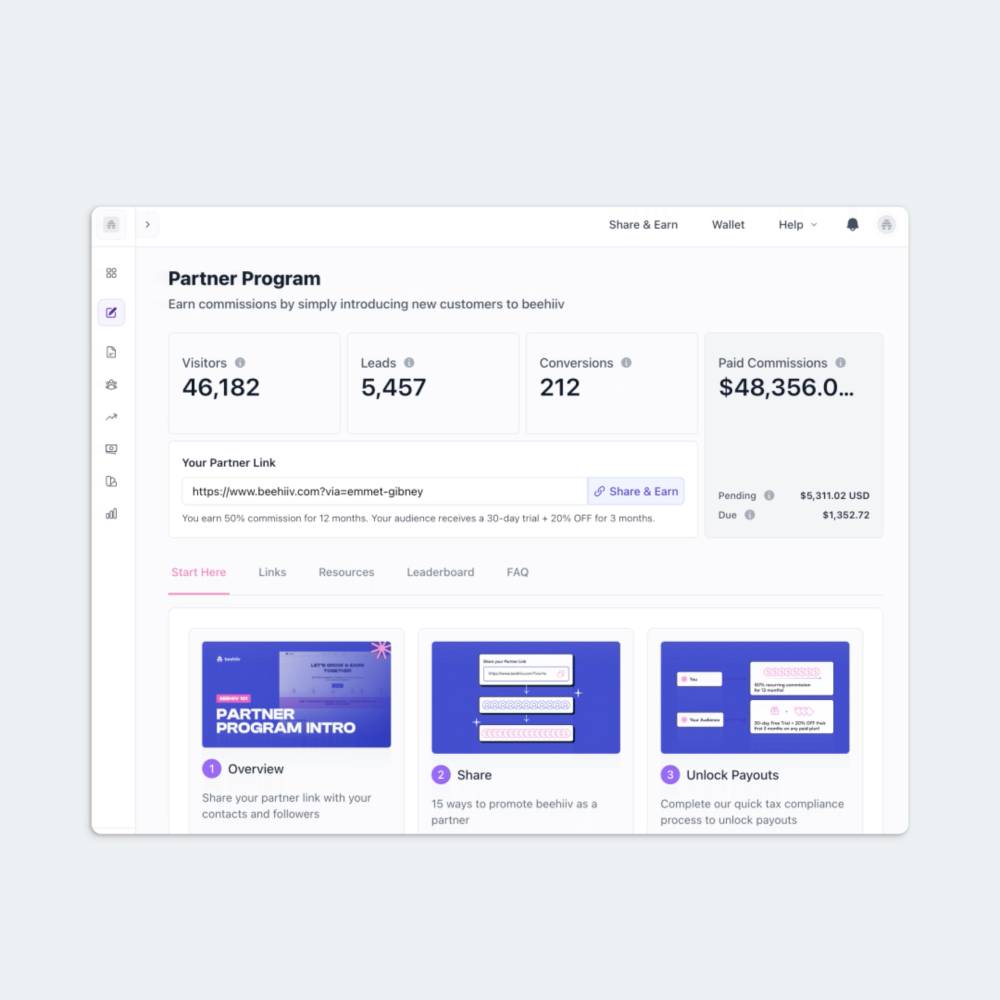
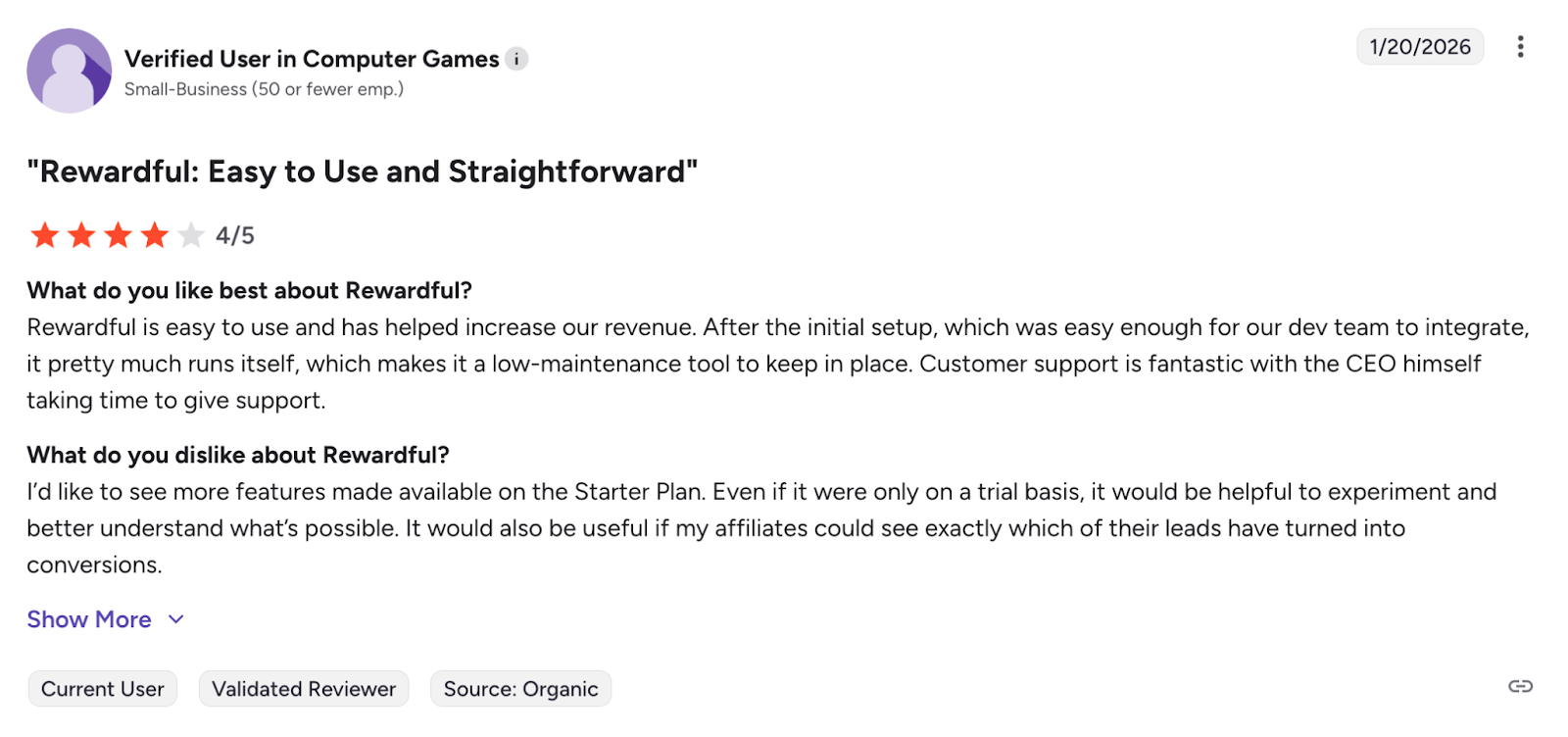
Rewardful tracks affiliate-driven signups and ties commissions directly to subscription payments through Stripe. You can set rules for recurring commissions, manage partner links, and monitor performance through a clean dashboard. It fits teams that want a simple way to run affiliate programs around monthly or annual billing.
Pricing starts at $49/month, with the option of a free 14-day trial.
Pros
- Direct Stripe and PayPal integration for subscription tracking
- Supports recurring commission structures out of the box
- Clean, easy-to-use dashboard for managing affiliates
- Quick setup for lean SaaS teams
Cons
- Payouts require manual handling
- Limited flexibility for ecommerce or multi-program setups
Rating: 4.4 out of 5 stars on G2.
4. Viral Loops
Ideal for: Early-stage to mid-sized B2C brands running referral campaigns, giveaways, or product-led growth loops
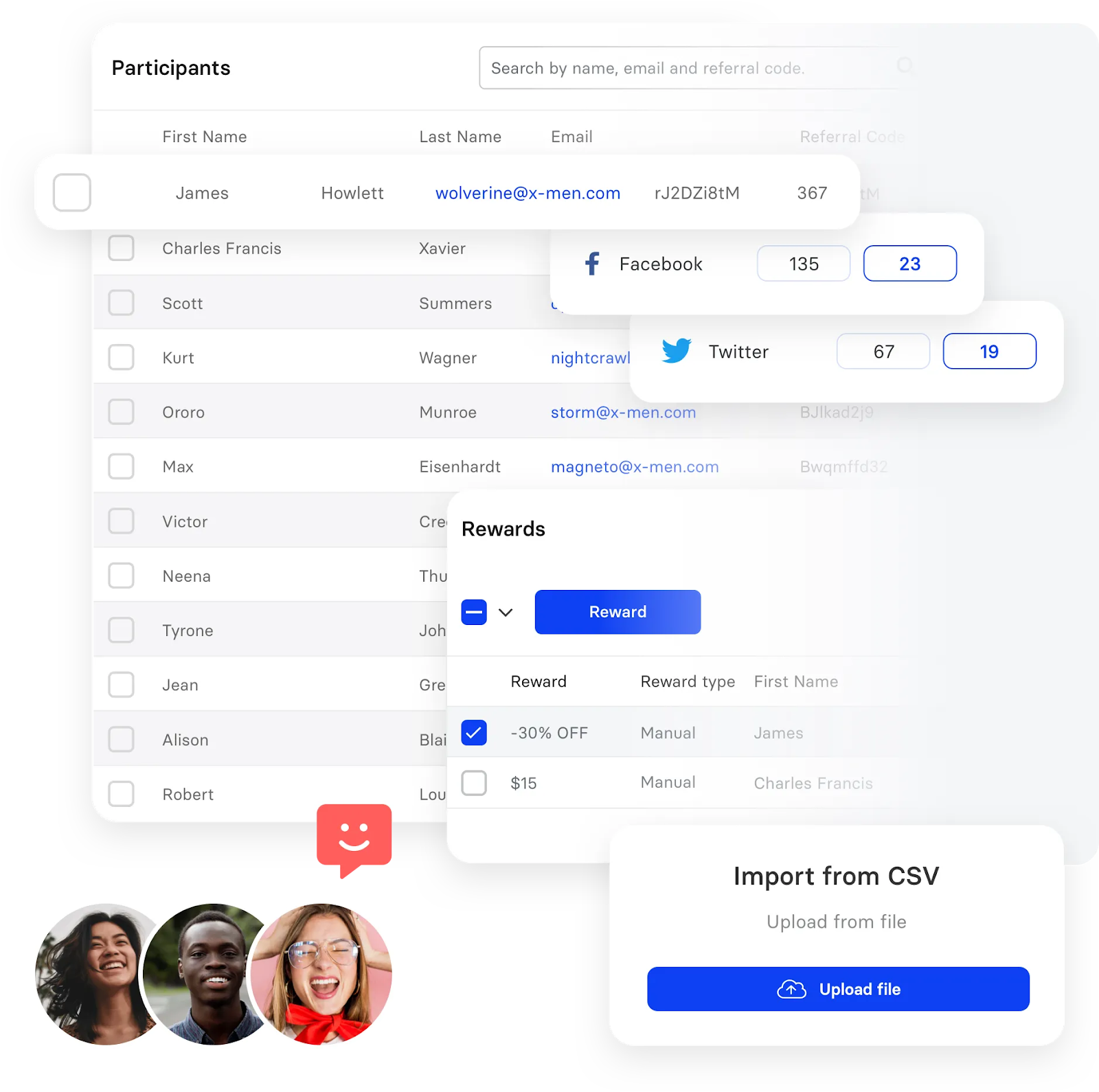
Viral Loops focuses on campaign-based referrals. You can launch pre-built referral programs such as giveaways, waitlists, and milestone-based rewards using ready templates. The platform supports sharing across email, social, and landing pages, making it useful for short-term acquisition pushes and product launches.
Pricing starts at $35/month for up to 1,000 participants and increases as you add more participants.
Pros
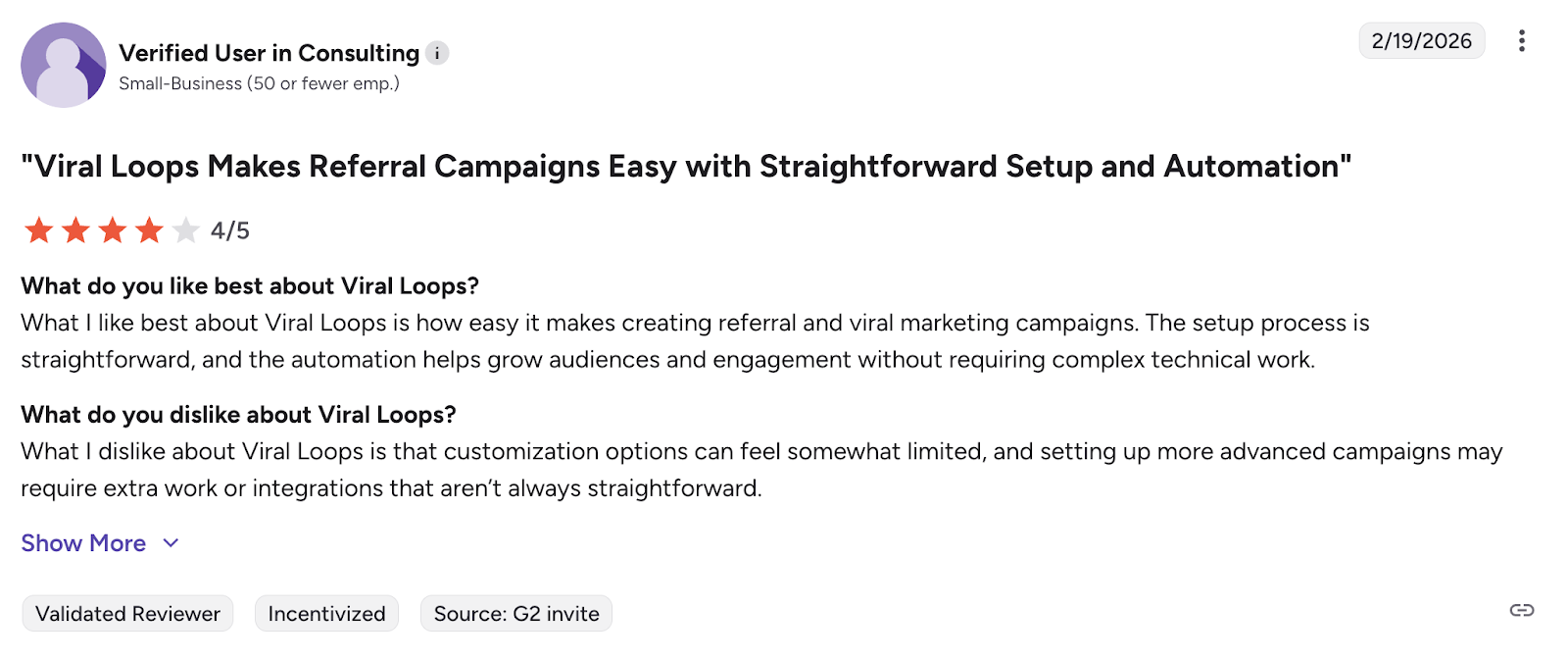
- Fast setup with pre-built campaign templates
- Supports multiple referral campaign formats (giveaways, waitlists, contests)
- Omnichannel sharing across email and social
- Helpful for driving early-stage growth and lead generation
Cons
- Integrations require setup effort depending on your stack
- Pricing increases as campaigns scale
- Better suited for marketing campaigns than ongoing referral systems
Rating: 4 out of 5 stars on G2
5. Friendbuy
Ideal for: Mid-sized to enterprise ecommerce brands running customizable, branded referral programs
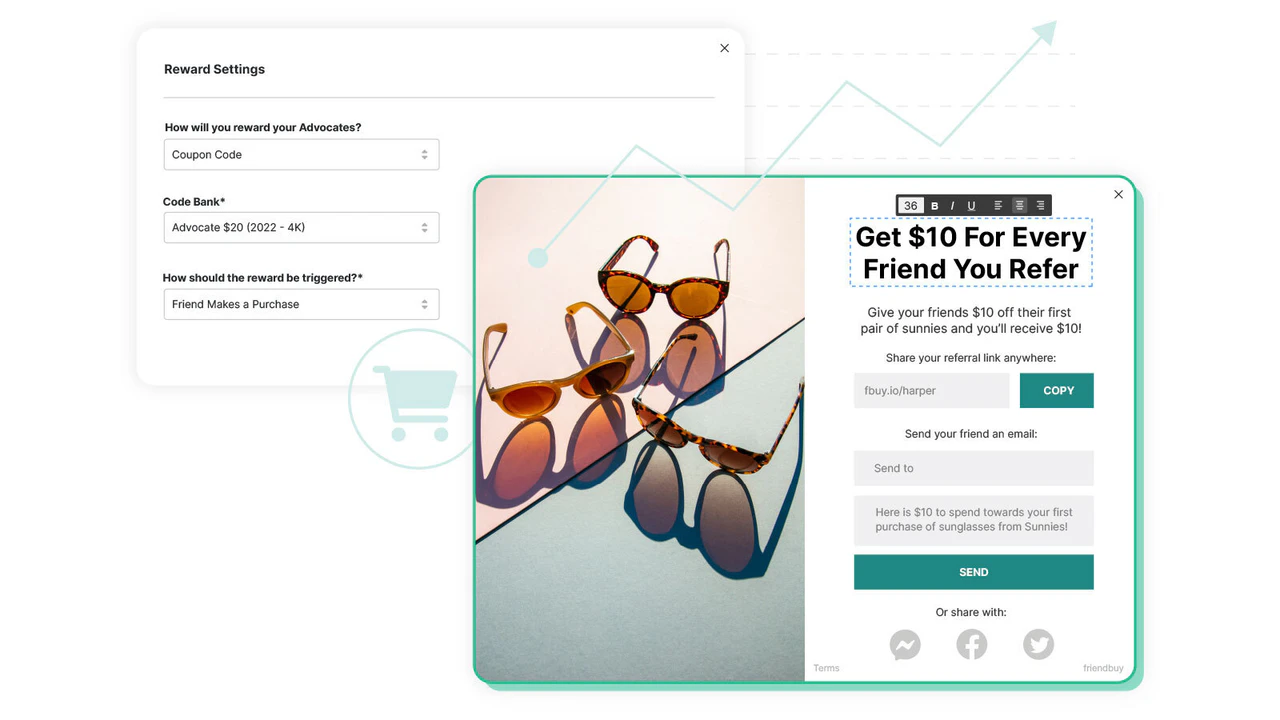
Friendbuy helps you run structured referral programs with control over how each campaign looks and performs. You can build referral campaigns using on-site widgets, test different offers through A/B experiments, and track referral performance in real time.
The referral marketing platform supports branded experiences across your storefront and connects referral activity directly to customer acquisition and retention metrics.
Pricing isn’t disclosed, but according to reviews, it costs around $249/month.
Pros
- Strong customization across referral campaigns and on-site widgets
- Built-in A/B testing to improve conversion rate and program performance
- Real-time referral tracking tied to revenue and customer behaviour
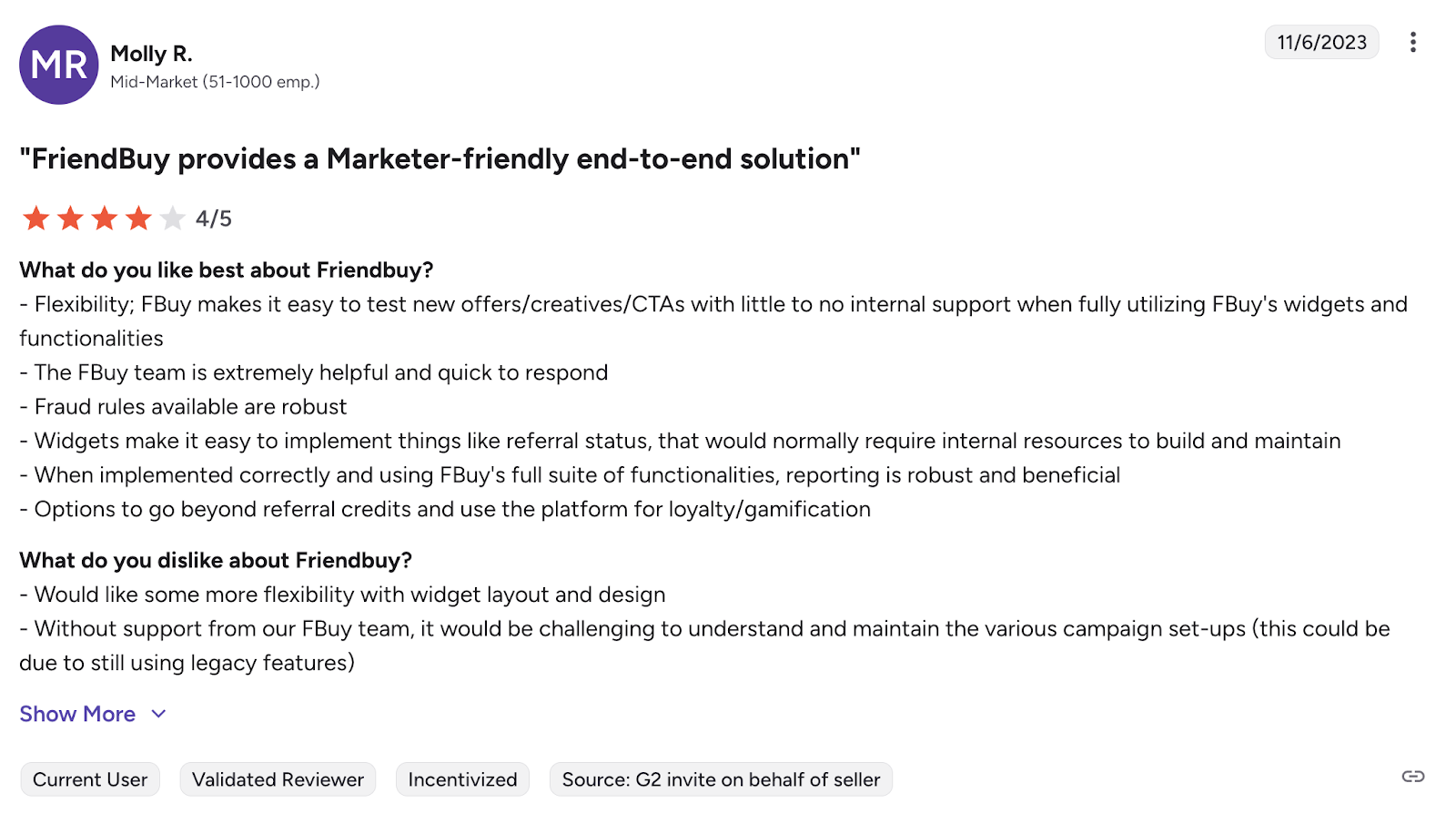
- Reliable customer support for campaign setup and optimisation
Cons
- Some workflows require manual approvals as programs scale
- Pricing sits higher for teams testing referral programs early
Rating: 4.3 out of 5 stars on G2
6. Referral Rock
Ideal for: Mid-sized to enterprise B2B and SaaS companies managing structured referral and affiliate programs
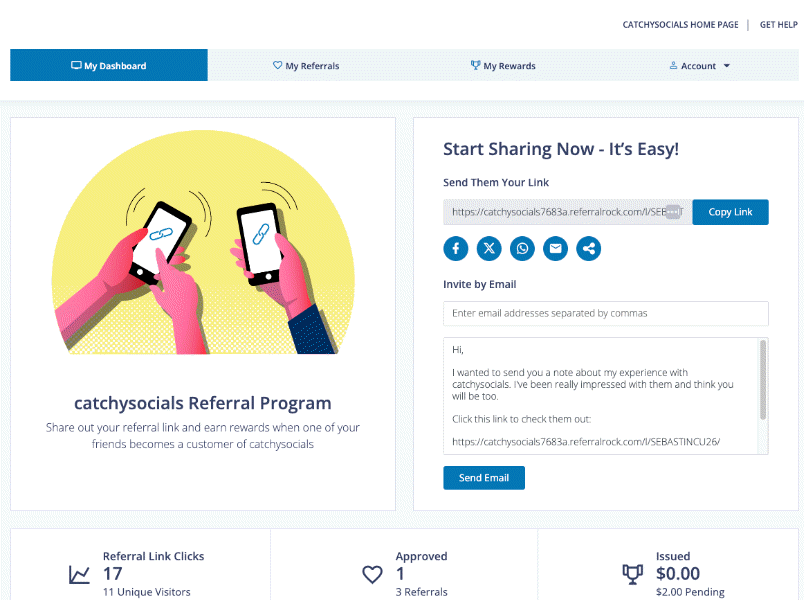
Referral Rock focuses on building a controlled referral system with flexible integrations. You can manage referral tracking, automate payouts, and customise dashboards for partners and customers.
The platform connects with tools like HubSpot, Salesforce, and Shopify through API-based integrations, making it suitable for teams running referral marketing alongside existing CRM and marketing tools.
Pricing starts at $249/month for a basic plan, which includes 1,000 subscribers and 1 plug-and-play campaign.
Pros
- Strong API support for custom integrations with CRM and marketing tools
- Automates referral tracking, commissions, and payouts
- Works well with HubSpot, Salesforce, and Shopify ecosystems
- Structured onboarding and support for setting up programs
Cons
- Setup requires time, especially for teams new to referral marketing software
- Pricing reflects a more advanced, enterprise-focused setup
- Interface feels dated compared to newer tools
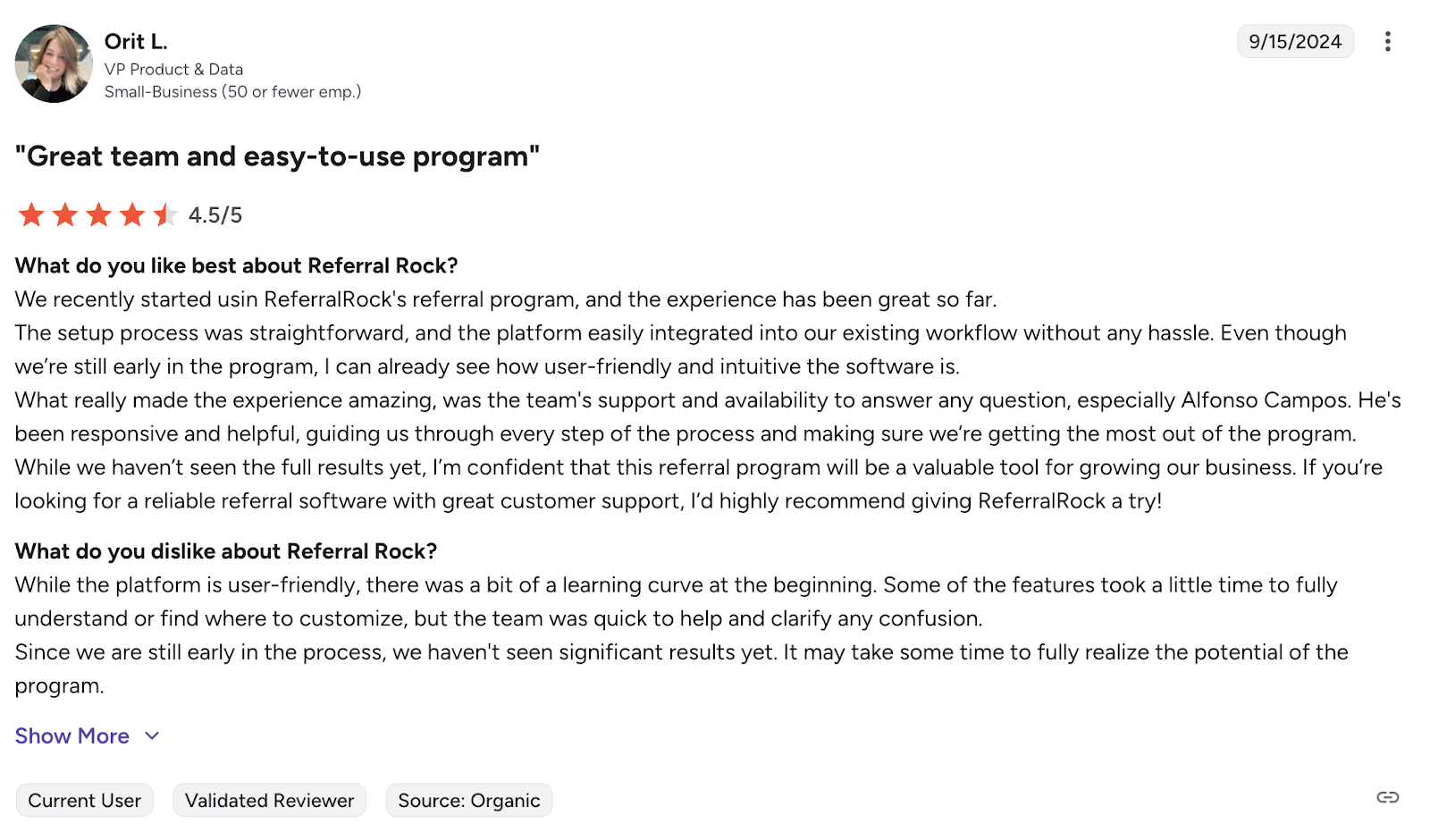
Rating: 4.5 out of 5 stars on G2
7. Referral Factory
Ideal for: Small to mid-sized businesses running multiple referral programs with flexible rewards and templates
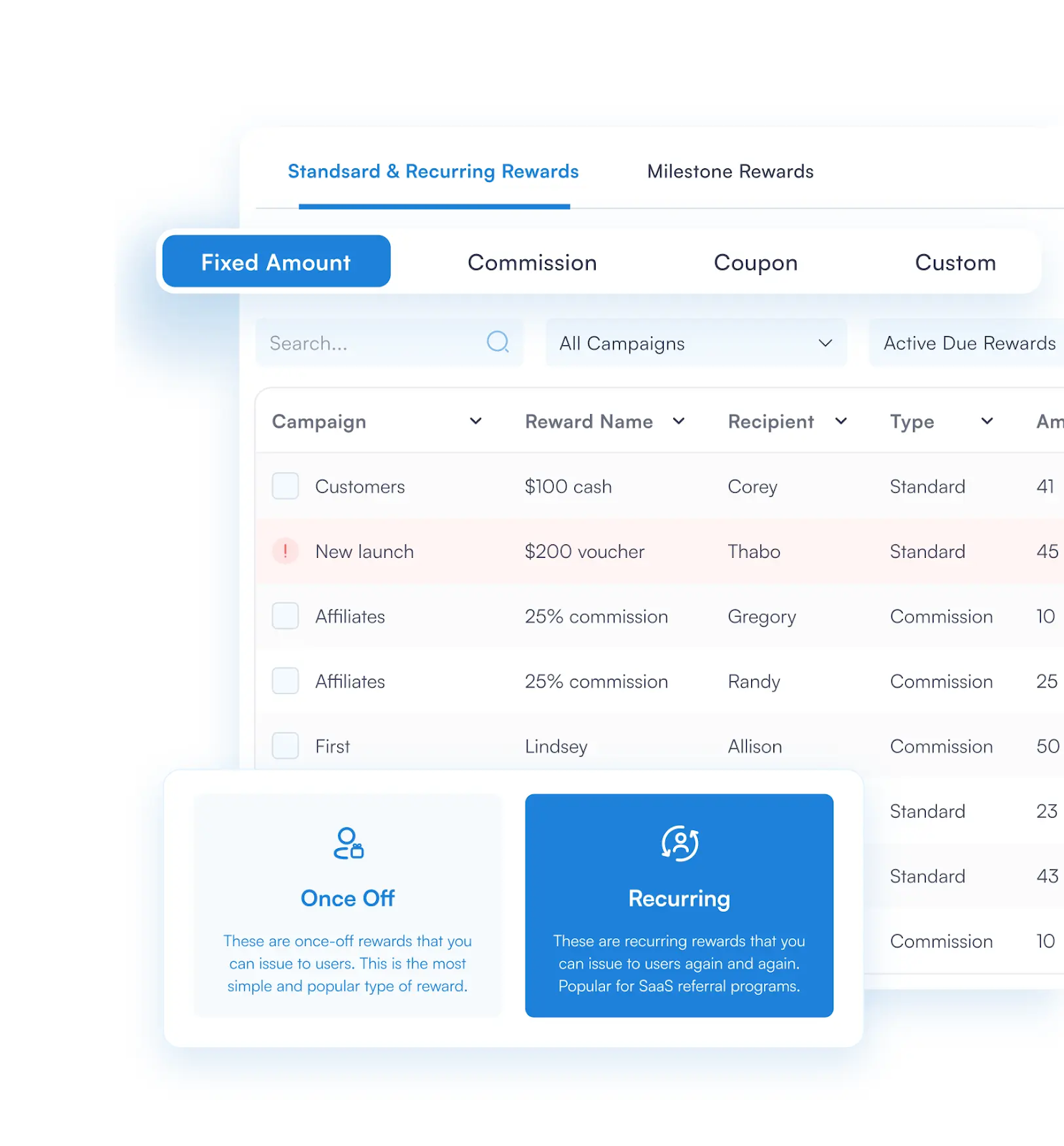
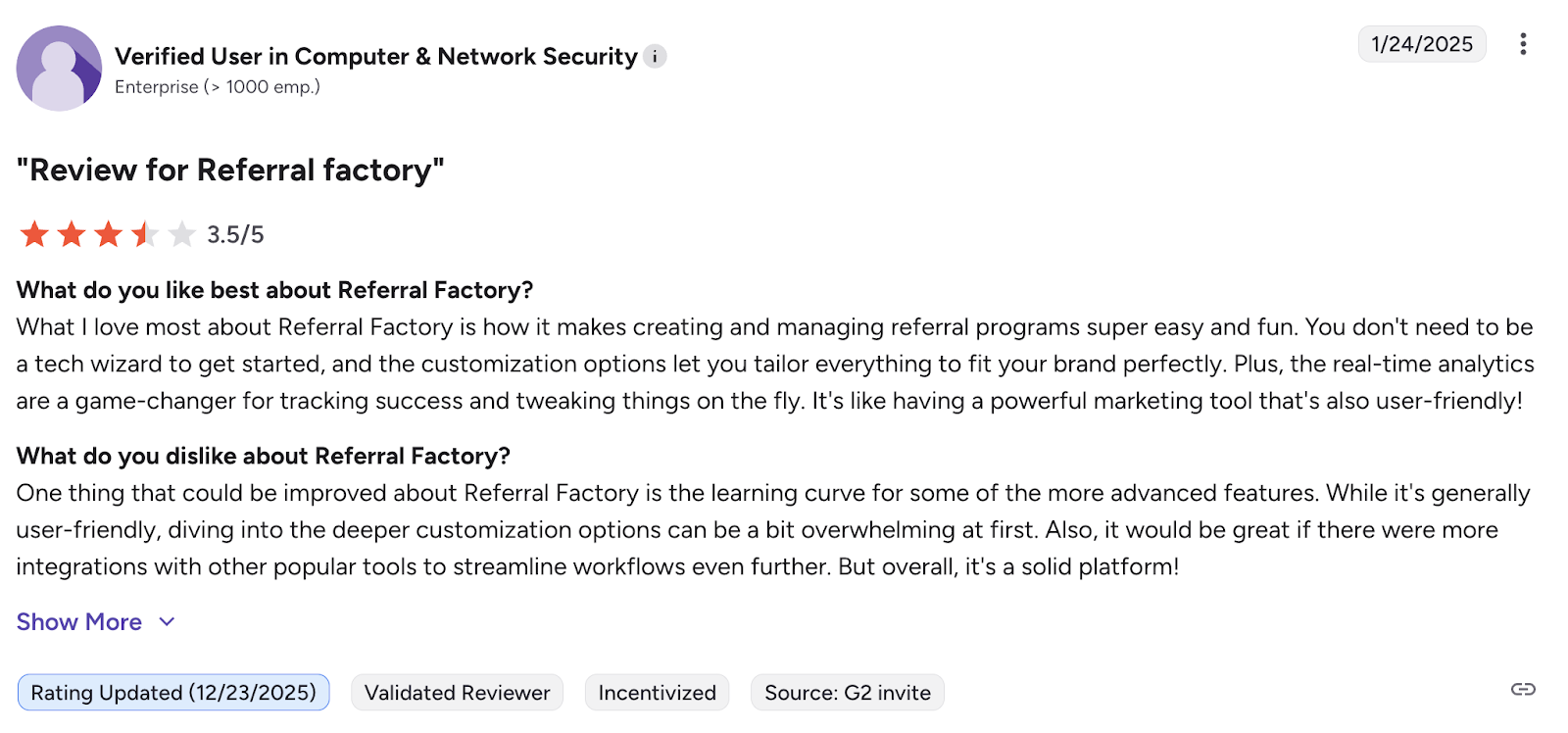
Referral Factory helps teams launch and manage referral programs quickly using pre-built templates and configurable workflows. You can create referral campaigns, assign rewards from a wide catalogue (including gift cards), and track performance through a central dashboard.
The platform connects with CRM systems and other marketing tools, making it easier to manage referral marketing alongside existing workflows.
Pricing starts at $76/month for 950 users and 1 live referral program.
Pros
- Large library of templates to launch referral campaigns quickly
- Supports a wide range of rewards, including gift cards and custom incentives
- Integrates with CRM systems and marketing tools for smoother workflows
- Strong value for teams running multiple referral programs
Cons
- Additional fees for features like custom domains
- No free trial to test functionality before committing
Rating: 4.8 out of 5 stars on G2
8. Yotpo
Ideal for: Mid to enterprise ecommerce brands combining referrals with loyalty, reviews, and retention programs
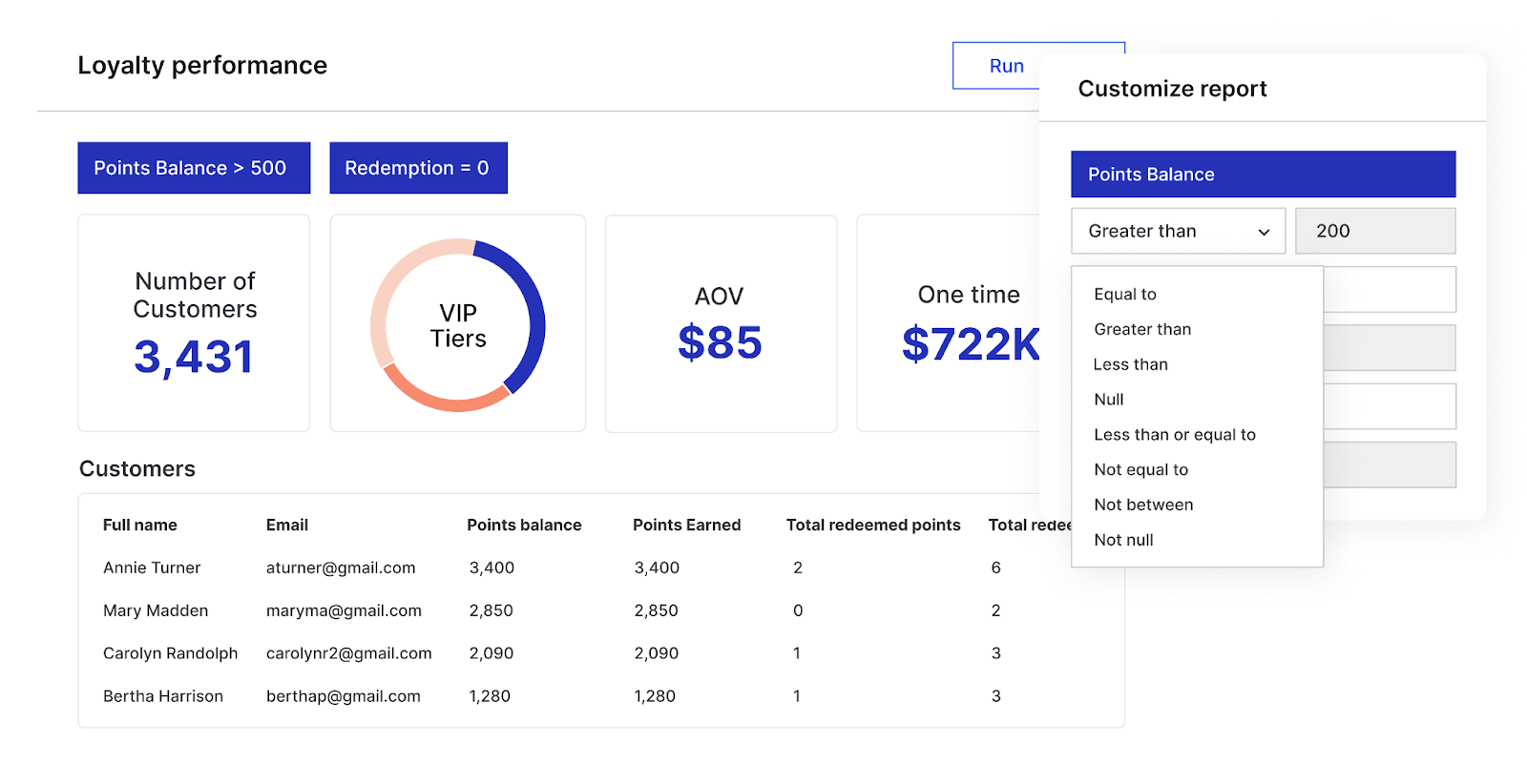
Yotpo runs referral programs as part of a broader retention system. Its Loyalty & Referrals module connects referral marketing with reviews, rewards, and customer engagement.
You can manage referral tracking, offer flexible rewards, and tie referral activity to lifetime value and repeat purchases. The platform integrates deeply with Shopify and supports multi-channel engagement across email, SMS, and social media.
Pricing plans start at $199/month and include loyalty rewards, fraud protection, and live support.
Pros
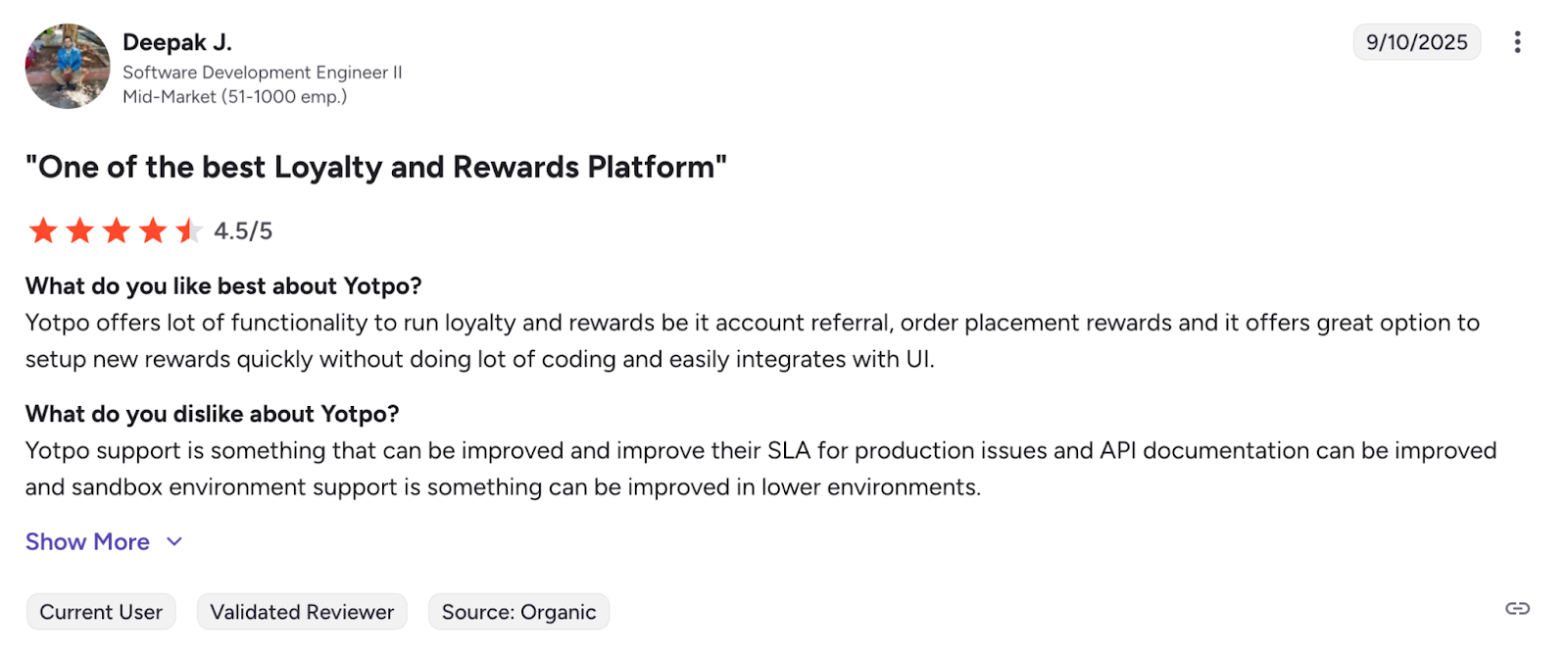
- Strong integration across loyalty, reviews, and referral programs
- Flexible reward structures, including points, discounts, and store credit
- Supports multi-channel referral marketing across email and social media
- Unified view of customer behaviour and referral performance
Cons
- Pricing increases quickly as you scale features and usage
- Setup and ongoing management require more time for full functionality
- Some integration issues reported across modules
Rating: 4.3 out of 5 stars on G2
What to look for in your customer referral software
Choosing the right referral program software comes down to how well it fits into your existing workflows and how reliably it handles scale. Each of these factors directly affects how your referral programs perform as participation increases.
1. Post-purchase enrollment
Post-purchase enrollment determines how quickly you can turn existing customers into active participants.
A strong setup activates customers immediately after checkout. The system assigns referral links or codes, prompts a signup, and makes sharing easy within minutes of purchase. This flow increases the chances of generating new customer referrals while intent is still high.
You’ll often see this implemented through on-site widgets, email triggers, or integrations with tools like Mailchimp or Klaviyo.
2. Automation
Automation defines how much manual work your team handles after launch.
Look for referral software that manages referral tracking, reward validation, and payouts without constant oversight. This includes handling edge cases like returns, duplicate referrals, or reward eligibility.
As referral programs scale, automated workflows keep operations consistent and reduce the need for manual checks.
3. Customization
Customization shapes how your referral campaigns fit your brand and growth strategy.
You should be able to control reward types, referral logic, and campaign structure. This includes options like flexible reward setups (discounts, gift cards, store credit), branded templates, and configurable referral rules.
Tools with drag-and-drop builders or campaign templates make it easier to launch and iterate quickly.
4. Fraud protection
Fraud protection keeps your referral system accurate as participation grows.
Look for platforms that offer controls to prevent self-referrals, repeated use of the same codes, and abuse across social media or coupon sites. Features like single-use referral links, usage limits, and behaviour-based checks help maintain clean attribution and prevent coupon leaks.
Strong fraud protection protects margins and keeps referral tracking reliable.
5. Integration with other tools
Referral programs work best when they connect with your broader marketing stack.
Integrations with ecommerce platforms like Shopify or WooCommerce, CRM systems like HubSpot or Salesforce, and email tools like Mailchimp keep data flowing across systems. API access also allows deeper customisation if your team runs more complex setups.
This creates a seamless integration between referral marketing and your existing marketing programs.
6. Pricing and scalability
Pricing should align with how your referral programs grow over time. Some providers charge a flat monthly fee, while others take a percentage of referral-driven revenue. As volume increases, this difference impacts margins.
Scalability also depends on how well the platform handles higher participation, like more referral links, more payouts, and more data, without adding operational complexity.
Ready to drive more acquisitions with customers?
Customer-led growth works when referrals run as a system; one that consistently turns existing customers into a source of new revenue, with clear tracking, rewards, and payouts.
The tools in this list support that system in different ways. Some help you launch simple refer-a-friend programs quickly. Others give you more control over campaigns, integrations, and workflows as your referral marketing expands.
Social Snowball fits teams that want this channel to run with minimal manual work. It activates customers post-purchase, manages referral tracking in real time, prevents code misuse through Safelinks, and handles payouts at scale, all within a Shopify-native setup built for ecommerce brands.
If your goal is to run referral programs across customers, affiliates, and influencers while keeping operations lean, Social Snowball gives you a single system to manage it all.